The Whigs. Perhaps it wouldn’t take much memory-jogging from high school history to bring up memories of Whigs vs Tories in the Merrie Olde England of the 17th and 18th Centuries. A quick-and-dirty summation tells us that Whigs were for parliamentary government and religious tolerance on non-Anglican Protestants, while Tories were Royalists and defenders of the Church of England.
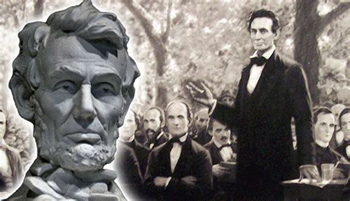
Whigs were also a prominent political party in America for several decades. They gave us four presidents – William Henry Harrison, John Tyler, Zachary Taylor, and Millard Fillmore. John Quincy Adams was also a Whig, but the party didn’t form until he left the presidency and returned to the House. Additionally, four other presidents – Abraham Lincoln, Rutherford Hayes, Chester Arthur, and Benjamin Harrison started out as Whigs. They became Republicans once the Whig party dissolved in the chaotic 1850s prior to the Civil War.
Okay, so that’s the political history of the Whigs, in a nutshell. But it doesn’t answer our question: What the hell is a Whig? Where did that name for political actors come from?
Here’s the rest of the story.
According to historian Arthur Herman, “Whigg” is Scots for a kind of sour milk or whey. It was the main dietary staple of the poor and indigent of Scotland. Back in the 17th Century, a group of Scots called the Covenanters stood in fierce opposition to any engagement with King Charles I of England. Most of these Covenanters were poor and were regarded by the English as lower-class trash who couldn’t afford decent food. The Brits taunted them about their enforced dietary habits.
Charles I was married to a Catholic woman. He believed in the divine right of kings, and some of his proposed reforms brought Protestant England perilously close to alliance with the Catholic church.
In 1648, a large group of Covenanters converged on Edinburgh, Scotland, to protest any deal with Charles I. It became known as “the march of the Whiggamores,” or “the march of the sour-milk men.” The name was shortened to Whig. It stuck in the political realm, eventually referring to anyone who was bound and determined to have a Protestant succession to the throne, whether of Scotland or of England.
Now you know the rest of the story.
Tags: Abraham Lincoln, American Whigs, Books, england, history, politics, scotland, Whigs, Whigs and Tories
 Veteranscribe's Blog
Leave a comment