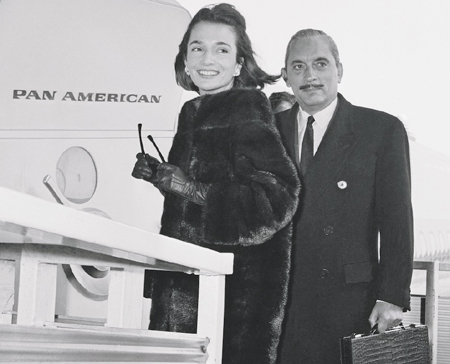
Does the name Princess Lee Radziwill ring a bell? If you’re a member of my boomer generation, it should. Caroline Lee Bouvier was Jackie Kennedy’s younger sister. A failed actress but an active, on-the-prowl socialite, her second of three marriages was to a Polish aristocrat, Prince Stanislaw Albrecht Radziwill. He divorced his second wife to marry Lee, and because his second marriage had never been recognized by the Catholic Church, he was free to marry.
Her Serene Highness Princess Caroline Lee Radziwill
For a while, it looked like Lee had beaten her big sister in the husband-hunting game. Jackie had to settle for a congressman from Massachusetts. But we all know how that turned out.
Anyway, when she got married, Lee began using the title Her Serene Highness Princess Caroline Lee Radziwill. The royalty-besotted American press ate it up and referred to her as Princess Radziwill. However, that was all stuff and nonsense. The Radziwills could no longer call themselves prince, princess, etc. as of 1921 when Poland established its constitution. That document abolished the legal recognition of titles. That didn’t matter to Lee and the Radziwills; as far as they were concerned, they were still royalty.
But who were these Radziwills, anyway? According to “Goodbye Eastern Europe: An Intimate history of a Divided Land,” by Jacob Mikanowski, the Radziwills were “an immensely rich Lithuanian family with a bottomless appetite for power and pleasure.” Many of the Roma, or gypsies as they also were called, had settled in Lithuania and went to work for the Radziwills.
The family’s roots go back to the 15th Century. They had immense wealth and longed to be kings of the Polish-Lithuanian Commonwealth. The other aristocrats and nobles successfully blocked that ambition, so the Radziwills developed expertise in other areas.
The coolest of these endeavors? The training of dancing bears.
If you lived in the Eighteenth Century and wanted a dancing bear for your royal court, you would send your animal to the Bear Academy in Smarhon, which is in today’s Belarus. The Radziwills owned that town. At the academy, on the Street of the Skoromokhs (jesters), the Romas trained the Radziwills’ dancing bears. They also took on the bears of private clients; you had to pay the animals’ room and board for the duration of their training period.
Lee and Stanislaw Radziwill
The Roma taught the bears not only to dance, but also to play the role of servants, waiting on tables, bringing water to the table, and so on.
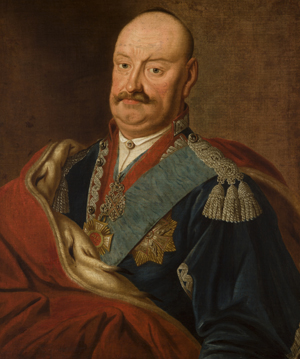
One of the most famous feats took place in the latter part of the eighteenth century, when Prince Karol Radziwill, known as Lord Lovey, owned the town. He was “preposterously rich, possessing sixteen cities, 683 villages, and 25 forests, as well as a mansion in Paris.” Lord Lovey was also “a drunk, a womanizer with a fondness for Jewish women, and a teller of talk tales.”
One day, the leader of the Roma, “king” Jan Marcinkiewicz, decided to play a trick on Lord Lovey. He had his Gypsies teach a group of bears how to pull a horse carriage. He then harnessed six of them and rode off to Lovey’s castle. The prince got such a kick out it that he treated Marcinkiewicz like a real king. He threw a feast that lasted several days. At the end, they all rode off to the prince’s summer palace, trailed by crowds of bears, Gypsies, burghers, and noblemen.
That’s the way the super-rich used to play in those days. Nowadays, they build spaceships and send their girlfriends up to the exosphere or rent the entire city of Venice for their wedding. I think it must have been more fun in Lord Lovey’s time.
And that’s the family into whom Jackie Bouvier’s sister married. Lee and Prince got divorced in 1974 after 15 years of marriage. They had two kids. She married a third time, and that one lasted 13 years. After third divorce, she again began calling herself Radziwill. On one Saturday Night Live episode, Roseanne Roseannadanna referred to her a “one of those classy ladies where you don’t know what she’s the princess of.” Lee lived her final years in the Upper East Side of Manhattan, so I guess she had no room for those Radziwill dancing bears.
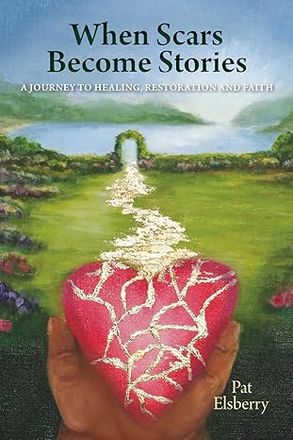
The first time I read Pat Elsberry’s wonderfully comforting When Scars Become Stories, I likened her to the poet Vergil, who accompanied Dante through the torments of his famous Inferno. Upon re-reading her as she guides us through the grief journey, as she puts the experience of losing a loved one and its aftermath, I see that my initial comparison missed the mark.
Author Pat Elsberry
Vergil knew what to expect in the Inferno, but he had never been through it, never endured those awful punishments. But Pat Elsberry has been there. She suffered the wrenching loss of an adult daughter several years ago. She takes our hand and tells us what to expect, what we feel, how to accept those myriad feelings and how to cope – because she has done it all herself.
Also, the first time I read the book, I went straight through it in just a couple of sittings. It’s only 200 pages, broken up into 50 short chapters, each of which includes a summary reflection and a concluding prayer. However, reading it straight through is not the way to do it. Instead, make one chapter a part of your early-morning routine each day. That’s what I do, and that’s how I believe you can derive the greatest guidance and comfort from Pat.
Prayers, spiritual readings, grateful reflections on life already lived and on life yet to come – they’re all part of my own grief journey, now of more than six years’ duration. And I’m most appreciative to now have Pat Elsberry’s wisdom and strong faith in God to accompany me.
Perhaps a sample of Pat’s own words can tell it better. The following passage captures the essence of When Scars Become Stories, in my opinion. It’s from Chapter 13, whose title coincidentally is the same as that of the entire book:
“There are times when I look at the scars of my grief and feel the ache of loss all over again. They are tender reminders of a story I would never have chosen. But there are also times when I look at them and see beauty – a reminder that God has carried me, sustained me, and is weaving my story into something bigger that I can see. My scars have allowed me to connect with others in ways I could never have otherwise. They give me language to comfort those whose wounds are still raw, to say, ‘You are not alone. I have walked this road too, and God is with us.’
“When scars become stories, they become gifts. They allow us to give away the comfort we ourselves have received. They allow us to bear witness to God’s faithfulness, to shine light into someone else’s darkness, and to remind the world that healing is possible.”
I can say unreservedly that those who are bereaved, whether recently or in years gone by, will find in When Scars Become Stories a renewed perspective and hope for the rest of their earthly journey, a hope that will sustain them until they are reunited with their loved ones in eternity.
Well, that headline is a bit of an exaggeration. But read on. There’s something to it.
According to “Eastern Europe: An Intimate History of a Divided Land” by Jacob Mikanowski, two towering figures dominated the cultural scene of that region in the idyllic decades before World War I destroyed that world: Habsburg Emperor Franz Joseph I, and Anna Csillag.
That time, from the end of the Franco-Prussian War in 1871 and the outbreak of World War I, is fondly remembered as the Belle Epoque (or Beautiful Era). In America, it was dubbed the Gilded Age by Mark Twain. In Europe, there was peace and stability, and people had money to spend. And they spent a lot of money on the wondrous, but totally bogus, hair pomade made famous by Anna Csillag.
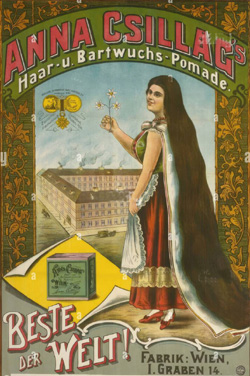
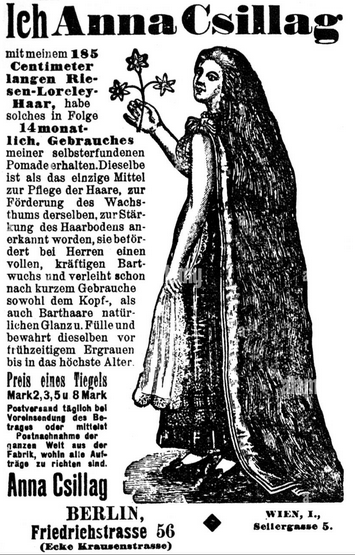
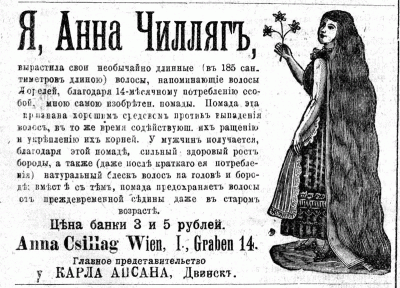
Mikanowski points out that Csillag’s image appeared in advertisements in every newspaper in Europe. The ads showed her in peasant garb, holding aloft three lilies, and nearly covered by her long and lustrous black hair, which “cascaded down her back like a wooly Niagara.”
How did she get that hair? The myth that her ads spun had her a poor young woman, nearly bald, and shunned by all those in her little village. But one day, she was working with chemicals and discovered a miraculous medicine that cured her baldness and became a hair-growing wonder drug. In her ads, printed in many languages, she wrote “I, Anna Csillag, possess an immense, 185-centimeter growth of Lorelei-like locks thanks to fourteen months spent using my specially formulated pomade.”
The men in her family got in on promoting the hair-growing too. The ads depicted them with “astounding pelts of lustrous black hair – fanlike beards stretching past their waists, and ropelike mustachios coiled around their trunks and midsections like so many boa constrictors.”
The ads appeared the papers of “Budapest, Krakow, Lodz, Vienna, Helsinki, Riga, and all points in between…the ads were so ubiquitous that they became part of the background hum or life in the Belle Epoque.” They also featured rapturous letters of endorsement by users.
The whole thing was a brilliantly executed con. Csillag – real name Stern – wasn’t born in “Karlowitz of Moravia,” as her ads claimed, but in Zalagerszeg, Hungary. She also sold a tea that was purportedly a miraculous shampoo, and a bar of soap that she plumped as “the best soap in the world.”
As she operated her business from Vienna and Budapest, the Austro-Hungarian bureaucracy come along to inspect. They found that the soap was just a red-brown toilet soap of inferior quality, and the tea was nothing but a common chamomile. As for the hair pomade, it was “nothing more than a mixture of fat and bergamot oil. It was white-gray in color, had the consistency of lard, and appeared grainy when spread out in a thin layer.”
Did that reality check matter? Nope. The stuff still sold. Or maybe the bureaucrats’ findings weren’t widely disseminated. And Mikanowski notes wryly, “with the benefit of hindsight we can say the imperial inspectors missed their mark. They evaluated a physical product, when the real miracle sold by Anna Csillag was her message. Repeated over and over again, it acquitted the force of a cryptic gospel or a prayer.”
Ah, the power of advertising. Anna would have made Don Draper and his coterie of Mad Men envious. But he did get the message. As Don he famously said in one episode, “What you call love was invented by guys like me to sell nylons.”
Someone else who was envious to the point of becoming enraged by Anna’s success in advertising was a penniless, struggling art student in Vienna. He spent hours poring over the ads, and he was especially fascinated by the letters of gratitude supposedly sent to Anna’s companies. He found that the letters were all fakes, and the supposed senders were dead.
The art student thought that he had found the key to a great mystery – the secret of propaganda. He ranted about its power, declaring to one friend “Propaganda, good propaganda, turns doubters into believers. Propaganda! We only need propaganda. Of stupid people there are always enough.”
The art student also wanted to turn his dormitory into an “advertising institute,” where the residents would all dedicate themselves to selling some product – perhaps a glass-strengthening paste – and promote it regardless of whether it worked. All they had to do, he claimed, was to repeat their message as often as possible, and, combined with a talent for oratory, they would attract all the customers they could want.
None of the guys in the dorm bought that scheme. One of them replied that they needed something worthwhile to sell, and that “after all, oratory on its own was useless.”
Rebuffed, the art student left school. But he wasn’t finished with the lessons he had learned from Anna Csillag and her fanciful stories. He found another dream to sell, another cryptic, diabolical gospel. He put Anna’s lessons to murderously effective use in his role of chancellor, and ultimately dictator, of the country of Germany.
From phony hair pomade to the brutal reality of a World War…now you know the rest of the story.
Hey, it’s summer. So what do we do? We travel. We read. And as Emily Dickinson succinctly reminded us, we can do both at the same time: “There is no Frigate like a Book//To take us Lands away.”
I’ve done a bit of traveling in this manner over the past many weeks. I’d like to share a few thoughts and impressions of some of my journeys with you. First up:
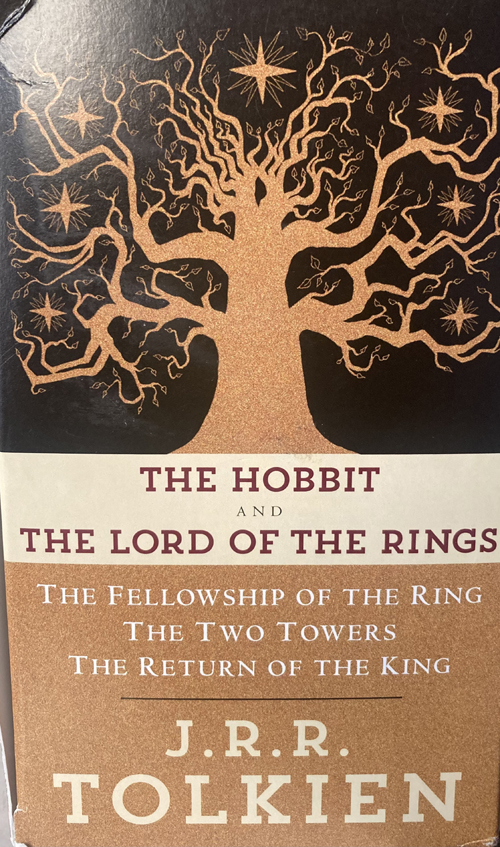
The Lord of the Rings, by J.R.R. Tolkien
This was my second time around for Tolkien’s masterwork, the trilogy plus The Hobbit, its indispensable prelude. If, like me, you’re already read it, I think you’ll get an immense amount of enjoyment if you take it up again. And if you have children or grandchildren who are looking for something good to read, something that will stay with them for many years, they can’t do any better than The Lord of the Rings.
Some 50 years after my first reading, I remembered almost every highlight of Frodo Baggins’s epic journey. Nominated the bearer of the One Ring of Power by the elves, men, and dwarves in the Council of Elrond, he succeeds –just barely – in his heroic quest to carry the Ring to the only place where it could be destroyed and kept away from the Dark Lord Sauron: the volcanic depths of Mount Doom in the desolate Land of Mordor.
I knew how it was going to end, so on this second reading I found that I could go at a more leisurely pace, picking up on some of the details I’d missed, recognizing for the first time some of the imagery and classical allusions, and enjoying the songs and the poetry.
On the other hand, I remembered very little of the Great War of the Ring. It actually took up more of The Return of the King, the trilogy’s third book, than did the perilous journey of Frodo and his ever-faithful servant Sam. The war served to distract Sauron and his armies as Frodo and Sam inched closer to Mount Doom. Aragorn, the organizer and leader, marries the Elven queen Arwen and takes back the throne as Elessar, King of the West. The good guys won, and the Third Age of Middle Earth came to an end.
In the foreword, Tolkien writes, “As for any inner meaning or ‘message,’ it has in the intentions of the author, none…I cordially dislike allegory in all its manifestations…I much prefer history, true or feigned, with its varied applicability to the thought and experience of readers.”
Well, whatever the author intended, I again absorbed several messages, all of which can be found in great literature: examples of courage, loyalty, steadfastness, love, deceit, treachery. They’re all on display here. So too is the eternal truth about power. The lust for power overwhelms and corrupts even the best of us.
Along the way the One Ring mesmerized and seduced the good warrior Boromir and the once-good wizard Saruman the White. Nor could Frodo, brave and virtuous, resist. At the end of his quest, rather than cast the Ring into the cracks of doom, he declares “I have come, but I do not choose now to do what I came to do. I will not do this deed. The Ring is mine!”
Sam and Frodo in the Land of Mordor
As Frodo puts the Ring on and becomes invisible, Sam gets bowled over by the repulsive Gollum, who once possessed the Ring and has stalked them all the way. Gollum wrests the Ring away from Frodo, but topples into the volcano and assures his own and the Ring’s destruction. Thus does an evil creature with evil intent bring about a good end – yet another lesson.
Truth to tell, Sam is a great a hero as Frodo. Loyal and totally devoted to his master, he saves Frodo from the monstrous spider Shelob. He also briefly takes custody of The Ring while Frodo is bound up in Shelob’s cave and nearly dies. A further lesson and reminder: it’s often the humble who perform the most heroic deeds.
Turning to the language and imagery and poetry, I did remember almost verbatim the introductory verses:
Three Rings for the Elven-kings under the sky,
Seven for the Dwarf-lords in their halls of stone
Nine for mortal men doomed to die,
One for the Dark Lord on his dark throne
In the Land of Mordor where the Shadows lie.
One Ring to rule them all, One Ring to find them,
One Ring to hold them all and in the darkness bind them
In the Land of Mordor where the Shadows lie.
The above lines set the stage for Frodo’s heroic quest. I did not, however, recall this even more beautiful poem, which came as a postscript in a letter to Frodo from the wizard Gandalf. It foreshadows the exploits and eventual triumph of Aragorn:
All that is gold does not glitter
Not all those who wander are lost;
The old that is strong does not wither,
Deep roots are not reached by the frost.
From the ashes a fire shall be woken,
A light from the shadows shall spring;
Renewed shall be blade that was broken,
The crownless again shall be king.
These are just two of the many poems and songs that grace the pages of The Lord of the Rings. As for the imagery and allusions, Frodo’s leave-taking of Sam almost reminded me of Jesus preparing his followers for the coming time when He would be in Heaven, and no longer be with them.
“Where are you going, Master?” cried Sam, though at last he understood what was happening.
“To the Havens, Sam” said Frodo.
“And I can’t come.”
“No, Sam. Not yet, anyway, not further than the Havens. Though you too were a Ring-bearer, if only for a little while. Your time may come. Do not be too sad, Sam. You cannot he always torn in two. You will have to be one and whole, for many years. You have so much to enjoy and to be, and to do.”
When at last they came to the gate of the Havens, Cirdan the Shipwright came forth to greet them. “Very tall he was, and his beard was long, and he was grey and old, save that his eyes were as keen as stars.” All I could think about here was Charon the Boatman of Greek mythology. Of course, Charon was a nasty guy who ferried damned souls across the black waters of the River Styx to eternal perdition.
But Cirdan led Frodo and Sam to the quay where a great white ship lay waiting. Gandalf was waiting there, and he would make the journey as well. He had been sent to Middle Earth to combat the Dark Lord, and now his mission as well as the Third Age were ended. Gandalf’s farewell to Sam and companions Merry and Pippin also had its religious overtones.
“Well, here at last, dear friends, on the shore of the Sea comes the end of our fellowship in Middle Earth. Go in peace! I will not say: do not weep; for not all tears are an evil.”
Perhaps that’s the final lesson. We of riper years know it well; those of a younger age have yet to learn it. Not all tears are an evil.
Several times during the last few weeks, I found myself thinking of Jiminy Cricket and Emily Dickinson.
Jiminy, those of a certain age will recall, used to sing “Books take you ‘cross the sea and down along a trail that never ends.” Emily, many will remember from high school, wrote “There is no Frigate like a Book, To take us Lands away.”
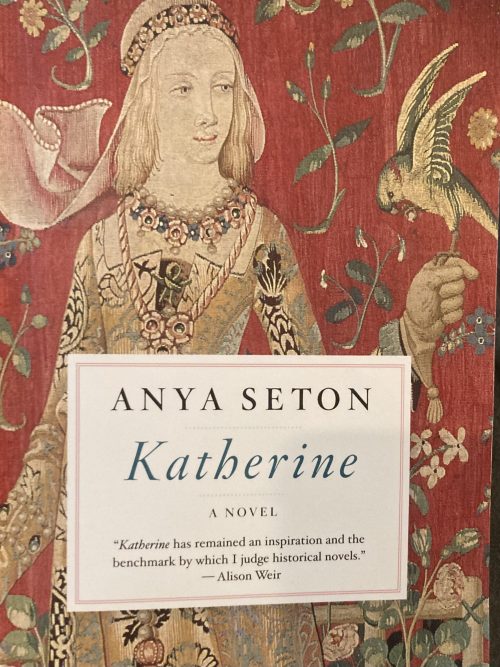
I recently returned from across the sea and lands away when I put down the 592-page historical novel Katherine, by Anya Seaton. This was one of those exceptional books that I just didn’t want to end. I felt like I was back in that time of Geoffrey Chaucer, of courtly love and arranged dynastic marriages, of treachery, adultery, and murder in the castles, of the Black Death and the Hundred Years’ War, and of the history plays of William Shakespeare.
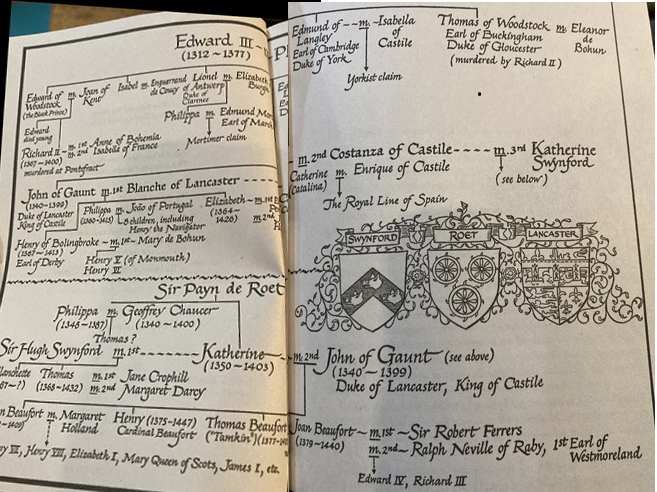
Katherine Swynford was mistress, love-of-life and eventual third wife to John of Gaunt, one of England’s greatest noblemen. Son of King Edward III and Duke of Lancaster, he never became King of England. But he would have been a much better monarch than his simpering nephew, Richard II, who succeeded Edward III on the throne and eventually screwed things up royally – pun intended.
Gaunt was smitten by Katherine’s beauty and regal presence almost from the time they met. He was married to the wealthy Blanche of Lancaster, with whom he had three children. Catherine, without dowry and second daughter of Payn de Roet, a knight who died at an early age, was married to another knight of slender means, Sir Hugh Swynford. She bore him two children.
Swynford was in Gaunt’s service and was a reliable and fierce warrior, but that’s about all he had going for him. He died under mysterious circumstances after returning from a military campaign. Gaunt’s first wife Blanche perished in the Black Death plague. Their spouses’ deaths would have freed John and Katherine to be together and make it official, you’d have thought, but that’s not what happened. He first married Queen Costanza of Castile, and he spent a good deal of time away in Spain trying to win more military victories and to become king of that realm. When he was in England, he eclipsed in strength and prestige the hapless King Richard, but he remained loyal until his death.
John’s loveless, political second marriage didn’t keep him and Katherine from having four children of their own. Somehow, that flame kept flickering and never went out. John found ways to share some of his wealth and keep her and their four bastard children financially solvent. It wasn’t that she was always there standing by him. They were apart and out of touch for long periods of time. She even contemplated suicide at one point. They finally married after his second wife died and spent three years together as husband and wife.
The author, Anya Seaton, took about a year and a half to write this book. She stayed true to historical fact and interpolated plausible though undocumented facts and motives where the record was lacking. She traveled through England and stood where her chronicled events took place. Her sources, among others, were Gaunt’s personal registers and the Jean Froissart’sChronicles, highly detailed descriptions of the events of the Hundred Years’ War.
John’s and Katherine’s genealogy chart
As she remarked in her journals, “I’m writing at least plausible history… I’m taking some liberties, etc.” Some of those liberties included imagining a deep-seated demon that plagued Gaunt from childhood and almost caused him to plunge England into a civil war. She has Katherine intervene and, through loving attention, quell the fires of his fury. As Seaton describes it, “Pretty psychiatric but I had to do it.”
Another couple of undocumented surmises by the author were her treatment of Geoffrey Chaucer and of Julian of Norwich, the revered religious leader, anchoress and author of the book of mystical devotions, Revelations of Divine Love.
Chaucer was actually Katherine’s brother-in-law, in a loveless marriage to her sister Philippa. He makes several brief appearances and inserts some wry and pithy observations; Seaton imagines that his Troilus and Criseyde was inspired by Katherine and John. She also had Swynford poisoned by a treacherous loyalist of Gaunt’s, although there is no evidence of that. Late in the book, Katherine, overwhelmed with guilt and on the brink of despair, is brought to Julian. Her experiences there, of course, are imagined by the author. Still, it is plausible – and I wanted to believe it was this way – that Julian relayed the following divine message to Katherine:
“It is truth that sin is the cause of all pain; sin is behovable – none the less all shall be well…Accuse not thyself overdone much, deeming that thy tribulation and thy woe is all thy fault; for I will not that thou be heavy or sorrowful indiscreetly.”
Yes, these are liberties taken by the author. But they work. As Seaton’s biographer Lucinda MacKethan points out about this book and Seaton’s next work, The Winthrop Woman, “Some readers have criticized the history of these works as too heavy, but for most, Anya’s great respect for what might be called the knowability of the worlds she was bringing to light in their greatest asset.”
I have to agree with that. As mentioned above, I felt like I was immersed in those worlds. No one can know what the people in them were actually thinking and feeling. And her description of the sack and burning of Savoy Palace during the Peasants’ Revolt was nothing short of terrifying. It certainly seemed true to history as far as I was concerned.
And for those aforementioned history plays of Shakespeare – particularly I Henry IV, Henry V, and Richard II – I finally learned who all those characters and parties to the conflicts were. They include, in addition to John of Gaunt, Henry Bolingbroke, Edward the Black Prince, Lord Harry Percy of Northumberland and his son Hotspur, Wat Tyler, Jack Straw, and the Dukes of Gloucester and York. They flit in and out of the history plays, and I always had a hard time remembering who the good guys were and who the bad guys were. Now I feel that I know where they all fit in the tumultuous history of the period.
Anyone who has read Shakespeare or dabbled in history has at least heard the name John of Gaunt. Like me, you probably regarded him as one of the big-time operators in a bygone age. And in that, you’d be right. But that’s the extent of it. Like me, you also would not have realized the profound impact he had on the history of the country of England. Nor, I daresay, had you ever heard of the formidable woman, the long-time mistress who at last became his wife, without whom John of Gaunt would have been just another member of the gone-and-forgotten noble class.
After Gaunt’s death, Richard II went off the rails and was succeeded by Bolingbroke, Gaunt’s son from his first marriage. He became Henry IV, and his son was the much mythologized Henry V. The Beauforts, who were the initially illegitimate children of Gaunt and Katherine, were the progenitors of Henry VII, the Tudor royal line, and the Stuart royal line. That includes, among others, Henry VIII, Elizabeth I, Mary Queen of Scots, and James I. Katherine’s grandsons were Edward IV and Richard III.
Quite a legacy. As the final line of this wonderful book states, in quoting the witches in Macbeth, “Thou shalt get kings, though thou be none.”
Perhaps the one good thing about being cooped up at home in the depths of winter is the extra time we have available for reading. I’ve taken advantage of that in the post-Christmas downtime. But after getting through, and learning a lot from, a couple of heavyweight books – The Winthrop Woman by Anya Seaton and Framed: Astonishing True Stories of Wrongful Convictions by John Grisham and Jim McCloskey – I was ready for something lighter and more fun.
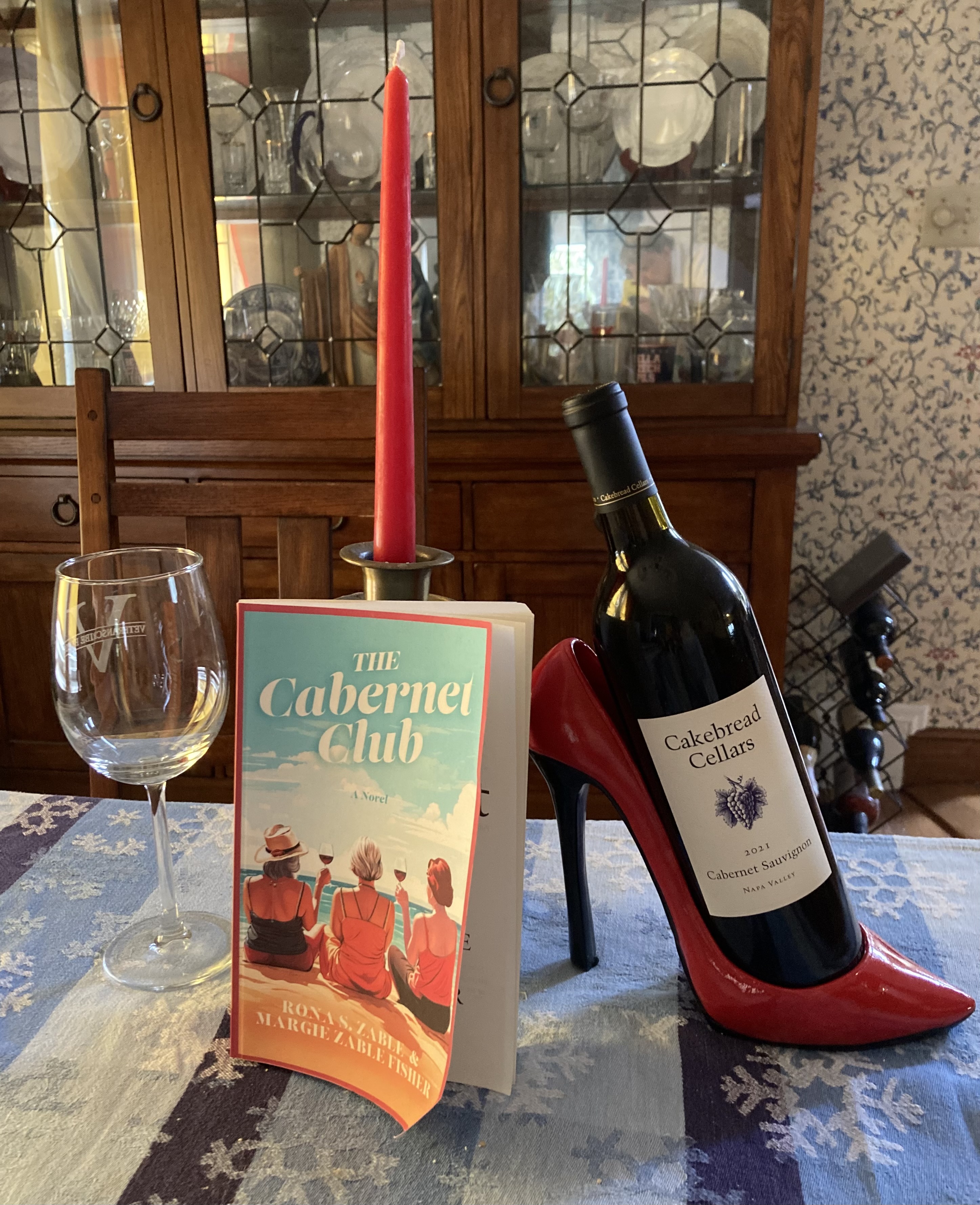
I found that in The Cabernet Club, a delightful romp through a many-faceted life transition by the heroine, Debbie Gordon. Though much of it was laugh-out-loud funny –especially a horror-show of a date with a friend of a friend…hard to believe guys actually behave that way on dates – the book also teaches some life lessons.
Maybe better, it just reiterates those lessons. We all know that it’s never too late to start over. We all know that things are seldom what they seem. We all know that someone’s apparently perfect life can really be a miserable slog. And we all know that “experts” usually don’t know “their ass from their eyebrows,” as Debbie memorably puts it in resolving one of the book’s conflicts. Still, it’s nice to have those lessons repeated as we watch Debbie re-learn them for herself.
Debbie is a long-divorced empty nester who leaves her New England home for six-month trial residency in Florida. If things don’t work out for her, she can always go back north and live in Delaware with her mother hen of a grown daughter. That’s an undesirable fallback Plan B, mostly because it will mean duty as an unpaid nana.
She rents a place in a rather sketchy, over-55 enclave called Palmetto Pointe. The cast of characters she meets there would be right at home in Schitt’s Creek. But fortunately for Debbie, she befriends Maria and Fran. Like Debbie, their drink of choice is Cabernet Sauvignon, hence the name of their exclusive little club. The three of them bond and work their way through a series of adventures that include dates and men, lousy but necessary jobs, small-town politics, health scares and incompetent doctors, and the re-visiting of a long-ago family tragedy when someone else from the old town arrives.
Navigating those adventures along with those ladies was fun for me. I think it will be fun and even somewhat familiar for women and men of their – and my – age group. In our own ways, we’ve been to some of those places. It also brought home the book’s greatest lesson: the critical importance of good friends who are there with us in good times and bad.
Speaking just for myself, I also felt a twinge of envy at that last lesson. And not for the first time, as I’ve frequently expressed to my lady friends over our own glasses of Cabernet. Women just have a knack of forming and keeping friendships like these. That’s one of the reasons that women outlive men, who have a much tougher time building and nurturing such support structures late in their lives.
The co-authors are Rona Zable and her daughter Margie Zable Fisher. Rona had published three Young Adult novels during her career, and she had drafted this novel before she passed away in 2023. Margie re-worked and augmented the draft and saw it through to publication.
If they ever turn this book into a TV series, I think it would be a mashup of Golden Girls and Gilmore Girls. And as noted above, there would be a touch of Schitt’s Creek there too – “Florida Man” probably has a place in Palmetto Pointe. I thought of Gilmore Girls because of the dynamic between an adult daughter trying to make her way in the world and her loving but tut-tuttingly disapproving parents. The situation is similar here but reversed, as the mother is plunging ahead with something new while the daughter hovers in the near background, ready to say “I told you so.”
Does the daughter ever get to say it? You can probably guess the answer, but I’m not going to spoil it for you. Read the book to find out.
What’s so magic about five years? Seems like the world is captivated by the very idea of that stretch of time.
Taken at one of the many Hughes Family weddings
Colleges have their five-year reunions. They look back, drink up a storm, and collect more alumni donations.
Governments – usually the nasty ones like Russia and China – have their five-year plans. They look ahead, map out how they’re going to change themselves, and then find someone else to blame when nothing works out.
Then there’s the five-year lookback rule for transferring your property to escape Medicaid liens, a five-year real estate rule for holding onto the house you’ve bought, and a five-year stretch (supposedly) to play four years of college sports. Seems like everybody’s got a five-year something or other.
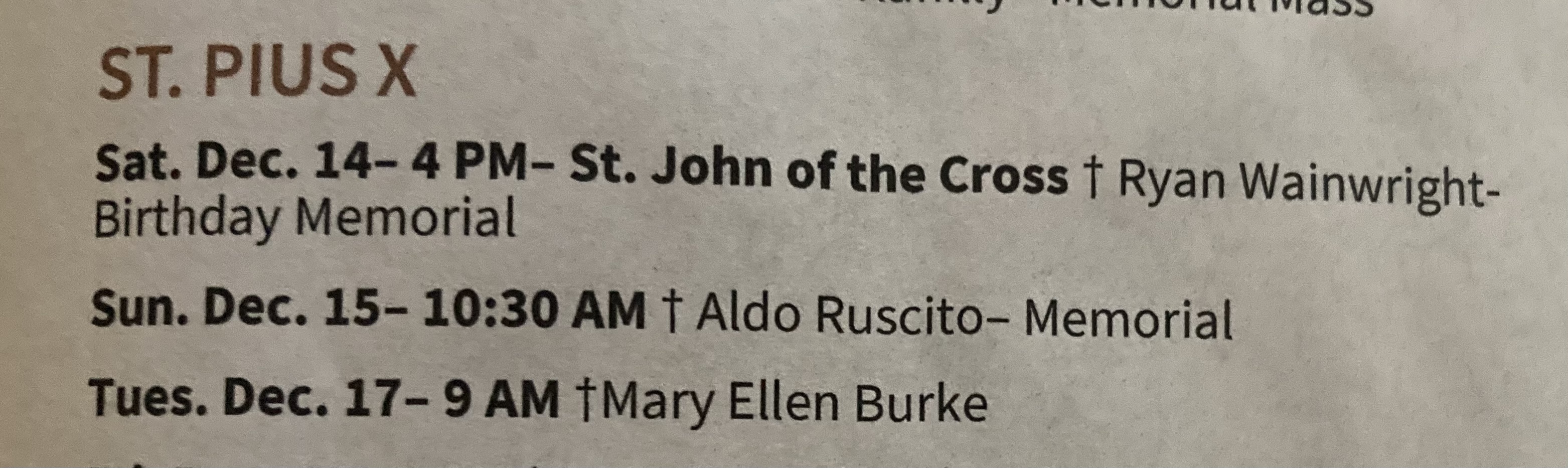
Myself included. Tomorrow, my first quinquennium without my partner comes to an end. The next day is a mass in memory of Mary Ellen, who left this earthly world on December 17, 2019. And another five years will begin. Perhaps, if the Lord spares me.
From the parish bulletin
Did I have a five-year plan that started in 2019? Most certainly not. Do I have a plan that will end in 2029? No, but after much contemplation, much prayer, and not a little reading of those much wiser and more experienced than I, I’ve got some ideas.
But first, what really happened to me during those first five years? And where did they go? It seems like only last week that they took her from her bed at the nursing home’s memory unit to the funeral home. I packed up the few things that were there and brought them home – including the lovely “fidget quilt” that my friend Barbie made for her, and the little potted plant in the plastic vase.
Here they are now. Aren’t they nice? I recently re-potted the plant for the fourth time. It seemed to do well out on the deck during the warm weather. Now it graces a table overlooking the back yard, right next to a peace plant. My friends at Hockey East sent that plant to Kirby’s for my brother Jackie’s wake in 2014. That’s already two quinquennia – talk about time flying.
So, these tangible items accompanied me along the way for these five years. I’m glad I have them. And they bring a smile to my face rather than a tear to my eye when I see them or touch them. But I ask again, what really happened to me – or maybe better, within me – over the past 1,829 days?
That great man, C.S. Lewis, has helped me to understand. He’s also brought me a measure of comfort. He’s a master storyteller, profoundly deep thinker, and devout – yet sensibly so – Christian and lover of God. I’m no match for him in any of those aspects, but I’ve found that he and I are quite alike in one way: what we went through, and how we wrestled with it, when we lost our spouses.
I have settled into a morning routine of reading first, before any other activity. There’s always a scriptural or philosophical component. Recently, as this five-year milestone approached, I again took up “A Grief Observed” by Lewis. It is his own account of the weeks and months – maybe even longer – of his thoughts and emotions about his beloved, about the God who saw fit to take her from him, and about himself.
I had read that book shortly after Mary Ellen died. But I guess I needed the re-reading at a much later date before I realized that he and I are in many ways kindred spirits.
Early in the book, Lewis writes, “Kind people have said to me, ‘She is with God.’ In one sense, that’s most certain. She is, like God, incomprehensible and unimaginable. But I find that this question, however important it may be in itself, is not after all very important in relation to grief…my heart and my body are crying out, come back, come back…but I know this is impossible. I know that the thing I want is exactly the thing I can never get. The old life, the jokes, the drinks, the arguments, the lovemaking, the tiny, heartbreaking commonplace.”
Yes, the commonplace. There was one time – I forget the occasion – when she and I were praying together. She said, “And thank you, dear God, for an ordinary day.” So Mary Ellen got this as well.
A little later on, Lewis writes,
“One flesh. Or, if you prefer, one ship. The starboard engine has gone. I, the port engine, must chug along somehow until we make harbour. Or rather, till the journey ends. How can I assume a harbour? A lee shore, more likely, a black night, a deafening gale, breakers ahead – and any lights shown from the land probably being waved by wreckers. Such was (her) landfall. Such was my mother’s. I say their landfalls; not their arrivals.”
I can relate to that too. I’m a little more hopeful, at this point, than he was, about eventually calling at a safe harbor. But we’ll have to see.
Mr. Lewis’s wife had a lot in common with mine, too. “Her mind was lithe and quick and muscular as a leopard. Passion, tenderness, and pain were all equally unable to disarm her. It seemed the first whiff of cant or slush; she sprang, and knocked you over before you knew what was happening. How many bubbles of mine she pricked!”
And a little later he adds, “ The most precious give that marriage gave me was this constant impact of something very close and intimate yet all the time unmistakably other, resistant – in a word, real.”
Me too, C.S. I’ve always felt, and I’ve said to many close friends who knew Mary Ellen, that I was the smart one in our relationship but that she was the wise one. School always came easily for me. I was a world champion test-taker, but I didn’t have an ounce of common sense. Book-smarts and snazzy report cards count for very little in the game of life. And in our marriage, in our family life, she was the one who made the decisions that truly mattered. Particularly when it came to raising our three children. And she got all of the big ones exactly right.
A few of those close friends from my early years will recall, I hope, my reaching out to them in the final years of Mary Ellen’s life, at the time when her diagnosis of Alzheimer’s was confirmed. I wanted them to meet her while she was still “with it” and able to let her personality shine through the descending fog. I remain grateful to those who agreed to meet Mary Ellen and me for coffee, lunch, drinks, or whatever.
I had two reasons for this. First, I wanted Mary Ellen to meet some people with whom we never had the chance to socialize, but whose friendship was important to me. I also wanted them to meet her, because they didn’t really know me until they met the love of my life.
And what about the day-to-day, the living without our beloved? How do we cope? How did we cope?
Lewis writes of an emotion that I too have felt – the shame and guilt and overall feeling that something is amiss when our beloved is not in our thoughts. Then came a lifting of his spirits. And a realization that, I think, has come to me as well.
“For various reasons…my heart was lighter that it had been for many weeks…And suddenly at the very moment when so far, I mourned her least, I remembered her best…It was as if the lifting of a sorrow removed a barrier.
“Why has no one told me these things? How easily I might have misjudged another man in the same situation? I might have said, ‘He’s got over it, he’s forgotten his wife,’ when the truth was ‘He remembers her better because he has partly got over it.’…And I believe I can make sense out of it. You can’t see anything properly when your eyes are blurred with tears.”
Coming close to his conclusion, he writes something to his wife that I could have written as well, had I had his genius. But I’ll write it now.
“It is often thought that the dead see us. And we assume, whether reasonably or not, that if they see us at all they see us more clearly than before. Does Mary Ellen now see exactly how much froth or tinsel there was in what she called, and I call, my love? So be it. Look your hardest, dear. I wouldn’t hide it if I could. We didn’t idealize each other. We tried to keep no secrets. You knew most of the rotten places in me already. If you now see anything worse, I can take it.
“So can you. Rebuke, explain, mock, forgive. For this is one of the miracles of love; it gives – to both, but perhaps especially to the woman – a power of seeing through its own enchantments and yet not being disenchanted.”
So here I am. As I write this, I am just about at the end of my first five years without my partner. The day of her anniversary mass, I’ll start another trek of time yet to be determined. Do I have a plan for the next five or whatever years? No. But…
We’ve all heard that men make plans and God laughs. True enough. But I do know that I’ll start my every day as I always do, with a prayer of thanks cribbed from my Jewish friends:
“Grateful am I, eternal and living King. Thou hast mercifully restored my soul within me. Great is your faith.”
Yes, great is God’s faith in me, for giving me another of those ordinary days for which Mary Ellen was so thankful, so long ago.
Then what? Well, one could do worse than to emulate the great Oliver Sacks, who wrote the following during his later years:
“Over the last few days, I have been able to see my life as from a great altitude, as a sort of landscape, and with a deepening sense of the connection of all its parts. This does not mean I am finished with life.
“On the contrary, I feel intensely alive, and I want and hope in the time that remains to deepen my friendships, to say farewell to those I love, to write more, to travel if I have the strength, to achieve new levels of understanding and insight.”
That’s as good a plan as any. And sitting here, well into my eighth decade, I’ve got some of that altitude and perspective as well.
But that’s a plan for me. What about for Mary Ellen? As Lewis points out,
“…bereavement is not the truncation of married love but one of its regular phases, like the honeymoon. What we want is to live our marriage well and faithfully through that phase too. ..We will be still married, still in love…we shall still ache. But we are not at all – if we understand ourselves – seeking the aches for their own sake. The less of them the better, so long as the marriage is preserved. And the more joy there can be in the marriage between the dead and the living, the better.”
I do think that Mary Ellen approves of what I’m going to do for myself, as I try to take Dr. Sacks’s advice. But I will remind her, as well, of the final words of my funeral eulogy to her, five years ago.
After speaking at some length about Mary Ellen and my memories of our life together, I told the congregation that I now wanted to speak for her, to them. I recited the wonderful poem, Epitaph, which concludes,
“Love doesn’t die,
People do.
So, when all that’s left of me
Is love,
Give me away.”
I don’t mind admitting that today I cried once again, as I did at the church, when I read that last line. And I will strive every day to keep giving you away, my darling. That I promise.
Did you ever wonder why, when your make out a check to someone or some business, you have to write in the sum in both numbers and words? If you’re bothered by all those unwanted ads cropping up on your social media, did you ever wish there was no such thing as an algorithm? And, be honest, did you ever wish that you didn’t have to take those required algebra courses back in high school?
All those feelings have occurred to me, but at least now I know who to blame. It’s those clerics and merchants and high-falutin’ academics who prowled the earth more than 1,500 years ago, from Baghdad to Cordoba to Florence and back again.
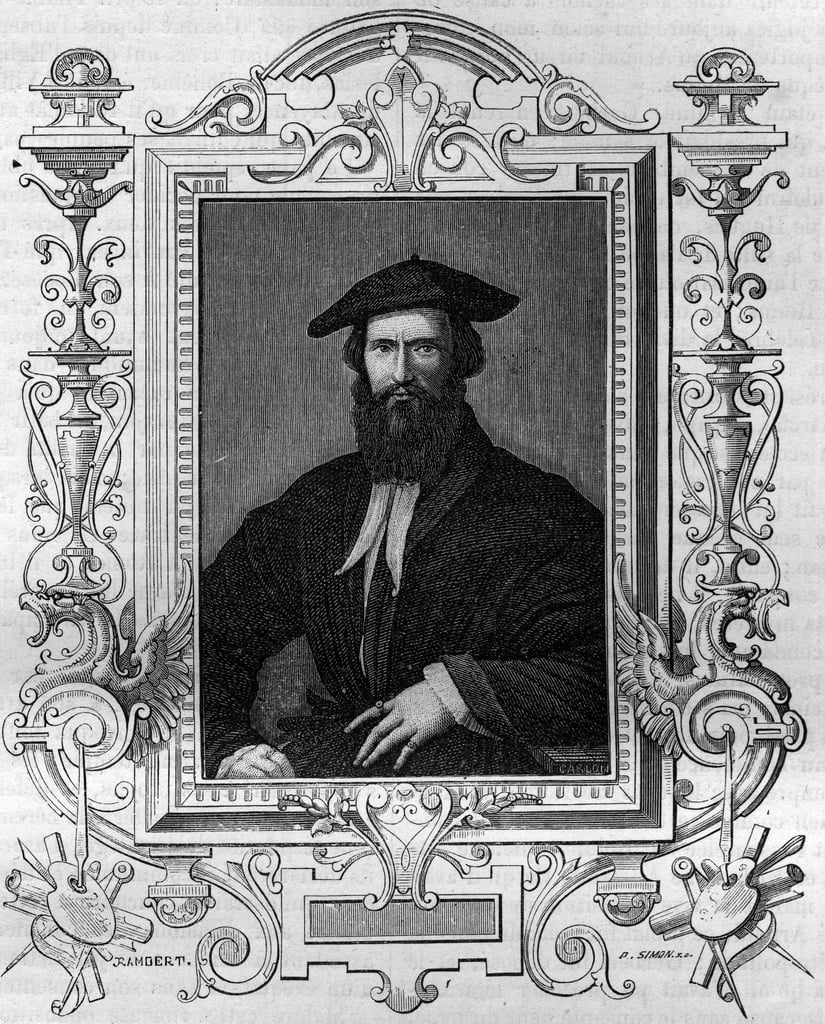
The Abacus and the Cross, a biography of learned scientist and teacher Gerbert of Aurillac, who ultimately became Pope Sylvester II, shows that the so-called “Dark Ages” weren’t so dark after all. In fact, there was a great deal of learning and trafficking in scientific knowledge going on. Gerbert was a renowned schoolmaster, scientist, and cleric of that era. He intrigued his way to the papacy and got appointed to it by Otto III, the Holy Roman Emperor, in the year 999.
Gerbert’s biography goes into the backstories behind those matters in the first paragraph. It tells of the House of Wisdom in Baghdad, which became a veritable research institute around the year 800. It saved for posterity works by such giants as Euclid, Ptolemy, Archimedes, and Aristotle. Much of the scientific know-how from Baghdad eventually made its way to Europe via al-Andalus, the Muslim stronghold in Spain.
Gerbert of Aurillac – the future Pope Sylvester II
One of the all-star mathematicians from the House of Wisdom was Muhammad ibn Musa al-Khwarizmi, who died in 850. He wrote On Indian Calculation, the world’s first book on Arabic numbers – the numbers that ran from 1 to 9 – and the place-value system of working with those numbers. That system originally came from India.
He also wrote The Compendious Book on Calculation by Completing and Balancing. In Arabic, that’s Kitabl al-muktasar fi hisab al-jabar wa’l-muqubalah. That was the first book of modern algebra – or the “al jabar” of the book’s title. But that’s not the last we hear of al-Khwarizmi.
Fast-forward to the career of Gerbert of Aurillac and beyond. Gerbert was an absolute whiz with the abacus, which was the personal computer of its day. For a couple of centuries, monastery schools used the abacus to teach arithmetic. Eventually they evolved from shuffling beads on a counting board to calculating with pen on parchment or with stylus on a wax tablet. They used as a guide a Latin translation of On Indian Calculation by al-Khwarizmi. The Latinized form of his name is “Algorismus.”
So it is that we get both algebra and algorithms from the math whiz of Baghdad.
But as with all evolutions in thought and methods, change was resisted. In 1299, the money changers of Florence, Italy, got into the act. They didn’t trust the Arabic numerals, so they banned the use of “letters of the abacus.” They decreed that no one “dare or allow that he or another write or let write in his account books or ledgers or in any part of it in which he writes debits and credits, anything that is written by means of or in letters of the abacus, but let him write it openly and full by way of letters.”
al-Khwarizmi – “Mr. Algorithm”
More than 1,100 years later, we in America still adhere to that proscription – or to some of it, anyway. As I learned when I was a banker-in-training, the Law of Negotiable Instruments states that such an instrument. i.e. a check, must have the amount written out in both numbers and words. If the sums differ, then the verbal one is the official amount.
As I write this, it’s the last day of February. Presidents are on everyone’s mind.
Last week, the country celebrated Presidents’ Day. It used to be Washington’s Birthday, celebrated on February 22. He was born on that date in 1732, but did you know that he actually was born on February 11, 1731? At the time of his birth, the Julian calendar was still in use, and would be for the first 20 years of his life. The Gregorian calendar was adopted in 1752, adding a year and 11 days, in order to more accurately calculate leap years.
Jefferson at work
Then there’s Lincoln’s Birthday on February 12. Abe deserves his own holiday, in my opinion, but he didn’t get one. I suppose that a Presidents’ Day, in which we honor both of these giants of American history, is a reasonable approach.
This year too, we’re going to be electing a president, come November. So we’re all thinking of that, and mostly with some trepidation. I don’t think I’m being too overtly political here when I say that most likely you agree with me and with most of America that none of the prospective candidates for the November ballot is in any way comparable to our Founding Fathers.
The Founders, after all, were brave, articulate, forthright men of sterling character. They put their lives on the line. And they were totally honest. All the time. Beginning with that felled cherry tree in George Washington’s back yard, they never told a lie. Always played it straight.
Er, not exactly. Not all the time. But sometimes, you gotta do what you gotta do, even if it means lying or exaggerating or dissembling. And history will reward you for it, if you play for the good guys. Consider these little-known backstories about two of our most revered founders, Thomas Jefferson and George Washington.
Take Jefferson and his writing of the Declaration of Independence. Without a doubt, that document is masterful and sublime – at least at the beginning, with the “We hold these truths to be self-evident, that all men are created equal, that they are endowed by their Creator with certain unalienable Rights, that among these are Life, Liberty and the pursuit of Happiness….” And so on.
But that first section ends with “The history of the present King of Great Britain is a history of repeated injuries and usurpations, all having in direct object the establishment of an absolute Tyranny over these States. To prove this, let Facts be submitted to a candid world.”
George III
Those “facts,” are anything but facts. Rather, they are 28 ad-hominem accusations against King George III, a king to whom on December 6, 1775, the Second Continental Congress had declared its allegiance while distancing itself from the real oppressors, the British Parliament: “Allegiance to Parliament? We never owed – we never owned it. Allegiance to our King? We have ever avowed it – our conduct has been ever consistent with it.”
So what happened, over the following six months? Did George III turn into a hateful monster? Did he desire to put into place a reign of tyranny and terror? Of course not. But Thomas Jefferson, probably the most facile wordsmith of all the leaders in the colonies, had to paint the King as just such a villain. He had to make it personal. The nuanced truth behind the issues be damned. And it worked.
Andrew Roberts’s fine book, “The Last King of America,” takes up the rhetorical excesses of the Declaration of Independence in great detail. He maintains that, because it was the King to whom Congress had recently declared allegiance, “unless it took the form of a personal attack, it would not answer the Loyalists’ argument that it was possible to become independent of Britain but remain in a political condominium of some sort with the Crown.”
In other words, they had to go negative – sound familiar? – and do it in a personal manner which also had to be untruthful in the extreme. The 28 charges “were kept deliberately unspecific regarding places and dates, for the obvious reason that most were untrue, since George had never sought to establish any kind of tyranny over America.”
Space doesn’t allow us to go into the detail that Roberts lays out. But here are just a few examples:
“He has kept among us, in times of peace, standing armies without the consent of our legislatures.” Well, yeah. The French and Indian War had concluded in 1763, and according to Roberts “a standing army on the western border had been the only way of protecting the colonies; the colonies had actually voted their thanks for what the British army had done.”
“He has transported us beyond the seas to be tried for pretended offences.” That never happened. A law allowing for this had been in place since the time on Henry VIII, and it was to deal with traitors and treasonable crimes. But George III never used it.
“He has transported large armies of foreign mercenaries to complete the works of death, desolation, and tyranny, already begun with circumstances of cruelty and perfidy scarcely paralleled in the most barbarous ages, and totally unworthy of the head of a civilized nation.” But Jefferson failed to mention that, fighting on America’s side, were Baron von Steuben, the Marquis de Lafayette, General Casimir Pulaski’s Legion, Bartholomew von Heer’s Provost Corps, and General Armand’s Independent Chasseurs.
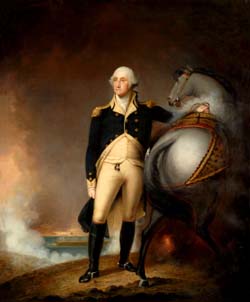
George Washington at Dorchester Heights, Boston
“He has excited domestic insurrections against us and has endeavoured to bring on the inhabitants of our frontiers the merciless Indian savages, whose known rule of warfare is an undistinguished destruction of all ages, sexes, and conditions.” Jefferson must have forgotten that Congress tried to outbid the British for the supports of the Indigenous Nations, and that Stockbridge Native Americans were members of the Massachusetts Militia, and that Massachusetts had a provincial alliance with the Mohawks.
“He has plundered our seas, ravaged our coasts, burnt our towns, and destroyed the lives of our people.” This points to the destruction of Norfolk, Virginia. Only problem was that Norfolk was primarily a Loyalist town and the burning was done by the Patriots, not by the Redcoats.
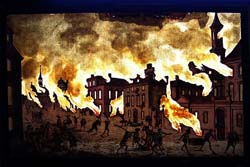
By now, I think you get the point. Thomas Jefferson never let the facts get in the way of a good story. And that final item lets us segue neatly into an adventure in plausible deniability by the father of our country, George Washington. He was almost certainly involved in and ultimately responsible for “The Great Fire of 1776” in New York. More than 500 buildings, including Trinity and Lutheran churches, were destroyed.
British soldiers had marched triumphantly into New York on September 15, 1776. Washington’s army had to flee, but six nights later, fire broke out in the city’s southern wharves. There were no bells left in the city of sound the alarm; Washington’s men had taken them all for cannon fodder. Strong winds had spread the blaze and turned much of the city, which was also teeming with Loyalists, into a waste land.
Washington had wanted to burn the city down before he fled, but Congress forbade it and told him to make a peaceful retreat. He complied grudgingly.
But two weeks later, writing to Lund Washington, a distant relative and manager of his Mount Vernon estate, GW stated, “Providence – or some good honest Fellow, has done more for us than we were disposed to do ourselves.”
The Great Fire of 1776
The rhetoric on the Patriots’ side claimed it was indeed some divine providence, or perhaps even British soldiers out plundering the city, that started the blaze. The Brits believed otherwise, pointing out that arsonists had to have done it because the blaze broke out in several places at once. They also pointed to Washington’s absconding with the fire bells as something that couldn’t have been a coincidence.
A subsequent investigation by the Brits couldn’t prove anything. But in June 1777, they caught Abraham Patten, a spy who was plotting to set afire the town of Brunswick, NJ. Before he was hanged as a spy, Patten admitted that he had helped start the New York fire. He didn’t name any accomplices, however. Shortly thereafter, Washington wrote to John Hancock and requested that they secure some funds for Patten’s widow.
No, we can’t expect our presidents to be totally honest all the time. We should know that by now. And they should have known it back in 1776. Some things never change.
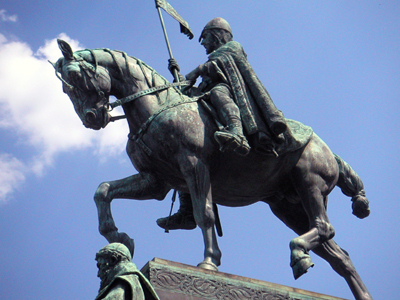
Wensceslas as armed knight on horseback in Prague’s Wenceslas Square.
Maybe you’ve even heard the joke about how he like his pizza cooked:
“Deep and crisp and even.”
But who was this guy, the patron saint of the Czech Republic, whose statue stands in Wenceslas Square in Prague? Legend holds that if the Czech homeland is ever threatened, the statue will come to life, summon the army that sleeps beneath Mount Blanik, ready to defend the homeland. Wenceslas will wield his sword, which is hidden under the stones of the Charles Bridge and is to be found by a child when peril from enemies looms for Prague.
Here’s the rest of the story. There was actually a Wenceslas – real name Václav the Good, as Wenceslas is the Latinized version. He wasn’t a king; rather, he was Duke of Bohemia. He apparently was a very nice guy. He was from a very dysfunctional family, and he died because of his opposition to slavery.
The Charles Bridge
Yes, slavery. It wasn’t invented in the American South. They used to have it all over Europe. And Prague was the main market for slaves who were being moved overland from central Europe to the west and south.
Wenceslas was against slavery; he would buy slaves himself and set them free. But he ticked off three rich guys who had made big money in the slave trade. Their names were Tira, Česta, and Hněvsa; all three of them stabbed him before his own brother, Boleslas, ran him through with a lance.
Boleslas, the bad guy, took over the realm and knew where his bread was buttered. He, nominally Christian like Wenceslas, let the slavers make their money. He reigned for more than 35 years.
It didn’t matter that Boleslas already ruled over half the country at the time of the killing. It wasn’t enough for him, and it was the money that mattered.
According to “Christendom” by historian Peter Heather, Christianity was spreading throughout Europe in those years, driven largely by the political decrees and conquests in the long reigns of Charlemagne and his son, Louis the Pious.
Václav and Boleslas’s father, Vratislaus I, was the Duke of Bohemia and a Christian. Their mother Drahomíra, though baptized before the marriage, was aligned with Bohemia’s pagans. As a child, Václav was raised largely by his Christian paternal grandmother, Ludmila — who was later canonized as a saint in her own right.
When Václav was about 13, his father died in battle and Ludmila became regent. But the regency did not last long. His mother Drahomíra had Ludmila killed, and she then tried to suppress Bohemia’s Christians.
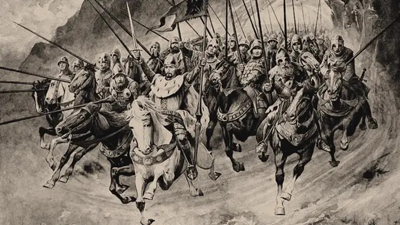
Wenceslas leads the Blanik Knights down the mountain to rescue Prague from its enemies.
When Václav became Duke of Bohemia himself at age 18 and came of age, he banished his mother and foiled her suppression plans by working to spread Christianity. He commissioned the building of several churches including part of what is now St. Vitus Cathedral in Prague. He also developed a reputation as a wise and compassionate ruler, known for his deeds of mercy.
But to try and avoid disputes, the country was split in two, and half was given to the younger brother, Boleslas. But Boleslas wanted the whole enchilada. He also remained the favored son of Drahomira. In September 935 he plotted with the slave-owning a group of noblemen to kill his brother. He did so by exploiting Wenceslas’s religious faith. He invited Václav to a church dedication on Sept. 27, 929. The next day, while Václav was on his way to prayer, Boleslas and his henchman attacked and killed him.
Only the good die young. Wenceslas was 22. On the base of his statue, the inscription reads “Saint Wenceslas, duke of the Czech land, prince of ours, do not let perish us nor our descendants.’”
I’m told by those who’ve visited that part of Europe that Prague is a particularly beautiful city and that the Charles Bridge is spectacular. That’s one place I’d love to visit. But I won’t be diving into the Vltava River and searching though the rocks for Wenceslas’s sword. As the legend tells us, that’s a job reserved for a child.









 Veteranscribe's Blog