Alissa Murphy Richardson: Hard Work Prepared Versatile BC Basketball Hall of Famer to Step in and Lead Team to Its First NCAA Tournament

October 5, 2015

AlissaHeadandShoulderswThe first big year, that breakthrough season, of the Cathy Inglese era of Boston College basketball was 1998-99, Cathy’s sixth as head coach. The team went 22-8, made it the NCAA Tournament for the first time ever, and knocked off both second-ranked UConn and tenth-ranked Notre Dame along the way. The reasons for the surge were many. But none was so important as the emergence of junior guard/forward Alissa Murphy.

As Inglese puts it, “If Alissa didn’t step up to the plate, it would have been a much different season. The freshman class stepped up too, but we had a leader in Alissa and everybody looked up to her.”

Murphy had been a solid contributor to the team for her first two seasons. She had averaged about 24 minutes and seven points per game. In mid-season of her junior year, Alissa’s roommate, co-captain, and future Hall of Famer Cal Bouchard went down with a torn ACL. She was gone for the year.

The team needed to replace both Bouchard’s scoring and her leadership. Inglese called on Alissa Murphy and showed why the judgment call she’d made in recruiting the San Diego native three years before was spot-on.

Alissa was more than ready for the challenge. She led the team in scoring with 16 points per game. She scored in double figures in all 30 contests. She led the team in three-point shots. She led the big East and was third in the nation in free throw percentage. She bagged a career-high 32 points in a monumental 78-66 win over Connecticut. The Big East named her its Most Improved Player.

“Alissa wasn’t a prize recruit, but I liked when she came out East to go to a camp. She had a scorer’s mentality, and you can’t teach that,“ said Inglese. “I could see that she loved the game and she brought the intangibles. She wasn’t overly athletic, but she had that mindset and a nose for the basket.

Alissa Murphy for Women's Basketball ad“She heeded our advice and made her shot release quicker. And she went above and beyond with what she did in the weight room and watching what she ate. She transformed herself from a medium build to someone who was strong and aggressive.”

Murphy had always been a diligent worker. But the summer between her sophomore and junior years was when she molded herself into a scoring machine. Every day she worked on her shooting technique with assistant coach Kelly Cole.

“She overhauled my shooting motion. I started at three feet away, then four, then five. She’d rebound for me and I’d shoot until I got the form. I locked it into muscle memory, shooting the same was every time, until it was as smooth and as quick as it could be. It wasn’t until the end of the summer that I made out to the three-point line,” said Alissa.

Becky Gottstein Holden, another who’s already made the BC Hall of Fame, was in that year’s freshman class that also included Nicole Conway, Brianne Stepherson and Kim Mackie. She gravitated toward Murphy, remarking,

“You have to re-learn how to work hard when you get to college. And with Alissa, it was what she did outside of the game, in practice, taking extra shots, making sure she was in great shape. There was always that extra piece to be sure that she was a strong competitor.”

Wherever the Eagles needed her, Murphy would play. She could be the point guard, the shooting guard, or the small forward. She was also aggressive under the boards and a rugged rebounder, a trait she’d developed back in California when she played mostly on boys’ teams until she got to high school.

Alissa is from a family of athletes. Her brother Michael played rugby in college and for a U.S. national team. Her brother Sean played college soccer. She was into every sport as a kid, but she especially loved basketball. There were no girls’ leagues, so she’d go to the next town, Mira Mesa, and hang out at the recreation center with the guys.

By the time she got to Scripps Ranch High School in San Diego, Alissa was almost college material already. She started for the varsity as a freshman. She led the state of California in scoring as a sophomore, but she’d always wanted to travel east for school. One of the summer development camps she attended just happened to be at Boston College. Mutual interest quickly blossomed, and Alissa became an Eagle.

“I don’t think BC had great aspirations for me,” Alissa said. “I wasn’t a heralded recruit, and San Diego is not really known for basketball. Coach Inglese was always on me. I didn’t like it at the time, but she’s the reason I was successful She was always asking me for more.”

Her senior year was almost as successful as junior year, for both her and the team. She averaged 13.5 points, was second in team scoring, and led the big East in free throw percentage. The Eagles finished 26-9 and again made it to the second round of the NCAAs.

Alissa finished her career ranked fifth all-time on BC’s scoring list with 1,361 points. She became the 12th BC player to score 1,000 points and the sixth to have 1,000 points and 500 rebounds. At the time of her graduation she ranked in among BC’s top six in rebounds, three-pointers, free throws made and attempted, and steals. She also holds the Boston College record for most points in an NCAA Tournament game with 26.

After graduating, Alissa hit the road and played basketball in five countries over five years – Israel, Sweden, France, the UK, and New Zealand. While in Christchurch, New Zealand, she got engaged. Her now-husband Adam, whom she’d met at a barbecue, flew all the way down there to pop the question.

Adam and Alissa live in Poway, California with son Adam, 7, and daughter, Mia, 5. Alissa teaches physical education at Adam and Mia’s elementary school.

The Coachable Mike Mottau: A Boston College Hockey Hall of Famer

October 5, 2015
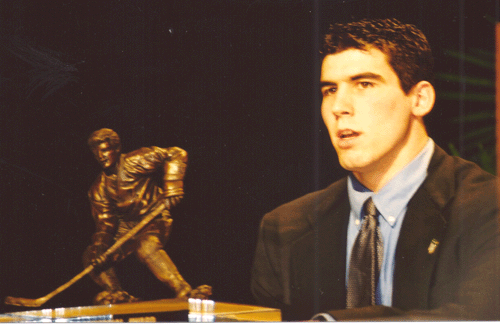
Mike accepts the Hobey Baker Award

Mike accepts the Hobey Baker Award

Anyone who questions the value of coaching to a hockey player’s career ought to talk to Mike Mottau.

The Avon, Massachusetts native is the all-time assist leader at Boston College, totaling 130 for his career. His 157 points in four seasons, most ever for an Eagle defenseman, place him 21st on BC’s all-time scoring parade. He holds the Hockey East career record for assists with 97. That makes him an “offensive defenseman,” by any measure.

Or does it? Mike was also voted the league’s best defensive defenseman in his senior season. He won the Hobey Baker Award as the nation’s top college player. He took home the both the Walter Brown Award as New England’s best college player and first-team All-America honors for the second time.

If ever there was an all-around player who excelled at both aspects of the game, aspects which are frequently mutually exclusive, it was Mike Mottau. He followed up his college career with 14 professional seasons than included seven in the National Hockey League.

When asked how it all happened, Mike is quick to credit his coaches and mentors, from youth up through the NHL. And even before he received formal coaching, there was brother Rob, five years Mike’s senior, who’d played at Division One Illinois-Chicago.

A familiar scene from Mike's BC career

A familiar scene from Mike’s BC career

“Rob let me play pond hockey and street hockey with him and his friends when I was five or so. I had to elevate my game, even at an early age,” said Mike.

When Mike was about seven, youth coach Vin Magno introduced the concepts that started him along the road to lifelong development of his Hockey IQ, as he puts it. He learned, among many other things, how to recognize a forechecking pattern, and why moving the puck to a breaking teammate was better than trying to carry it up ice himself.

“Those ideas and concepts were foreign to me at that age, but when I got to Thayer Academy I was able to make the varsity as a freshman because my thought process about the game was so accelerated,” stated Mottau.

Thayer coaches Jack Foley and Kevin Sullivan used advanced, European-style drills, stressing puck movement and protection. They had defensemen play as forwards in practice, and vice versa, to expose their players to every nuance of the game.

”Looking back on it, it was the influence that those guys had on my hockey IQ that allowed me to eventually play in the NHL,” says Mike.

When college approached, Mike seemed destined to play at Boston University. The Terriers were riding high, and Jack Parker was interested. But before committing, Mottau decided to look around. His former Thayer teammates Dave Wainwright and Dave Hymovitz showed him the campus.

Mixing it up in the NHL

Mixing it up in the NHL

Mike had played against Marty Reasoner, who was already in board, in national junior competition. He also knew Jeff Farkas, who had committed to BC earlier. “I could see the upside at BC. And my parents let me do my own due diligence and make the decision without any outside pressure. Best decision I ever made,” he says.

Mottau became a regular right away, as part of Jerry York’s youth movement. It wasn’t easy at first. The speed of the game, and an inability to recognize what was going on around him brought growing pains.

“I was fortunate that the coaching staff would keep putting me out there after I had made mistakes. I can remember especially a couple of big turnovers in bad spots. They could have easily benched me, but they didn’t. They had the confidence I’d pull through it.”

Mike scored 38 points as a freshman when the team went 15-19-4. Sophomore season was the breakout one. He led the nation’s defensemen in scoring with 49 points. The 25-9-5 team made it all the way to the national title game and lost a heartbreaker, 3-2 in overtime to Michigan.

With all of his point production over the years, Mottau is prouder of what he did on the defensive side. On being named Hockey East’s top defender, he states,

“D is very personal. You don’t want to get beat. Defense wins more games than putting up the points. It was nice to get some points on the power play, but I carved out a niche by still playing well defensively.”

BC Coach Jerry York and Mike at the dedication of a sign honoring Mike in his home town of Avon, Massachusetts.

BC Coach Jerry York and Mike at the dedication of a sign honoring Mike in his home town of Avon, Massachusetts.

Continued perceptive coaching and heady defensive play led to Mike’s lengthy professional career. Drafted by the Rangers, he played mostly in the minors for seven years. It was some contrarian advice from minor league coach John Paddock put Mike on the path to the National Hockey League.

“Most people told me I had to get bigger and stronger, because that was the way the NHL was headed. John told me that instead I should be leaner and quicker, so that I could get to the spot sooner and use my head. I’d never been told that before, but that’s what I’m good at. The next year, I started doing better as a pro.”

A training camp injury to another defender brought Mike up to the New Jersey Devils for four exhibition games before the 2007 season. He made the most of that opportunity won a full time spot. Coach Jacques Lemaire recognized and appreciated his heady play, and rewarded Mike with more than 20 minutes a game of ice time.

“Lemaire was one of the best coaches I ever had. He ‘got it’ in a different way from many pro coaches. He valued good decision-making,” said Mottau.

Mike retired from the game at age 36, after 14 professional seasons and 321 games with six different teams. He had a wife and four young kids by that time. It was time to hang them up after the Florida Panthers offered him a two-way contract.

Mike and his wife Courtney, who met in freshman year at Thayer, have four children: son Ryan, age 10, and daughters Rowan, 8, Madelyn, 7, and Brooke, 5. Mike scouts part-time for the Chicago Black Hawks and works in wealth management with Morgan Stanley.

Book Review and Reflection: “Plato at the Googleplex”

August 10, 2015
The Subject, the Book, and the Author

The Subject, the Book, and the Author

A flame-haired friend who had seen my review of “Red: A History of the Redhead” pinged me to ask what I was reading now. When I told her “Plato at the Googleplex,” her reply was understandable: “What???”

Guess I can’t blame her. This book, by Rebecca Newberger Goldstein, isn’t your usual summer reading fare. I also told my friend that I was catching up to my kids. One of them is a fan of Plato. Another majored in philosophy…and she once aced a paper by incorporating the deep philosophical musings from a column by Carrie Bradshaw in “Sex and the City.”

I heard Professor Goldstein speak at an authors’ night at BPL several months ago. I bought the book then and put it aside. It’s summer, and the back porch beckoned. It was now or never. So what the hell. In I plunged.

Issues and Questions: A Sample

Columnist Carrie Bradshaw:

Columnist Carrie Bradshaw: “Is it possible to forgive, if you can’t forget?”

This book’s subtitle is “Why Philosophy Won’t Go Away.” In the opening chapter, Goldstein tells why:

“When we wonder how we teach the difference between right and wrong to our children, whether it is through storytelling or reason or threats or love, then there is Plato.

“When we argue over whether ethical truths are inextricably tied to religious truths, then there is Plato.

“When we worry about the susceptibility of voters to demagoguery and the dangers of mixing entertainment values with politics, then there is Plato.

“When we argue over what the role of the state is, whether it is there to perfect us or protect us, then there is Plato.

“When we ponder the nature of romantic love and whether there is something redemptive or rather wasteful about the amount of attention and energy we’re prepared to sacrifice to it, then there is Plato.

And many more intriguing issues that good friends like to ponder together. Okay, so perhaps philosophy doesn’t go away.

Just Read It, Man. You Can Handle It.

I plunged in despite my misgivings about having paid very little attention in the required philosophy courses in college. Sure, I remember some provocative dialogues in freshman year when the professor told us that the philosophy of baseball was to “Kill the Ball.”

I also remember the Hegelian Dialectic and its “Thesis-Antithesis-Synthesis.” Why? Football. The Wishbone Offense (thesis) was unstoppable in those days. Then coaching staffs figured out how to defend against it (antithesis). So teams revamped their offenses to include more passing again (synthesis, which became the new thesis). And pass defenses evolved to stop them (the new antithesis). And so on, ad infinitum.

So maybe I wasn’t all that unprepared after all. As I read along, memories of other types of preparation for these mental gymnastics came wafting back over the decades, preparation that I didn’t appreciate at the time. When I was an adolescent, I used to lie on my back under the stars and wondering what if I didn’t exist…what if this world didn’t exist. What would there be? Such musings can prepare one for Plato’s “ability of the soul to soar up to heaven to behold beauty, wisdom, goodness and the like…”

Late in teenage years, I had some deep and often discomfiting religious and metaphysical discussions with a friend and grade-school classmate whose sophistication and worldly wisdom were downright intimidating. I had always gotten good marks in school; but with her questions and rejoinders, she’d always win the arguments. I was the guy in Plato’s Cave. She dragged reluctant me upwards towards the sunlight.

So even though I was more ready to read this book than I thought, it’s not an easy one to get through. It is slow going for a lay person. At least it was for me. I had to re-read passages two or three times to figure out what was going on. But I think it was worth it.

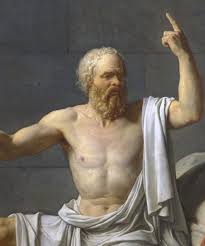
Socrates

Socrates

The book is as much about Socrates as it is about Plato. Socrates is Plato’s philosophical godfather. Most of what Plato eventually wrote consisted of dialogues in which Socrates is the main character.In this book, we observe several discussions and conversations involving Plato and various characters who are familiar to us today.

In the eponymous chapter, Plato goes to an authors’ day at Google headquarters and strikes up a spirited discussion with an engineer. Along the way we learn how Google’s algorithms assemble and impose order on all that information out there. The pair of them go at it on information versus knowledge, one of philosophy’s recurring themes.

In another chapter, Plato takes part in a panel discussion on raising children. His counterparts are a Tiger Mom and a touchy-feely, self-esteem promoting child psychologist. He also goes on a radio show with a bombastic, never-wrong host. (Take your pick about whom I’m talking here!)

Then he serves as a consultant to Margo Howard, daughter of Ann Landers, who dispenses moral, ethical, and sexual advice in her column. He debates the nature of brain functioning before undergoing a Magnetic Resonance Imaging session inside the noisy MRI tunnel.

Exceptionalism Athenian and American

I’d say that the author does a good job of making the life and works of a man who lived about 2,400 years ago relevant to today. Here’s another way she does that – in raising the topic of exceptionalism. Want to start a philosophical food fight? Speak glowingly of “American Exceptionalism.” You’ll come close to revisiting the Athens of Socrates’ day.

Goldstein spends a good deal of time telling us why the Athenians condemned Socrates to death. Supposedly, he corrupted the youth of the city. The real reason was that he pissed off the guys in the power structure. He showed them how they were in no way exceptional – at least not in the way they esteemed themselves.

In her chapter on Socrates’ death and in several other places, Goldstein speaks of “arete,” which can be interpreted as excellence or virtue. She also talks of “kleos,” which is glory or fame. These were high on the priority list for Athenians, many of whom thought they had those qualities, especially arete, simply because they lived in Athens. They couldn’t countenance Socrates and his maddening questions and ripostes. He easily made fools out of his interlocutors, and he further confounded them with his insistence that the unexamined life is not a life worth living. And so they did away with him.

Those who are not receptive to the nature of American exceptionalism think the same way as those tunnel-visioned men of Athens. It’s not that we’re better than anyone else, as people, simply because we happen to live in America.

For most of recorded history, the vast majority of humanity has lived under tyranny and oppression. In America, and in other parts of the Anglosphere, it’s different. We do live in an exceptional system. It’s not jingoistic yahoo-talk to celebrate and appreciate it. But you’d never know that if you say “American exceptionalism” at a cocktail party.

So What About Philosophy and This Plato Guy? Summing It Up.

I do agree that we don’t so much study philosophy as experience it, on our own or one-on-one. That’s what I did when I lay under the stars and when I sparred with my brilliant friend from grammar school. That’s what Socrates did every day on the streets of Athens. This book can serve as either an introduction or a refresher to that process.

Professor Goldstein puts Plato in context when she quotes the philosopher Alfred North Whitehead, who wrote, “The safest general characterization of the European philosophical tradition is that it consists of a series of footnotes to Plato.” I’ll take her at her word there.

I also don’t think that I am giving away the store to quote her own opinions of Plato. She writes: “My Plato is an impassioned mathematician, a wary poet, an exacting ethicist, a reluctant political theorist. He is, above all, a man keenly aware of the way that assumptions and biases slip into our viewpoints and go unnoticed, and he devised a field devoted to trying to expose these assumptions and biases and to do away with any conflicts with commitments we must make in order to render the world and our lives maximally coherent…

“Above all, my Plato is a philosopher who teaches us that we should never rest assured that our view, no matter how well argued and reasoned, amounts to the final word on any matter. And that includes our view of Plato.”

“Go Set a Watchman” – Book Review & Reflection

July 17, 2015

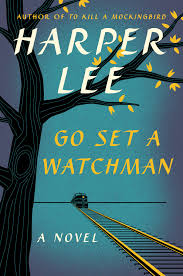
WatchmanThe prophet Isaiah, foretelling the harsh judgment of God against both the sinful people of Israel and of the surrounding kingdoms, writes (21:6) “For thus has the Lord said to me, ‘Go, set a watchman. Let him declare what he sees.”

The watchman sees chariots, and horsemen, and a lion, and more chariots approaching. Destruction and divine vengeance are upon the land. “Babylon is fallen, is fallen. And all the carved images of her gods, He has burned to the ground.”

Harper Lee’s long-anticipated second novel, Go Set a Watchman, tells also of destroyed images and harsh judgment. The biggest image, the most revered icon, is that of Atticus Finch, father of 26-year-old protagonist Jean Louise “Scout” Finch, the tomboy heroine of To Kill a Mockingbird. The harsh judgment is hers, delivered on her father, her town, and in her bewildered anguish, on herself as well.

Scout is not the only one who is disillusioned. All of us who grew up with Ms Lee’s first book have always considered Atticus Finch one of American literature’s greatest heroes. He was noble, and pure, and motivated by holy charity in his search for justice. Well, not so fast. We, like Scout, find that it’s a little more complicated than we thought.

In her climactic confrontation with Atticus, the shocked and appalled Jean Louise was allowed to “break her icons, one by one,” as her uncle, the eccentric but learned and worldly-wise Dr. Jack Finch, subsequently explains to her.

Author Harper Lee

Author Harper Lee

Jean Louise, home from New York for her annual two-week vacation, had seen her 72-year-old father taking part in a local council meeting in Maycomb, Alabama. Her icons are not the only ones that get broken; as Atticus comes down from his pedestal, one of ours does too.

That council had been formed to resist the workings of the NAACP, the Northern do-gooders, the Supreme Court, and all other external forces that had gathered to end the century of Southern Democrats’ resistance to the full emancipation of their former slaves. Repulsive, rodentine characters take the stage and spew racist, reactionary invective. Jean Louise slips into the building and watches from the “colored balcony.”

Though Atticus doesn’t engage in such speechmaking, he’s up on stage with them. So too is Henry Clinton, his young law associate who wants to marry Jean Louise. She can’t deal with it. She yearns for her own personal watchman, to help her declare what she sees.

I don’t think I’m giving away too much by reporting that Uncle Jack tells her that he, and not Atticus, had to be the one telling her what had happened during the daughter-father blowout. She would not have listened to her father, who had been like a god to her and “Our gods are remote from us, Jean Louise. They must never descend to human level,” as Jack puts it.

Uncle Jack, and Harper Lee, speak to all of us when he says, “…every man’s island, Jean Louise, every man’s watchman, is his conscience. There’s no such thing as a collective conscious…Remember this also: it’s always easy to look back and see what we were yesterday, ten years ago. It is hard to see what we are. If you can master that trick, you’ll get along.”

The book deals with the most serious of themes, but it’s also loaded with humorous asides and biting insights into human nature. Lee introduces the watchman quote during a church service that Jean Louise dutifully attended but “slept through with her eyes open.”

Of Mr. Stone, the youngish preacher who delivered the quote, she says, “There was nothing whatever that was wrong with Mr. Stone, except that he possessed all the necessary qualifications for a certified public accountant: he did not like people, he was quick with numbers, he had no sense of humor, and he was butt-headed.”

Mr. Stone had been dispatched to Maycomb by the Methodist Church Conference. Uncle Jack sums him up with “We asked for bread and they gave us a Stone.”

Jean Louise also sits through a “Coffee” run by her Aunt Alexandra. She endures the inane chatter of the ladies – the “magpies” who “wore gloves and hats, and smelled to high heaven of attars, perfumes, eaus, and bath powder. Their makeup would have put an Egyptian draftsman to shame.”

The subgroups of those Southern belles included the Newlyweds, the Diaper Set, the Light Brigade, and the Perennial Hopefuls. Reading Lee’s acerbic descriptions made me think of the beehive-coiffed and bigoted females of that terrific movie, The Help. Jean Louise would get along famously with Emma Stone’s heroine, Skeeter Phelan. Alison Janney’s character, Charlotte Phelan, would be instant simpatico with Uncle Jack.

Along the way there are several flashbacks to Scout’s childhood, to adventures and misadventures with her now-deceased brother Jem and their friend Dill, and to the trial of the falsely-accused Tom Robinson at the heart of Mockingbird.

Go Set a Watchman was written by Lee in the mid-1950s, which was right around the time of the Brown vs. Board of Education decision. Governor Orval Faubus may or may not have already fomented the 1957 crisis at Little Rock Central High School, which prompted Republican president Dwight Eisenhower to send in the 101st Airborne Division to restore order.

James Meredith, Bull Connor and Selma, the Freedom Riders, Strom Thurmond and the Dixiecrats defiantly raising the Confederate Flag in South Carolina – all these lay in the future. But Harper Lee saw what was happening. And like Isaiah’s watchman, she saw what was coming. She’s written another wonderful book. I’m only sorry she waited so long to let it be published, and I’m sorry that during her long life she didn’t see fit to write more of them.

Go Set a Watchman will probably never be as prominent in the canon of American literature, or as beloved, as To Kill a Mockingbird. But no matter. It’s a superb book. If you liked Lee’s first one, I think you’ll like the second – and may appreciate it even more.

“Red: A History of the Redhead” – Book Review and Reflection

June 29, 2015

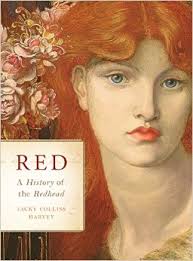
red - the bookThose who know me won’t be surprised that when I saw a review of Red: A History of the Redhead by Jacky Colliss Harvey, I ordered it immediately and devoured it as soon as it arrived. I wasn’t disappointed – but then again, what guy would ever be disappointed when the topic is redheads?

Harvey’s academic background in English and Art History as well as her work in museum publishing make her a natural to do a book like this. But she obviously worked very hard and researched energetically in other disciplines as well – biology, genetics, chemistry, physiology and business among them.

Early in the book, Harvey explains the quirky MC1R gene that produces a substance called eumelanin, which makes for dark skin, eyes and hair. Sometimes, however, the gene produces another substance called red or yellow phaeomelanin. It also teams up with another gene, HCL2, to bring forth all sorts of variants in hair, eye, and skin color.

Biology dictates that redheads don’t do well in strong sun and tropical climes. They’re more suited to higher latitudes like Scotland and Scandinavia. Their pale skin does a good job of processing Vitamin D from sunlight, and there’s less sunlight up North.

Redheads also smell different. The genes make their skin more acidic than that of blondes and brunettes, and it reacts differently to the chemicals of their perfume. So that’s why. I always thought it was nothing but pheromones – with which they are obviously abundantly blessed as well. Yikes. As if they actually need any help in that area. But moving on…

The parts I especially liked had to do with history: political, art, and cultural. If I want to understand why things are the way they are now, reading up on history generally provides solid clues. So does re-reading some of the books we had to get through in high school but never really appreciated.

Harvey unearths many of those clues. She goes back to Biblical legend as well as to our fourth-grade history and the mythology of ancient Greece and Rome to show how redheads have captivated and intrigued the rest of humanity. Seems it’s always been this way.

A fresco unearthed in the home of M. Fabius Rufus – whose name means “red” – in Pompeii depicted Cleopatra with red hair. The author surmises that the painting is probably one of Cleopatra, anyway, and that it’s not very likely that she did have red hair. But the point is that she acted like a redhead, and so was painted that way.

Cleopatra was a formidable and powerful woman, Mark Antony’s lover, and thought to be typical of the redhead stereotype that has stayed with us: a “flame-haired seductress, exotic, sensual, impulsive, passionate.”

In 403 A.D. Saint Jerome, the guy who translated the Bible, wrote to a woman about her daughter, “do not dye her hair red, and thereby presage her for the fires of hell.”

Lilith, the legendary lady of creation who thought herself Adam’s equal, unlike Eve, “refuses to lie beneath.” She rebelled and left him to live in the wilderness, and she is frequently depicted with red hair by religious artists.

The resurrected Jesus meets with his redhead disciple Mary Magdelene.

The resurrected Jesus meets with his redhead disciple Mary Magdelene.

Then there’s Mary Magdalene, perhaps my favorite Biblical character. I’ve come to believe that she was the truly indispensable disciple of Jesus. Even the Scriptures back this up. She was the first one to whom Jesus revealed himself after his resurrection. But she has gotten a raw deal from the guys who ran the Church in later centuries. They rewrote her story and made her a bad girl.

Pope Gregory (the Chant guy), in 591, declared that the “woman cured of seven devils” in Mark’s gospel was actually Magdalene. She took her unguent, “previously used to perfume her flesh in forbidden acts,” to wash Jesus’ feet. She had once “displayed her hair to set off her face,” but now that hair is what dried her tears of repentance. And what color is that hair in devotional paintings? Why, red, of course.

Jacobus de Verigine, an early author who compiled the lives of saints, writes that Magdalene was wealthy and “shone in beauty.” Moreover, her sins were her pleasure in looks, and riches, and in “giving her body to ‘delight’ rather than straightforward prostitution.” In other words, she loved it. And so she flouted all of the taboos of the medieval Christian Church. How could the popes and bishops possibly approve of Magdalene’s closeness to Jesus? They didn’t, and so they smeared her – before they also admitted that she repented.

The painting “Noli Me Tangere” (“Don’t Touch Me”) by Martin Schongauer shows a strawberry blonde Magdalene with the risen Jesus on Easter morning. And there was another redhead present at the crucifixion, as shown in “Calvary” by de Messina. The unrepentant “bad thief” is also a redhead.

Red-headed Judas leads the soldiers to Jesus in Gethsemane.

Red-headed Judas leads the soldiers to Jesus in Gethsemane.

Going back to the night before the crucifixion, “The Agony in the Garden” painting in the Bavarian National Museum shows a red-headed Judas leading the soldiers towards Jesus. It is but a short step from there to one of the fueling elements of anti-Semitism: the treacherous, redheaded Jew.

Freckles were called “Judasdreck” in medieval Germany. Shylock, the Jewish lawyer in “the Merchant of Venice,” is usually depicted as a redhead. Fagin in Dickens’s “Oliver Twist” is “a very old, shriveled Jew, whose villainous-looking and repulsive face was obscured by a quantity of red matted hair.”

Those sexual taboos and those attitudes toward red hair didn’t die out in the Middle Ages, either. They remained around for a long, long time, and they haven’t entirely disappeared.

There’s much more than religiously-oriented historical discussion in Harvey’s book. But religion has been so powerful in shaping humanity’s behaviors, I thought it worth delving into here. And next time you’re grappling with some thorny issue and ask “What would Jesus do?” think of “Noli Me Tangere.” Jesus would pick the redhead.

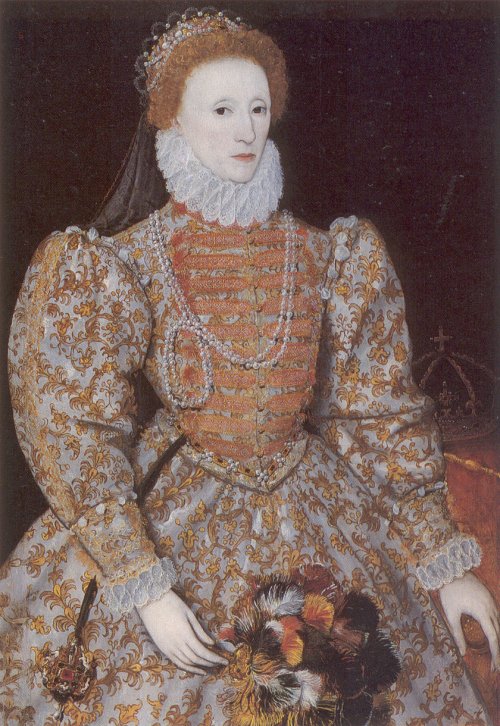
Queen Elizabeth I portrait in Britain's National Gallery.

Queen Elizabeth I portrait in Britain’s National Gallery.

Other famous and infamous redheads, real and fictional? How about Henry VIII and his daughter, Queen Elizabeth I? She supposedly had eighty wigs, and she liked to be seen in them to play up the connection with her father, who had declared her illegitimate.

The lists go on and, as we’d expect, pay a visit to Hollywood and its red-haired goddesses: Clara Bow, Rita Hayworth, Lucille Ball, and their many successors in movies. And in cartoons: The Little Mermaid, Jessica Rabbit, and Red Hot Riding Hood.

Millions of women want to be like them, and millions of men cheer that development. Red hair tint outsells all other hues. In 1970, L’Oreal sold only two shades of red hair coloring. By 1989, they were up to 16 shades, while Redken had 29 shades of red and Clairol had 43.

Lucille Ball once said, “Once in his life every man is entitled to fall madly in love with a gorgeous redhead.” For once, she’s not got any ‘splainin’ to do.

Lucille Ball

Lucille Ball

The author also quotes a firm named Upstream Analysis, which points out that up to a third of all TV advertising features a redheaded character, but redheads make up only somewhere between 2 and 6 percent of the population. So we all pay attention to redheads. They sell.

In the book’s last chapter, where she tells of her visit to Redhead Days in Breda, Holland, Harvey says that “gingerism” endures as one of humanity’s prejudices. I don’t watch “South Park,” so I was unaware of its episode on “Kick a Ginger Day.” OK, agree, kids can be cruel. They will pick on people who are different from them, and redheads are definitely different.

But savvy redheads are battling back against bullies and turning negative stereotypes hip and cool. A Canadian comedian responded to “South Park” by co-opting the Canada Dry logo and setting up “Kiss a Ginger Day.” Good for him. Sign me up.

Redhead Days brought together 6,000 of them from all over the world. I have to put that event on my bucket list.

I’d also love to take the redheaded Jacky Colliss Harvey to lunch, just to learn more about her research and her other work in museum publishing. She has an easy, enjoyable writing style, and she’s done a most interesting book on one of my favorite subjects.

The Remarkable Career of Maksymilian Faktorowicz

June 27, 2015
Rita Hayworth as Gilda.

Rita Hayworth as Gilda.
“Men go to bed with Gilda, but they wake up with me.”

He was so renowned and prized as the hairdresser to the Russian court that he did most of his work under military guard. But when he married secretly without first securing Czar Nicholas II’s permission, he had to flee the country. Faktorowicz used his own makeup to fake symptoms of jaundice in order to leave Moscow for America in 1902.

His early times in America were tough. A business partner defrauded him of most of his savings at the Louisiana World’s fair. His half-brother became known as “Jake the barber,” a notorious Prohibition gangster who once, literally, broke the bank at Monte Carlo.

But Faktorowicz was a resilient sort. He headed west, and in 1908 he set himself up in Hollywood with a business that hired out wigs to film extras. Then he did the extras’ makeup. Then he graduated doing makeup for the stars. Then he invented the term “makeup.”

In 1935, he was so popular and so much in demand that he opened his own “Makeup Studio.” It had color-coded rooms for his clients: one with salon-peach walls for “brownettes,” one with powder-blue walls for blondes, and a mint-green one for redheads. “Whenever there is red in the composition of the hair,” he said, “green will be becoming.”

Faktorowiczs’s many successes included the heart-shaped lips of Clara Bow, Hollywood’s “It Girl” and perhaps its first

Maksymilian Faktorowicz at work with his

Maksymilian Faktorowicz at work with his “beauty micrometer,” which detected tiny flaws in actor’s faces. Without a treatment of some sort, these flaws would show up on the big screen. The solution? Pancake makeup.

famous redhead; the platinum blonde look of Jean Harlow, which she maintained with a weekly wash of ammonia, Clorox, and Lux soap flakes; and the glorious copper curls of Rita Hayworth.

clara bow

Clara Bow, Hollywood’s “It Girl” (colorized).

Hayworth is the star that most frequently comes to mind when you say “Hollywood” and “redhead” together, even though her films were shot in monochrome rather than in color. She drove men wild with desire in many roles including that of the seductress and society girl Gilda, on stage and in a 1946 film. Her complaint about that role? She once sighed, “Men go to bed with Gilda, but they wake up with me.”

If, in my next life, I come back as Maksymilian Faktorowicz, I’ll take that as God’s message that I was a good boy in this life, and that I deserve a nice reward.

And you know who Maksymilian Faktorowicz is. We’ve all used his products.

Max Factor.

The Lord and the Lip: Lessons in Life from Bible and Ballfield

May 11, 2015

Next time you’re debating some weighty matter of ethics or morals – and for heaven’s sake, let’s hope it’s weightier than Deflategate – and your friend asks you, “What would Jesus do?” here’s your answer:

Jesus and Leo“Jesus? He’d cheer for Leo Durocher!

Yes, Jesus was one of the all-time nice guys of human history. He ended up on a cross. Leo “The Lip” Durocher is best remembered for “Nice guys finish last,” something he never really said.

But even though Leo got it essentially right about Jesus, that’s not why the man from Galilee would have been a Durocher fan. No, it’s because Leo Durocher, ferocious good-field, no-hit shortstop and one of baseball’s best managers ever, remembered one of Jesus’ favorite teachings. Leo Durocher said “thank you.”

Of all the great players recruited to the old New York Yankees by Paul Krichell, baseball’s best talent scout of all time, Leo Durocher was the only one who ever thanked Krichell for believing in him and bringing him into professional baseball.

Krichell traveled the land in search of players for the Yankees. Jesus traveled the land, preaching to believers and doing good things. In Luke 17, he comes to a village where ten lepers call to him from a distance, begging his mercy. He tells the whole crew to go and show themselves to the priests, and they all get cured of their disease.

Only one of them, seeing he was made whole again, came back to Jesus, fell at his feet, and thanked him. Whereupon Jesus says “Were not ten cleansed? Where are the other nine?”

I don’t know a thing about Leo Durocher’s religion, but he must have heard that story and taken it to heart.

“Scouting for the Yankees,” a wonderful profile of Krichell by W.C. Heinz, tells the story of Krichell’s fabled 37-year career. Between 1920 and 1957, he signed more than 200 baseball players. They included Lou Gehrig, Hank Greenberg, Phil Rizzuto, Tony Lazzeri, Whitey Ford – Hall of Famers all.

He also went to see a minor league team play in Hartford one day. He’d seen the shortstop’s name on file in the Yankee’s head office, and he remembered the key observation: “Can’t hit.” But he saw something he liked, and he signed that shortstop anyway. It was a kid named Durocher.

Leo went on to a Hall of Fame career too, as both a player and manager. He played shortstop for the Yankees’ Murderers’ Row and was captain of the Cardinals’ Gashouse Gang. As manager, he seemed to specialize in umpire-baiting tantrums and ejections from games. But he brought the Dodgers, “the Brooklyn Bums,” to their first pennant.

After sitting out 1947, suspended by commissioner Happy Chandler for his many “unpleasant incidents,” as well as his affinity for wise guys like mobster Bugsy Siegel and a tabloid affair with actress Laraine Day, he took over the crosstown rival Giants. The year before that, in talking about the Giants, he said “The nice guys are all over there, in seventh place.”

Many years later, in his autobiography, Durocher recalled his assessment of that Giants team as “Take a look at them. All nice guys. They’ll finish last. Nice guys. Finish last.” Sportswriters and broadcasters massaged those words down through the years until they became “Nice guys finish last,” which Leo never actually stated.

Durocher quickly changed the Giants and their losing ways. He was manager when they game from 13 and a half games out to win the 1951 pennant on Bobby Thomson’s home run. He managed the team to the World Series win over the Indians in 1954. He also managed the Cubs and Astros. In 24 years, he racked up 2008 wins. At the time of his retirement, he was the fifth winningest manager of all time.

When Heinz was interviewing Krichell for a piece in Collier’s magazine, he looked down the roll of baseball legends whom Krichell had discovered, and he asked,

Did any of them ever thank you? For seeing something in them and signing them – and without you they’d be coal miners or garage mechanics or carpenters?”

Krichell replied. “Only Durocher. Whenever I see Leo anywhere, he says ‘Here’s the guy I owe everything to. He saw something in me when nobody else would give me a tumble.’

“Most of them say nothing.”

Just like the other nine. But not like Leo Durocher.

Heinz returns to the subject of Durocher in his superb novel about boxing, “The Professional.” Of that book, Ernest Hemingway wrote, “The Professional is the only good novel I’ve ever read about a fighter and an excellent first novel in its own right. Hemingway.”

In the book, the protagonist describes Durocher’s approach to his game: “Durocher was a symbol of what baseball – any game – is all about, the overwhelming desire to win.” He tells of an interview scene in a post-game locker room after Durocher’s Dodgers had blown the 1946 pennant race and ended up tied with the Cardinals after losing the last game of the season.

“I’ll tell you what about it,” Durocher says to the reporters. “We’ll play ‘em until the snow flies.”

As it turned out, the Cardinals won two straight games of a three-game tiebreaker playoff, eliminating the Dodgers. Even the great ones don’t win them all.

I think Jesus would agree with that. I also think that if they’d met up in Galilee two thousand years ago, Jesus would have bypassed Peter and given that set of keys to Leo Durocher instead.

Leo Durocher might not have been a nice guy. But he was a competitor and a winner. And he remembered to say “Thank you.”

“Next Year in Jerusalem” – My Thoughts and Wishes for You on This Weekend

April 5, 2015

April 2, 2015

This holy season is a time of the year that the veil between the worlds – between the earthly lives that we are living now and the eternity that awaits us all – is at its thinnest point, as a dear friend once pointed out to me.

This evening, Christian peoples begin the Easter Triduum, the three-day observance that culminates in the Easter morn celebration of redemption and deliverance from sin and death. Tomorrow evening, Jewish folk begin Passover, their week of remembrance and thanks for divine deliverance from bondage in Egypt.

The Earthly Jerusalem, seen from the Mount of Olives. Redeemer's Gate, on the city wall that overlooks the Kidron Valley and Gethsemane, which is at the foot of the Mount of Olives, will remain sealed shut until Judgment Day.

The Earthly Jerusalem, seen from the Mount of Olives.
Redeemer’s Gate, on the city wall that overlooks the Kidron Valley and Gethsemane, which is at the foot of the Mount of Olives, will remain sealed shut until Judgment Day.

Meanwhile, all around us the earth is coming back to life in the glorious season of spring. I can’t help but think that even those who don’t profess or practice a religious faith share with those who do the same feelings of wonderment and appreciation of our here and now, as well as eager anticipation of the blooming, the ripening, and the harvest that are to come.

That same friend also remarked that our earthly life is but a moment of time that stands between two eternities.  How true. But before we exit our moment and pass through that veil and finally know what dreams may come, much remains for us all to do.

I especially love the way our Jewish friends conclude the Seder on the first night of Passover with the phrase “Next year in Jerusalem.” Those words reach forward to the coming of the Messiah and to complete spiritual redemption, which is represented by Jerusalem.

Rabbi David Hartman explains it inspiringly. Every year, he writes, Jews drink four cups of wine and then pour a fifth for Elijah, the prophet who would be sent before the coming and great day of the Lord.

“The cup is poured, but not yet drunk. Yet the cup of hope is poured every year. Passover is the night for reckless dreams; for visions about what a human being can be, what society can be, what people can be, what history may become. That is the significance of ‘Le-shanah ha-ba-a b’Yerushalayim’ (Next year in Jerusalem).”

So let us take this special time to love and embrace and celebrate it all – our families, our friends near and far, our health, our work, our fair and blessed land that still flows with milk and honey.

Let us drink that cup of hope and dream those reckless dreams. Let us renew once again all that we are about, and envision all that we may yet become. Then, when we do take our leave, we’ll have done our parts to make the world a better place for those whose brief moments in time have not yet come.

Happy Easter. Chag Pesach Sameach. And to all, “Next year in Jerusalem.”

Rest in Peace, Eddie LeBaron – One of My Earliest Football Heroes

April 5, 2015

Sad to hear of the passing of Eddie LeBaron, one of my earliest football heroes. He died last week in Stockton, CA at age 85.

Eddie played at College of the Pacific for Amos Alonzo Stagg. He graduated in 1950 but was drafted into the Marines. He fought in Korea and earned two Bronze Stars. Then he came back to football and played a total of 11 seasons in the NFL. He was a four-time Pro Bowler even though he stood only 5-7…a Doug Flutie type who, unlike Doug, got to show what he could do as an NFL quarterback.

I saw Eddie play on TV a few times during the final stages of his career when he was with the Dallas Cowboys. It was a big disappointment when the team went with a youth movement and made the wooden Don Meredith the first-string quarterback.

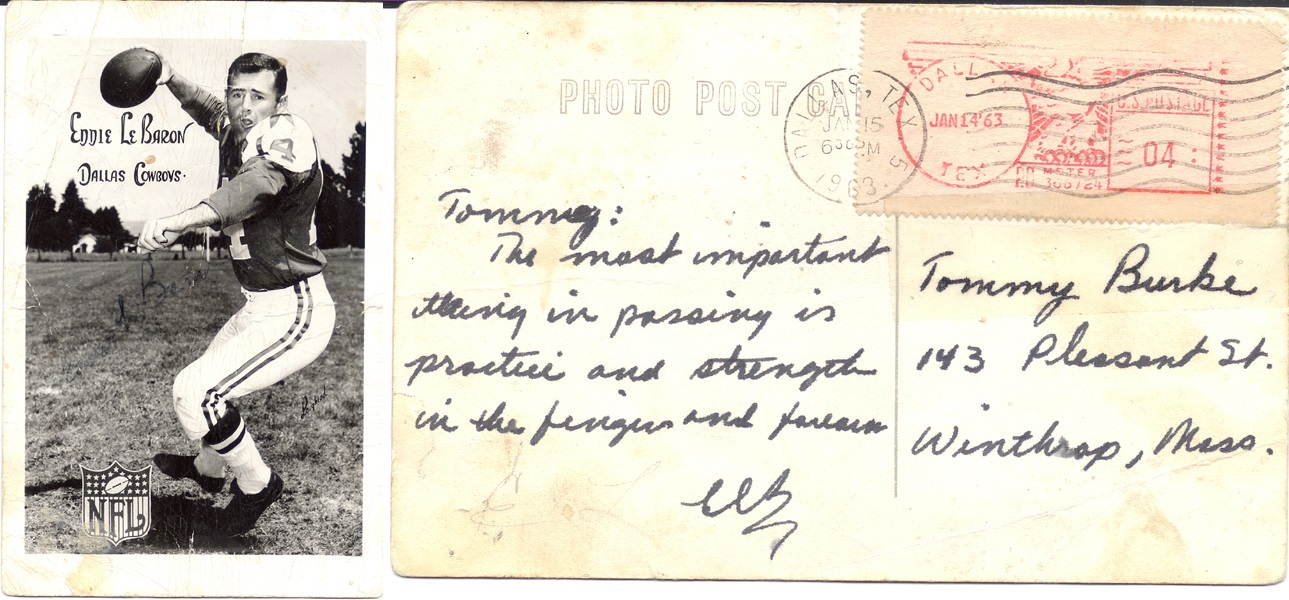
In 1962 I wrote a letter to Eddie and asked him how I could become a great passer like him. In January 1963 I got this autographed picture post card that read “Tommy: The most important thing in passing is practice and strength in the fingers and forearm.”

Thanks Eddie – for your kindness in getting back to me, but most especially for your service to our country. Rest in peace!

LeBaronpic and card

History I Never Knew – EEEWWW! The origin of vinaigrette, and the real lives of our stinky ancestors.

April 3, 2015

I usually order vinaigrette salad dressing when I go to a restaurant. I think I’ll go back to Greek, now that I know where the term “vinaigrette” came from.

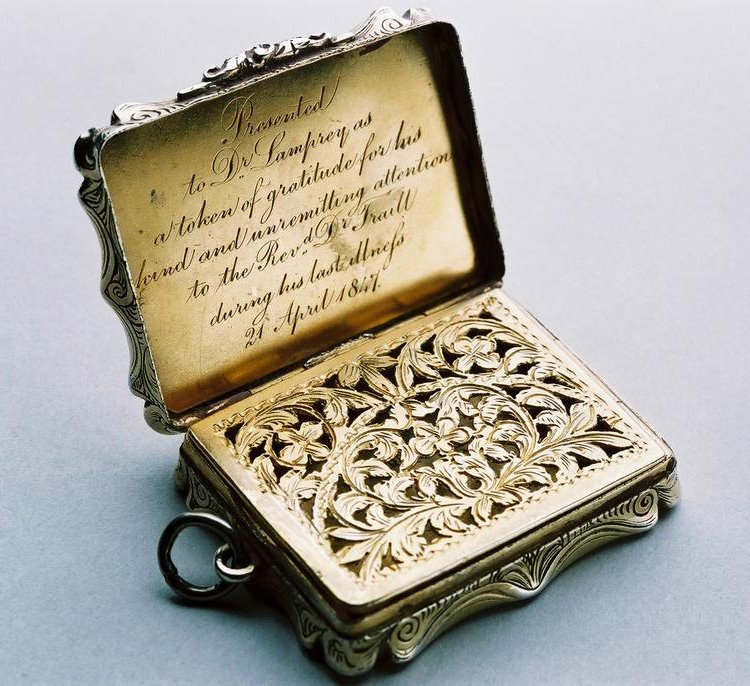
Vinaigrette Box

Vinaigrette Box

Back in Victorian times – think the 75 years or so before the era of “Downton Abbey” – fashionable ladies carried their vinaigrette everywhere. Depicted here, the vinaigrette was a little perforated box filled with aromatic herbs and a vinegar-soaked sponge. It was handy for sniffing in times of “olfactory distress.” The ladies’ attendants also found the vinaigrette handy in reviving their mistress after she had swooned and fainted for one reason or another.

 
Apparently, there were plenty of occasions of olfactory distress back in those days. A great deal of the ladies’ fainting must have been caused by the relentless assaults of offensive aromas.

According to “The Royal Armpits” in the latest issue of Mental Floss magazine, our forerunners stank. To high heaven, they stank. The article’s subhead wryly points out,  “We should be thankful they don’t make history books scratch n’ sniff.”

 
So how bad was it? Hard to imagine, but it started ‘way back before the Victoria era. People in those days thought that baths caused disease by opening the pores and allowing diseases to invade the body – the exact opposite of what happens.


Elizabeth I - never had the luxury of Dove Body Wash.

Elizabeth I – never had the luxury of Dove Body Wash.

Queen Elizabeth I once stated that she “took a bath once a month, whether I need to or not.” Henry VIII had a foul-smelling, festering wound on his lower leg; you could get a whiff of it from three rooms away. The royal doctors made it worse by tying the wound open, thinking that the sore needed to run in order to heal. They even sprinkled gold pellets onto it, keeping it infected and putrefying.

 
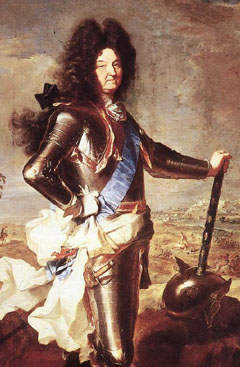
Over in La Belle France, Louis XIV, “The Sun King,” had such bad breath that his mistress doused herself in perfume to ward off the stench. His predecessor, Louis XII, once declared, “I take after my father. I smell of armpits.”

 
Outside those royal rooms it was just as bad, if not worse. In cities, people would simply toss the products of their bathroom visits out into the street. In 1900, in New York, there were about 200,000 horses within the city. That means a daily output of five million pounds of poop, most of which was just swept to the curb.

Louis Quatorze - could have put Scope or Listerine to mighty good use.

Louis Quatorze – could have put Scope or Listerine to mighty good use.


Wealthy Londoners employed an army of “night soil men” to cart the stuff away. They disposed of it in dumps on the outskirts of the city. One such place – typical British humour – was named “Mount Pleasant.”

 
The invention of the flush toilet made it even worse. In the summer of 1858, so much human excrement clogged the Thames River that it became known as the year of the “Great Stink.”

 
There was also the smell of death. In London, butchers killed and disemboweled animals right in the streets. One greedy British pastor sold “burials” to his flock, but didn’t bury the bodies. He stashed 12,000 of them in the church cellar, and the fumes made churchgoers pass out.

 
Even in churches where the dead had been properly buried, the smell of the people was too much to take. Thomas Aquinas approved the use of incense because the faithful’s odors “can provoke disgust.” In Shakespeare’s Globe Theatre, the people who bought the tickets in the cheap seats were known as “penny stinkers.”

 
Yes, I am very glad that our history books are not scratch ‘n sniff. And I have a suggestion for historians.

 
Let’s revise, once again, those notations that describe calendar eras. “BC” is now “BCE,” and “AD” is now “CE.” I say that we do away with them.

 
The most accurate way to depict former times is to start back at the beginning. Make the year that Adam and Eve left the Garden of Eden “Year One, B.O.”