Lives of Service, Lives of Generosity: Honoring “Men for Others”

February 14, 2014

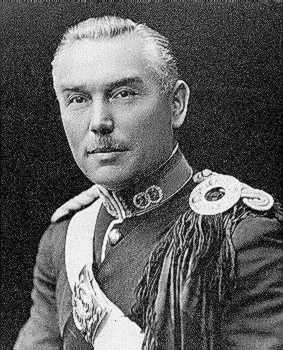
BC High 1967 classmates Christoper Small, left, and Tom Burke after Chris received the school's prestigious Saint Ignatius Award.

BC High 1967 classmates Christoper Small, left, and Tom Burke after Chris received the school’s prestigious Saint Ignatius Award.

Today I attended a reception honoring my BC High 1967 classmate Christopher Small, who has been Executive Director of the Italian Home for Children for the past 35 years.

Chris received the St. Ignatius Medal, BC High’s highest alumni award. It goes to graduates who “have exemplified the ideals of the school through high moral character and selfless service to the community.”

Superb choice. Congratulations to Chris, thanks to him for his career as a man for others, and kudos to the school for its wisdom in selecting him.

The Italian Home is one of the most respected and well-run social service agencies in Massachusetts. It is also recognized by the Council on Accreditation (COA). This certifies that the Home meets the highest national standards and delivers the best quality care to its communities. About 100 children are served each day on the Home’s Jamaica Plain campus. Another 20 kids attend programs at its Cranwood Group Home in East Freetown.

In his briefs and gracious acceptance speech before the school’s entire student body, Chris talked about how his experiences at BC High helped him to discern the signs and signals that led him to his life’s work.

“I was always challenged to examine things for what they meant, both in general and in particular for me. Many times, I got a feeling – a feeling for when I was doing my best work, when I was making plans or judgments or decisions. It was the feeling that I was doing the right thing.”

At first, Chris had no thought of a career in social services. He went to BC, majored in physics and math for three years, and aimed to be a scientist. During vacations he worked at IHop. But in the summer following junior year, he got a job working with emotionally disturbed youngsters at the New England home for Little Wanderers.

“It took me a couple of weeks and a handful of experiences with these special kids to give me that feeling. I recognized that I was meant to work with them. At the ripe old age of 20, I was lucky enough to find the work that I was born to do,” he said.

After that summer, Chris didn’t bother finishing his science training at Boston College. Rather he went right into the field and eventually earned a degree in social work at Boston University.
Chris closed his remarks by telling the students that each of them was developing his own version of the feeling.

“I hope you pay attention to what your heart tells you, and to have the courage to let your choices by governed by who you really are, rather than by what you think others think you are. And however successful or influential you aspire to be, your greatest achievements will always involve what happens between you and others. They may be your loved ones, or good friends, or total strangers. But if you put others and their needs first, ahead of your own, it won’t feel like a sacrifice. Think of them as opportunities you’ll encounter unexpectedly, on whatever path you choose.

“Measure wealth not by the things you have but by the things that you have that you would not exchange for money,” he concluded.

Chris was one of three alumni recipients of BC High’s Ignatius Award. The others were mathematician Paul Sally, a Roslindale native and professor of mathematics at the University of Chicago, and Reverend Richard “Doc” Conway of the Boston archdiocese.

Professor Sally, a 1950 BC High graduate who died on December 30, 2013, taught at Chicago for 50 years. He led the University’s Mathematics Project, which developed “Chicago Math” for grade school children.

Father Conway, a Class of 1955 alumnus, grew up in Holy Name Parish in West Roxbury. He worked in many parishes in and around Boston. In 2012 he received the Crime Fighter of the Year award from the Boston Police for his work with the city’s young people.

BC High also honored William A. MacNeill with its Shields Award for his lifetime of service as a teacher, track coach, and vice president of development. A Roxbury native whose family was too poor to send him to BC High, MacNeill enlisted in the Army at age 17. He served in Europe and Korea and graduated from Boston College in 1956. He organized BC High’s first fund raising program in 1971.

I had Bill for history and as a coach in cross country. Later on, when I was in the development business, we’d frequently talk shop. He did a lot, very quietly and unobtrusively, for people and for other worthy causes in addition to BC High. I’m glad that he was among the honorees as well.

It was a good day to be back at the old school, all right!

Today’s History Lesson: Music and Sports – How Golf’s Bogey Got Its Name, and Who Colonel Bogey Really Was

February 6, 2014

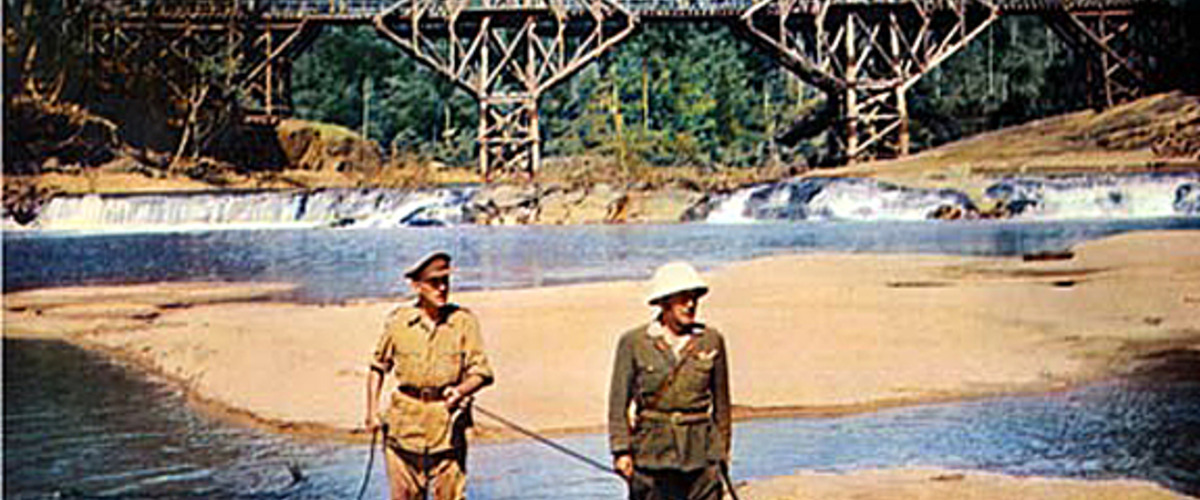
Bandmaster Lt. J.F. Ricketts, composer of  "The Colonel Bogey March."

Bandmaster Lt. J.F. Ricketts, composer of “The Colonel Bogey March.”

By the time Lieutenant J.F. Ricketts wrote “The Colonel Bogey March” in 1914, the fictitious Colonel Bogey was already the presiding spirit of golf links in Britain. This is the story of how Ricketts’s famous song was written, and of how the bogey came to mean one over par in golf.

Let’s go back, first, to a popular British song of the late 19th century. The “Bogey Man,” who lived in the shadows, was the star of said song. It went “I’m the Bogey man, catch me if you can.” “Bogle” had been the term for a Scottish goblin since the 16th Century. A Bogey-man was a popular term for a goblin or devil.

In 1890, Hugh Rotherham, secretary of the Coventry, England Golf Club, proposed standardizing the number of shots at each hole that a good golfer should take. He called that number the “ground score.” A Dr. Browne, Secretary of the Great Yarmouth Club, adopted the idea. Great Yarmouth used it in match play. During one competition, a Major Charles Wellman exclaimed to Dr. Browne, “This player of yours is a regular Bogey man.”

In Yarmouth and elsewhere the ground score became known as the Bogey score. So it was, originally, the measure of a well-played round of golf. Golfers of the time thought that they were playing against “Mister Bogey” when measuring themselves against the bogey score. They would, as the song went, try to catch the Bogey man. Bogey was interchangeable with the word “par.”

In 1892, Colonel Seely-Vidal, the Secretary of the United Services Club at Gosport, worked out the “Bogey” for his course. All members of the United Club had a military rank, and they felt they could not measure themselves against a “Mister” Bogey or have him as a member. So they gave him the honorary rank of Colonel, and “Colonel Bogey” was born.

Alec Guinness and Sessue Hayakawa in "Bridge on the River Kwai," the movie that introduced a generation of Americans to "The Colonel Bogey March."

Alec Guinness and Sessue Hayakawa in “Bridge on the River Kwai,” the movie that introduced a generation of Americans to “The Colonel Bogey March.”

Lieutenant Ricketts (1881-1945) was a British army bandmaster who later became director of music for the Royal Marines at Plymouth. He published “Colonel Bogey” and his other compositions under the pseudonym Kenneth Alford, because service personnel were not supposed to have jobs outside of the military.

The tune was said to have been inspired by a military man who was also a golfer. That golfer did not shout “Fore” when it was called for. Instead, he whistled a two-note phrase, a descending interval which begins each line of the march’s melody.

The bogey got demoted to its present one-over-par status in the early 20th century. Although the first noted use of the word “Par” in golf was in Britain and predates that of Bogey. “Par” comes from a stock exchange term – a stock may be priced above or below its normal or “par” figure.

In 1870, a British golf writer asked golf professionals David Strath and James Anderson, what score would win “The Belt,” which was the winning trophy for “The Open” at Prestwick. Strath and Anderson said that perfect play should produce a score of 49 for Prestwick’s twelve holes. The writer, whose name was Doleman, called this “Par for Prestwick.”

However, the bogey scoring system as the high-performance standard would take effect in Britain first. But over Across the Pond, things were changing.

Shortly before the turn of the century, the American Women’s Golf Association began to develop a national handicapping system for women, and the Men’s Association soon followed suit. In 1911, the Men’s USGA set down the following modern distances for determining Par: Up to 225 yards, Par 3; 225 to 425 yards, Par 4; 426 to 600 yards, Par 5; and over 601 yards, Par 6.

Golf continued to improve in America, and scores started to come down. But many old British courses did not adjust their courses or their Bogey scores.

This meant that good golfers and all the professionals were achieving lower than a Bogey score. The United States had an up-to-date national standard of distances for holes, but the British Bogey ratings were determined by each club and were no longer appropriate for professionals.

Americans began referring to one over Par as a Bogey, much to British chagrin.

And now you know the rest of the story.

History I Never Knew: Aristides de Sousa Mendes; and Why We Should All Try to be Historians

February 4, 2014

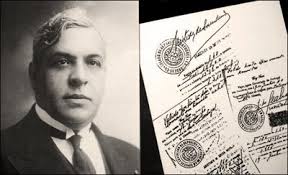
Not long ago I came across this story in The Forward. It is about Aristides de Souza Mendes, the “Portuguese Schindler,” as he is called.

Aristides de Sousa Mendes and a life-saving transit visa

Aristides de Sousa Mendes and a life-saving transit visa

I’d never heard of Sousa Mendes before. He was another of those most admirable people of the hellish Europe of the 1930’s – people who did everything in their power, at great risk to themselves, to aid the Jews persecuted by the Nazis.

A diplomat stationed in Bordeaux, France, Sousa Mendes used his official position to provide transit visas to Jews who were fleeing through Portugal to safer countries. Portuguese dictator Antonio de Oliveira Salazar had forbidden it; Sousa Mendes did it anyway.

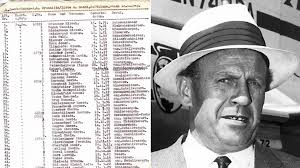
Oskar Schindler and his "List"

Oskar Schindler and his “List”

This article also serves as an important lesson about human history. That lesson: history’s heroes are those whose stories are faithfully recorded and told. But not all of those stories have been told. History is forever incomplete, a work in process. We can all do our part to advance that work.

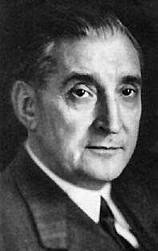
Until the 1970s, the story of Aristides Sousa Mendes remained hidden. It had been suppressed by Salazar, who ruled Portugal from 1932 to 1968. Today, Mendes is rightly regarded as a Portuguese national hero. Salazar? Who the hell cares.

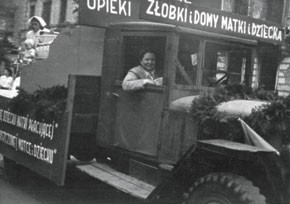
Irena Sendler and the truck she used to smuggle about 2,500 Jewish children out of the Warsaw ghetto

Irena Sendler and the truck she used to smuggle about 2,500 Jewish children out of the Warsaw ghetto

Sousa Mendes is honored along with Oskar Schindler, Raoul Wallenberg, Irena Sendler, and almost 25,000 others in the Garden of the Righteous Among Nations at Yad Vashem in Jerusalem.

Antonio de Oliveira Salazar, dictator of Portugal

Antonio de Oliveira Salazar, dictator of Portugal

In this case, the good man finally receives his due. The bad man, prosperous and powerful while on earth, shrinks further into the dark alleyways of oblivion with every passing year.

Avenue of the Righteous in Yad Vashem, Jerusalem

Avenue of the Righteous in Yad Vashem, Jerusalem

It doesn’t always happen that way. There are millions of stories out there, still waiting to be told. Their heroes and heroines aren’t always the “great people” either. They won’t be in the history books. But they should remain in our hearts.

You don’t need to be a professional historian. You don’t have to write a book. But you can seek out those quiet, unknown heroes. Listen to their stories. And pass those stories on.

Introducing Lane MacDonald, Newest Member of the Beanpot Hall of Fame

January 29, 2014

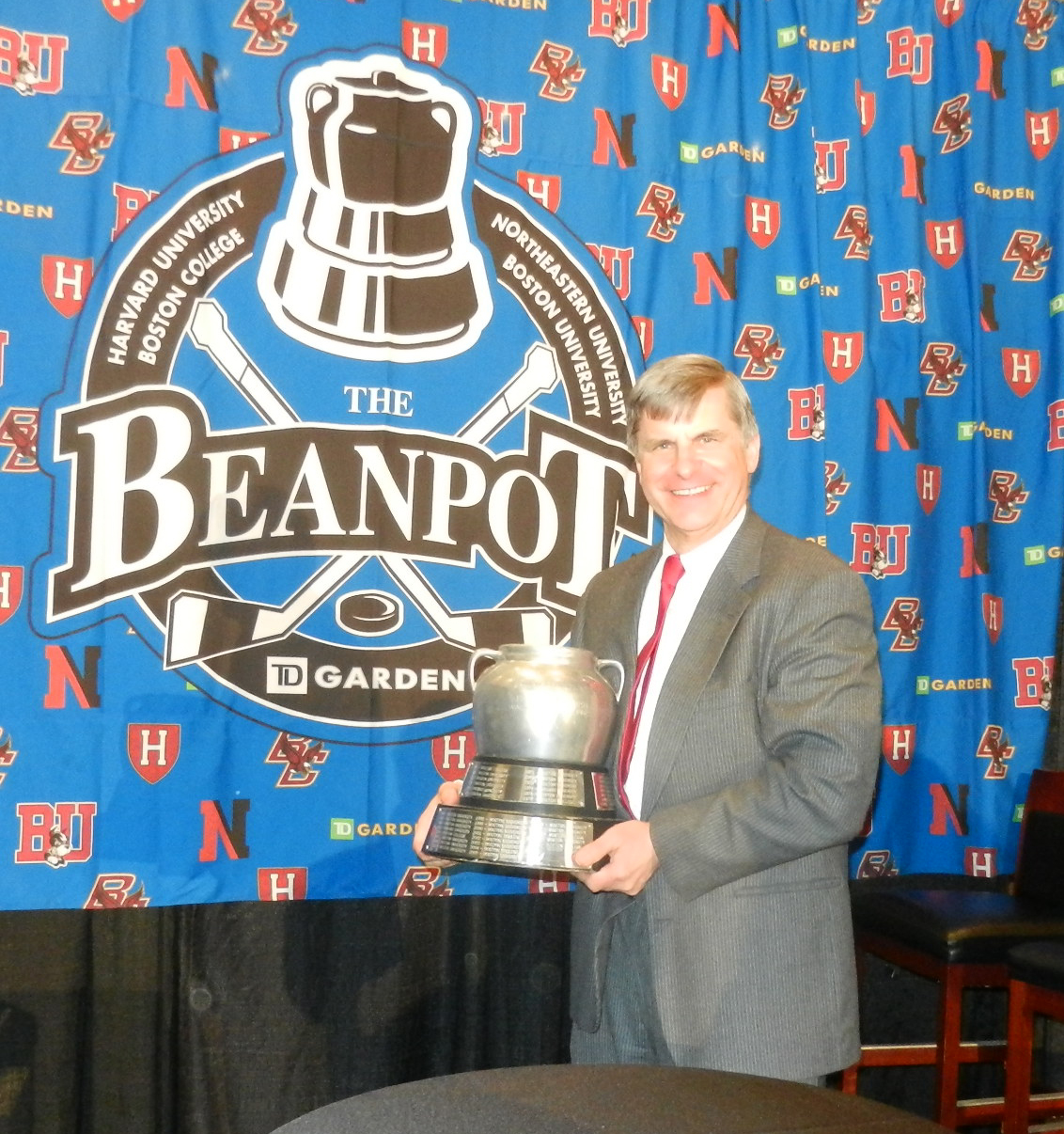
With the Beanpot, since 1952 the emblem of the college hockey championship of Boston.

With the Beanpot, since 1952 the emblem of the college hockey championship of Boston.

Speech by Tom Burke, Assistant Secretary of the Beanpot College Hockey Tournament, at the press luncheon at TD Garden, January 28, 2014.

Today I have the honor of introducing the Beanpot Hall of Fame Class of 2014. We have just one inductee. Lane MacDonald, Harvard University, Class of 1989. And where to begin?

Well, knowing a bit about Lane, I think he’d rather I speak of teams, and lines, and other people. So I’ll start there. A couple of years ago the Massachusetts Hockey Hall of Fame enshrined an entire Harvard line that we all know as the Local Line. Three Massachusetts kids named Corkery, McManama, and Hynes who terrorized opponents for three seasons in the early seventies. It was possibly Harvard’s best line ever.

When I raised that subject with Lane, and asked him about his own line, he said that that Harvard’s best lines were whichever ones had Joe Cavanaugh or Bill Cleary. But if you know your Harvard hockey history, or if you just remember the fabulous season of 1988-89, you might just cast your vote for the line of Lane MacDonald, Alain Bourbeau, and C.J. Young.

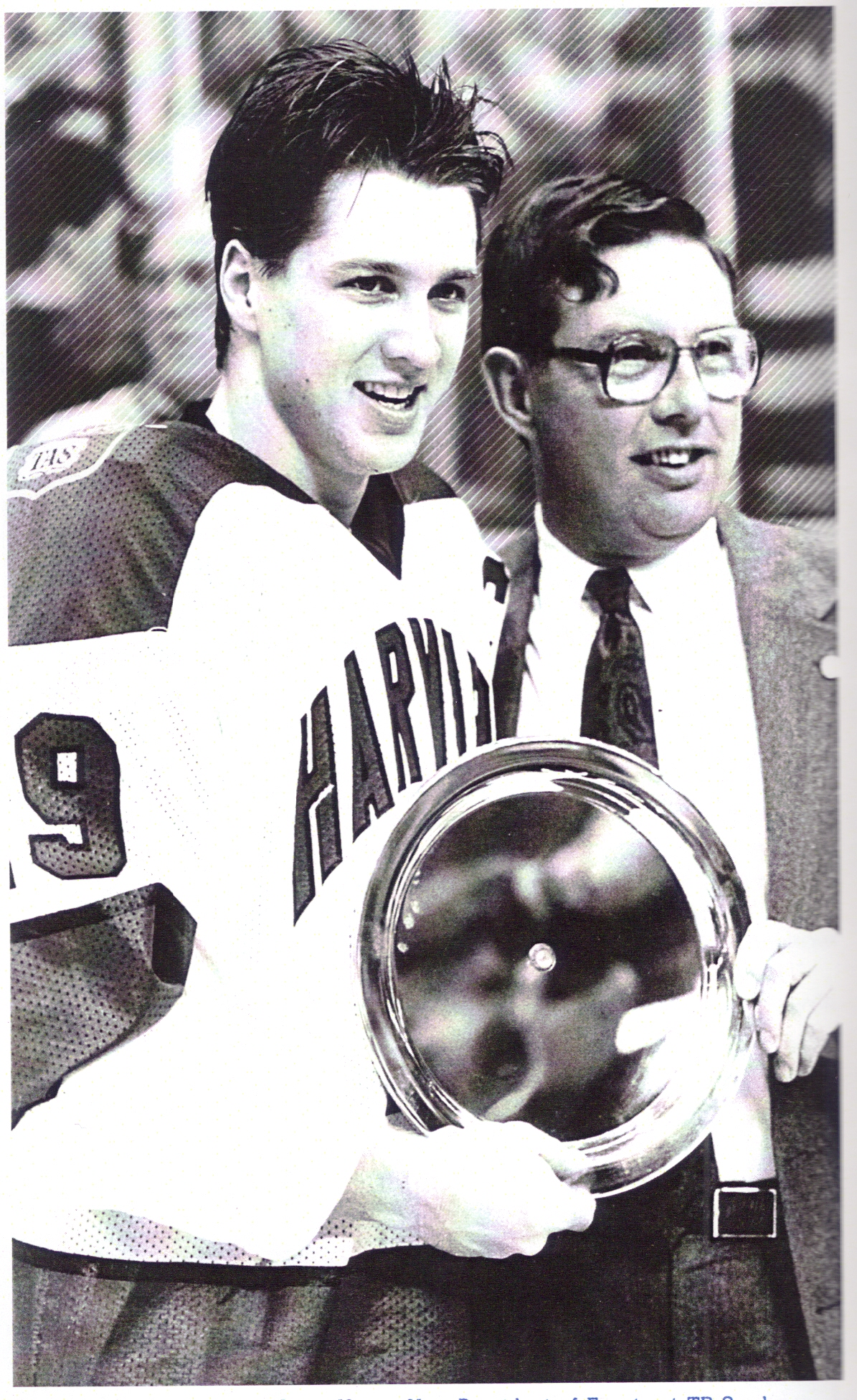
Lane MacDonald accepts MVP trophy from Garden VP Steve Nazro after Harvard defeated BU 9-6 for the 1989 Beanpot title.

Lane MacDonald accepts MVP trophy from Garden VP Steve Nazro after Harvard defeated BU 9-6 for the 1989 Beanpot title.

Lane was the team captain that year. Harvard had a record of 31-3. They won the Beanpot. They won the NCAA championship. Lane was the MVP in that Beanpot. He’s tied for third place in all time Beanpot scoring – 15 points, same as Art Chisholm of Northeastern, Vic Stanfield of BU, and Billy Daley of BC.

Many of you here remember Lane’s father Lowell. He had an 18-year professional career that began back in the days of the six-team National Hockey League. Lowell for the Red Wings, the Kings, and the Penguins. One of his teammates on the Pittsburgh Penguins was Bobby McManama, one of those guys on the Local Line that I mentioned a minute ago. Bobby came to the MacDonalds’ for dinner one night, and that meeting got Lane thinking about going to Harvard.

That’s where he ended up, and what a career it was. He’s Harvard’s top goal scorer of all time with 111. He had 12 shorthanded goals – the next player on the all-time list has 7. The only man who scored more goals than Lane in a single Harvard season is with us today – his coach Bill Cleary.

I’ve mentioned that Lane was captain of the NCAA champions of 1989. The MVP of that championship tournament is here too – coach Ted Donato.

Lane also played for the 1988 U.S. Olympic team in Calgary before he returned to Harvard for his final season. After Harvard, a pro career didn’t happen. Lane played in Switzerland and helped coach at Harvard for a year. But his playing career was cut short due to recurring problems from head injuries he’d suffered along the way.

Lane then entered the investment banking field, earned his MBA at Stanford, and now he’s a managing director at Harvard Management Company. Those are the financial guys who take care of the school’s endowment. So Lane is still scoring goals for Harvard.

Over the course of his career, the honors and accolades to Lane MacDonald the hockey player included:

ECAC Player of the Year
Twice a First Team All-America
The Walter Brown Award
The Hobey Baker Award
And membership in the United States Hockey Hall of Fame.

But now, as we of Beanpot Land all would agree, he is in truly distinguished company. He’s the newest member of the Beanpot Hall of Fame. Lane MacDonald.

Holy Ground

January 27, 2014

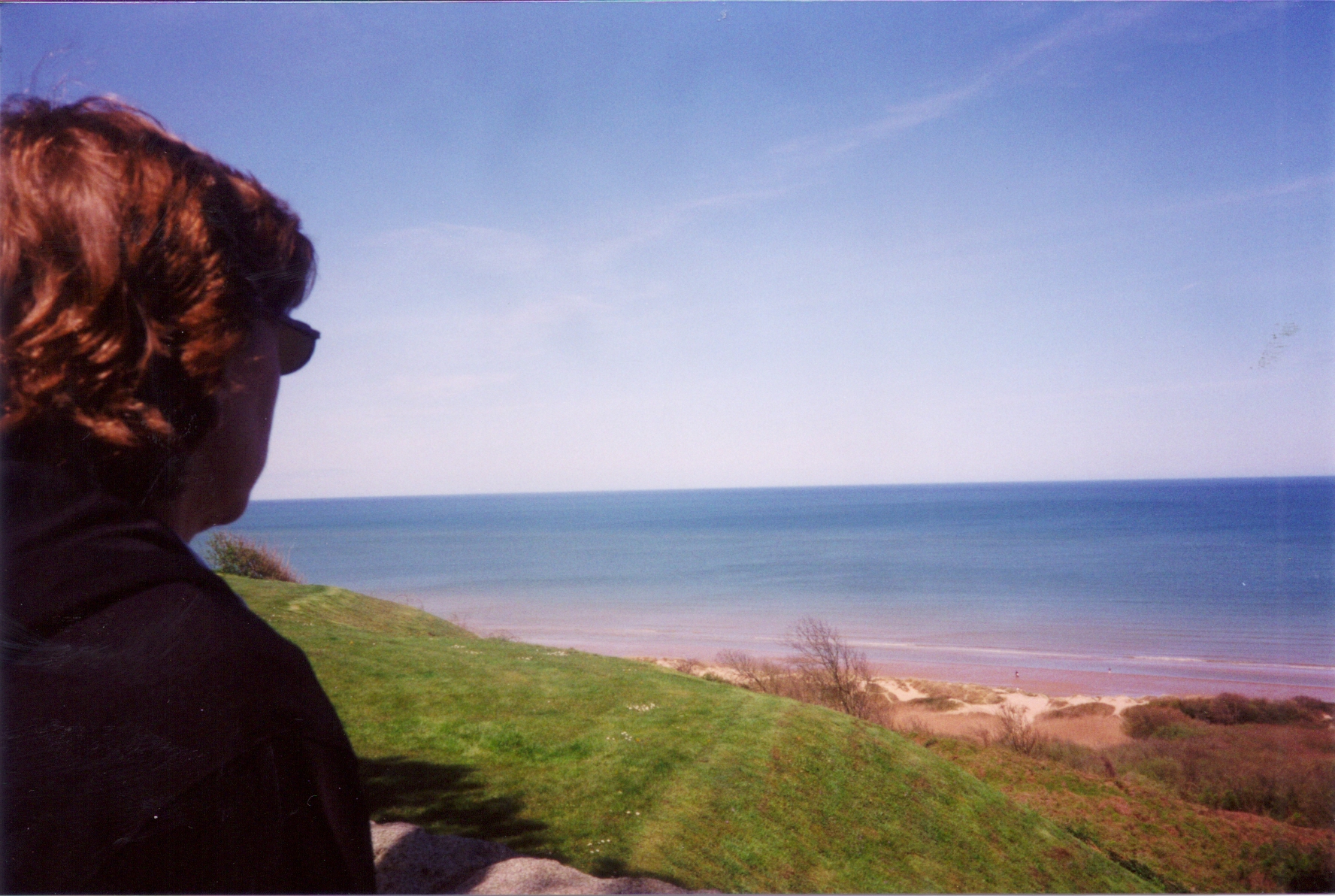
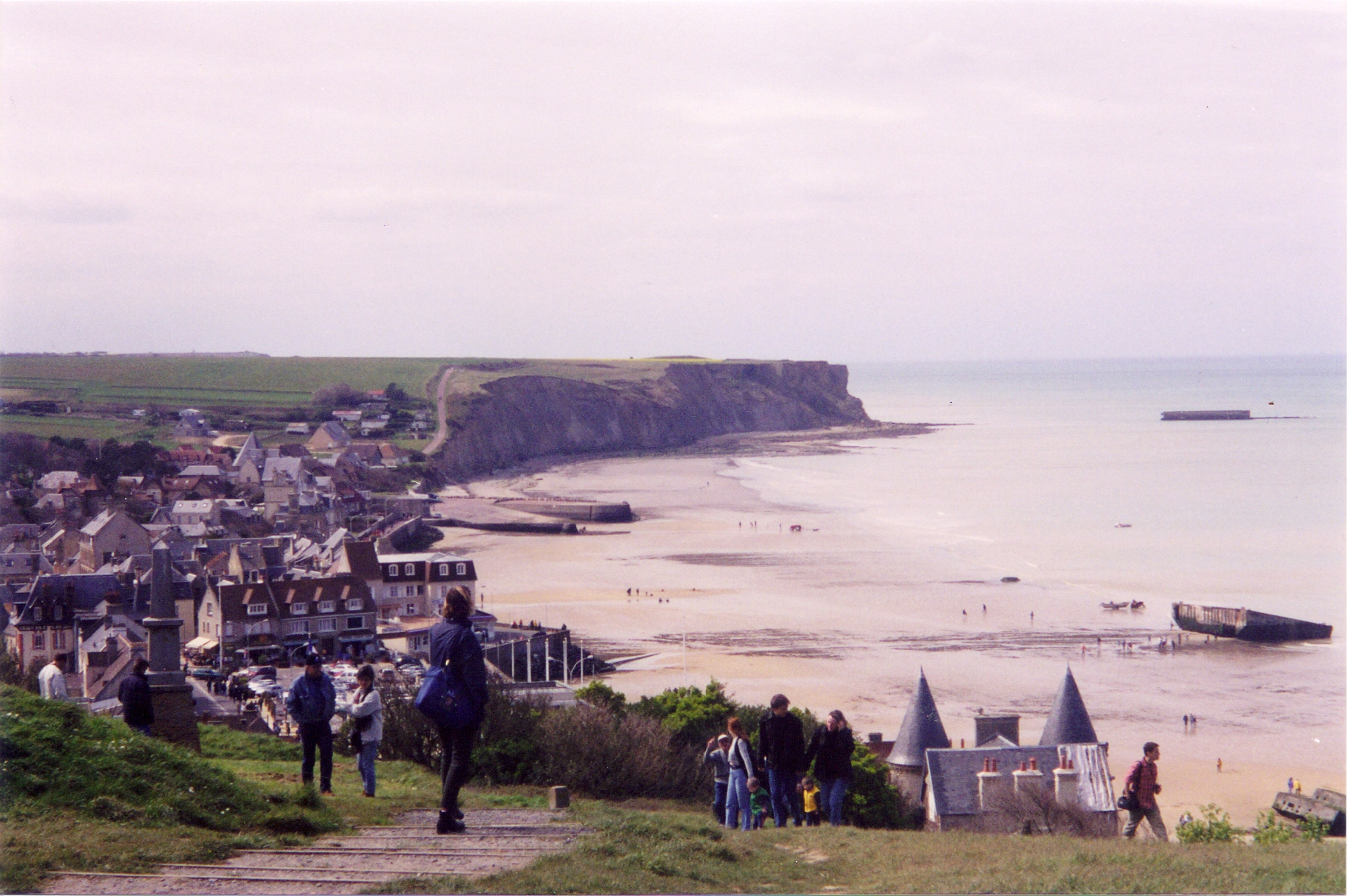
The beach at Colleville sur Mer, France. Nearby is the American cemetery with the sculpture "The Spirit of American Youth Rising."

The beach at Colleville sur Mer, France. Nearby is the American cemetery with the sculpture “The Spirit of American Youth Rising.”

Few places on earth can compare with Normandy in France. Can you imagine a scene as placid and peaceful as this one?

In the first photo, my wife Mary Ellen gazes over the bluff and down onto the beach at Colleville sur Mer. Such quiet, such tranquility. It was not always this way.

This is near the eastern end of the shore section code-named Omaha Beach on D-Day in 1944. That June 6 it was anything but placid and peaceful, as American soldiers waded slowly onto the shore and into cataracts of bullets fired by unseen enemies high above.

As one proceeds to the west, the bluff rises higher and steeper and gives an even stronger advantage to entrenched defenders. The second photo is of Vierville sur Mer, on the western end of the Omaha Beach sector. The large objects in the water there are the remains of “mulberries,” the artificial docks that were needed to bring trucks, tanks, and other mechanized equipment to the land.

Vierville sur Mer, France, the westernmost part of Omaha Beach.

Vierville sur Mer, France, the westernmost part of Omaha Beach.

Beyond Vierville is Point du Hoc, the high vertical cliff that Army Rangers scaled with the aid of extension ladders from the London Fire Department, and the beach code-named Utah.

Such a flood of emotions gripped me on our trip there in 2000: patriotic pride, and gratitude and admiration for those who came ashore and somehow, some way, prevailed in the end. But most of all, it was sadness, an overwhelming sadness for all those young men from Canada and Britain and America who suffered so much that day and did not return.

I wasn’t there that day, and I’ve known just a few people who were. Andy Rooney – good old, acid-tongued, unsentimental Andy – landed a few days after D-Day and proceeded to write about what he’d seen on the war’s front lines. One of his most revered commentaries goes, in part,

“No one can tell the whole story of D-Day because no one knows it. Each of the 60,000 men who waded ashore that day knew a little part of the story too well. To them, the landing looked like a catastrophe.

“Each knew a friend shot through the throat, shot through a knee. Each knew names of five hanging dead on the barbed wire in the water 20 off shore, three who lay unattended on the stony beach as the blood drained from holes in their bodies. They saw whole tank crews drowned when the tanks rumbled off the ramps of their landing craft and dropped into 20 feet of water.

“There were heroes here no one will ever know because they’re dead. The heroism of others is known only to themselves…On each visit to the Beaches over the years, I’ve wept. It’s impossible to keep back the tears as you look across the rows of markers and think of the boys under them who died that day.

“Even if you didn’t know anyone who died, your heart knows something your brain does not – and you weep.”

Mr. Rooney is so right. When I came across these pictures today, almost fifteen years after standing there in Normandy and taking the pictures, I felt those tears welling up once again.

I think that every American should make the pilgrimage to Normandy at least once in his or her life. That’s what it is. It’s not a trip. It is a pilgrimage to holy ground.

New Journeys with Old Friends

December 26, 2013

Rebecca Eaton

Rebecca Eaton

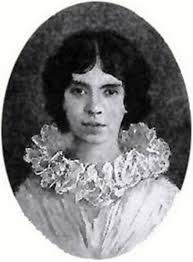
Emily Dickinson wrote “There is no frigate like a book/To take us lands away.”

Right you are, Belle of Amherst. Today I embarked aboard another frigate, Making Masterpiece, the memoirs of Rebecca Eaton, who spent 28 years as executive producer of Masterpiece Theatre and Mystery!

I’m looking forward to the rest of my journey with Rebecca Eaton. But I’m not alone. My wife’s uncle Roger is there with me.

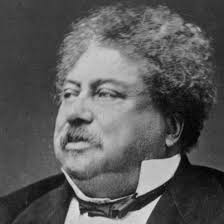
Alexandre Dumas

Alexandre Dumas

I’d also begun reading The Three Musketeers a week or so ago. I was eager to get to Ms Eaton’s book, but I’ll definitely finish the Alexandre Dumas classic too. My childhood bud Peter is accompanying me on that voyage.

Roger and Peter have both passed on from this life. But when I sit down and open the pages of these books, memories of those friends return to me like a gentle refrain from a favorite song of my youth. Marking my place, and the beginning and end of my day aboard the frigate, is the little remembrance card that I took home from the funeral home after attending their wakes. My old friends start on the book-journey with me, and they bid me adieu when the trip is done.

I have many of those remembrance cards. They’re in a little stack on the corner of a bookcase shelf. I began using them as bookmarks a year or two ago. And as I sit down to read the stories of other people and their lives on the printed pages, I can’t help but recall the little stories of these bookmark friends.

Roger was a bombardier in World War II. His B-17 was shot down over Germany. He had to kick open the jammed bomb bay door just in time to bail out. He broke his leg when hitting the ground, was captured by a farm family, and spent two years in a POW camp. I know few people who were as unfailingly cheerful and gregarious as Roger. Those wartime privations and near misses must have taught him what really matters.

Peter was a grade-school classmate, sandlot-ball companion, and fellow altar boy. He had a devilish sense of humor and an impish grin. I saw little of Peter as we grew to late adolescence and adulthood, so I never knew how good an athlete he’d become in college. I also found, after he’d departed, how seriously and how long he believed in the old-time religion that we were both force-fed as youngsters. The last chapter of Peter’s life was one of heroic sacrifice. He gave up his career and moved across the country to take care of a son who’d been injured and permanently incapacitated by a drunk driver.

Emily Dickinson

Emily Dickinson

Other old friends wait to rejoin me on future book voyages.

There’s Sam, a wonderful gentleman I got to know well when I was raising funds at Boston College. He ran an industrial-sized laundry plant for hospitals. It was stifling hot in that place all year-round, a miserable working environment. Or so you’d think. Sam was a demanding boss, but he was so hard-working and fair-minded that he had a long waiting list of prospective employees eager to come and work for him. Study management theory in my MBA classes? Nope. I just observed Sam at work.

Jackie’s there. She was the mom of one of my best friends from high school days. So pretty, so sweet, so exquisitely put together, and so tolerant of our mischief and antics. I adored Jackie. But I don’t think I realized how much I cared for her until she passed on a few years ago. We weren’t supposed to be in love with our friends’ mothers. I blush now when I think of the tremendous teenage crush I had on her, one that I was never able to admit to myself.

Fernie from the world of hockey is there. Most would remember him only as a genial college coach. I’m old enough to have seen him play. He was a ferocious defender; woe betide any opponent who ventured near the goal when Fernie was on duty. He showed me that it is possible to be a thoroughly nice man in one context and a carnivorous myrmidon in another. In hockey, there was no better friend and no worse foe than Fernie.

I also see Jack, the high-school classmate whose career as a social worker was made immensely more difficult by a succession of serious illnesses and health problems of his own; Bobby, the acid-tongued but good-hearted sportswriter whose techniques I observed and with whom I drank more than a few beers; Paul, World War II veteran, Iwo Jima survivor and leading citizen of my native town of Hopkinton, whose sister taught my older siblings in first grade; Daniel, a distant in-law I never knew personally but whose taking of his own life was heartbreaking and incomprehensible.

The list can go on. Oh yes, it will go on, and some day my name will be on it too. Until then, I’ll keep adding to my personal edition of the list. I’ll gladly re-visit and fondly remember its distinguished citizens.

In her first chapter, Rebecca Eaton reflects that Masterpiece Theatre is essentially “…stories about families. Family stories are sagas: love, betrayal, money, infatuation, infidelity, illness, family love, and family deception.”

As she went through old papers, pictures, and documents in preparing to write about her own life and her own family, Eaton said that she’d come to recognize “the really important thing – the stories, and the stories behind the family stories that we all have.”

Perhaps the stories of those I take along on my book-frigate journeys are not writ as large as those of the kings, queens, prelates, princes, and aristocrats of Masterpiece Theatre. But to me, they are that “really important thing” that Rebecca Eaton mentioned. In small ways, and sometimes in larger ones, their stories are bound up with the story of my own life. They helped make me who I am.

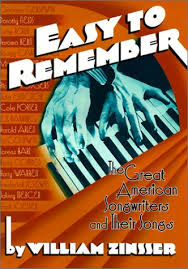
Book Review and Reflections: “Easy to Remember” by William Zinsser

December 18, 2013

easy to rememberWhen I saw the author’s name on the spine of the large paperback,I bought the book immediately. I’m glad I did. Just finished the book, and loved it.

I consider myself a disciple of William Zinsser. His “On Writing Well” is one of the best books I’ve ever read about the art and craft of non-fiction writing.

Zinsser wrote “On Writing Well” in 1974 when he was teaching at Yale. Before going into teaching in the 1970s, he’d been a writer and drama critic for the New York Herald Tribune for ten years and a free-lance magazine feature writer for another decade or so. He’s penned several other books about writers and writing. The man knows his business.

“I write to affirm,” he once put it. He’d rather celebrate that denigrate. So would I.

American Music’s Golden Age and Its People

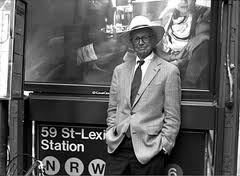
Author William Zinsser

Author William Zinsser

Zinsser also knows his music. “Easy to Remember,” written in 2001, is an education in America’s four-decade golden age of music. That golden age began in the magical American year of 1927 with “Show Boat,” a work that drew upon the talents of composer Jerome Kern and librettist Oscar Hammerstein. With its songs like “Ol’ Man River,” “Can’t Help Lovin’ Dat Man,” and “Misery’s Comin’ Around.”

“Show Boat,” as Zinsser puts it, elevated the musical from a grab-bag of songs into “a drama with musical numbers that established character and anchored the story in a social context.”
For about 40 years – through the rest of the Jazz Age Roaring 20’s, the Depression, World War II, and the Fabulous Fifties – music and songs written for Broadway and Hollywood were the standard-bearers of our country’s culture. This book tells of the people who composed the music and wrote the lyrics for those songs.

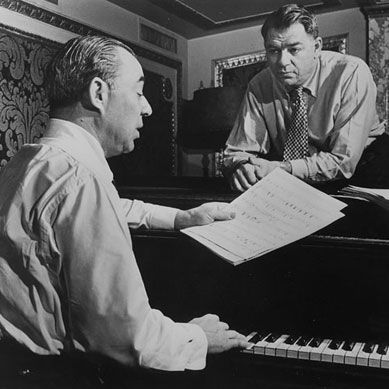
The team of Richard Rodgers (at piano) and Oscar Hammerstein

The team of Richard Rodgers (at piano) and Oscar Hammerstein

Some of their names were familiar to me, though I knew little about their personal histories: Hammerstein, George and Ira Gershwin, Irving Berlin, Cole Porter, and Richard Rodgers among them.

Other giants of the era about whom I knew next to nothing included Frank Loesser, composer and lyricist of “Guys and Dolls;” E.Y. Harburg, who wrote “Brother Can You Spare a Dime,” and “Over the Rainbow” for Judy Garland and “the Wizard of Oz;” the prolific Harry Warren, who gave us “There Will Never be Another You,” “Chattanooga Choo-Choo,” and “I Only Have Eyes for You;” and Jule Styne, whose “Diamonds Are a Girl’s Best Friend” in “Gentlemen Prefer Blondes” shot Carol Channing to stardom.

Society and the Movies

Zinsser builds the book largely around the biographies of the musical artists. But he also delves into the cultural and societal influences such as sheet music, African-America jazz, and World War II. He writes of the outsize impact of performers like Frank Sinatra, Fred Astaire, Ethel Merman, and Ella Fitzgerald, and of game-changing movies like “Wizard of Oz” and “Casablanca.”

“As Time Goes By” by Herman Hupfeld was the seventh-most frequently played song of the 20th Century, according to ASCAP, the American Society of Authors, Composers, and Publishers. Zinsser devotes almost a chapter to that song and to “Casablanca,” and it’s a fascinating little story in itself.

Hupfeld wrote the piece for a 1931 Broadway musical, “Everybody’s Welcome.” A woman named Frances Williams sang it so beautifully that a Cornell student named Murray Burnett fell in love with it and made a recording, which he played often.

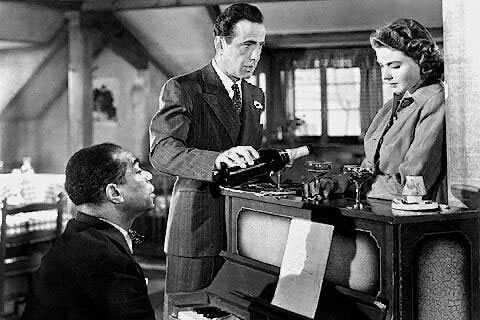
Dooley Wilson as Sam, Humphrey Bogart as Rick, and Ingrid Bergman as Ilsa in "Casablanca"

Dooley Wilson as Sam, Humphrey Bogart as Rick, and Ingrid Bergman as Ilsa in “Casablanca”

Burnett went to Vienna in 1938 and saw first-hand the horrible treatment of Jews at the hands of the Nazis. On his way back to America he happened to visit a bar in Paris where a black guy was playing the piano. He returned to New York and wrote his own play, “Everybody Goes to Rick’s,” which Warner Brothers bought and made into “Casablanca.”

That’s not the end of the story, however. The script calls for Ilsa to enter the bar and ask the piano man to play “As Time Goes By.” Producer Max Steiner of Warner Brothers didn’t like the song and wanted to cut it. But Jack Warner liked the song and ordered him to make it the musical centerpiece of the movie. Zinsser explains how the song and the movie gradually grew into twin cultural icons. He says, further, that it really isn’t much of a song and that jazz musicians tend not to play it unless asked. He concludes, “Melodically it’s inert. Lyrically it’s platitudinous. But emotionally it’s off the charts.”

End of an Era

The author says that he was lucky enough to be born right at the beginning of that golden age. I and my boomer friends came into this world just as that era was ending and rock and roll took over. The songs discussed in this book were all just out of reach in my generation’s immediate past. Zinsser’s America was one where just about every home had a piano and at least one family member who could play it. America back then was a self-entertaining country. It’s no longer that way, for many reasons.

Unlike William Zinsser, I have no musical talent, no ear for music, no skill in any instrument. But music moves me – to laughter, to melancholy, to tears. That only makes me human, I guess. Gogi Grant’s rendition of “Wayward Wind” never fails to raise goose bumps. Singers like Barbra Streisand, Judith Durham, Linda Ronstadt, Johnny Mathis, and Don McLean usually make me pause what I’m doing and enjoy the emotional ride along with them. Recordings played on my favorite oldies station transport me back to those high school dances of fondest memory.

The book explains that the dawn of the rock and roll era and a larger, underlying cultural shift ended the musical theater era. True, we have a number of contemporary masterpieces that will be around for a long time: “Les Mis,” “Phantom of the Opera,” “Beauty and the Beast” and “The Lion King” are some the author cites.

Zinsser, the master writer and lover of language, explains that rock also altered the way we Americans listen to music. Our generation, he says “…didn’t insist on songs that told a story, or on rhymes that exactly rhymed…But what fundamentally changed was the audience. The love affair with language was over…The great American songwriters wrote for men and women who cared about literary forms. It was the end product of a heritage that esteemed the written and the spoken word.”

The words, he said, needed exactly the right melodies, and the melodies needed exactly the right words. The combination was easy to remember and impossible to forget.

I highly recommend this book, and I agree with a quote on its jacket: “It’s a de-lovely biographical companion to the Great American Songbook.”

This is Your America

November 18, 2013

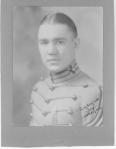
George Lermond West Point 1930 Graduation Photo

George Lermond
West Point 1930 Graduation Photo

The “great people” are the ones who make history. Or at least they’re the ones who get credit for it.

Presidents and potentates, generals and warlords, captains of industry and show-business celebrities – we chronicle and study their lives. Their deeds – and their misdeeds – are the Cliff’s Notes stories of our civilization. We are supposed to know those stories so that we may make sense of the world we live in.

But it’s not enough to read about those with the big jobs, impressive titles, and bottomless bank accounts. Not if we want to learn the possibilities of the human spirit, to hear of the heights of personal accomplishment, to grasp the boundless potential of human love and sacrifice. Not if we want to understand what it means to be an American.

To comprehend and appreciate such possibilities, heights, and potential, we must know the people who have been there. They’re not in the pages of the history books. But they are all around us, and always have been. I would like you to meet one such man. His name is George Lermond.
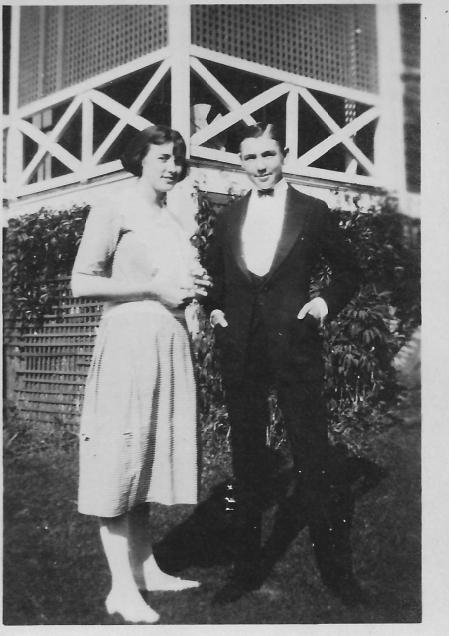
George Lermond and his sister Mary in Nahant before BC High graduation, 1921

George Lermond and his sister Mary in Nahant before BC High graduation, 1921

George was born into a poor Massachusetts family. He was a hard-working student, loving son and brother, altar boy, Olympic athlete, soldier, and father. His life touched many of those whom history considers great men.

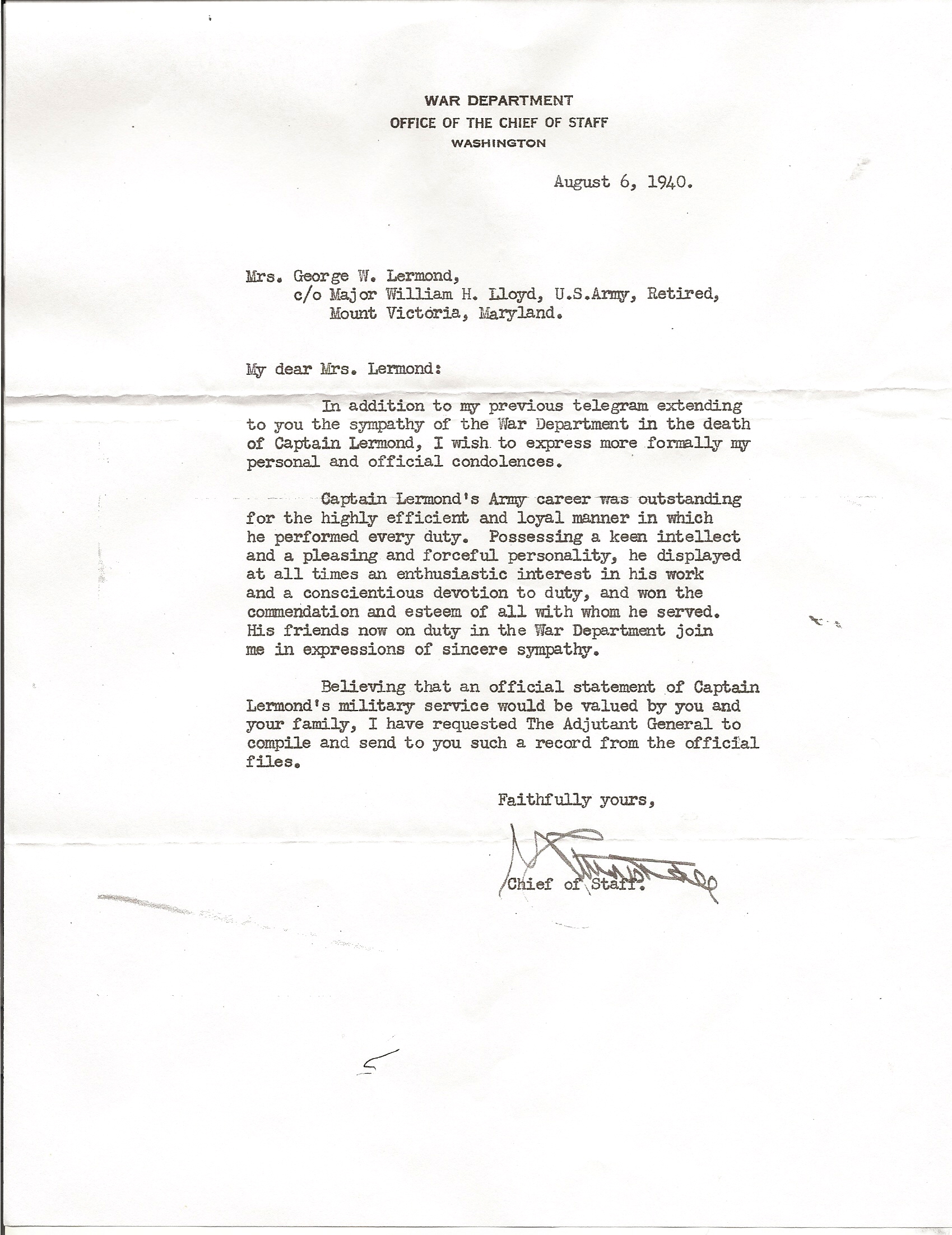
Dwight Eisenhower promoted George Lermond to captain in the U.S. Army. Franklin Roosevelt called on him when he needed trained pilots to fly U.S. air mail. George Patton was to be his next immediate superior before his tragic death in a house fire. George Marshall commended his exemplary service in a personal letter to his family. Roosevelt directed that Lermond and his son, George Junior, be buried together in Arlington National Cemetery.

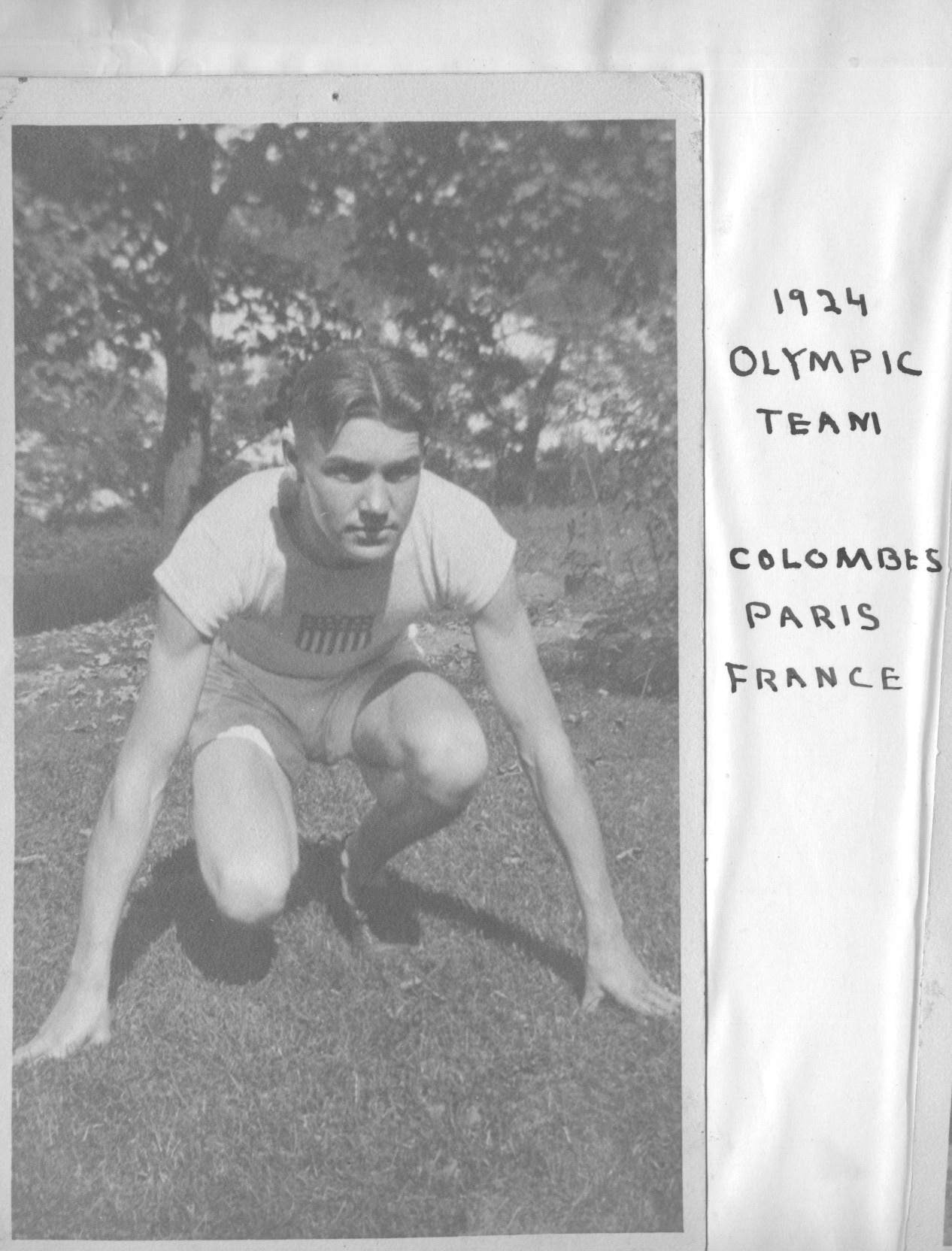
George Lermond commuted from Nahant to Boston College High School. He graduated from there in 1921 and from Boston College in 1925. He was a superb track athlete, the only one from his college squad chosen to compete in the 1924 Olympics. After BC, he went to West Point and graduated in 1930. I researched and wrote his biography for his induction to the BC Hall of Fame in early October. The full text of the story appears below, along with some photos and letters that I received from family members.

George’s son Bill journeyed from Maryland for the Hall of Fame induction ceremony. His heartfelt words of thanks, as he accepted the bronze plaque for the father he hardly knew, brought tears to many eyes that evening.

Bill, his sister Edith, and his mother Edith, were saved from the blaze that took George Lermond’s life. George lowered the two children, who were wrapped in a blanket, from a window to his wife on the veranda. George then went back inside to save the third child, and perished.

I want the world to know of this man’s exemplary life. Perhaps history won’t number him among the greatest of men. But I do, and I suspect you will agree.

In this our time, it is all too easy to become distressed at the sight of so many charlatans, mountebanks, and outright villains who occupy positions of power and prestige. Do not be distressed. They will be gone and forgotten.

To my fellow baby boomers, who’ve reaped our blessed land’s bounty that was sown by our fathers and grandfathers, I say take heart. The generation of our children, and soon enough, their children, has its own ample supply of George Lermonds. They’ll soon be in charge.

You made them and set them on their way. Have faith.

George Lermond
Boston College High School ’21, Boston College ’25, United States Military Academy ‘30

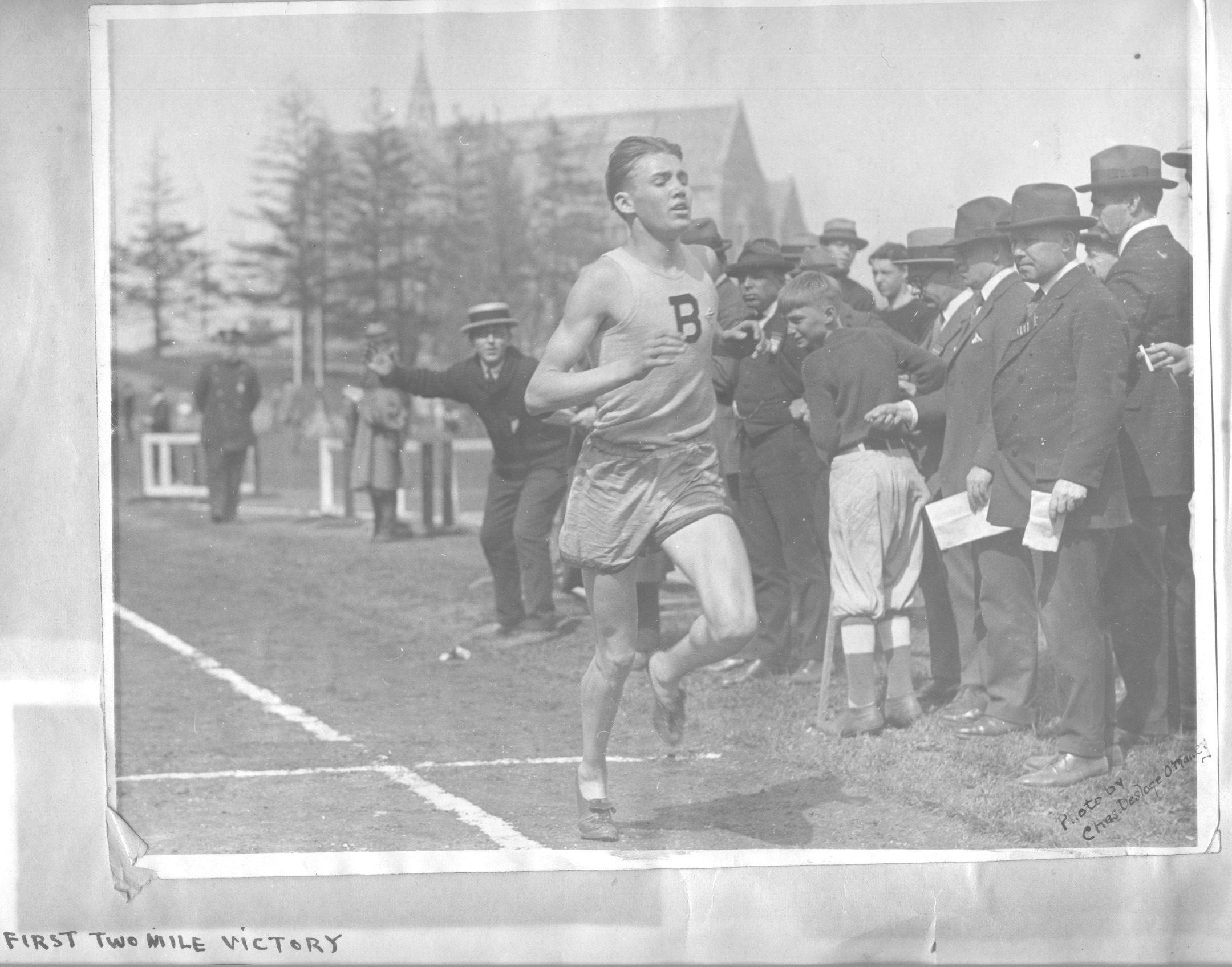
Winning the two-mile run at Boston College

Winning the two-mile run at Boston College

The first glorious era for Boston College track and field was the Roaring 20’s. Nine Eagle athletes of that time along with coach Jack Ryder, are already enshrined in the Hall of Fame. But none of those athletes distinguished himself, both on the fields of play and in later life of service to his country, more than George Lermond.

A middle distance runner and winner of innumerable races and championships during his time at Boston College, Lermond was the only Eagle who made the 1924 Olympic team.

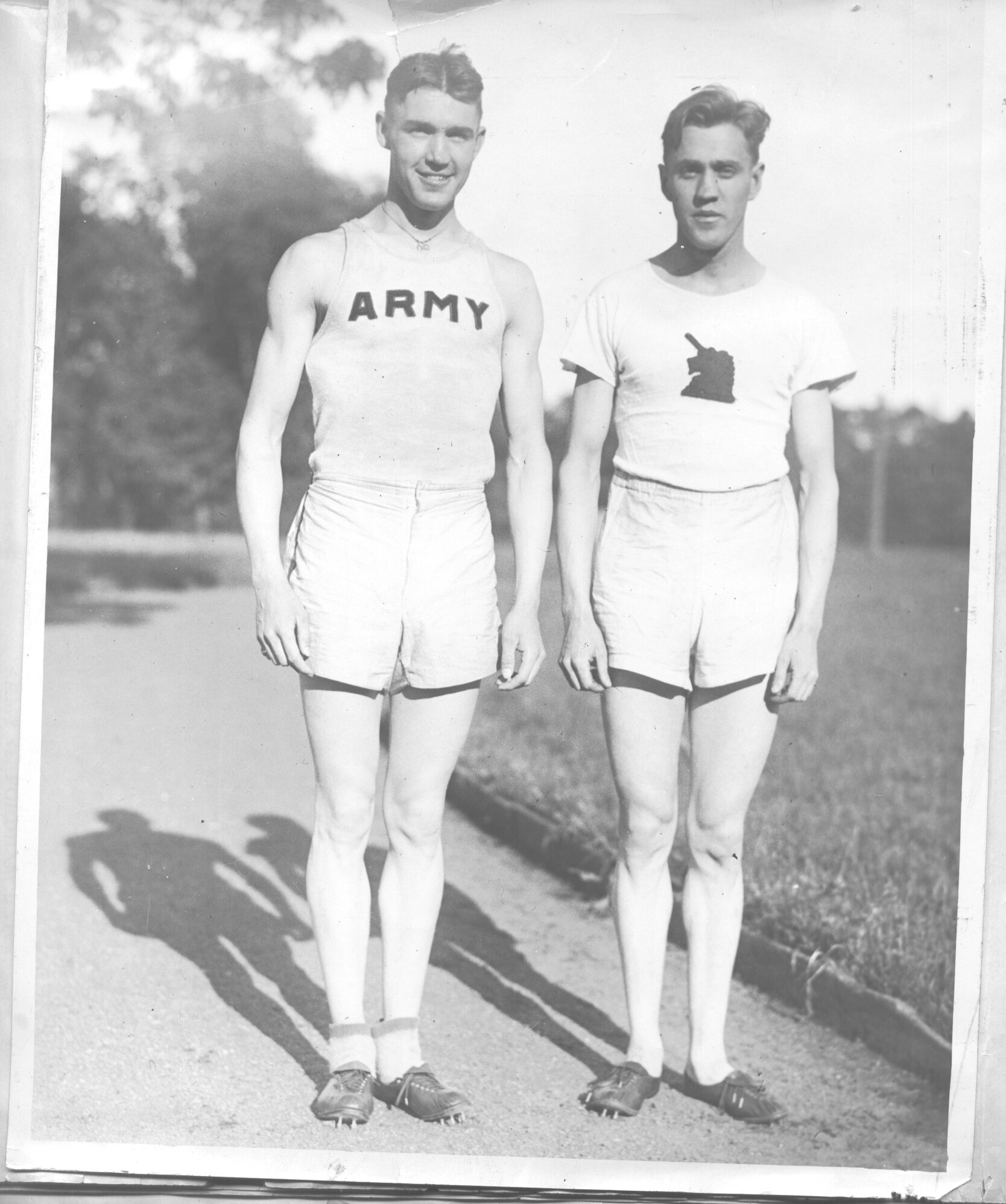
After Boston College he enrolled at West Point and graduated in 1930 while continuing his track career and grooming his younger brother Leo to track stardom.

George was a championship-caliber runner well into the 1930s while serving in the United States Army. He died tragically in a house fire in1940, on the eve of World War II.

George Lermond was the prototypical student for whom Boston College was founded. The third child in a poor but hard-working Catholic family, George was born in Revere, Massachusetts. His father left when he was ten years old, and his mother Julia Lenehan Lermond moved to Nahant to be with her parents.

George’s uncle, Father Daniel Lenehan, was pastor of Sacred Heart Parish in Malden. A frequent visitor to the house, he undoubtedly had something to do with George’s enrolling at Boston College High School in Boston’s South End. George commuted the 15 miles every day. Like many BC High lads, he then proceeded right to Boston College.

“Lemons” fit right in with the other Eagle track stars. He was on the distance medley team with Tom Cavanaugh, Luke McCloskey, and Louis Welch. They won four national championships and broke three world records.

George was the New England two-mile champion three straight years, and in one of those victories he set a course record of 9:33.5. Sportswriters called him “the sensation of the Eastern track world” in 1924. Among his many victories were the Millrose Three Mile in New York, the New England Two Mile championship, both indoor and outdoor, the National AAU 5- Mile, and the BAA Games Two Mile.
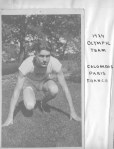
At Paris Olympics, 1924

At Paris Olympics, 1924

At the Paris Olympics George faced the immortal Paavo Nurmi and his mates from Finland in the 5000-meter run. Nurmi won the gold and George finished 24th. Aged 19, George was the second-youngest American ever to compete in the 5000.

Returning to Boston after the Olympics, George was the AAU six-mile champion in 1925. In January of 1925, he placed fourth against Nurmi in the 5000 at the Millrose Games in Madison Square Garden.

George also ran for the Boston Athletic Association. He introduced his younger brother Leo to Jack Ryder and the BAA. Under Ryder’s direction Leo became as big a star as George. Leo finished fourth in the 5000 at the 1928 Olympics in Amsterdam.
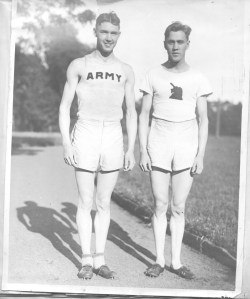
George in West Point track uniform, brother Leo in BAA gear

George in West Point track uniform, brother Leo in BAA gear

George and Leo also ran for the New York Athletic Club during the 1920’s, and press reports speculated that the United States would have two brothers competing at the Amsterdam Olympics in the 5000. George was at the peak of his powers at the time, holding the Military Academy records for the half-mile, the mile, and the two-mile. But he came up short during the trials, probably wearied from competing in multiple events at West Point.

Service to the county was in George’s family history. His grandfather Patrick had lied about his age to get into the 55th Massachusetts Infantry in the Civil War. A great-grandfather, William McCallister, served at both Petersburg and Appomattox.

George’s first military career stop was at the Air Corps Flying School in California. Though commissioned as a flyer, he stayed with the infantry. However, he was one of 262 Army pilots who delivered the nation’s air mail for 78 days in 1934.
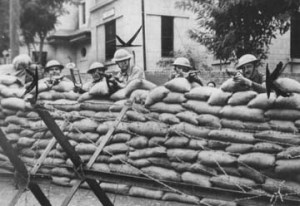
George's 15th Infantry Defending Post in Tientsin, China

George’s 15th Infantry Defending Post in Tientsin, China

George returned to an infantry assignment at Fort Jay on Governor’s Island in New York Harbor. He kept running and aimed for the 1932 Olympics in Los Angeles. His personal bests in several events took place around that time. In 1930 he posed a 1:55.3 in the 880 and a 4:15.2 in the mile. In 1932, he ran the two-mile in 9:16.6. It was also in 1932 that he set the unofficial world record for the 3000 meter steeplechase at the Eastern Olympic Tryouts at Harvard, with a time of 9:08 2/3.

He and Leo competed in a track meet in Lynn before the national Olympic tryouts, and George injured an ankle going over a water jump and missed the national final tryouts. The winner was Joe McCluskey, with a time of 9:14.8, much slower than George. McCluskey ended up taking the bronze in Los Angeles.

George did go to Los Angeles in 1932, however. He was a coach in the pentathlon. That event, consisting of fencing, swimming, show jumping, pistol shooting, and a distance run, was a showcase for military competitors. Richard Mayo won America’s first-ever pentathlon medal, a bronze.

George attended chemical warfare school in Maryland in 1934. After a graduate course in infantry at Fort Benning, Georgia, he was assigned to the 15th Infantry Brigade in Tientsin, China in 1936. His wife Edith accompanied him.

Japan invaded China in 1937, and the 15th ‘was reassigned to Fort Lewis, Washington. George’s immediate superior was and up-and-coming colonel named Dwight Eisenhower. Ike promoted George to captain in 1940.

George Lermond’s final assignment was to tank school at Fort Benning. He was slated to train under General George Patton, but he never got there. He and his family stopped for a few days at the luxurious Mount Victoria in LaPlata, Maryland, while Edith’s parents took a short vacation.

On the night of July 5, a fire broke out in the upper floors and spread quickly. George was able to lower Edith, four-year old Bill, and 15-month old daughter Edith to a porch by using a bedsheet. He dashed back into the house to save George junior and was overcome by the smoke. He was 35 years old. President Roosevelt directed that he be buried in Arlington National Cemetery.
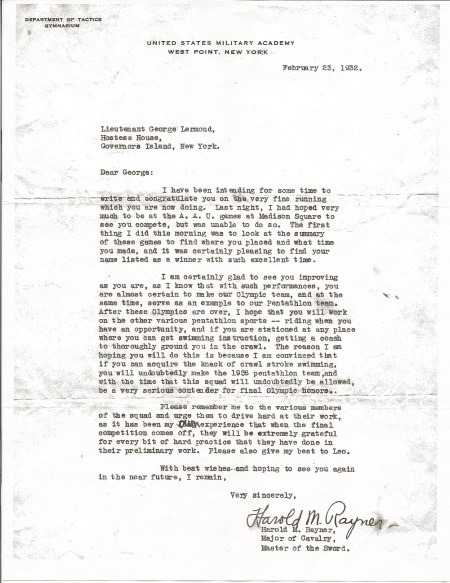
1932 Letter from Major Harold Rayner, Major of Cavalry and Master of the Sword
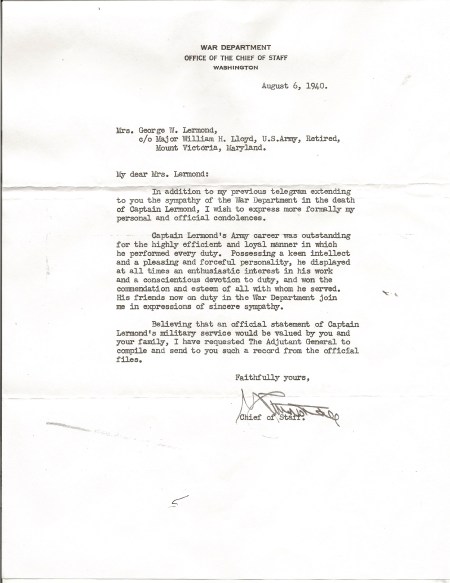
1932 Letter from Major Harold Rayner, Major of Cavalry and Master of the Sword

1940 Letter of Condolence from General George C. Marshall, U.S. Army Chief of Staff
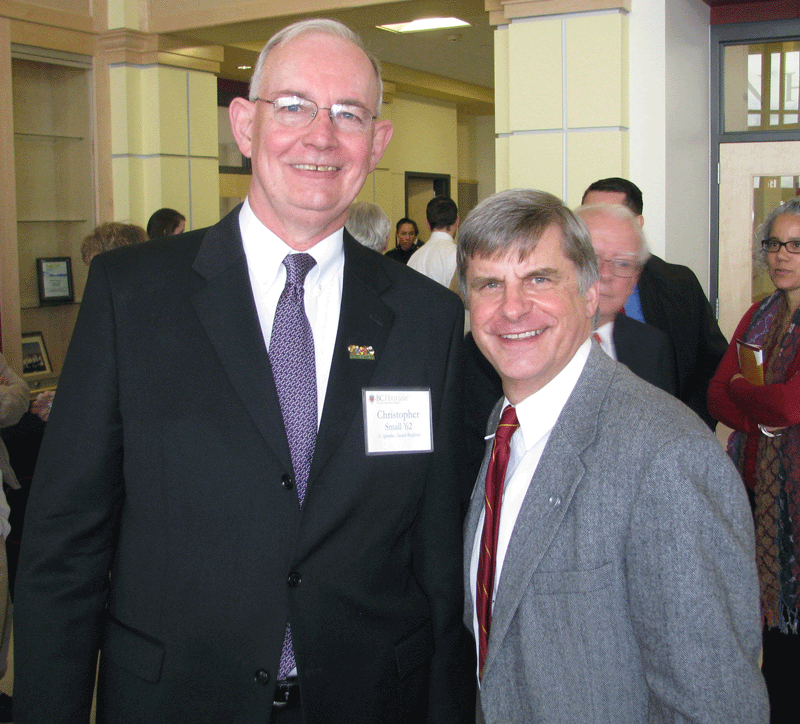
1940 Letter of Condolence from General George C. Marshall, U.S. Army Chief of Staff
Discussing College Hockey’s Best Rivalry with the Master: Former Boston University Coach Jack Kelley

November 11, 2013

Getting cold out there. Steamy morning breath. Rime on the windshield. A skim of glaze on the Charles. Bats, balls and gloves are put away. A final thanks to our Boys of Summer. Time for the Boys of Winter.

It’s hockey season at last, and there’s no better harbinger than the renewal of that ancient rivalry, Boston College and Boston University.

The Eagles took this year’s first encounter, 5-1, in the Terriers’ home arena on November 8. These two teams first played against each other in 1918. The all-time tally now reads BU 129, BC 117, with 17 ties. The 5-1 game was BC’s first outing since the announcement of Jerry York’s six-year contract extension. Looks like the team decided to throw Jerry a little party.

David Quinn, BU’s new head coach, was facing BC for the first time. He said that his lads would put the lessons of the loss to good use. Good call, David, to remember this game and build upon it.

Learning from Defeat
“I think I only remember the times that you beat me. That tells you what a rivalry it was,” said the coach.

Jack Kelley at the old Boston Arena, in the days before protective glass.

Jack Kelley at the old Boston Arena, in the days before protective glass.

The speaker of the above was not David Quinn or his predecessor Jack Parker. It was Jack Kelley, the man who coached the Terriers to the pinnacle of college hockey back in 1971 and 1921. Jack was the first coach I ever interviewed in person when I began writing for the Hockey News in 1969. I spoke with him recently to ask him for some memories of his games with Boston College.

“I had such great respect for Snooks Kelley and I loved coaching against him,” said Jack. “He and Cooney [Weiland] and Eddie Jeremiah and Herb Gallagher… they did so much for hockey way back then, getting it recognized and bringing it to the forefront…what they’ve done is probably forgotten today.”

For those who don’t remember back that far, Cooney Weiland played for the Bruins, coached them as well, then was the long-time coach at Harvard. Herb Gallagher was hockey coach and then athletic director at Northeastern. Eddie Jeremiah was a legendary head coach at Dartmouth. Agree with Jack’s observation about all three. But the same is certainly true of him. He’s not forgotten, but I don’t think his own contributions to college hockey are as well remembered or as highly esteemed as they should be.

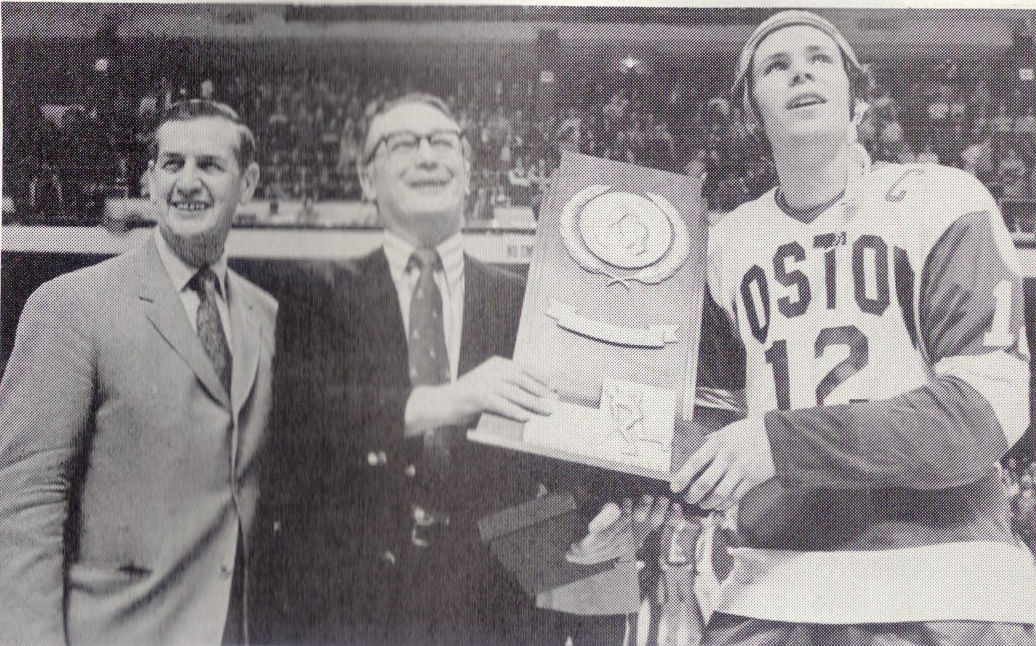
NCAA Tournament chairman Herb Gallagher, left, presents 1972 national championship trophy to Kelley and captain John Danby.

NCAA Tournament chairman Herb Gallagher, left, presents 1972 national championship trophy to Kelley and captain John Danby.

Jack Kelley’s work at Boston University transformed the college hockey culture in Boston. He came down from Colby College and shook a sleepy Terrier program awake. He turned the BC-BU series upside down and made the Beanpot a virtual BU invitational. He also showed that Eastern colleges could take down the mighty Western schools in the national tournament. And the precise, methodical passing game of his champion teams remains an essential part of any successful college sextet today.

Aside – yes, Cornell won a couple of national titles during Kelley’s era too. But gimme a break – they were a Denver-style Western crew, a transplanted Canadian Major Junior A outfit in college uniforms. Dick Bertrand, their tri-captain in 1970, was 28 years old when he graduated. Cornell had excellent teams and was almost impossible to beat. But their success was not quite as admirable as that of the other Eastern champions, of which Boston University under Jack Kelley would be the first.

The Raw Numbers

Before Quinn arrived, Parker had directed the team for 40 years. York is in his 42nd year of coaching. Between them, they’ve earned ten national championships and have won 1,838 games. Their places on Boston’s sporting Olympus are secure.

Jack Kelley, in his ten years at BU, had “only” 206 wins to go along with 80 losses and eight ties. His win percentage was .716, and his teams won six Beanpots and two national titles. Add seven years of coaching at Colby, and his all-time college record is 295-95-13. These numbers don’t lie, but they don’t speak loudly enough either.

Reverberations

You hear echoes from Jack Kelley’s time whenever BU and BC play. Parker learned his hockey at Kelley’s knee, a both player and assistant coach. After the year-and-a-half blip with Leon Abbott in charge at BU, Jack the Younger took over in 1973-74. He had learned well, and he preserved and extended the Terriers’ winning ways. Quinn played for Parker and was his assistant for a spell.

York’s teams play like an updated version of Kelley’s Terriers. They fling the puck around and through the opposition, a perpetual attack at greyhound skating speed made possible by full face masks and ever-lighter protective equipment. The face mask was not a good thing for the game, but that’s a topic for another time. It’s here to stay, and the winning teams like York’s have adapted to it. Jerry’s players excel at the stick-to-stick passing that Kelley’s BU teams perfected.

Back in 1971, Notre Dame came to BU and lost by several goals. The goaltender was asked what he thought about trying to stop the BU power play. “Stop it?” he said. “I just had to stand there and watch it – it was so beautiful. “

Those Last Games of 42 Seasons Ago

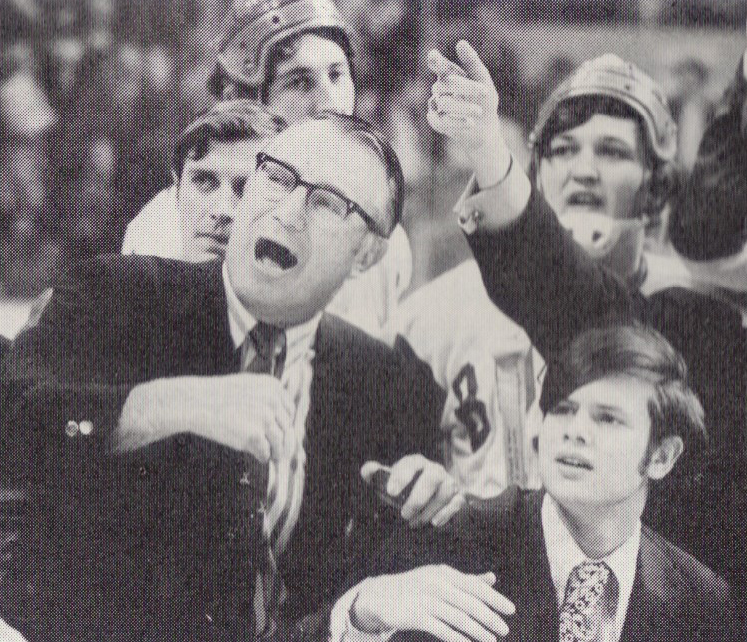
Kelley and his 1972 team, on the ice for the final time at Boston Garden

Kelley and his 1972 team, on the ice for the final time at Boston Garden

The last game that Jack Kelley coached against Boston College was one of those losses he remembers. He’s not the only one who recalls it well. Both he and Snooks Kelley had announced their retirements. BU was on its way to a second straight NCAA title. BC was a struggling, second-tier crew that had just one objective: to get Snooks his 500th career win before he went home after his 36th season.

BU that year was a little like the Bruins of 1971. Both teams were so powerful that they didn’t have to try especially hard. The B’s had won the Stanley Cup in 1970, then breezed through the next season and absorbed a dope-slap loss from Montreal in the first playoff round.

BC somehow rose to the occasion that snowy February night and upset BU 7-5, snapping an eight-game loss streak. As both Kelleys exited the rivalry, the series stood at 50-50-4. Jack Kelley recalled,

“That was the wakeup call. It was probably my fault. I sure didn’t want to be his 500th victim. Snooks deserved to beat someone like Boston University for such a magic number, and as time’s gone on, it’s dulled the pain and I appreciate being a part of his history.

“When you lose, most of the time you think it’s on you… and I kept wondering what I had done that I didn’t have my team totally prepared for BC.”

BC had given Jack a captain’s chair before that game. He still has it up in his lakefront home in Maine. As always, he was most gracious with Snooks and his players in the post-game handshakes at center ice. But when the locker room door closed behind him, Jack launched a post-game tirade that has become a permanent part of Terrier hockey alumni lore.

Well known to BU insiders too is the story of Kelley’s return to his Belmont home, where he usually entered by the back door. Finding the door locked, and still steaming, he kicked it in.
“My wife didn’t speak to me for a week after that,” he chuckles.

If that game was a poetic denouement to Snooks Kelley’s career, if the Snooker deserved to topple Boston University one last time, then the final contests of Jack Kelley’s tenure at BU were just as fitting and just as deserved.

Celebrating the win: Whooping it up as the 1972 tournament awards are announced. Behind Kelley is Jack Parker, then his assistant coach.

Celebrating the win: Whooping it up as the 1972 tournament awards are announced. Behind Kelley is Jack Parker, then his assistant coach.

The 1972 Terriers took both the ECAC and the NCAA championships at their second home, the Boston Garden. Each time they defeated Cornell, the team that had been Kelley’s most troublesome foe. It was 4-1 in the ECAC final and a thumping 4-0 in the NCAA title game.

Those final victories didn’t come easily. Cornell had beaten BU in the last regular season game after the BC loss. But the music finally stopped for the Big Red and their supercilious fans. Kelley kept fiddling with his lineup. If memory serves, one of his key moves was to give a more prominent role to Paul Giandomenico. Up to that time, the little guy known as Sweeper to his teammates and Peewee to his Walpole, Mass. friends had been a spare part, but in the Garden he gave his team mates a big extra boost.

What Else Might Have Been

Kelley departed the scene then, off to run the Whalers of the World Hockey Association. He turned to Boston College for several of his pro players – Tim Sheehy, Kevin Ahearn, John Cunniff, Paul Hurley. He also ran ice arenas, went back to Colby to coach a year, and all the while kept up with his horse-breeding business. An entire career in college hockey was not for him.

It would have been nice to see what Jack Kelley could have done as coach of a U.S. Olympic team. He was every bit as tough, every inch the disciplinarian, as Herbie Brooks would turn out to be in 1980. I suspect that he would have made Brooksie seem like a soft touch.

Jack’s Terriers took on the 1972 Olympic Team at an exhibition game at the Garden in November of 1971 and tied them 4-4. Three BC players were on the Olympic roster, prompting one Terrier partisan to yell, “Come on BU – it’s only BC!” A tie with the team that would bring home a Silver Medal from Sapporo – not bad at all for a college outfit.

Another thing that I never knew about Jack Kelley until our recent chat – he too is one of those Greatest Generation guys to whom we boomers owe so much gratitude. He was a latecomer to the war effort, but he did his duty, leaving Belmont High early in 1945 and entering the service. The war ended shortly thereafter. Jack would have graduated from BU in 1949, but his delayed return with so many other veterans put him into the class of 1952.

BC was in the Kelley family’s sights even then. Jack points out that his brother Paul was the BU goaltender in the first Beanpot game ever played, a 4-1 Terrier win over Northeastern on December 26, 1952. But he proudly adds that later in the year, Paul shut out Boston College. It was the first time the Eagles had been blanked in eight seasons.

Boston College and Boston University meet for the 264th time on January 17 at BC. Then they’ll play in the Beanpot first round on February 3.

I won’t predict the winner of either of those games. But I can promise that in both contests you’ll see college hockey the way it should be played. You’ll feel the rivalry’s spirit, raucously opposing on the surface, but respectfully friendly at the core like the game of hockey itself. For all that, you can thank the people who built these two college hockey programs. And one of the greatest of those builders was Jack Kelley. He wasn’t around Boston for very long, but he was one of the very best.

High Flight: Really, Really High Flight

November 6, 2013

Q: How high do you have to fly to be considered an astronaut?
Hint – you have to fly into space. So, where does “space” begin?

A. According to the Federation Aeronautique Internationale (FAI), space begins at the Karman Line, which is 100 kilometers or roughly 62 miles above sea level. At this height the air is too thin to give a vehicle sufficient aerodynamic lift to maintain altitude. In order to stay aloft at that level a vehicle must be traveling at orbital speed.

Theodore von Karman

Theodore von Karman

The barrier is named for Hungarian-American astrophysicist Theodore von Karman (1881-1963), who made the calculations that establish the limits of aerodynamic atmospheric lift.

Von Karman, called “Father of Supersonic Flight,” left Hungary at the end of World War I and returned to Aachen, Germany to head the Aeronautical Institute. He designed and built the first wind tunnels at Aachen. In 1926, he built the first ones in California. He was offered the post of director of the Aeronautical Laboratory at Caltech in 1930. The rise of the Nazis troubled him, so he accepted the offer and became a U.S. citizen in 1936. In 1941, he co-founded Aerojet General to develop rocket engines for the U.S. military, and he was a principal mover of the creation of Caltech’s Jet Propulsion Laboratory (JPL). In 1945, he co-developed America’s first high-altitude sounding rocket, the WAC Corporal.

The FAI states that if you’ve gone beyond the Karman Barrier, you’ve made it to space and you are an astronaut.

The X-15

The X-15

But here’s the rest of the story. The U.S. Air Force has always maintained that space begins 12 miles lower, at 50 miles above sea level. That made for long-delayed recognition, as astronauts, of a number of brave test pilots of the X-15.

My contemporaries will doubtless remember the exploits of the X-15, an experimental rocket-powered aircraft/spaceplane that set speed and altitude records in the early 1960s. The X-15 reached the edge of outer space and returned with valuable data used in aircraft and spacecraft design. As of 2012, it still holds the official world record for the fastest speed ever reached by a manned rocket-powered aircraft.

Joseph Walker

Joseph Walker

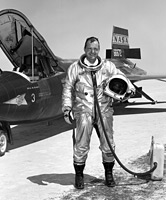
During the X-15 program, 13 different flights by eight pilots, five military and three civilian, met the USAF spaceflight criteria by exceeding the altitude of 50 miles (80 km). But of all the X-15 missions, only two flights (by the same pilot) exceeded 100 kilometers (62.1 mi, 328,084 ft.) in altitude and qualified as space flights per the FAI definition.

John McKay

John McKay

All of the pilots qualified as astronauts by military standards, and the Air Force pilots received USAF astronaut wings. But NASA, apparently worried about ruffling the FAI’s feathers, did not accord similar recognition to the civilian pilots. The agency hemmed and hawed about it for almost 40 years.

Bill Dana

Bill Dana

Finally, in 2005, the three civilian pilots – Bill Dana, John McKay and Joseph Walker, were awarded NASA astronaut wings – 35 years after the last X-15 flight. McKay’s and Walker’s wings were, unfortunately, awarded posthumously.

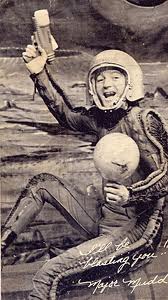
Major Mudd

Major Mudd

Congratulations, at long last, to those three gentlemen. As our old television favorite Major Mudd would say, “I’ll Be Blasting You!”