Boston, City of Champions: The Full Story

November 5, 2013

WCVB-TV, Channel 5 in Boston, has updated its “Banner Years” sign. And it’s impressive. Since 1903, Boston’s professional sports teams have racked up 34 championships:
17 NBA titles
8 World Series Crowns
6 Stanley Cups
3 Super Bowls
Eight of these titles have come since 2001.

But that’s not all. With thanks and due respect, Channel 5, you left out the 11 NCAA Hockey Titles won by Boston teams since 1949:
5 for Boston College
5 for Boston University
1 for Harvard
Five of these 11 National Collegiate Hockey Championships have come since 2001.

The WCVB Banner with needed additions.

The WCVB Banner with needed additions.

Hashing Out the History of the Hashtag

October 28, 2013

The Hashtag - Now Indispensable to Twitter Users

The Hashtag – Now Indispensable to Twitter Users

When you were memorizing your facts back in grade school, did you ever wonder why “lb.” is the abbreviation for “pound?” Makes no sense at all, does it?

And nowadays, do you puzzle over why the robocall operator wants you to hit the “#” symbol on your keypad when she says “press pound?” That doesn’t make much sense either. Are you supposed to bang hard on that little key?

Well, they do make sense after all. Nothing happens without a reason. Here’s the rest of the story.

According to the book Shady Characters by typographical historian Keith Houston, the”#” sign evolved in England during the Middle Ages. Scribes and scrivener-accountants needed an abbreviation for “libra pondo,” which means “a pound by weight.”

They would write “lb” on their documents, and to signify that the term was a contraction, they would append a tilde: ~. Over time, hastily-working record-keepers corrupted “lb~” to “#.”

That’s how the “#” came to be known as the pound sign, but the versatile little symbol has had many other uses as well. Its most recent duty has been as the Twitter hashtag, but it has also meant “number” and “checkmate.”

The symbol’s official name is the “octothorpe.” According to one believable story, it was also used by medieval British cartographers. “Octo” is the Latin prefix for “eight,” while “thorpe” is an old Norse word meaning “field” or “farm.” Thus, if you saw a “#” on one of their maps, you’d know that it was a village surrounded by eight fields.

Roger Maris: 61 Home Runs in 1961

Roger Maris: 61 Home Runs in 1961

And while we’re at it, it’s World Series time, so here’s another. Do you, like me, think that Roger Maris’s brilliant achievement of 61 home runs in 1961 should not by sullied by an asterisk? If so, we can draw a bit of consolation whenever that little “*” shows up. That’s because the asterisk comes from the cuneiform symbol meaning “heaven.”

Roger was a good, clean-living guy. He belted all those homers in an era long before the damnable performance-enhancing drugs arrived. If anybody deserves a place among the baseball deities, it’s Roger Maris. He was a star among stars. Just like you see in the heavens above.

A Look Back: Dick MacPherson, Gridiron Club’s Man of the Year for 2003

October 17, 2013

Coach Mac

Coach Mac

Ten years ago, in my term as president of the Gridiron Club of Greater Boston, we honored Dick MacPherson as our Man of the Year.

We had a great turnout, with speakers from Dick’s native Old Town, Maine, and from many of the places where he’d played and coached. These included Springfield College,. Maine Maritime Academy, UMass, Syracuse, and the New England Patriots. We also raised $10,000 for Dick’s designated charities, the Joslin Diabetes Centers in Boston and Syracuse.

Click on the link for the evening’s souvenir program book: DMacPhersonManofYear It has Coach Mac’s biography and full coaching record.

America’s Second “Ace of the Aces” – Greatest Generation Member Joe Foss (1915-2003)

October 13, 2013

Joe Foss on the cover of Life Magazine

Joe Foss on the cover of Life Magazine

Sports fans of a certain age, especially those of us who grew up with the New York Giants of the National Football League, remember fondly the arrival in 1960 of the American Football League, the Boston Patriots, Dallas Texans, Los Angeles Chargers, New York Titans and others. The man whom the upstart AFL owners picked as their commissioner, to lead them in their challenge to the NFL and its commissioner Pete “Pope Alvin” Rozelle, was the governor of South Dakota, Joseph Jacob “Joe” Foss. And what a choice it was.

Joe Foss grew up in a South Dakota farmhouse that had no electricity. At age 12, he visited a local airfield to see Charles Lindbergh on tour with his plane, the Spirit of St. Louis. At 16, he and his father paid $1.50 apiece to take their first aircraft ride, in a Ford Trimotor.

In 1933, while coming back from the fields during a storm, his father died when he drove over a downed electrical cable and was electrocuted as he stepped out of his automobile. Joe dropped out of school at 17 to run family farm. But after watching a Marine Corps aerial team perform aerobatics in open-cockpit biplanes, he was determined to become a Marine aviator. Joe worked at a service station to pay for books and college tuition and began to take flight lessons. His younger brother took over the farm, and Joe attended Sioux Falls College and then the University of South Dakota.

Joe paid his way through university by “bussing” tables and took part in football, track, and boxing. In 1940, he hitchhiked to Minneapolis to enlist in the Marine Corps Reserves.

World War II, the Second “Ace of Aces”

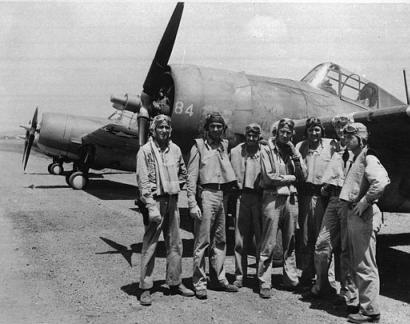
Men of the Cactus Air Force on Guadalcanal

Men of the Cactus Air Force on Guadalcanal

Foss became a Naval Aviator and was commissioned a second lieutenant. At age 26, he was considered too old to be a fighter pilot and was initially assigned to flying reconnaissance. He kept requesting combat, however, and eventually the Marines let him transfer to a fighting squadron. He became the squadron’s executive officer and was shipped with his mates to the Pacific island of Guadalcanal in 1942.

Foss and his group were catapult-launched off an escort carrier and flew 350 miles to reach the island, code-named “Cactus.” It was the brutal first extended encounter in the island-hopping campaign for the Marines. The air group became known as the Cactus Air Force. They were pivotal in the battle and in bringing ultimate victory.

Japan’s fighter plane, the Mitsubuishi “Zero”, was the best combat flying machine in the war’s early years. Foss shot down a Zero on his first mission. He barely escaped in his own shot-up Grumman Wildcat, but he landed it safely at full speed with three more Zeroes on his tail.

In three months of the battle for Guadalcanal, he and his boys of the Cactus Air Force shot down 72 Japanese Zeroes. Foss downed 26 of them. That matched the record held by America’s top World War I “Ace of Aces” Eddie Rickenbacker. America eventually surpassed Japan in aerial warfare capabilities and resources, and by 1945 the Japanese had no planes or pilots remaining to fight the air war.

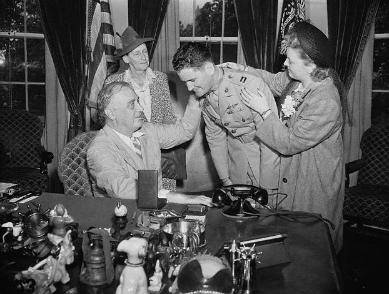
Receiving the Medal of Honor from FDR

Receiving the Medal of Honor from FDR

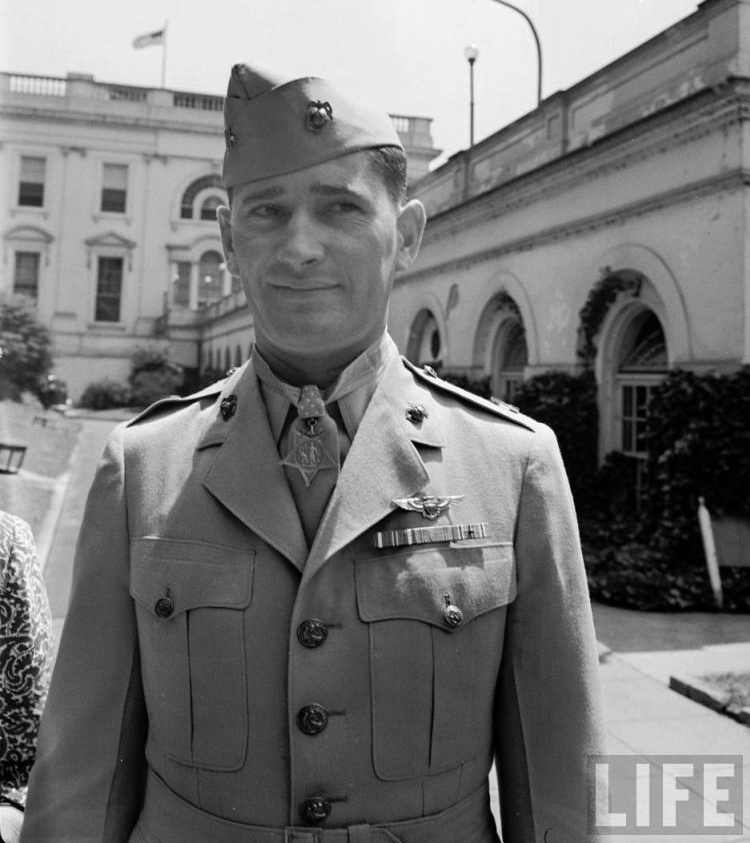
Foss returned to the United States and received the Medal of Honor from President Franklin Delano Roosevelt. The White House ceremony was featured in Life magazine, which portrayed the reluctant Captain Foss on the cover.

Foss returned to the Pacific in 1944 but did not register any more kills. He left active duty in 1945, but was recalled for the Korean War, was Director of Operations and Training for the Central Air Defense Command, and rose to the rank of Brigadier General.

Politics, Business, and Charitable Endeavors in Civilian Life

Foss served two terms in as Republican state legislator before becoming South Dakota’s youngest governor ever, at age 39. In 1958, he tried for the U.S. House of Representatives and lost to George McGovern, another World War II flyer.

Joe accepted the offer to become the first Commissioner of the newly created American Football League in 1959. He served there for seven years. In 1960, secured the league’s continued existence with a five-year, $10.6 million contract with ABC to broadcast AFL games. That deal arguably secured the future of ABC Sports as well. Joe stepped aside as league commissioner in 1966, two months before the historic merger of AFL and NFL and the creation of the Super Bowl.

Joe Foss as NRA spokesman

Joe Foss as NRA spokesman

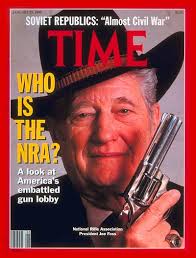
Joe hosted ABC ‘s The American Sportsman from 1964 to 1967, and he hosted and produced his own syndicated outdoors TV series, The Outdoorsman: Joe Foss, from 1967 to 1974. He spent six years as Director of Public Affairs for KLM Royal Dutch Airlines and two years as president of the National Rifle Association. He continued to speak out for Second Amendment rights and other conservative causes, once appearing on the cover of Time magazine wearing his trademark Stetson hat and holding a revolver.

Foss had a daughter with cerebral palsy, which undoubtedly played a part in his tenure as president of the National Society of Crippled Children and Adults. He also worked for Easter Seals, Campus Crusade for Christ, and an Arizona program for disadvantaged youths.

In 2001, he and his wife founded The Joe Foss Institute, a 501(c)(3) nonprofit organization that is still active today in promoting patriotism, public service, integrity and an appreciation for America’s freedoms. The Institute recruits military veterans to go into classrooms across the country to interact with students.

Handling Indignities with Dignity

In January 2002, the 86-year-old Foss was in the news when he was detained by security at the Phoenix Sky Harbor International Airport. He was scheduled to deliver an address at the NRA and speak to a class at the United States Military Academy. Because he had a pacemaker, he could not go through the metal detector. He was searched by the airport security people, who discovered his star-shaped Medal of Honor, a clearly marked dummy-bullet keychain, a second replica bullet, and a small nail file with Medal of Honor insignia. The airport functionaries did not recognize the Medal of Honor, demanded that it and the memorabilia be confiscated and destroyed, and required him to remove his boots, hat and belt.

Despite this ignorant and insulting treatment, Foss didn’t stoop to anything resembling “Do you know who I am?”

He said later, “I wasn’t upset for me. I was upset for the Medal of Honor, that they just didn’t know what it even was. It represents all of the guys who lost their lives – the guys who never came back. Everyone who put their lives on the line for their country. You’re supposed to know what the Medal of Honor is.”

Yes indeed. This was not a case of “Those who do not learn the lessons of history are doomed to repeat them.” Rather, it was a pathetic example of what can happen when people don’t bother to learn history or to respect those who made that history.

A Final Personal Comment

Joe Foss suffered a stroke in late 2002 and died on New Year’s Day 2003. He was buried in Arlington National Cemetery. I would like to thank him for many things. The first, of course, is for his military service. Boomers like me should never stop thanking our elders of the Greatest Generation for the hardships they endured and for the prosperous country they bequeathed to us.

Thanks also, Joe, for being the American Football League’s Number One Man. Those Boston Patriots’ games, especially at BC and Harvard, were unforgettable. It took a man of your stature to give the league the credibility it sorely needed. Later on, in your charitable endeavors, you were “a man for others” in the fashion that my own Jesuit educators preach to their students.

Finally, thank you for demonstrating such dignity and class after that unfortunate airport incident. You showed that you’d been living and fighting for a higher cause than yourself. It was never about you.

Yet, even as I acknowledge and recount all that Joe Foss did for his country, I can’t help but think that it would have been better if he’d taken a different path in 1960 and not run the American Football League. Like George McGovern, the man who kept him out of Washington DC – Joe Foss would have made a superb president of the United States.

Boston College Hall of Fame Inducts Eight New Members

October 4, 2013

The Boston College Hall of Fame inducted eight new members this evening. The members of the Hall’s 44th class are:

Football: Mike Cloud ’99, Stalin Colinet ’96, and Dick Cremin ’65
Basketball: Jessalyn Deveny ’05
Hockey: Ken Hodge ’88
Baseball: Chris Lambert ’05
Track and Cross Country: George Lermond ’25
Soccer, Lacrosse, and Ice Hockey: Anne Kavanagh ’81

I am the official Hall of Fame Biographer. You can read their biographies here. Hope you like them – it’s another class of great Boston College people, all of whom exemplify the school’s motto: Ever to Excel!

I Still Like Ike

September 2, 2013

General Eisenhower Behind the Wheel of a Jeep“I hate war as only a soldier who has lived it can.”
–Dwight D. Eisenhower

Our 34th president learned well from the many errors he made as commander in chief of America’s army in Africa and Europe, and then as Allied Supreme Commander, during World War II.

But he got all the big decisions right, both in war and later on in eight years in the White House. For instance:

The Shoah

Interviewing survivors at Ohrdruf prison camp

Interviewing survivors at Ohrdruf prison camp

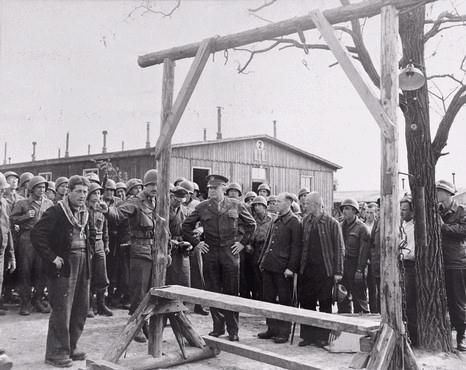
He insisted on seeing for himself the Nazi death camps and the horrors inflicted at them. Then he called for a sizable delegation of people from Congress, along with many photographers and journalists, to witness the evidence of man’s inhumanity to man. He explained,

“I visited every nook and cranny of the camp because I felt it my duty to be in a position from then on to testify at first hand about these things in case there ever grew up at home the belief or assumption that the stories of Nazi brutality were just propaganda. Some members of the visiting party were unable to go through with the ordeal.

“I not only did so but as soon as I returned to [General George] Patton’s headquarters that evening I sent communications to both Washington and London, urging the two governments to send instantly to Germany a random group of newspaper editors and representative groups from the national legislatures. I felt that the evidence should be immediately placed before the American and British publics in a fashion that would leave no room for cynical doubt.”

Segregation and Civil Rights

The 101st Airborne at Little Rock Central High

The 101st Airborne at Little Rock Central High

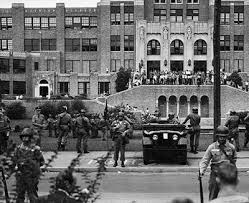
Eisenhower, not Kennedy or Johnson, was the first president to take a principled stand for Civil Rights. He followed through against the Southern Democrats whose century of delay and obstruction had frustrated realization of those rights for black Americans.

Governor Orval Faubus of Arkansas refused to comply with Brown vs. Board of Education. In 1957 he sent out the state’s National Guard to prevent nine black kids from attending Little Rock Central High School. Rioting broke out and Faubus did nothing to stop it. So Ike sent in 1,000 paratroopers from the 101st Airborne, one of the units he had commanded on D-Day, to restore order and ensure that the” Little Rock Nine” could attend the public school.

Harry Truman had ordered the military desegregated, but two-thirds of the units were still segregated when Eisenhower came along. He finished the job and made sure to include all auxiliary facilities including many southern shipyards. Firebrand black congressman Adam Clayton Powell stated that Ike “had done more to restore the Negro to the status of first-class citizenship than any president since Abraham Lincoln.”

National Defense and Security

Ike was principally responsible for the formation of NATO, a military alliance that prevented wars rather than fight them. Some of his military advisers were fans of using nuclear weapons during the Cold War. One time he reprimanded them, in writing, with “You boys must be crazy.”

That move established the principle of deterrence, a no-first-strike rule that has held to the present day. He never tipped his hand to the Russian Communists and other evil empire-builders of his era, however. He avoided involving America in what he called “brushfire wars” while making enemies believe that he would have no compunction about engaging in another world conflict.

The Economy, and America’s Standing as World Leader

In the Oval Office

In the Oval Office

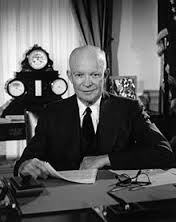
Eisenhower knew how to balance the demands of national security and the national economy. He stated “I patiently explain over and over again that American strength is a combination of economic, moral, and military force. If we demand too much in taxes in order to build planes and ships, we will tend to dry up the accumulations of capital that are necessary to provide jobs for the millions of new workers that we must absorb each year.”

When he came into office, he inherited a $6.5 billion deficit. Tax cuts, reductions in government expenditures, and abolition of price controls launched an economic rise that brought on surpluses by 1956. He left office with a surplus, and with the interstate highway system well underway and financed by a dedicated gasoline tax.

Eisenhower died in 1969. He was buried in an $80 Army coffin and wearing his standard field jacket. The only ornamentation consisted of his five stars, recognizing his rank as General of the Army. John J. Pershing also had that rank, as did George Washington, although Washington’s fifth star was awarded after his death.
.
Eisenhower’s predecessor “Give ‘em Hell Harry” once remarked with cynical realism that a statesman is a politician who has been dead for 10 or 15 years. It has taken much longer than that for history to show how great a statesman Dwight Eisenhower actually was.

Ike was so much more than a bland old retired soldier who liked to play golf. He was the perfect man for his time as leader of our nation, and, more importantly, he was one of the best presidents ever.

Though I was born in the Truman Administration, Dwight Eisenhower was the first president I knew. I was one of the many Boston kids who joined Big Brother Bob Emery in a toast to the president each day, raising our glasses of milk while “Hail to the Chief” played. I like Ike even more now than I did at the time, and nowadays I raise a glass of adult beverage in salute to him.

America sorely needs another president with Dwight Eisenhower’s character, values, experience, and perspective.

Reflections: A Pilgrimage to the Seashore

August 29, 2013

Some go to the chapel to pray. I go to the ocean. But I don’t recite prayers. I listen. I cannot help but hear God’s voice when I go to the water’s edge.

I hear the roar of His wrath in the surf’s endless assault on the rockbound coast. Crash. Retreat. Crash. Retreat.

IMG_7750I hear His whisper in the murmuring wavelets on a starry night — Orion and Ursa and playmates without number above me, countless grains of sand at my feet.

I remember His promise to Abraham, 4000 years ago.

“If you can number the stars, and count the grains of sand on the seashore, so shall your descendants be.”

Since I was young, I have come to the ocean to seek solitude. Or comfort. Or memories. Of my friends, my elders, my family, my sweethearts real and yearned for. They remain with me, like weathered stone monuments or faded snapshots. And on the shore I feel their presence, close by me again.

Sometimes, at twilight, when I walk the strand or sit on the rocks, and the darkening sky blends the horizon away, I hear the music.

The sweet, sad songs of my youth waft in on the salty breeze. My heart lifts up, and I am sixteen years old again. I’m Hugo, Kim’s One Boy. I’m Tony, and I just kissed a girl named Maria. I’m Rick, assuring Ilsa that we’ll always have Paris. Lord, I’m so gallant and debonair.

Or I’m just me, standing at the edge of the dance floor, watching her whirl and smile. I’m hoping that a slow number plays next, that I’ll get to her first, and that I’ll summon up the courage to ask her to dance. Lord, I’m so shy and nervous.

I am thankful to be here. Thankful for what I find when I come to the seashore. I find my own true nature, like a shell dug out of the sand. I find both good and bad.

Yes, the songs I hear are sad, but I’m not. Though there’s much, much, I would do differently if I could go back, I don’t want those days to return. I’ve lived them. I am at peace.

Now I do say a prayer. A prayer of gratitude for the gift of those days – of those years – and for all those who shared them with me.

Frankly, My Dear, He Did Give a Damn

August 8, 2013

Major Gable

Major Gable

Today’s featured Greatest Generation member: Major Clark Gable. Frankly, my dear, he did give a damn. About his country.

Gable enlisted in the U.S. Army Air Forces in 1942 after the death of his wife, Carole Lombard. He was 41 years old at the time and had already starred in “Gone with the Wind,” “Mutiny on the Bounty,” and “It Happened one Night.”

He wanted to become an aerial gunner on a bomber. He was sent to Florida and officer Candidate School, where he was an assistant potato peeler during training. He graduated 700th in his class of 2,600, and his fellow trainees chose him as their graduation speaker. He got a special assignment from General “Hap” Arnold: to make a recruiting film in combat with the Eighth Air Force. Arnold wanted to recruit more gunners for his bomber fleet.

Gable trained with and accompanied the 351st Bomb Group to England. He spent most of 1943 there as the head of a six-man motion picture unit. He’d been promoted to captain while in training so he would have a rank commensurate with his position as a unit commander.

He flew five combat missions, including one to Germany, as an observer-gunner in B-17 Flying Fortresses between May 4 and September 23, 1943. Gable earned the Air Medal and the Distinguished Flying Cross. During one of the missions, his plane was damaged by flak and attacked by fighters, which knocked out one of the engines and shot up the stabilizer. In the raid on Germany, one crewman was killed and two others were wounded, and flak went through Gable’s boot and narrowly missed his head.

The lobbying of MGM got its top star reassigned to noncombat duty, and he returned to the States to edit his film. As it turned out, the service was able to recruit enough gunners, but he completed the film and hoped for another combat assignment. In May 1944 he was promoted to major but was not brought to Normandy for D-Day. He was relieved from active duty as a major on June 12, 1944 since he was over-age for combat. His discharge papers were signed by Captain Ronald Reagan.

Gable completed editing of the film “Combat America” in September 1944. He gave the narration himself and interviewed several enlisted gunners, making them the focus of the film. He resigned his commission on September 26, 1947, a week after the Air Force became an independent service branch.

Gable was Adolf Hitler’s favorite actor. The Führer had offered a big reward to anyone who could capture Gable and bring him to Berlin.

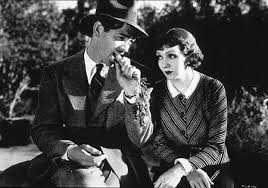
The scene that inspired Bugs Bunny's most famous line.

The scene that inspired Bugs Bunny’s most famous line.

Bugs Bunny’s “Eh…what’s up, doc?” carrot-chewing pose was inspired by a scene in “It Happened One Night.” Gable, leaning on a fence, was eating carrots and talking with his mouth full to Claudette Colbert.

But as Doris Day put it, “He was as masculine as any man I’ve ever known, and as much a little boy as a grown man could be – it was this combination that had such a devastating effect on women.”

And LIFE magazine said of Gable: “All man… and then some.”

People Who’ve Made a Difference: The Ravishing and Brilliant Hedy Lamarr

July 31, 2013

A Beginning in Sex and Scandal

lamarr 1Her early life was scandalous. She appeared naked, on the movie screen, running through the woods and swimming in a lake, the first woman ever shown in the altogether.

That was in Ecstasy, made in Czechoslovakia in 1933. She also acted out sexual climax, writhing and moaning in a bliss that would have made Meg Ryan blush. Her films were luscious cinematic forbidden fruit, banned almost everywhere. Benito Mussolini owned and treasured a personal copy of Ecstasy.

And she was beautiful. Hedwig Kiesler had a perfect face, raven hair, and a slim delicate figure. Men lusted for her. The first man to have her – that’s not the right word, nobody ever truly had her – was Friedrich Mandl, the first of her six husbands.

He was one of the richest men is Austria. She was his trophy wife. His company, Hirtenberger Patronenfabrik, sold ammunition and was the one of the leading arms makers in Europe. He was a Fascist sympathizer, supplying the war machines of anyone who’d buy his wares.

Mandl showcased Hedwig at dinners and banquets with the likes of Mussolini and Adolf Hitler. She acted the part of a brainless beauty. She often said that the secret of glamor was to “stand there and look stupid.” So she did. It was a superb performance, maybe the best acting job of her career.

Hedwig Kiesler was a genius. Daughter of a Jewish banker, she had excelled in school, especially in math and science. She was born in Vienna on November 9, 1914. She quit school at 16 to study acting. In the late 1920’s Hedy was discovered and brought to Berlin by director and acting instructor Max Reinhardt. Following her training in the theater, she returned to Vienna and began to work in the film industry. She married Mandl, who was 30 years older than she, in 1933.

Eavesdropping Inside the Third Reich

When her husband and the evil dictators sat around talking shop, she sat there, looked pretty, and took it all in. She knew what they were talking about, and she knew what they were up to.

A favorite topic of Adolf Hitler was military technology, especially of the type that could control missiles and torpedoes by radio. Wireless control of weapons would be a huge jump from the hard-wired methods then in use. Wireless did come into use during the 1940s, by both Allies and Axis forces. But it was single-frequency radio, easy to monitor, detect, and jam.

According to one account, Mandl and Hitler engaged in a drunken menage à trois after a dinner party. Mandl was desperate to cement a big arms deal. The third party in the threesome was his gorgeous wife. That story is from a widely-panned book, What Almost Happened to Hedy Lamarr, and its truth is in doubt.

Even if it is true, that may or may not have been the final straw for Kiesler. As a Jew, she came to hate Nazis. She despised her husband’s business ambitions, and she did not share her thoughts about science and technology. If anything, she would share her information with the Allies who were fighting against the Nazis.

The radio-controlled guidance system for torpedoes that she heard discussed never got into production because it was too susceptible to disruption. Somewhere along the way she got the idea of distributing the guidance signal over several frequencies. This would protect it from enemy jamming. But she still had to figure out how to synchronize the transmitter and receiver. The solution would come to her later.
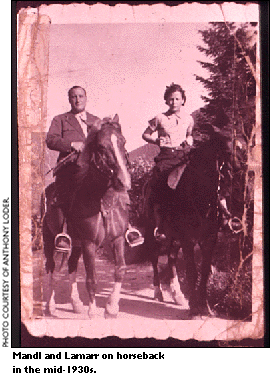
Hedy and Mandl

Hedy and Mandl

Mandl came to know how she felt about him, and he kept her locked up in his castle, Schloss Schwarzenau. He had also forbade her to pursue acting, and tried to buy up all copies of Ecstasy.

In 1937, Hedwig escaped by drugging her maid and sneaking out of the castle wearing the maid’s clothes. She sold her jewelry to finance a trip to London.

Hedwig made it out of Austria just in time. Hitler annexed the country in 1938 and took over Mandl’s business. Mandl was half-Jewish, so being an arms supplier to the Third Reich was no help to him. He had to flee to Argentina, where he eventually became an adviser to Juan Peron.

Into the Movies

In London, Kiesler arranged a meeting with the Hollywood film titan Louis B. Mayer. He knew of her, of course, and he too was captivated by her beauty. On the voyage to America she signed a long-term contract and became one of MGM’s biggest stars of the time.

Hedy and Paul Henreid in "The Conspirators"

Hedy and Paul Henreid in “The Conspirators”

She was in more than 20 films, costarring with Clark Gable, Judy Garland, Bob Hope, Paul Henreid, James Stewart, Spencer Tracy and others. Algiers, White Cargo, and Samson and Delilah were among her biggest screen successes. Unfortunately for Hedy, she turned down the lead in both Casablanca and Gaslight.

She made and spent, by some accounts, at least $30 million. The mansion used in filming The Sound of Music in 1965 belonged to her at the time. Her film career went into decline after Samson and Delilah in 1949.

Film fame and the showbiz scene didn’t do it all for Hedy Lamarr. She didn’t care much for the world of glitz, parties, and paparazzi. She wanted more. She wanted use her money, power, and formidable intellect to defeat the Nazis. She found an ally in composer/musician George Antheil.

Her Only True Partner
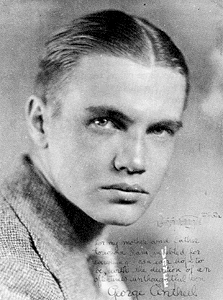
George Antheil

George Antheil

Antheil was an interesting individual too. His 1945 autobiography, The Bad Boy of Music, was a best seller. He was born in New Jersey in 1900 and showed promise as a musician and composer. He lived in Paris, and then in Berlin, from 1923 to 1933 when he returned to America. He also wrote books and a nationally syndicated advice column, wrote regularly for Music World and Esquire, and was a major figure in American ballet.

Antheil made his way to Hollywood to write musical scores for movies. He thought that the movie industry was hostile to modern music, however, and had little personal regard for Hollywood. He also saw Nazism for what it was. One of his magazine articles, “The Shape of the War to Come,” accurately predicted both the outbreak and eventual outcome of World War II. He joined up with Oscar Hammerstein and others in the Hollywood Anti-Nazi League.

Antheil and Lamarr were ideological soul mates. But that’s not what brought them together initially. He also claimed to be an expert on female endocrinology. He had written a series of articles about how to determine the availability of women based on “glandular effects” on their appearance. They had titles like “The Glandbook for the Questing Male” and another on “glandular criminology” titled “Every Man His Own Detective.”

Lamarr first sought out Antheil for help in “augmenting her upper torso,” as one web site nicely puts it. She had him over for dinner after scrawling her phone number in lipstick on his windshield after leaving a party. He suggested glandular extracts of some sort, but their talk evidently turned to technology and how it might be used to fight Hitler. Perhaps technology talk was unavoidable; she had a drafting table in her living room.

Antheil’s most famous musical work was the thoroughly avant-garde Ballet Mechanique. The work’s orchestration first called for 16 player pianos, along with two regular pianos, xylophones, electric bells, propellers, siren, and bass drums. It was hard to keep so many player pianos synchronized, so he scaled it back to a single set of piano rolls and augmented the regular pianos with several additional instruments. It produced an entirely new brand of stereophonic sound.

The Technological Breakthrough and Patent

Antheil’s expertise with player pianos was just what Hedy Lamarr needed. She wanted to design a system of controlling torpedoes that would also be hard or impossible for the enemy to jam. Single-frequency radio control was vulnerable to jamming, as she knew. If they could find a way to “change the channel” at random intervals, the torpedoes could make their way to the target.

Hedy incorporated Antheil’s method for synchronizing his player pianos. The coordination of frequency signals was done with paper player-piano rolls. Then she was able to synchronize the frequency changes between a weapon’s receiver and its transmitter. This “frequency hopping” used a piano roll to make random changes over 88 frequencies. It was intended to make radio-guided torpedoes harder for enemies to detect or jam.

On August 11, 1942, U.S. Patent No. 2,292,387 for a “Secret Communication diagramSystem” was granted to Antheil and Hedy Kiesler Markey, which was Kiesler’s married name at the time. They turned the patent rights over to the U.S. Navy, and unfortunately they never made any money from their brilliant invention.
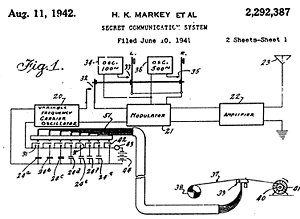
The Navy did not end up building radio-controlled torpedoes. They might not have taken the idea seriously; after all, it came from a gorgeous woman and a flaky musician. There were also some big additional hurdles to overcome before such a system could be used with waterborne ordnance. The Navy did ask her to use her good looks to sell War Bonds, though. She agreed, and bestowed kisses for a purchase price of $50,000.

But the Navy did use Lamarr’s system beginning in 1950. It first controlled sonobuoys, the floating listening posts that detect submarines. In the sixties, it was used for secure ship-to-ship communications during the Bay of Pigs invasion and the Cuban missile crisis. Reconnaissance drones used in Vietnam also employed frequency hopping.

Every time you dial your cell phone, take a call on it, or log onto the Internet, you can thank Hedy Lamarr. Her invention, conceived to fight the Nazis and now called “spread spectrum,” is the foundation of all wireless communication.

“Long-term evolution,” or “LTE,” technology, is just an extension of Hedy and George’s frequency-hopping. Spread spectrum is also the key element in anti-jamming devices used in the government’s $25 billion Milstar system. Milstar satellites control all the intercontinental missiles in U.S. weapons arsenal.

Dozens of “citing patents” owned by the likes of Sony, AT&T, and Seagate now appear on the Patent Office page for Hedy Lamarr’s Secret Communication System. The latest of them was filed in 2009.

After the Glamor Fled
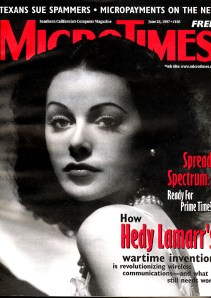
Micro Times magazine with coverage of Lamarr's achievements in technology

Micro Times magazine with coverage of Lamarr’s achievements in technology

The last half of this remarkable woman’s life was not happy. True, the Electronic Frontier Foundation gave Lamarr her a long-overdue award for her work in 1996. Her son Anthony Loder accepted it for her because she no longer appeared in public. She also received the prestigious Austrian Academy of Science Award from her native country.

All six of Hedy’s marriages ended in divorce. Some of her quotes about her experiences there are revealing:

“I must quit marrying men who feel inferior to me. Somewhere there must be a man who could be my husband and not feel inferior. I need a superior inferior man.”

“Perhaps my problem in marriage–and it is the problem of many women–was to want both intimacy and independence. It is a difficult line to walk, yet both needs are important to a marriage.”

“I have not been that wise. Health I have taken for granted. Love I have demanded, perhaps too much and too often. As for money, I have only realized its true worth when I didn’t have it.”

Lamarr’s last movie appearance was in 1958. Her eye-candy roles had never required much acting anyway. She was usually cast as the mysterious and ravishing femme fatale. She’d often been called the most beautiful woman in the world. But when other, younger stars came along, she had fewer and fewer opportunities. She underwent plastic surgery that didn’t help. She had money problems and was twice arrested for shoplifting.

She also launched a number of lawsuits. These included going after Mel Brooks for his silly “That’s Hedley Lamarr!” in Blazing Saddles, and suing Corel Draw for using her image on packages. Both suits were settled out of court. She also wrote an autobiography, Ecstasy and Me, in the 1960s, and ended up suing the publisher.

Hedy lived her final years in seclusion in Florida, her eyesight failing and out of touch with the world that her scientific genius has helped immeasurably. She died in 2000 and was cremated. At her request, her ashes were scattered in the Vienna Woods of her native land.

I Wish I’d Known Her

Anthony Loder once said that his mother never got the chance to grow old gracefully. He also stated that he wished she had talked more to him. There was so much he never was able to ask her. She was frequently on the phone with show-business people, he remarked – Greta Garbo, Bob Hope, Barbara Stanwyck, Louis Mayer, and many others. I wonder, though, if she ever truly revealed herself to another person. Much of what ought to be known about her remains hidden.

One of the greatest satisfactions I get in my work is to hear someone say, “You captured him (or her) in that article.” When I can discover and tell of things that should be known about people, I feel that I’ve done a good deed, both for my subject and for posterity.

How I wish I’d had the opportunity to capture the fabulous Hedy Lamarr. Yes, she was a rich and pampered glamor girl, and we have too many of them. Much of her biography reads like a supermarket tabloid.

But there was so much more to Hedy. She saw monstrous evil. She looked it in the face and escaped its clutches. She made it out of Adolf Hitler’s world, and could have lived an opulent and decadent life. But she decided to do something about the evil she’d seen.

There had to be enormous goodness in her soul, enormous strength in her character. I doubt that anyone was ever allowed to see that goodness and strength for what they were, and then to tell her entire story. We’re the poorer for it.

This blog post is the best I can do for her and for you, dear reader. Danke schoen, Hedwig Kiesler. Sie möge in Frieden ruhen.

A Profile from the Greatest Generation: James Maitland Stewart (1908-1997)

July 28, 2013

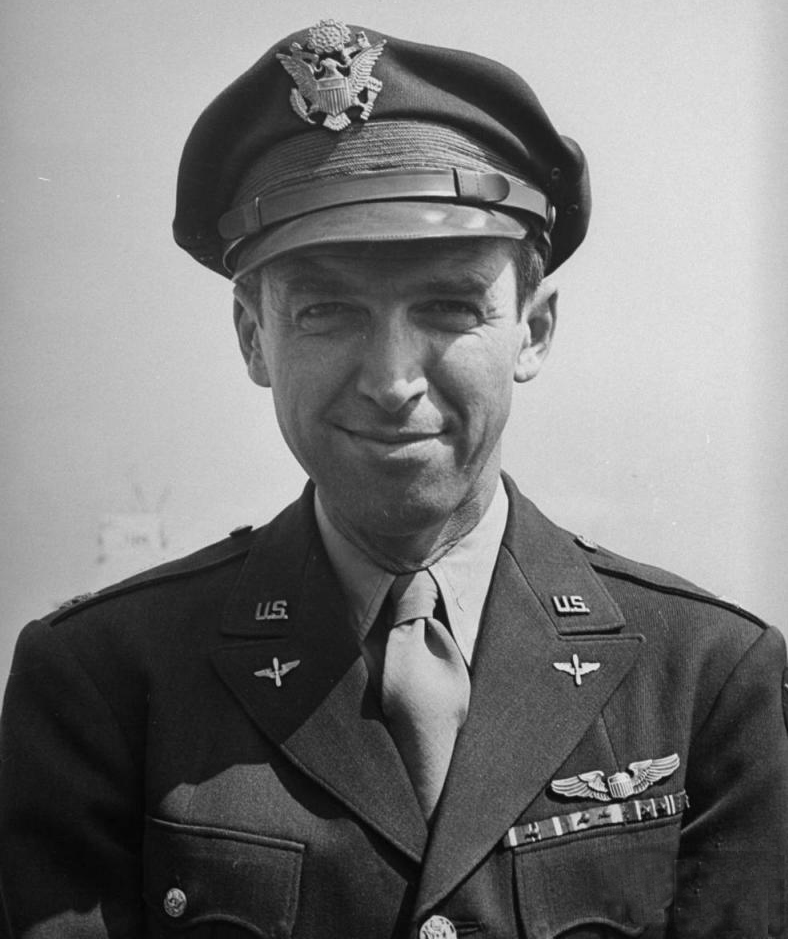
ImageThe real-life George Bailey didn’t stay home and fight the Battle of Bedford Falls.

Both of James Stewart’s grandfathers had fought in the Civil War. His father was in the Spanish-American War and World War I. James was eager to serve his country when World War II broke out, and he wanted to do so as a military flier. He had been a licensed pilot since 1935. Several times he’d flown cross-country from Hollywood to visit his parents in Pennsylvania, navigating by railroad tracks.

It wasn’t easy for him, either to get into the service in the first place or to get assigned to combat duty. He was already an established film star – “You Can’t Take It With You,” “Mr. Smith Goes to Washington,” “The Philadelphia Story” and others – when he was drafted in 1940. He did not meet the height and weight requirement and was rejected. He sought out the MGM muscle man Don Lewis, bulked up, and was initially rejected again before persuading the enlistment officer to run new tests. He finally got into the Army in 1941.

Stewart enlisted as a private, but as a college graduate (Princeton 1932) and a licensed commercial pilot he applied for an Air Corps commission. Though he was almost 33, six years beyond the maximum age restriction for aviation cadet training, Stewart received his commission as a second lieutenant on January 19, 1942, His first assignment was an appearance at a March of Dimes rally in Washington, D.C., but he wanted to go to war rather than be just a recruiting symbol. He applied for and was granted advanced training in multi-engine aircraft.

His show business background still was needed and useful to the nation as well. Shortly after Pearl Harbor, he performed with Orson Welles, Edward G. Robinson, Walter Huston and Lionel Barrymore in an all-network radio program called “We Hold These Truths,” dedicated to the 150th anniversary of the Bill of Rights. In 1942, he starred in “Winning Your Wings,” a film that helped bring in 150,000 new recruits.

Until well into 1943, he stayed stateside in various training capacities. After rumors that he would be taken off flying status and go out to sell war bonds, the 35-year old Stewart appealed to his commander, 30-year-old Lt. Col. Walter Arnold. His commander recommended Stewart to the commander of the 445th Bombardment Group, a B-24 Liberator unit then undergoing final training in Iowa.

Stewart started out as operations officer but soon became the group’s commander. They flew to England and had their first combat mission on December 13, 1943, bombing U-boat facilities at Kiel, Germany. After missions to Bremen and Ludwigshafen, Stewart was promoted from group commander to squadron commander. He received the Distinguished Flying Cross for actions as deputy commander of the 2nd Combat Bombardment Wing in February. In March, in his 12th combat mission, Stewart led the 2nd Bomb Wing in an attack on Berlin.

In all, Stewart flew on 20 official missions and on several others that were uncredited because he, as a staff officer, could assign himself as a combat crewman. He received a second Distinguished Flying Cross, the Croix de Guerre, and the Air Medal with three oak leaf clusters. He was promoted full colonel in 1945, making him one of a very few Americans to rise from private to colonel in four years.

After the war Stewart stayed with the Air Force Reserve and reached the rank of Brigadier General in 1959. He was one of 12 founders and a charter member of the Air Force Association. In 1966, he flew as a non-duty observer in a B-52 on an Arc Light bombing mission during the Vietnam War. He refused the release of any publicity regarding his participation, as he did not want it treated as a stunt, but as part of his job as an officer in the Air Force Reserve.

After 27 years of service, Stewart retired from the Air Force on May 31, 1968. But he kept working for democracy and human rights through the American Spirit Foundation, which he co-founded. He collaborated with Russian president President Boris Yeltsin to have a special print of “It’s a Wonderful Life” translated, and in January 1992, on the first free Russian Orthodox Christmas Day, Russian TV broadcast that film to 200 million Russians.

In tandem with politicians and celebrities such as President Ronald Reagan, Supreme Court Chief Justice Warren Burger, California Governor George Deukmejian, Bob Hope and Charlton Heston, Stewart also worked from 1987 to 1993 on projects that enhanced public appreciation and understanding of the U.S. Constitution and Bill of Rights.

If giving is what makes you rich, then James Stewart’s long life of service and giving of himself to his country undoubtedly made the real-life George Bailey the Richest Man in Town.