Book Review and Reflection – “American Girl: Memories that Made Me” by Georgia Scott

February 28, 2022

Over the years I’ve become an enthusiastic reader of biography and memoir. Everybody, from the “great” people of history to the utterly on-the-surface-ordinary Joes and Janes, has a story.

There are different kinds of memoir. If I seek out one by, say, Winston Churchill, I’m less interested in the events of his childhood than in getting his take on how he changed the world. It’s a slanted, autobiographical view of history, but still one worth knowing. As Winston once cracked, “History will be kind to me, for I intend to write it.”

But as author Marion Roach Smith points out in The Memoir Project, memoirs are not autobiographies. Rather, she suggests that memoir is “the single greatest portal to self-awareness…writing about how you grew up to be who you are…little moments, revelatory real events, are what turn and shape our lives.”

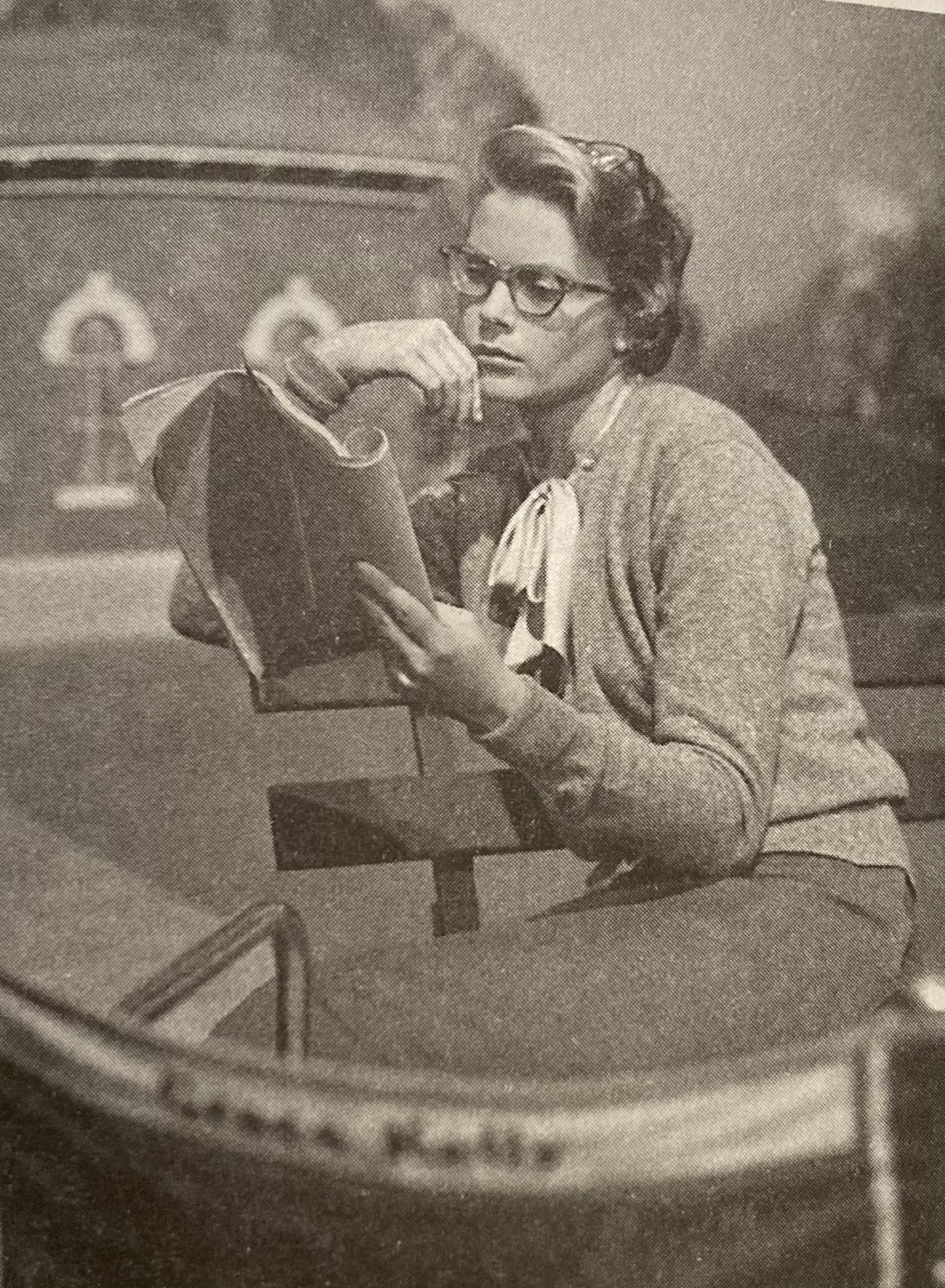
That’s what I saw – no, it was actually what I nearly experienced – as I read and then re-read American Girl: Memories that Made Me, by Georgia Scott.

We don’t learn a lot about the author’s life as an adult or about her distinguished academic career. All the book says about her is that she is an author and a poet, whose work includes two collections of poetry and books on British and American literature. It doesn’t mention her three degrees, topped by a doctorate in Jewish studies, her faculty appointments in Michigan, Japan, and Poland, or her nine years of study and writing in London.

You also have to dig around to find that she had a Fulbright Scholarship to teach African American literature in Poland, and that Lech Walesa endorsed her poetry book, The Good Wife, as “a brave and beautiful book.” She read her first published poem for the preliminary talent competition in her state’s Miss America pageant, where she finished runner-up.  She’s done more than sixty poetry readings and performances throughout Europe and America. She lives in Gdansk, Poland.

But if we don’t get Scott’s life story from this book, we do learn what makes her tick, what shaped her life and brought her in Roach Smith’s terms “from what you once did not know (Act One) and what you now know after you’ve been through it (Act Three.)”

Scott grew up in a seaside town near Boston. She dubs it with the pseudonym “Belle Isle.”  The town, the busy street she calls “Wisteria Drive,” and all of the neighbors, family members and acquaintances who segue in and out of her young life are also given pseudonyms.  Local businesses, public figures, and other places retain their real names, so anyone who grew up in “Belle Isle” will instantly recognize them.

Georgia Scott

Reading this memoir is much like reading a collection of poems. The chapters are short; there are 138   of them in the 268-page printed edition.  Actually, there are many echoes from Scott’s previously-published books of poetry sprinkled throughout. She has that knack for observation and turn of phrase that only gifted poets seem to have.

In this way, her book reminds me of Glad Farm by Catherine Marenghi, which I consider the gold standard in memoir-writing. I reviewed it here a few years ago. Its chapters are also short, with 35 of them over 281 pages. Marenghi, like Scott, is an acclaimed and frequently-published poet. Both women, I suspect, would tell you that they prefer writing poetry to writing prose; their love poetry is as provocatively erotic as anything you’ll find in the Bible’s Song of Songs. But when they do write prose, the clever images, similes, and metaphors crop up on almost every page.

For Scott’s writing style alone, her book is a treat.  Here are just a couple of examples of her poetry-in-prose: 

Recalling trips to the beach with her older sister, she writes, “The rules were simple. Never turn your back on the water. Know which way the tide is headed. In or out…When I think back, those tides were like women with different scents and different demands. Low tide was fruity and cool. It took a while to get to her edge. Low tide held back. The onus was on you to go over to her. High tide smelled of heat that built up. It was Chanel No. 5 to her drugstore opposite. She went after you in no uncertain terms.”

In describing her house, Scott takes a single sentence that runs on for 20 printed lines to tell us of all the unique aspects – white columns, hand-painted Dutch tiles, intricate parquet floors, and so on – that were not the reasons that her mother fell in love with the place. Then she pivots to write “No” with three more sentences spanning just two lines. They land like jabs in a boxing ring to tell us why her mother liked the window seat in the front hall most of all.

Severe physical setbacks played a big role in shaping Scott’s attitude towards life and in honing her powers of observation. Relegated to the sidelines for a few years – on crutches, with rheumatoid arthritis as a schoolgirl and six months in a full body cast after back surgery as a college student – she learned some hard lessons and developed a gimlet eye on everyone who crossed her path.

In a blurb on the back cover of the book, she states, “Long periods of convalescence don’t make for an endearing child…your best skills are as transferable as soldier’s ability to kill.”

Sheesh! Here I want to make a side remark. I have to take issue with another thing that she wrote for the book’s back cover. I’ll quote it here first.

“My stillness is not surrender anymore than my silences are. If you think I acquiesce, think again. I am watching. I am listening. I am noting everything down. The transformation of my right middle finger began in those months. The protrusion in the first joint resulted from the pressure of pencils and pens in my hand. Typewriter and computer use have reduced it somewhat in recent years, though not entirely. See. My middle finger is still raised.”

I don’t see that here. Yes, she’s “on” to everybody, and her assessments along the way are appropriately critical. But I don’t see her flipping us all the bird. I see an understanding instead, a willingness to forgive. It may be coming at long last, but it’s there. Maybe you won’t agree with me. But read the book before you decide.

 As the book moves along, Scott’s perspective widens. She becomes more and more perceptive. We see her growing into a worldly-wise adult, from Act One to Act Three, as Marion Roach Smith describes. As a child, she wondered how Perry Mason could be so smart and never see how madly in love with him that Della Street was.  At school, trying to get around in her crutches, she was labeled “diseased” by an older girl. “I learned that a smiling face could carry an insult…she left me with a wariness of my peers. Girls, that is. The boys didn’t bother me at all.”

Her widowed mother became romantically involved with a neighbor, also widowed, and there was one time she saw them kissing, “in an embrace worthy of Rodin.” She’d never seen her mother and father kissing, though. She ran upstairs, cried into her pillow, and rubbed her eyes, “wishing I could erase what I saw.”  

Later, when her mother’s romance ends unhappily, she writes “I don’t remember the last time [he] visited. That’s the problem with real life as opposed to what is made up. You don’t know until after things happen what is important. Sometimes you spot it after. More often not. The domino that topples the rest is lost…The house got quieter without their laughter. Tarantellas became a memory.”

The author’s most distressing memory, the one that “marked my entry into that club of adults that I had wanted to join for so long,” still bothers her. One of the adult children who lived next door, a Korean War veteran, apparently cut himself late one night and bled to death. One of the neighbors came in to help and “did what she could. He seemed alright when she left. But in the morning he was dead.”

Scott tries to make sense of that incident, and can’t. “What was done was done and what wasn’t was never spoken of again. Yet, I never forgot. It was the death that no one could know about. It became ours alone. Like a chocolate heart that is crushed but kept in a drawer because it is all that a lover could give it has been my secret until now. No one is left who can be hurt, I don’t think…The question that has haunted me for years is not to him but to those others who were there with him. One who amused me and one whom I loved. Why wasn’t an ambulance called?”

Act Three, indeed.

Another similarity to Catherine Marenghi’s story is that Georgia, like Catherine, did not come to know “the whole truth” about herself and her family until relatively late in life.  In Glad Farm, we read of Catherine’s discovery of family correspondence and newspaper clippings in an old cedar chest that revealed the details of her parents’ dreams and ambitions, as well as a tragic death that no one ever spoke of.

In Georgia’s case, it takes until the end of the book for us to find out just what she meant to her father, who died suddenly when he was just forty-five.  Fifty years later, one of her sisters told her of the family’s situation and where they had lived in the city, not in the town of Belle Isle, when Georgia was born.  She had never known just how her arrival changed everything. She then, at long last, realizes why her mother had always said, “He loved you all, but you were special.” And that revelation inspired her to write this book.

In an early chapter, Georgia writes, “I didn’t miss my father. That was the awful truth.  A source of guilt, I let no one know and I only realized as a person realizes a staircase is steep. Step by step or in my case, year by year.”

But near the book’s end she is recounting her dreams of her father, dreams in which she never saw his face. It never came into view but stayed a whitish-grey, and, “His voice gave no reassurance. It remained mournful as a foghorn for years. Now he sings. It wasn’t my time to go then, but when it comes, I hope he’s there.”

That brought tears to my eyes.
Never Forget

January 27, 2022

Today, January 27, is International Holocaust Remembrance Day. It is the anniversary of the liberation of Auschwitz-Birkenau, the massive murder factory where more than a million Jews were put to death as part of Adolf Hitler’s Final Solution.

We must never forget those innocent victims of the Nazis’ insane crusade. Nor must we forget the five million other Jews and the five or six million other people who were killed by a nation that had gone mad. These numbers are estimates, educated guesses. No one really knows for sure just how many lives were snuffed out, how many life stories will never be told.

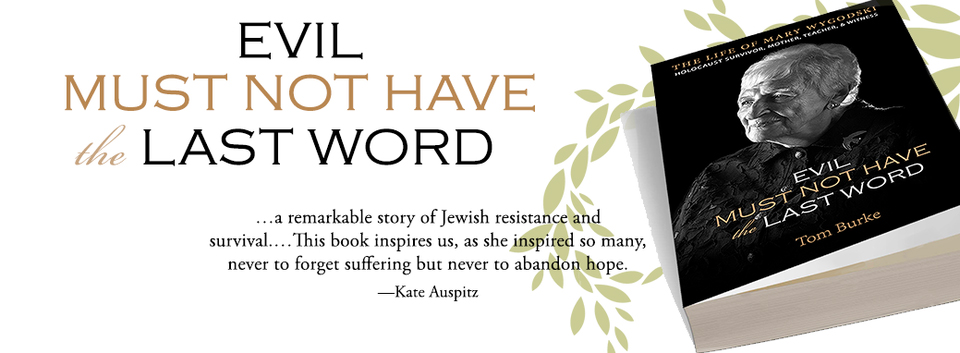
But some people lived to tell about it. I have been most privileged to help one of them, Mary Wygodski, to tell her story in book form. Evil Must Not Have the Last Word is the fruit of almost six years of research. It was released for publication on December 31, 2021.

The book is written in the first person. Mary is the principal narrator, but we hear the voices of several others: her husband Mort; her girlfriends Bella and Edith, who also survived the three concentration camps where Mary was imprisoned; her cousin, Genia Kovner; and her children and grandchildren, son Avi, daughter Charlene, and grandsons Matthew, Jeremy, and Elan.

The book took much longer to write than I had ever imagined. Once I had done several interviews with Mary, I realized that I needed to learn much more about the Holocaust and its aftermath, as least as it had directly affected her, in order to place her story in the proper context and to do it full justice. So I undertook the research that gave me an appreciation of, inter alia: the history and culture of her native city of Vilna, the wonderful “Jerusalem of Europe;” how the Nazis used people of the conquered lands to carry out much of their diabolical work; the particular history of the concentration camps at Kaiserwald, Stutthof, and Magdeburg; the Jews’ difficulties in escaping from post-war Europe to Palestine, America, and other places; and the emergence, through the crucible of war, of the new state of Israel.

So, to mark this Holocaust Remembrance Day, I am pleased to inform you that the book is available on all of the major online sites – Barnes & Noble, Amazon, Goodreads etc. – and that it can be ordered through your local bookstore.

If you wish to contact me directly about the book or would like to purchase a signed copy, please email me at tjburke@veteranscribe.com.

I will close this blog post with the book’s epigraph. It ends another Holocaust memoir, I Was a Boy in Belsen, and it sums up perfectly my own beliefs and feelings.

“Go home from this place and tell your children and your grandchildren that you have looked into the eyes and have shaken hands with people who have survived the greatest cataclysm mankind has unleashed on mankind. Tell them to tell their children and their children’s children, because these people will be mourned and spoken about and wept over for 10,000 years. For if they aren’t, we are all done for.”

— Paddy Fitzgibbon, On the Occasion of the Dedication of Irish Shoah Memorial, Listowel, Ireland, 2010

A Year (and a Drink) of Godly Prosperity to You

December 31, 2021

It’s the last day of 2021. The old year and its spirits, both good and evil, take their leave. We celebrate, give our thanks, and wish our fellow human beings well in coming twelve months. If we’re in America we’ll have our weary eyes glued to the big ball that descends on the stroke of midnight.  If we’re residents of other countries, we’ll be observing the turning of the year in some other quaint – and quite frankly, nicer and more tradition-suffused ways.

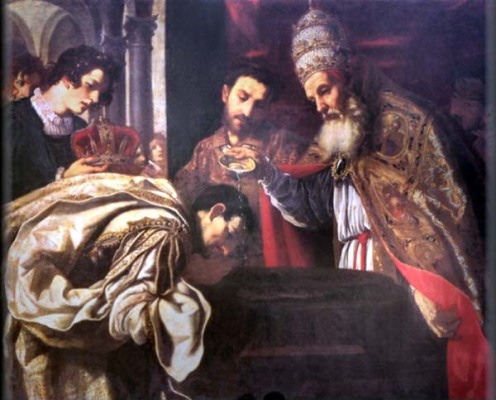
Pope Sylvester baptizing Emperor Constantine

We’ll all be raising glasses of various types this evening too, and I’ll suggest two appropriate libations.  The first of these is Maria von Trapp’s Sylvester Punch: take a 750 ml bottle of burgundy, mix in 12 cloves, I lemon rind, 2 tbsp sugar, and 2 cinnamon sticks. Heat it over a low flame but don’t let it boil. Add 750 ml of hot tea and serve – about 12 of your guests can partake.

Why the name Sylvester Punch? Today is the feat of Saint Sylvester. In Germany, this evening is called Silvesterabend or Silvesternacht in honor of the man who was pope during the reign of Emperor Constantine. Legend also has it that Sylvester baptized Constantine after the emperor, who ended the persecution of Christians, was cured of leprosy.

Whether or not that story is true, we don’t know. But we do know that Sylvester, who was pope for 21 years and died on December 31 in the year 335, was the first man to assume the throne of Peter during a time of civic peace. That peace was welcomed, and had been a long time coming. So it’s especially appropriate to remember and honor Sylvester at this time of year, when we all wish and hope for “peace on earth.”

Thanksgiving and ritual purifications to cast out demons are popular December 31 traditions beyond our borders. In central Europe, in times that pre-dated organized religion, fireworks and artillery salutes took place to scare away demons. In France, the father of the family would bless the children, and the children would thank the parents for their love and care. In Austria, December 31 was Rauchnacht,or “Incense Night,” when the father would purify all the rooms of the house with incense and holy water. In Spain and Spanish-speaking countries, it was considered good luck to eat twelve grapes at the stoke of midnight.

Sinners got a chance to lighten their sentences in Purgatory too. The Church granted a plenary indulgence – yes, a wiped-clean slate – for those who recited the Latin “Te Deum” prayer in public. Those who recited the prayer in thanksgiving would get a partial indulgence. Not a bad deal either way, for us sinners.

But in any case, we really ought to be thankful as we toast in the New Year. And that brings us to our second drink. Unfortunately, we can no longer order the liqueur known as Sansilvestro, which was made with suspended flakes of silver. People used to put flakes of gold or silver into their beverages. These flakes didn’t affect the drink’s tastes and they weren’t harmful; in fact, they were thought to aid circulation and digestion.

So here’s what we’ll use to toast in the New Year: The Godly Prosperity. It’s .5 oz cinnamon schnapps with gold flakes, .25 oz lemon juice, 3 oz chilled sparkling wine, a dash of orange bitters, and a cranberry garnish.

The drink’s name comes from Saint Thomas More. One New Year’s Eve he lifted a glass and wished his friends “a year of godly prosperity, one that sees a happy continuation and gracious increase of virtue” in their souls.

I’ve already recited my “Te Deum.” You may read the words here, if you wish.  Yes, I am most thankful for all the blessings I’ve received, and for the family and friends whom God has sent to me.

And tonight I echo the words of Thomas More. May 2002 be for you a year of godly prosperity.

What John Steinbeck Really Saw and Thought

November 18, 2021

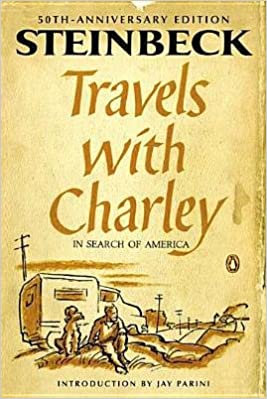
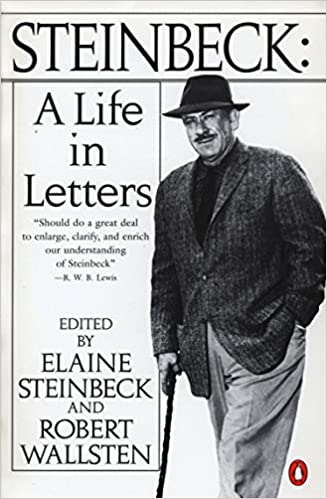
Like me, you likely read John Steinbeck’s Travels with Charley when you were in high school. If so, you probably don’t recall anything like the following excerpt from a letter to his long-time friend and publisher, Pascal Covici. The letter was written in July, 1961. Steinbeck was in the process of writing his travelogue at that time. The book was published in 1962.

His trip around the country had taken place in 1960 – the beginning of the decade of “The Sixties,” – don’t forget. He was already in declining health, and he wanted to see his country one last time. He died in 1968, at the age of 66.

I wonder what Mr. Steinbeck would have to say if he took a similar trip today. Here is the passage, today’s food for thought.

“Thinking and thinking for a word to describe decay. Not disruption, not explosion but simply rotting. It seemed to carry on with a weary inertia. No one was for anything and nearly everyone was against many things. Negro hating white. White hating negroes. Republicans hating Democrats although there is little difference.

“In all my travels I saw very little real poverty. I mean the grinding terrifying poorness of the Thirties. That at least was real and tangible. No it was a sickness, a kind of wasting disease. There were wishes but no wants. And underneath it all the building energy like gasses in a corpse. When that explodes, I tremble to think what will be the result. Over and over I thought we lack the pressures that make men strong and the anguish that makes men great. The pressures are debts, the desired for more material toys and the anguish is boredom. Through time, the nation has become a discontented land. I’ve sought for an out on this – saying it is my aging eyes seeing it, my waning energy feeling it, my warped vision that is distorting it, but it is only partly true. The thing I have described is really there. I did not create it. It’s very well for me to write jokes and anecdotes but the haunting decay is there under it.

“Well, there was once a man named Isaiah – and what he saw in his time was not unlike what I have seen, but he was shored up by a hard and durable prophecy that nothing could disturb. We have no prophecy now, nor any prophets.”

I offer this passage to you, dear reader. I offer it without comment. However, I commend for your reading my source for this: Steinbeck: A Life in Letters. John Steinbeck didn’t care much for the telephone, and he didn’t have email or social media. So he wrote, longhand. And this collection of his letters is superb.

Finally, I also suggest that it would be nice if we all could take up, once again, the nearly lost art of letter-writing. What was the last time received a letter, one composed especially and only for you?  Wasn’t it a nice feeling to get it? Maybe, as 2021 wanes and the New Year approaches, you could take the time to write one to someone you’ve not seen or spoken to lately. I assure you, it will be appreciated.

Mud in Your Eye for Mid-November

November 15, 2021

Today is November 15, the feast of Saint Albert the Great (Albertus Magnus), who died in the year 1280.

The cocktail of the day is the Mud Pie: 1.5 oz rye or bourbon, .5 oz orange curacao, .5 tsp sugar, 2 dashed Peychaud’s bitters, on orange slice, cherry, lemon twist.

And when we raise a toast with that drink, it’s “Here’s mud in your eye.

You’ve heard that one, I’m sure. Where did it come from? If you guessed The Bible, you’re right.  Here’s the rest of the story, from John, Chapter 1.

“And as Jesus passed by, he saw a man which was blind from his birth. And his disciples asked him, saying, Master, who did sin, this man, or his parents, that he was born blind? Jesus answered, Neither hath this man sinned, nor his parents: but that the works of God should be made manifest in him. I must work the works of him that sent me, while it is day: the night cometh, when no man can work. As long as I am in the world, I am the light of the world.

“When he had thus spoken, he spat on the ground, and made clay of the spittle, and he anointed the eyes of the blind man with the clay,  And said unto him, Go, wash in the pool of Siloam, (which is by interpretation, Sent.) He went his way therefore, and washed, and came seeing.”

So, “Here’s mud in your eye” is a toast to your health – especially to your precious gift of eyesight. It’s also a wish for you to “see the light” in many other ways. A goodly benediction, indeed.

And what does this have to do with Albertus Magnus, honored as a doctor of the church and a brilliant natural scientist? Perhaps, though it’s all speculative, it has to do with his musings on the birds of the air. Albert wrote that the heron, whose Latin name is “ardea,” was probably named thusly because its excrement burns (“ardet”) whatever it touches.

The heron is said to defend itself from hawks by aiming its anus at it and shooting excrement. It may not mud in the hawk’s eye, but all that the projectile has to do is hit the hawk’s wings. The attacker’s feathers burn away, and the heron escapes.

The heron’s name is found in a royal decree of James VI of Scotland (1566-1625.) The Oxford English Dictionary suggests that the name is a shortening of “shiteheron.”

So there’s some more history I never knew. The heron was officially the world’s first “hot shit.”

Now you know the rest of the story.

Today is Crispin’s Day. So what really happened?

October 25, 2021

Today’s cocktail is the cherry cobbler. I’ll get to what it is and why, but first, Shakespeare’s King Henry V before the Battle of Agincourt:

Kenneth Brannagh as Henry V

“Today is called the feast of Crispian.

He that outlives this day, and comes safe home,

Will stand a tip-toe when this day is named,

And rouse him at the name of Crispian.

He that shall see this day, and live old age,

Will yearly on the vigil feast his neighbours,

And say ‘To-morrow is Saint Crispian.’

The will he strip his sleeve and show his scars,

And say ‘These wounds I had on Crispin’s Day.’

This story shall the good man teach his son;

And Crispin Crispian shall ne’er go by,

From this day to the ending of the world,

But we in it shall be remembered-

We few, we happy few, we band of brothers;

For he to-day that sheds his blood with me

Shall be my brother; be he ne’er so vile,

This day shall gentle his condition.”

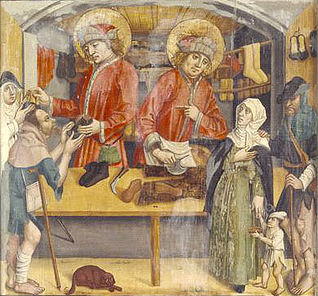
Saints Crispin and Crispinian, who was also called Crispian, were brothers and missionaries from Rome to Gaul. They were martyred for their faith around the year 286. They preached by day, and they made shoes by night to pay their bills. They are the patron saints of shoemakers, or cobblers. That’s why the drink of the day is the cherry cobbler: .5 oz cherry heering, .5 oz lemon juice, 1.5 oz gin, .5 tsp sugar, one cherry, one lemon wedge.

As we few, we happy few, we band of brothers, raise our glasses with the cherry cobblers in toast to Crispin and the King, let’s look at the rest of the story. It’s not a tale of chivalry, lads. It’s a tale of butchery, and brutality, and the hell of war. William Tecumseh Sherman would be right to state it again, more than 400 years later. War is indeed hell. Come to think of it, maybe we shouldn’t toast at all, or just toast to Crispin and Crispinian.

So what really happened at Agincourt? Whence that storied victory? A combination of luck and superior military technology for the English, and vanity combined with stupidity on the part of the French.

England’s invading army was in tatters. Henry V landed his ships on the Normandy coastline in the summer of 1415, thinking he would claim the crown of France.  The French Dauphin blew off Henry’s challenge to meet in single combat and raised a big army that besieged and nearly starved the English at Harfleur.

Disease swept through the English camp. Henry was to lose more of his men to rampant dysentery than he did in battle. More than a thousand were reduced to agonies, with blood and filth constantly oozing out of them. The stench was indescribable: by the time the siege was lifted, and the survivors had staggered south in pouring rain and crossed the Somme river, the French were boasting that their enemy were as good as dead.

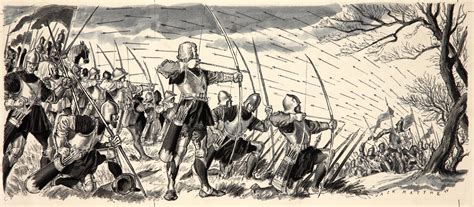
The English and Welsh troops were outnumbered four-to-one. But they had as their best weapon the longbow. It fired arrows with such power that they could pierce even the heavy armor of knights on horseback, and kill at 200 yards or more. Most of the 5,000 archers were Welsh, mere commoners, who wielded 7ft bows made from thick yew staves, tipped with cow horn.

Henry knew his theatrics. He rode a small grey horse and his legs hung down with no stirrups. His armor was mirror bright and his helmet was crowned with a richly jeweled golden battle crown. He was making himself a target, to show his troops how unafraid he was.

The French lined up at least 1,000 glory-seeking knights, lords and minor aristocrats, all itching to make their reputations as warriors, on the front line. They wanted to capture English knights and hold them to ransom — and they were so certain of swift victory that they feared all the rich pickings would be gone unless they were first into battle. Their own archers and crossbowmen were sent to the rear.

The Welsh longbowmen at Agincourt

The sticky clay ground had been churned to a quagmire the previous night as the grooms walked the noblemen’s horses around, and a headlong gallop was impossible. The English began to advance, until they were within bowshot range. Then the archers opened fire. After hesitating, above the screams of wounded men and horses, the French cavalry tried to charge.

The ranks of knights broke up into ragged lines, and the English archers began to pick them off like snipers. It was impossible for the Frenchmen to mount a cavalry charge. The horses stumbled, floundered, and fell.

French knights who survived the blizzard of arrows blundered onto the archers’ next line of defense — sharpened stakes rammed into the mud that impaled the horses. As the animals thrashed, the aristocrats were thrown off, and the archers clubbed them to death with mallets. Horses that saw the threat in time swerved back and crashed into those still advancing. The French went tumbling, with more ranks tripping over the bodies as they advanced.

The archers were able to fire into this lurching mass without respite, while the primitive French artillery far behind the lines lobbed cannonballs that caused just one English casualty and mostly landed among their own troops.

Realizing that the cavalry assault had failed, the French commanders signaled a mass infantry attack. As the fallen men struggled to haul themselves out of the sludge, they were knocked flat by the new arrivals who, in turn, tripped and fell. A great number of men drowned in the mud beneath heaps of other bodies, though no English weapon had touched them.

Finally the French trumpets sounded the retreat, and more than 2,000 Frenchmen surrendered rather than have their throats slit. They removed their helmets and were herded back towards the English baggage train, to be ransomed later.

But rumors swept the exhausted English army that a second French attack was being mounted from the south. Afraid of being trapped on two sides, with the added peril of 2,000 armored Frenchmen in the heart of his own army, Henry reacted ruthlessly. He ordered the immediate execution of all but the most noble and valuable of the prisoners. Two hundred archers did the killing, with daggers.

In a desperate bid to escape, some of the Frenchmen barricaded themselves into a barn. The English burned the barn down.

Around 8,000 Frenchmen died at Agincourt. English and Welsh casualties numbered just a few hundred. After the battle, Henry’s men ransacked the French camp, before marching in triumph to Calais.

The king sailed for home, and landed in a snowstorm at Dover, before elaborate festivities in London hailed him as “Henry the Fifth, King of England and France.”

Glorious and chivalrous? I don’t think so.  Brilliant strategy? Nah. More dumb luck than anything else. And is there any doubt now as to why the British and the French really don’t like each other?

And that’s the real story of what happened on the Feast of Crispian.

History I Never Knew: Saint Hildegarde, Sybil of the Rhine

September 22, 2021

Today’s history-I-never-knew blog post is from the annals of religion. Or, maybe it’s from the annals of medicine.  You can decide.

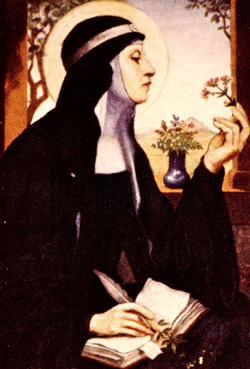
It took almost a thousand years for the Catholic Church to get it right about Saint Hildegarde of Bingen (1098-1179.) She’s known as “The Sybil of the Rhine” for her poetic prophecies. She was already canonized a saint, but it wasn’t until 2012 that Pope Benedict XVI named the learned Hildegarde a Doctor of the Church. She’s only the fourth woman to be so designated.

Hildegarde of Bingen

I’d say she deserves it. When it came to health care matters, she knew what was good for you.

According to “Drinking with the Saints: A Sinner’s Guide to a Holy Happy Hour,” Hildegarde was exceptionally wise, “with a keen insight into moral psychology and an avid interest in many subjects, including medicine. An important example of Hildegarde’s wisdom is her high regard for wine and beer.”

In her treatise “Causes and Cures,” Hildegarde’s prescription for treating a sick person is “Cerevisiam Bibat.”

Translation: “Let him drink beer.”

She explains why: “For beer fattens up man’s flesh and bestows a beautiful color to his face on account of the strength and good vitality of the grain. But water debilitates man and, if he is sick, sometimes produces a bluish discoloration around the lungs. For water is weak and does not have a strong power.”

Brilliant. Why didn’t they think of that before? Holy and wise she was, indeed. But medicine was hardly her only subject. She wrote fifteen books and composed dozens of hymns; she is one of the most renowned composers of sacred monophony, which will be familiar to people of my generation as Gregorian Chant.

Hildegarde founded two abbeys in Germany. They were dissolved in a nineteenth-century wave of secularization, but Benedictine nuns later re-established one as Eibingen Abbey. It is also known as Abtei St. Hildegard, and it is a “Klosterweingut,” a monastic winegrowing estate.  They make their own Riesling wine, which is unfortunately not distributed beyond the borders of Germany.

The wine from that abbey has nothing to do with the Blue Nun brand. You may remember how popular Blue Nun used to be, and the radio ads for it by Stiller and Meara. It was called a “Liebfraumilch,” or “Dear Lady’s Milk,” and the nuns in blue habits that are associated with it were garbed in that color as a display of devotion to the Virgin Mary.

Blue Nun was invented in the 1920s by the H. Sichel Schöne Company. The Blue Nun name and labeling was a branding maneuver to help boost exports. Up until that time, German wine labels were printed in a typeface called Fraktur, which was difficult to read. Blue Nun’s simplified visuals and graphics were a welcome change.  The first nuns depicted on the labels actually wore brown habits, not blue ones. But in the United States, even they couldn’t be shown initially because the Bureau of Alcohol, Tobacco, and Firearms prohibited images of nuns.

There’s a Hildegard wine put out by Au Bon Climat winery of Santa Barbara, California, but it has nothing to do with Hildegarde of Bingen. It’s named for Empress Hildegard, the wife of Charlemagne. She lived a couple of hundred years before our admired friend from Bingen. According to the Au Bon Climat website,

“The name Hildegard is a salute to the history of Burgundy and to her husband the King of the Franks, Charlemagne. During his rule in the early 800s the importance of wine and viticulture exploded. The Catholic Church and Charlemagne ruled most of Europe and both were interested in wine and viticulture.  The Church needed wine for the Eucharist and under Charlemagne more and more vineyards were planted in Burgundy. Charlemagne brought civilization and order back after the dark ages. Part of this rebirth was wine production.”

You might have a little more luck obtaining one of two Réserve Hildegarde beers, a blonde and an ambree, from the Brewery St. Germain in Aix-Noulette, France. They make the beers as “a special tribute to Hildegarde of Bingen, who lived and loved hops more than 800 years ago.”

So that’s my story of Hildegarde of Bingen. Kudos to Pope Benedict for his better-late-than-never accolade to her.

And let’s heed her excellent recommendation and raise a stein in her honor: “Cerevisiam Bibamus!”

Punctuation Can Be a Matter of Life and Death

June 30, 2021

“Woman without her man is nothing.”  Right?

Actually, that is right. But ya gotta adjust the punctuation before you submit the answer.

“Woman: without her, man is nothing.”

You’ve probably seen that one if you read blogs and posts from grammar curmudgeons like me.  I know we can be a pain in the neck. But you know we’re correct. Faulty punctuation can make what you write mean the opposite of what you intend.

Here’s another one:

“Let’s eat Grandma.”

Er, wait a minute.  It’s “Let’s eat, Grandma.”

Okay, so much for the levity. Now for a deadly serious story about how a wrongly-edited piece of punctuation – a comma inserted for a semicolon – nearly freed some of history’s most despicable and scaffold-deserving criminals from a full accounting for their crimes.

As described in East West Street (Vintage Books, 2017) by Philippe Sands, the last-minute edit was made to Article 6 (c) of the charter for the trial of the Nazi leaders at Nuremberg.  All of the quoted passages that follow are taken from that book. That trial eventually ended up breaking new ground and establishing in international law the offense of crimes against humanity.

Philippe Sands

But the four victorious powers who were conducting the trial – the United States, Britain, France, and Russia – were not in agreement on that point. The Russians, in particular, objected to the notion of crimes against humanity, because allowing for it that meant that if a state trampled the rights of individual people as the Nazis had done, then it was breaking a law not of individual nations but of all mankind. Those who transgressed it would have no immunity, even if they were leaders. Individuals could be held liable for such crimes and could not hide behind the veil of a state government.

When Supreme Court Justice Robert Jackson, the United States’ chief prosecutor, reviewed the charter of the trial court, his intent to define and prosecute crimes against humanity was unmistakable. He wrote, “We should insert words to make clear that we are addressing persecution, etc., of Jews and others in Germany, as well as outside of it, before as well as after commencement of the war.”

As the book’s author Sands continues, “Such language would extend the protections of international law. It would bring into the trial Germany’s actions against its own nationals – Jews and others – before the war began.”  That meant the killings, incarcerations, expulsions, pogroms like Kristallnacht, and so on.

Despite the Russians’ objections, the final text of the Charter was adopted, signed and made public on August 8. In Article 6 (c), the judges were given the power to punish individuals for crimes against humanity. Here is the relevant, and infamous, passage in the first published charter:

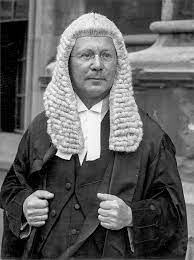
Justice Robert H. Jackson

“murder, extermination, enslavement, deportation, and other inhumane acts committed against any civilian populations, before or during the war; or persecutions on political, racial, or religious grounds in execution of or in connection with any crime within the jurisdiction of the Tribunal, whether or not in violation of the domestic laws of the country were perpetrated.”

Seems pretty clear and definitive, right? But wait – and look closely at the semicolon in the second line. That disappeared, and was replaced by a comma, because the semicolon caused a discrepancy between the English text and the French and Russian texts of the charter.

As the book points out,

“The semicolon seemed to allow a crime against humanity that occurred before 1939, when the war began to come within the jurisdiction of the tribunal; the replacement comma, however, seems to have the effect of taking the events that occurred before the war began outside the jurisdiction of the tribunal. There would be no punishment for those actions, if crimes against humanity had to be connected to war. Whether this was intended, or would have this effect, would be for the judges to decide.”

Decide they did, and they decided wrongly, in clear contravention to what Justice Jackson intended.

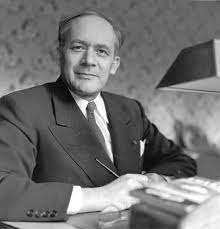
Hersch Lauterpacht

On the second day of announcing the verdicts, Russian judge Iona Nikitchenko stated, “Only acts that constitute crimes against humanity were those committed after the war started. No war, no crime against humanity. In this way, the tribunal excluded from its judgment everything that happened before September 1939, no matter how terrible the acts.”

Ah, yes, their hands were tied by that comma. That’s what they said.

Nikitchenko went on to (seemingly) acknowledge the unfairness of it, but he absolves himself and the other judges of any responsibility to rectify that unfairness.

“political opponents were murdered in Germany before the war. Many individuals were kept in concentration camps, in circumstances of horror and cruelty, and a great number were killed. A policy of terror was carried out on a vast scale, organized and systematic, and the persecution and repression and murder of civilians in Germany before the war of 1939 were ruthless. The actions against the Jews before the war were established ‘beyond all doubt.’  Yet ‘revolting and horrible’ as these acts were, the comma inserted into the text of the charter excluded them from the tribunal’s jurisdiction. We were powerless to do anything else, the judges said.”

Now do you believe me about punctuation?

Rafael Lemkin

The book, East West Street, is about much more than punctuation. It is a dramatic account of the lives and intellectual development of two Jewish men, Hersch Lauterpacht and Rafael Lemkin. Both studied law at the University of Lwów (or Lviv or Lemberg, depending on which conquering power was in charge of that city in Ukraine). Both were involved in preparation for the Nuremberg trial. Both did seminal work on the concepts of “genocide” and “crimes against humanity.”

The book also describes the life, times, and crimes of Hans Frank, who ruled the General Government, or the conquered land of Poland, for Hitler’s Third Reich. He was a pre-war friend of one of the trial judges, the Frenchman Henri Donnedieu de Vabres. The French guy tried to get Frank a life-in-prison sentence rather than a hanging.  He didn’t succeed.

I recommend this book highly, whether your area of interest is law, World War II, or the Holocaust.

My Patron Saint Takes the Stage

April 10, 2021

I’ve always rather liked this weekend, Low Sunday, on the liturgical calendar. It’s also called Quasimodo Sunday, but that’s not the reason I like it. To me, today is special because it’s one of the few occasions when my patron saint – Thomas, who was called Didymus – took center stage in a Gospel story.

Say what you will about old Saint Tom. He didn’t just take your word for it. He wanted proof. And so, when the other apostles had told him that they had seen the Risen Lord on the evening of Easter Sunday, at a meeting where Thomas was not yet present, he was doubtful – hence the term “a doubting Thomas.” If Tom were still with us today, he’d probably be a senator from Missouri, the “Show Me” state.

He might have been a doubter a bit later on, but Thomas was devoted and fully on board as an apostle. In John 11, when Jesus planned to return to Judea, the disciples warned him of those “now seeking to stone you”. Thomas replied, “Let us also go, that we may die with him.”

At the Last Supper, before the doubting Thomas story that really made him famous, Thomas could not comprehend what Jesus meant when he said, “I will come again and will take you to myself, that where I am you may be also. And you know the way where I am going.” Thomas asked him “How can we know the way?” to which Jesus answered, “I am the way, and the truth, and the life.”

Here is the “doubting Thomas” passage from John 20:

“But Thomas, one of the twelve, called Didymus, was not with them when Jesus came. The other disciples therefore said unto him, “We have seen the Lord.” But he said unto them, ‘Except I shall see in his hands the print of the nails, and put my finger into the print of the nails, and thrust my hand into his side, I will not believe.’

And after eight days again his disciples were within, and Thomas with them: then came Jesus, the doors being shut, and stood in the midst, and said, ‘Peace be unto you.’

 Then saith he to Thomas, ‘Reach hither thy finger, and behold my hands; and reach hither thy hand, and thrust it into my side: and be not faithless, but believing.’

And Thomas answered and said unto him, ‘My Lord and my God.’

Jesus saith unto him, ‘Thomas, because thou hast seen me, thou hast believed: blessed are they that have not seen, and yet have believed.’”

Thomas needed some convincing from the Top Guy, but once he got it he became the first of the apostles to acknowledge Jesus’s divinity.

Another reason I have never forgotten this story. One time, back in Saint John’s, “Sister” asked the class “Who said ‘My Lord and my God?’” Nobody knew the answer, and Sister said she was surprised that I, Thomas, did not know it. It stuck in my mind forever, after that.

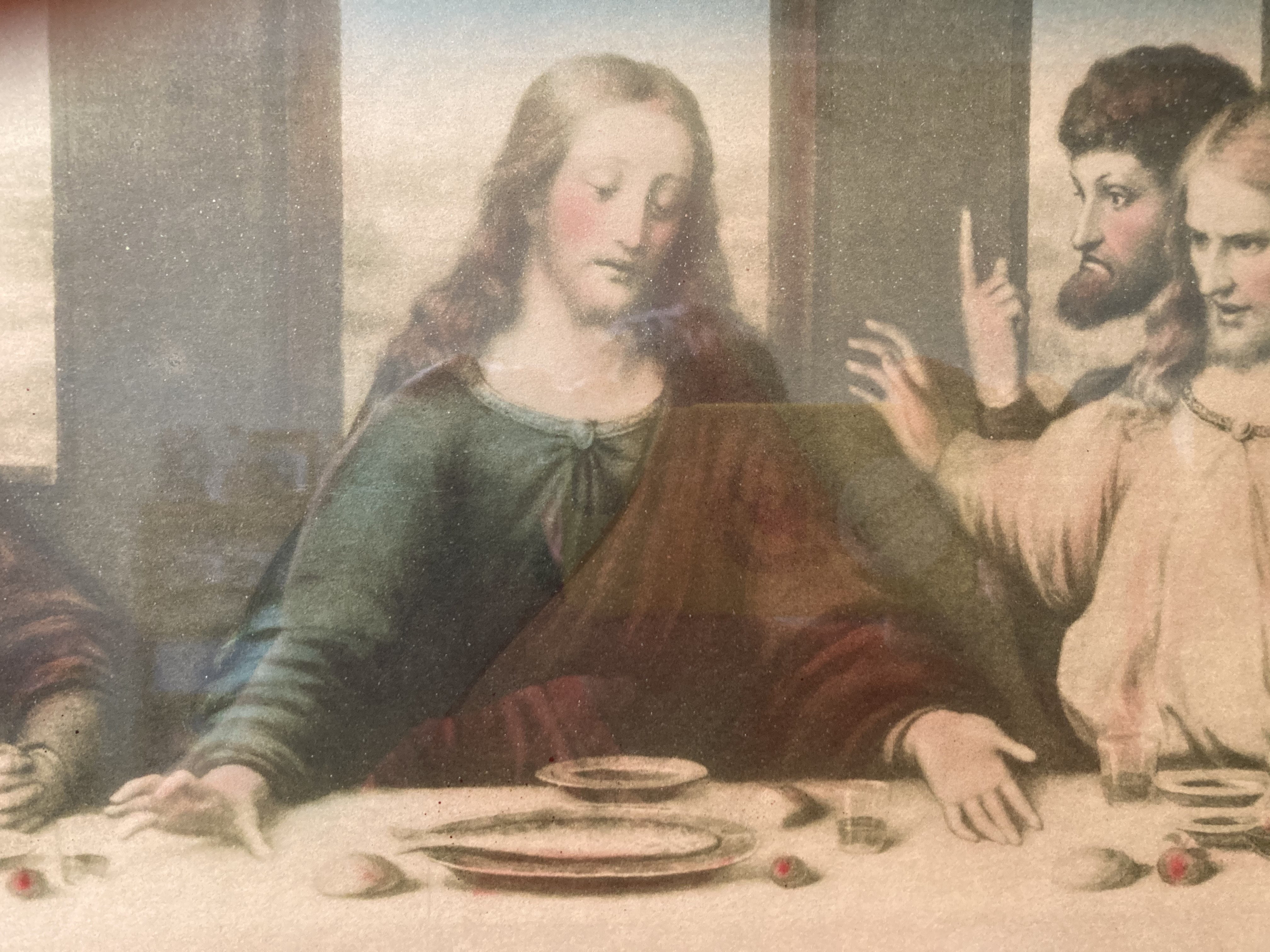
Leonardo da Vinci must have had this passage in mind when he painted The Last Supper. Thomas and his trusty index finger are almost front-and-center, as you can see from the accompanying cut. Jesus has just dropped a bombshell on the gathering:

Thomas, with upraised index finger, demands to know “Is it I, Lord?”

“And as they did eat, he said, Verily I say unto you, that one of you shall betray me.

And they were exceeding sorrowful, and began every one of them to say unto him, Lord, is it I?

And he answered and said, He that dippeth his hand with me in the dish, the same shall betray me.”

Thomas is the closest to Jesus, getting right up in his face with that finger which, ten days thence, will probe the nail holes in Jesus’s hands. He’s doubting then too. Looks rather ticked off at the suggestion, if you ask me.

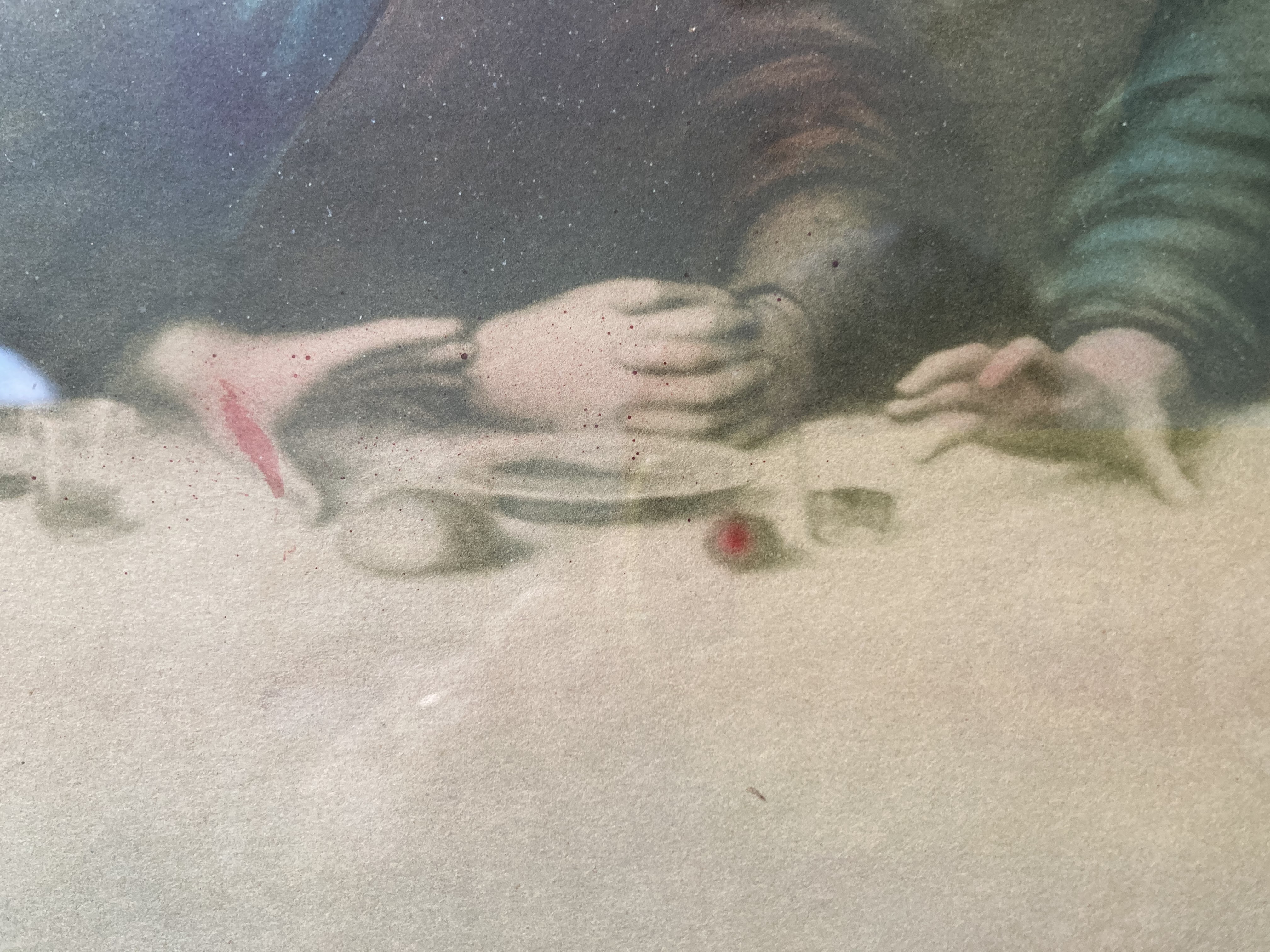
And from the other side of Jesus, opposite Thomas, you can see the hand of Judas and the hand of Jesus, each reaching toward the bread which they will dip into the dish.

That’s the complete story of my guy Thomas and his dramatic confrontation with Jesus.  We hear it every year on Low Sunday – so called, most likely, because it ends the Octave of Easter and is opposed to the “high” feast of Easter itself.

The hands of Judas (left) and Jesus (right) grasp for the bread which they will dip into the dish together.

And why is the day also called Quasimodo Sunday? Glad you asked that too.

No, it’s got nothing to do with the Hunchback of Notre Dame. It stems from the days of the mass in Latin. The introductory prayer, or the Introit, of that day, goes thusly:

Quasi modo géniti infántes, allelúia: rationábile, sine dolo lac concupíscite, allelúia, allelúia, allelúia.

Which, translated into English, is:

“As newborn infants do (alleluia), covet milk that is rational, without dolosity (alleluia, alleluia, alleluia).”

I think that nowadays we all could use a dash of my patron saint’s skepticism. Don’t believe everything you read, on line or anywhere else. Trust, but verify.

May God bless and keep you today, as Eastertide recedes toward its ultimate end on Pentecost, or Whitsunday, as they say in the UK.  

A Reflection, Appreciation, and Book Review: The Women of The Barbizon Hotel

March 9, 2021

It is a truth universally acknowledged that a single man, in possession of a good fortune, must be in want of an understanding of women. And that goes for a married man as well, be he possessed of big bucks or living paycheck-to-paycheck.

There’s just no understanding of women, if you’re a male of the species.  There’s the truth that should be universally acknowledged.

But we should never stop trying, guys.

So today, in recognition of the recent International Women’s Day, I commend to you The Barbizon: The Hotel that Set Women Free, a new book by historian Paulina Bren of Vassar College.  Reading it may not give you great insight into what makes women tick, and all that that implies. But you can’t help coming away with a heightened understanding of the societal hurdles faced — and the methods and stratagems for advancement employed — by ambitious, venturesome ladies of the decades from the Roaring Twenties through the “Me Decade” of the Seventies. 

The Barbizon, a residential hotel on New York’s Upper East Side, catered to middle- and upper-class women. You needed letters of recommendation to get in. That pleased the well-to-do parents no end, because their daughters were going to be living among “the right kind of girls.” Pleasing to the nervous parents also was the knowledge that no men were ever allowed above the first floor.

The rooms were small and somewhat Spartan. But the ladies had everything they needed otherwise – pool, gym, library, soundproof rehearsal rooms for singing and music practice, lecture halls, free afternoon tea, a garden on the roof – and first-floor businesses with all the products and services necessary for life in the big city.

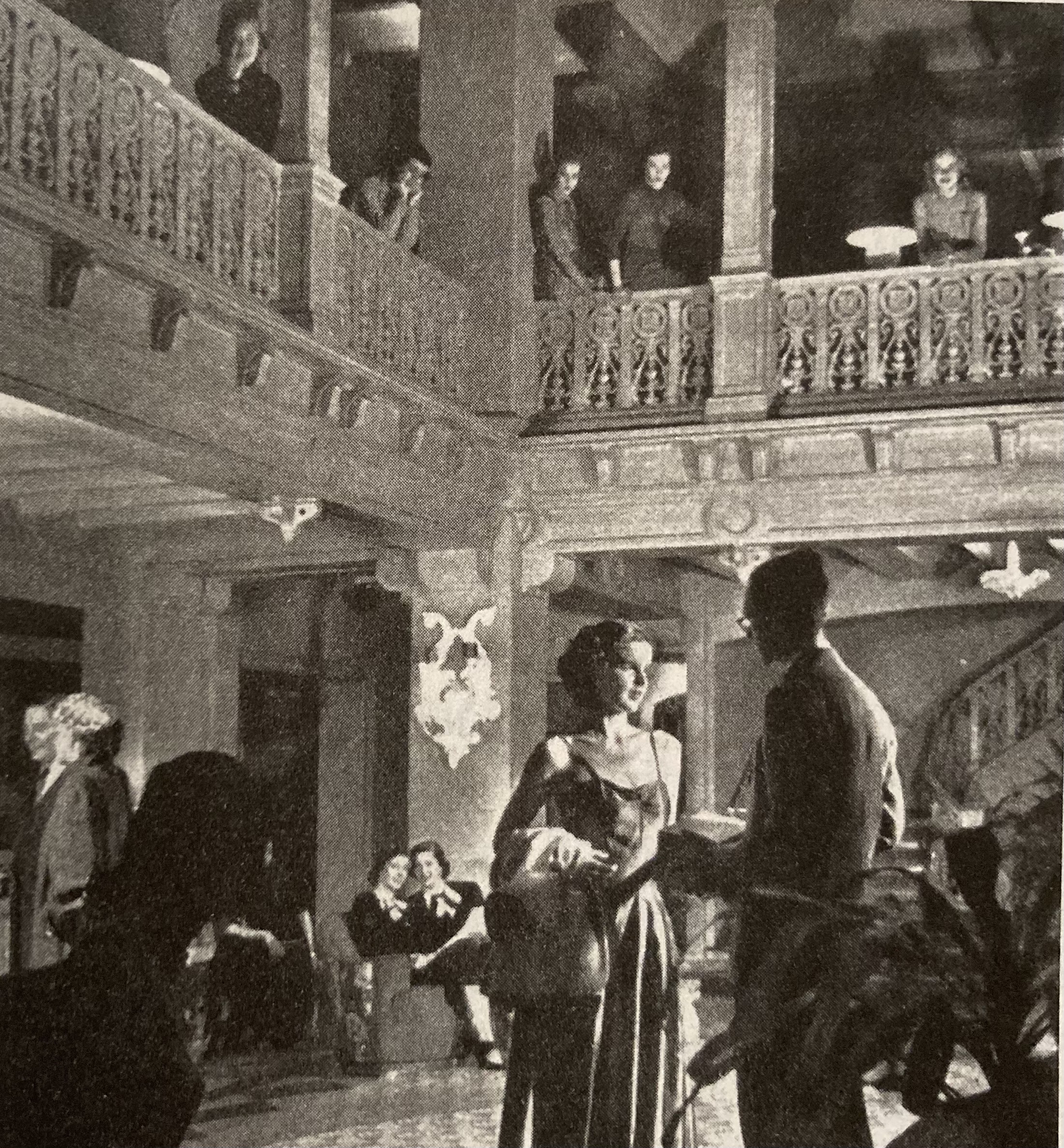
They also had a nice, Juliet-style balcony that overlooked the first floor and gave them a vantage point to size up the gentlemen who eagerly awaited them in the lobby. I can actually relate to that. My very first date in college was with a lovely girl from Emmanuel. I went to her dorm and gave the receptionist my name and hers. Over the loudspeaker came the announcement, “Dorothea So-and-so, you have a visitor in the lobby.”

At least half a dozen other girls came cruising down from upstairs for a quick inspection before retreating and, presumably, reporting back. Then she made her appearance. Whether or not I rated highly with that appraisal squad I’ll never know. But on this occasion, there was little chance that she was going to stand me up, because I had tickets to a Simon and Garfunkel concert at BC.  Of course I kidded myself into thinking that it was I who interested her, not Paul and Art. I suspect that many of the guys who laid out big bucks to impress a Barbizon girl with a night on the town had a similar experience.

The Barbizon lobby – no men allowed above that first floor.

The author estimates that 350,000 women lived at the Barbizon, from its opening in 1927 through the mid-1960s. Most of them were girls from small-town America; they got their training and their jobs, they found their husbands, and they made it out into picket-fence suburbia. We don’t know the names of that majority, but we do know the names of many others who made it big in their respective fields.

I’ll list a few of those stars, but not before telling you what I liked most about the book: its delving into the cultural and business history of the era.

If you appreciated Mad Men for its portrayals of life in the 1960s and its take on the people and practices of the advertising business, then you’ll appreciate The Barbizon for similar reasons.  It gives close-up views of the emerging fields of popular publishing, modeling, advertising, and the secretarial profession; they’re all excellent bits of history of the nexus of business and culture. 

There’s also some interesting stuff about life during Prohibition and its speakeasies; of the emergence of McCarthyism; about the sometimes glacial pace of women’s progress in the working world; and of the Kinsey Report, the coming of the pill, and women’s sexual emancipation – they’re all worth the price of the book.  For instance, I had never known that, by 1932, 26 states had laws against married women holding a job. Single working women had to disclose their impending marital status, lest they take a job away from a “real” breadwinner.

Speaking of jobs, in the 19th century, almost all secretaries were male. Women finally cracked their way in, though, and during the Depression, the already-flourishing Katharine Gibbs secretarial school was harder to get into than one of the Seven Sisters colleges. A Katie Gibbs girl, with her white gloves and her rigorous training in typing, stenography, business, poise, voice, and manners, was still eminently employable when jobs everywhere else had disappeared.

Gibbs girls also got exposure to art history, banking management, finance, income management, and English literature.  It was undoubtedly a better preparation for the real world than four years in some ivory tower.

Two floors of the Barbizon were the Gibbs girls’ dormitory; many Seven Sisters graduates ended up enrolling there. They needed work too, and typing was often all that was available. That steady income stream from the Gibbs School helped keep the Barbizon afloat during those lean years.

If a girl couldn’t type, she could still make it in New York if she looked good. And the Barbizon was home to many such women who found work as models. Early on, most of them worked for John Robert Powers, founder of the Powers Agency. He was a sales/marketing whiz who knew intuitively the allure of “The Powers Girl.” If she looked the part, she could sell anything.

The biggest source of income for the Powers agency was the mail-order catalog business. Powers recruited women from all over the country to pose for his pictures. He urged them to stay at the Barbizon. It might have been slightly more expensive than other accommodations, but it was safe and prestigious. The Powers girl had “the typical Midwestern look: tall, blond, and curvy…they were typically give foot nine inches and a voluptuous 34-24-34; long-stemmed American beauties.”

It wasn’t an easy life, and it didn’t pay especially well. The ladies had to be on call just about all the time; they had to do their own hair and makeup. You could always tell a Powers model by the black hatbox she carried. It contained all her makeup, combs, brushes, hair pins, extra socks and underwear, and a contraption called “binoculars” that gave her bust a perky boost if the situation demanded it.

One Powers girl named Celeste Gheen made $25 a week in her first year; of that, $11 went to her room at the Barbizon. She went home to Cleveland, but Powers knew she was exceptional and begged her to return. She was indeed perfect for the job: 5 feet, 8 ½ inches; 34-24-35; and 115 pounds. She eventually became, as a New Yorker article notes, “the face – or the limbs, or the lips – of five cigarette brands, Spam, Texaco, Oldsmobile, Log Cabin Syrup, Schaefer beer, Bayer Aspirin, Bon Ami cleanser, Beautyrest mattresses, and Hellman’s mayonnaise.”

Celeste was one of the most successful of the Powers girls. Later came Eileen Ford and the Ford agency. Ford changed the business model of modeling. She worked for the girls, got them better pay, and had them paid faster than Powers and some of his imitators. 

As for the publishing business, the book tells the story of editor-in-chief Betsy Talbot Blackwell and her ingenious management of Mademoiselle magazine. She took it over in 1937 and soon came up with two smashing ideas to revive the magazine for its publisher, Street and Smith. One was the “College Board,” a veritable army of young women in schools around the country. They all “covered” their school and supplied Blackwell with unmatched market research on trends and on the desires of their peers. Blackwell used that intelligence to turn the month of August, usually a dead zone in the magazine business, into a Mademoiselle marketing and advertising bonanza for the coming school year.

The next brilliant stroke was Mademoiselle’s Guest Editor Program. Every June, 20 of the most talented college-age female writers and editors came to New York to work at Mademoiselle. They all stayed at the Barbizon. The program launched many a career in literature and publishing, including those of Sylvia Plath, Joan Didion, Ann Beattie, Gael Greene, Diane Johnson, Mona Simpson, Meg Wolitzer, Janet Burroway, Lynn Sherr, Nanette Emery, and Elizabeth Moulton.

Those attractive young guest editors did a lot of client-schmoozing and socializing on the magazine’s dime. It came with the territory. But they also got to meet some of the up-and-coming writers of the literary world, who were recruited by Blackwell and published for cheap, starter’s rates. They included Truman Capote, James Purdy, Flannery O’Connor,and Edward Albee.

The book devotes an entire chapter to both Didion and Plath, which is understandable, given their reputations as writers. Plath’s only novel, The Bell Jar, is a fictionalized account of her time at The Barbizon. Plath ended her life by suicide. When she succeeded, it wasn’t her first attempt.  A sad part of the Barbizon’s history is that Plath was not the only resident to take her own life. There were other suicides of women who couldn’t handle the pressure of chasing success in New York. There was also at least one murder on the premises.

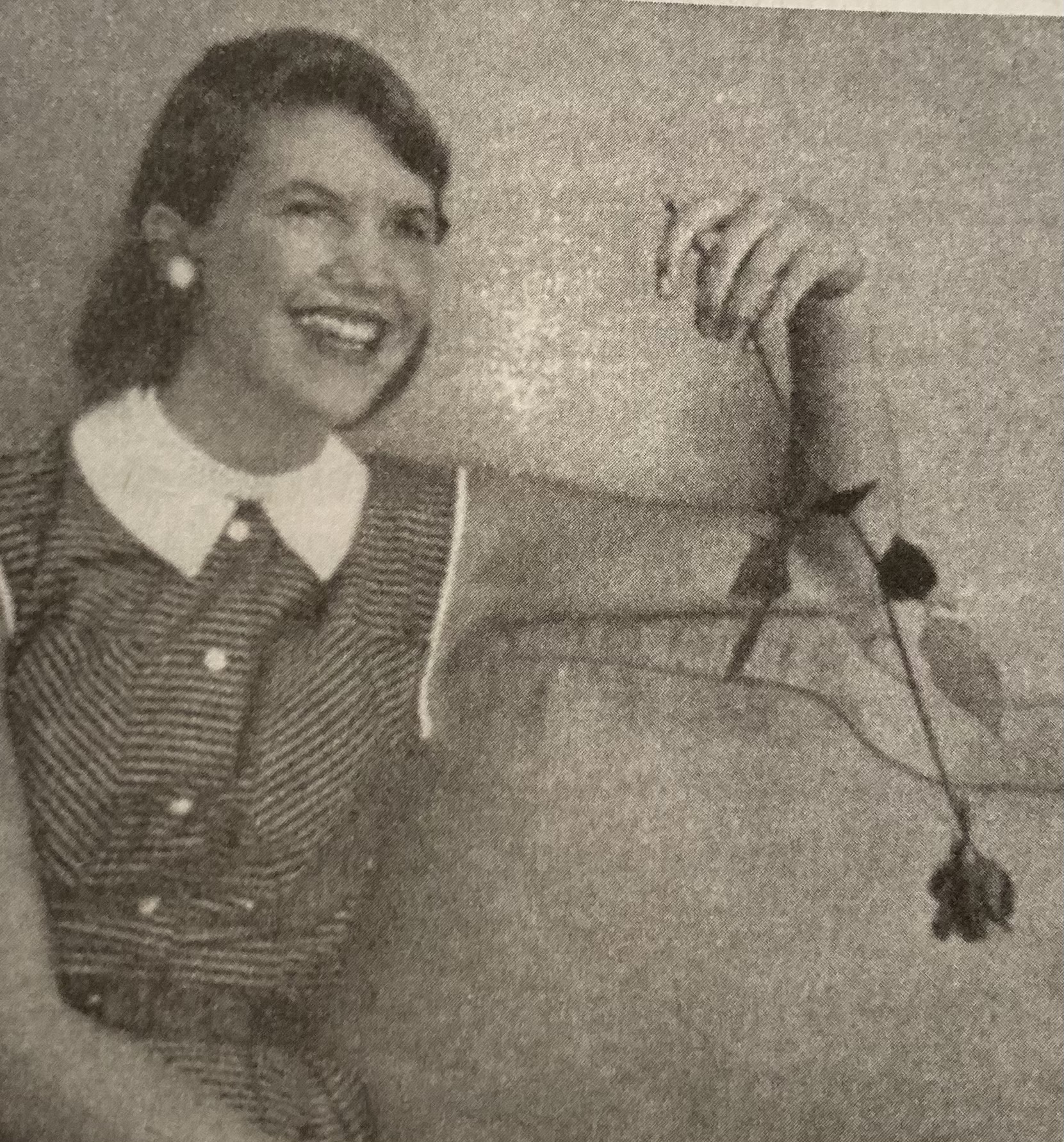
Sylvia Plath, on her first day as a Mademoiselle guest editor.

Okay, so how about some of those other big names? It’s going to sound as if reading this book is like flipping through a People magazine, looking at the pictures, and searching for the gossipy and titillating tidbits. I assure you, it’s not that way at all. But you do deserve a few little morsels of gossip.

There’s Grace Kelly. Her father, John B. Kelly, was a multimillionaire and a three-time Olympic Gold Medal winner in the sport of rowing.  As the book points out, Grace was “the poster girl for that decade’s perfect woman….forever identified with sweetness and chastity, [yet she was] fond of dancing to Hawaiian music down the hallways of the Barbizon, and given to shocking her fellow residents by performing topless. Rumors of her sexual appetite and promiscuousness abounded.” Alfred Hitchcock, who cast her in Rear Window, called her a “snow-covered volcano.”

Kelly had poor eyesight and wore horn-rimmed glasses. When she took them off in the movies, she “exuded a sensuous dreaminess that was in fact plain old myopia,” according to author Bren. But you have to give Grace a world of credit for hard work. Told by her acting teachers that her voice was too high-pitched and nasal, she bought a recorder and talked into it every night until she was able to correct her tone and sound almost British.

The ultimate goal of many a Barbizon resident was to bag a husband. Grace hit a jackpot there, moving out of the Barbizon to Hollywood and eventually to the royal palace of Monaco. Her life ended tragically in 1982 when her car pitched over a cliff.

Grace Kelly

Then there were the guys who patrolled the streets near the Barbizon and hung out in the lobby, trolling for dates. Most of them struck out. But author J.D. Salinger was one who didn’t. He frequented the first-floor coffee shop and convinced at least a few of the girls that he was the goalie for the Montreal Canadiens.

Another was Noel Parmentel, a writer who befriended Joan Didion and helped her publish her first novel. She brought him to a party one night so he could meet with some “new faces” – Barbizon girls, primarily. There were fifteen people in the room when they arrived. Parmentel had already slept with five of the women and owed money to all but two of the men. He, like Salinger, had found a way to penetrate Fortress Barbizon.

All right, you’ve waited long enough. Who were some of the other famous alumnae of The Barbizon? Here we go, in no particular order, and I’m sure I’ve overlooked some: Liza Minnelli, Cybill Shepherd, Betty Buckley, Ali MacGraw, Shirley Jones, Lorna Luft, Peggy Noonan, Cloris Leachman, Phylicia Rashad, Rita Hayworth, Tippi Hedren, and Phyllis Kirk. There was also Edie Bouvier, who was a cousin of Jackie Kennedy, and the “Unsinkable” Molly Brown, a survivor of The Titanic.

Some of those luminaries are mentioned only in passing. Of others, we learn a bit more.  Ellen Smith, who later became the Jaclyn Smith of “Charlie’s Angels” fame, arrived in New York from Texas in 1966 to study ballet arts. Ellen’s parents were reluctant to let her come, and they made her promise never to use the subway. In her two years at the Barbizon, she never did.

Ellen/Jaclyn may be somewhat typical of the women of Barbizon. Few made it as big as she did, but many of them must have had a similar experience of life. She was a small-town girl who saw life go whizzing by in the fast lane but who took it slowly until she was ready. As the book points out, the Barbizon “represented ‘a time of rules and anticipation’ which suited her just fine…the hotel and New York would also teach her an ‘emotional independence’ that she would rely on for years to come; the ability to fend for herself, not only financially but emotionally.”

The Barbizon and hotels like it grew less relevant and less desirable as women advanced in the business world and elsewhere. The hotel admitted men beginning in 1981. It went through a series of owners and is now a home for luxury condominiums.  Incredibly, five or six elderly women still live there, protected from eviction and paying their original room rates, thanks to New York’s rent-control laws and to effective legal representation.

So what to make of it all? I must say that the stories of the women of Barbizon are inspiring. Oh yes, they had their fun times and their share of screw-ups and failures. But what impressed me the most was their sheer courage. They came from their sleepy little towns and took on life in the fastest, roughest, and most ruthless city imaginable. They were strivers and doers. 

And do I understand women any better, having read this delightful book? No. The truth universally acknowledged at the beginning holds firm for me.

But do I love, admire, and appreciate women even more? You bet I do.

And with that I wish you, albeit belatedly, a Happy International Women’s Day.