February 9, 2021, marks the 82nd anniversary of the submission to Congress of the German Refugee Children’s Bill (S.J. Res 64 and H.J. Res 168). Its sponsors were Senator Robert Wagner, Democrat of New York, and Representative Edith Nourse Rogers, Republican of Massachusetts. I had not known of this bill, and while I had heard the name of Edith Nourse Rogers somewhere in the distant past, I had no idea of her character or her accomplishments. She was the first woman to represent Massachusetts in Congress, and she was arguably the best and most influential of all of them.
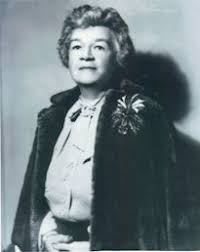
So I’d like to tell you the story of Mrs. Rogers and the law that she and Senator Wagner crafted. The bill’s story is a tragic one. It’s tragic because it didn’t pass, and 20,000 orphaned Jewish children died as a result. The story is also infuriating, because it didn’t have to happen. It shouldn’t have happened. But it did, and I hold the then-president of the United States, Franklin D. Roosevelt, responsible.
As you may know, I have a particular interest in the history of The Holocaust. Six million Jewish people lost their lives in the killing machine of Adolf Hitler’s Third Reich. I have often heard, and I still hear, that “the United States didn’t do enough” to help the Jews of Europe. How so? The Allies should have bombed Auschwitz and its railway lines, once we heard of what was going on there.
That’s a defensible argument. Bombing those rail lines might have slowed down the Auschwitz murder machine. It should have been done. But that was 1944. By that time, the horrible mass killings, 15,000 people per day at the extermination sites of Operation Reinhard – Treblinka, Sobibor, and Belzec – had ended. Thinking only in terms of long-range bombing missions that never happened obscures the more important part of what America did – or didn’t do.
The doors of America were locked and barred to Jewish refugees long before World War II broke out. Immigration quotas based on national origin had been enacted in 1924. They were not wholly abandoned until 1965. There was no separate provision for refugee admissions. Once it did erupt, the State Department’s Visa Division under the despicable Breckinridge Long, an old Navy buddy of FDR, erected barriers and bureaucratic roadblocks to Jews. Historians disagree about degree of blame that Roosevelt should bear for these sins of omission. He did have to deal with widespread and virulent anti-Semitism, stoked by such adversaries of the New Deal as Father Charles Coughlin. Roosevelt had given significant aid to Britain, with controversial programs such as Lend-Lease. He had to anticipate charges that he and the Jews were dragging the United States into another European War. “America First” was originally the slogan of Nazi sympathizer Charles Lindbergh.
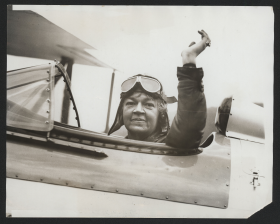
Yes, it is true America didn’t do enough. But it wasn’t a failure on the battlefield. It was a failure in the halls of Congress and in the corridors of the White House. It was an abdication of leadership and human decency in politics. And there is no more striking example of that than the killing of the German Refugee Children’s Bill.
There’s no room here to recite chapter and verse of the Visa Division’s entire hateful chronicle, possibly the worst part of the American involvement in World War II. Nor is there room to go into detail on why I believe what I do about Roosevelt – that he really had no use for Jews and other people who didn’t look like him, a White Anglo-Saxon Protestant. I admit that I come to this blog post with my bias against the guy already firmly established. This sad story about Mrs. Rogers’s failed effort to do a right and noble deed simply strengthens my convictions about FDR.
But enough about him for now. I really want to salute and honor Edith Nourse Rogers. Most of the information about Mrs. Rogers comes from an unpublished paper based on her papers, which are in the Schlesinger Library. This superb archive of American women’s history is part of the Radcliffe Institute at Harvard. The author of the unpublished paper is Kate Auspitz, who wrote an alternative history of the Abdication of Edward VIII, Wallis’s War, a Novel of Diplomacy and Intrigue (University of Chicago Press) and a serious history, The Radical Bourgeoisie: the Ligue de l’Enseignement and the Origins of the Third Republic (Cambridge University Press.
I’m grateful to Kate for pointing me in this direction and for giving me many other pointers and suggestions for reading and research. I also want to say that she does not share my feelings about Franklin Roosevelt. She believes that, as Lincoln, criticized, even vilified, for emancipating slaves in the states of the Confederacy but not in Kentucky or Missouri, he acted to win the war.
So who was Edith Nourse Rogers?
She was born in Saco, Maine to Franklin T. Nourse, the manager of a textile mill, and Edith France Riversmith. Both parents were from old New England families, and their daughter got the best education – private tutors; Rogers Hall School in Lowell, Massachusetts; and Madame Julien’s, a finishing school in Paris.
Edith married John Jacob Rogers, a graduate of Harvard Law School. In 1912 he was elected as a Republican to the 63rd United States Congress as the Representative from the 5th District of Massachusetts. When World War I broke out, John Rogers traveled to the United Kingdom and France to observe the conditions of the war firsthand. Edith Rogers first volunteered at the YMCA in London. But soon she was in the thick of the war zone.
President Woodrow Wilson authorized her to oversee field hospitals in France. She saw the dead and dying and understood the costs of war. She also witnessed the conditions faced by women employees and volunteers working with the United States armed forces. Except for a few nurses, they were civilians, and received no benefits including no housing, no food, no insurance, no medical care, no legal protection, no pensions, and no compensation for their families in cases of death. In contrast, the women in the British Army loaned to the American Expeditionary Force (AEF) in France were military, with the attendant benefits and responsibilities.
Edith’s experience with veteran’s issues led President Warren G. Harding to appoint her as the inspector of new veterans’ hospitals from 1922 to 1923. Her salary was one dollar a year. Her appointment was renewed by both the Coolidge and Hoover administrations. She became known as the “Angel of Walter Reed.”
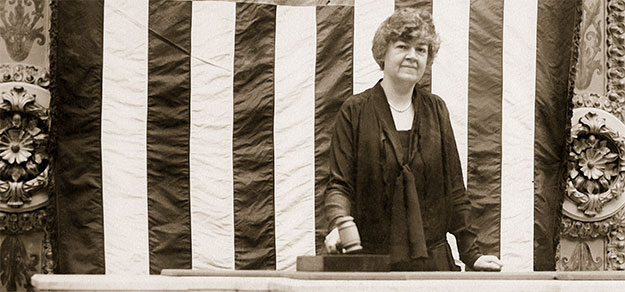
Her first experience in politics was serving as an elector in the U.S. Electoral College during Calvin Coolidge’s 1924 presidential campaign. John Rogers died in March, 1925. She ran for his seat in a special election and took 72 percent of the vote, making her the sixth woman to serve in Congress. Throughout her career, she was a champion of veterans, especially disabled veterans.
In May 1941, Rogers introduced the Women’s Army Auxiliary Corps (WAAC) Act, to create a voluntary enrollment program for women to join the U.S. Army in a non-combat capacity, as medical care professionals, welfare workers, clerical workers, cooks, messengers, military postal employees, chauffeurs, and telephone and telegraph operators. In 1942, the WAAC Act was signed into law. A year later came her Women’s Army Corps Bill, which granted official military status to the volunteers by creating the Women’s Army Corps (WAC) within the Army.
Edith was always an outspoken foe of racism and xenophobia. She was also fiercely vocal about patriotism and an ardent proponent of immigration. On Patriots’ Day in 1937, she declared she was proud to represent Lexington and Concord, but the day and the sacred ground belonged to “me no more than to you.” The whole world is freer today and the condition of mankind is better for the events of that day. Throughout her career in the House, she sought to make the day a national holiday, not just for Massachusetts but for all Americans, despite any classifications which may be made by some as to race, creed, or color.
True patriotism, she believed, depended on shared beliefs and principles, not common ancestry. She maintained that thousands of people from foreign lands have been attracted to our shores by that freedom, seeking “the right which is every American’s — the right to think, to believe, or disbelieve, to speak, to choose…With rights go privileges and responsibilities, they have become men, not puppets to be moved at the will of a dictator.”
With an outlook like that, it was hardly surprising that she teamed up with Senator Robert F. Wagner (D-NY) to put the German Refugee Children’s bill before Congress. Even while she was fully engrossed in that mission, she found time to take on the Daughters of the American Revolution. That organization, loudly and vocally patriotic in its own fashion, had not yet gotten the message about its own racism when Edith called them out in the spring of 1939.
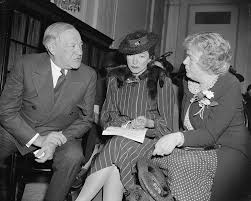
The DAR had barred Marian Anderson, a woman of color whose glorious voice was world-famous, from performing in their Washington venue, Constitution Hall. The DAR had a “whites only” clause in every one of its contracts. Eleanor Roosevelt resigned her DAR membership and arranged for Anderson to deliver an outdoor concert on the steps of the Lincoln Memorial on Easter Sunday, April 9. Fifty thousand people attended.
Edith Nourse Rogers addressed the DAR on April 20. “All of you are fond of fine music,” she began, and she continued, evoking “…130 million people of different races, speaking many languages…What are these but the component parts of a great symphony of civilization? Just as the orchestra becomes great with unity and cooperation, so does the nation…in the United States, race cooperation must replace race hatred.”
Rogers took on race hatred in February 1939 with her co-sponsorship of the German Refugee Children’s Act. A little background on the events leading up to the Act will help here.
Hitler came to power in 1933 and immediately began the persecution of Jews. The world could no longer turn a blind eye to what was happening to Jews in Germany after November 9-10, 1938. That was Kristallnacht, the “night of broken glass,” when SS-directed rioters throughout Germany looted and smashed windows in homes, shops, hospitals, and synagogues. More than 100 people were killed outright and thousands were subsequently arrested. Among other atrocities, mobs destroyed a Jewish orphanage in Berlin, leaving 200 children homeless.
Great Britain responded immediately with the Kindertransport program. It offered non-immigrant visas to orphaned or “unaccompanied” children, many of whose parents were in concentration camps. These were not yet “camps of annihilation,” established to carry out genocide. Rather, they were places to intern, torture and interrogate political dissidents and other “undesirables,” such as communists, socialists, Roma, homosexuals, and union activists as well as Jews.
After Kristallnacht, Jewish parents still at liberty anticipated worse persecution would follow. Many chose to send their children to safety, even if it meant parting from them.
America was ready to help. The bill submitted by Nourse Rogers and Wagner would have admitted 20,000 Jewish children into the country, 10,000 in 1939 and another 10,000 in 1940, over and above the highly restrictive limits and country quotas that had been in place since the early 1920s.
But America’s political leaders were not ready to step up in any way. Yes, there were racists, anti-Semites, “America Firsters” and xenophobes abroad in the land and too-well-represented in Congress. They ended up winning the day, but they shouldn’t have. And with a word of support for the Americans of good will, even a mere suggestion of it, from Franklin Roosevelt, those evil forces would not have prevailed. But Roosevelt never uttered a peep. The Act, submitted in February, was delayed and tabled until September by bigots in Congress. That month, Hitler attacked Poland, the war was on, and getting anyone out of Europe became impossible.
It’s not as if Americans were against helping the kids. Concerned citizens had established the Non-sectarian Committee for German Refugee Children. The American Friends Service Committee, the Unitarians, and several important Catholic clergymen, including George Cardinal Mundelein of Chicago, all cooperated with Jewish groups. They understood that their work must be bi-partisan and appeal to all Americans, regardless of, as it was then expressed, “race, creed, or color.”
Eleanor Roosevelt and Frances Perkins, Secretary of Labor, whose department was then responsible for immigration, urged passage of the law. So too did former President Herbert Hoover, along with Governor Alf Landon and Frank Knox, 1936 Republican candidates for President and Vice-President. Hollywood heavyweights also were in favor. The great actress Helen Hayes testified on behalf of the bill, referring to herself as an “American mother” and using her real name, Mrs. Charles MacArthur.
It was a truly bi-partisan effort. It even overcame a traditional hurdle to all matters related to immigration, the opposition of organized labor. Throughout the 1930s the labor unions, with unemployment chronically high, opposed the opening of America’s doors to any newcomers who would compete for the few jobs available. Not this time, however.
John L. Lewis, President of Congress of Industrial Organizations (CIO), which had four million members, ridiculed the notion that 20,000 children under the age of 14 would worsen unemployment.
Nor could anyone claim that letting the kids in would cost the taxpayers money. Thanks largely to Edith Nourse Rogers, 5000 American families offered to care for the refugee children. One of their prominent leaders was Grace Coolidge, the widow of Calvin Coolidge. Several of her neighbors in Amherst, Massachusetts, also stepped up and were ready.
I do know that fans of FDR will maintain that he always had to tread lightly, bobbing and weaving and doing things by indirection because of those awful racists and bigots in Congress, whose support he needed. He really had the Jews’ interests at heart, but he couldn’t tip his hand.
Sorry, I don’t buy it. There’s a point where reticence becomes cowardice, where inaction becomes action. FDR never told anyone what he really felt about anything. With him especially, we have to look at what he did, not at what he said. Americans were ready to save the Jewish children, thanks to the wonderful Edith Nourse Rogers. By not weighing in on behalf of the Jewish kids, which he could have done at no political cost to himself, FDR was responsible for sending them to their deaths.
So that is the sad story of the German Refugee Children’s Bill. This is the kind of history that should be known, and pondered, and used as a reason to say “never again.”
But let us not allow the negative sentiments expressed herein to lessen our appreciation and esteem for the life and works of Edith Nourse Rogers, Republican Congresswoman of Massachusetts. She was one of our finest of all time.











 Veteranscribe's Blog
From the annals of plus ça change, plus c’est la même chose
October 7, 2020Coincidental, indeed, is the headline of this month’s blog post. It is 171 years old, having been coined in 1849 by French journalist and critic Jean-Baptiste Alphonse Karr in the January 1849 issue of his journal Les Guêpes (“The Wasps”).
I had decided on that title after reading a passage from Alexander Herzen’s memoir, My Past and Thoughts. Herzen, a Russian émigré nobleman who has been called “the father of Russian socialism,” had made his way to Paris during the revolutionary year of 1848. You don’t have to buy his entire outlook and philosophy to appreciate his literary skills and his powers of observation.
The following passage was written after Herzen attended an evening of drinking and scheming at the Café Lamblin. I quote it without further commentary, other than to opine that he could just as well have been writing about a sizable cohort of the denizens who prowl and streets and the Twitterverses of 2020.
The more things change, the more they stay the same. You bet.
“In the café the various habitués of the revolution were sitting at a dozen little tables, looking darkly and consequentially about them from under wide-brimmed felt hats and caps with tiny peaks. These were the perpetual suitors of the revolutionary Penelope, those inescapable actors who take part in every popular demonstration and form its tableau, its background, and are as menacing from afar as the paper dragons with which the Chinese wished to menace the English.
“In the troubled times of social storms and reconstructions in which states forsake their usual grooves for a long time, a new generation of people grow up who may be called the choristers of the revolution; grown on shifting, volcanic soil, nurtured in an atmosphere of alarm when work of every kind is suspended, they become inured from their earliest years to an environment of political ferment – they like the theatrical side of it, its brilliant, pompous mis en scène…
“Among them are good, valiant people, sincerely devoted and ready to face a bullet; but for the most part they are limited and extraordinarily pedantic. Immobile conservatives in everything revolutionary, they stop short at some programme and do not advance.
“Dealing all their lives with a small number of political ideas, they only know their rhetorical side, so to speak, their sacerdotal vestments, that is the commonplaces which successively cut the same figure, à tour de rôle, like the ducks in a well-known children’s toy – in newspaper articles, in speeches at banquets and in parliamentary devices.
“In addition to naïve people and revolutionary doctrinaires, the unappreciated artists, literary men, students who did not complete their studies, briefless lawyers, actors without talent, persons of great vanity but small capability, with huge pretensions but no power of work, all naturally drift into this milieu.
“The external authority which guides and pastures the human herd in a lump in ordinary times is weakened in times of revolution; left to themselves people do not know what to do.
“The younger generation is struck by the ease, the apparent ease, with which celebrities float to the top in times or revolution, and rushes into futile agitation; this inures the young people to violent excitements and destroys the habit of work…One must not be left behind, there is no need to work: what is not done to-day may be done to-morrow, or may not even be done at all.”
Tags: social commentary, social justice, socialism
Posted in Events and Society | Leave a Comment »