Archive for the ‘Events and Society’ Category

High Flight: Really, Really High Flight

November 6, 2013

Q: How high do you have to fly to be considered an astronaut?
Hint – you have to fly into space. So, where does “space” begin?

A. According to the Federation Aeronautique Internationale (FAI), space begins at the Karman Line, which is 100 kilometers or roughly 62 miles above sea level. At this height the air is too thin to give a vehicle sufficient aerodynamic lift to maintain altitude. In order to stay aloft at that level a vehicle must be traveling at orbital speed.

Theodore von Karman

Theodore von Karman

The barrier is named for Hungarian-American astrophysicist Theodore von Karman (1881-1963), who made the calculations that establish the limits of aerodynamic atmospheric lift.

Von Karman, called “Father of Supersonic Flight,” left Hungary at the end of World War I and returned to Aachen, Germany to head the Aeronautical Institute. He designed and built the first wind tunnels at Aachen. In 1926, he built the first ones in California. He was offered the post of director of the Aeronautical Laboratory at Caltech in 1930. The rise of the Nazis troubled him, so he accepted the offer and became a U.S. citizen in 1936. In 1941, he co-founded Aerojet General to develop rocket engines for the U.S. military, and he was a principal mover of the creation of Caltech’s Jet Propulsion Laboratory (JPL). In 1945, he co-developed America’s first high-altitude sounding rocket, the WAC Corporal.

The FAI states that if you’ve gone beyond the Karman Barrier, you’ve made it to space and you are an astronaut.

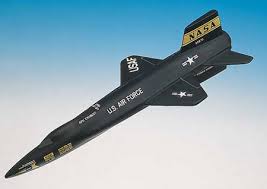
The X-15

The X-15

But here’s the rest of the story. The U.S. Air Force has always maintained that space begins 12 miles lower, at 50 miles above sea level. That made for long-delayed recognition, as astronauts, of a number of brave test pilots of the X-15.

My contemporaries will doubtless remember the exploits of the X-15, an experimental rocket-powered aircraft/spaceplane that set speed and altitude records in the early 1960s. The X-15 reached the edge of outer space and returned with valuable data used in aircraft and spacecraft design. As of 2012, it still holds the official world record for the fastest speed ever reached by a manned rocket-powered aircraft.

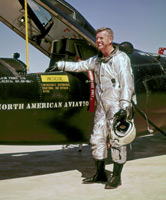
Joseph Walker

Joseph Walker

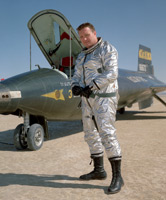
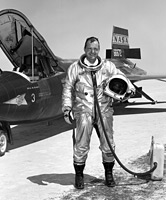
During the X-15 program, 13 different flights by eight pilots, five military and three civilian, met the USAF spaceflight criteria by exceeding the altitude of 50 miles (80 km). But of all the X-15 missions, only two flights (by the same pilot) exceeded 100 kilometers (62.1 mi, 328,084 ft.) in altitude and qualified as space flights per the FAI definition.

John McKay

John McKay

All of the pilots qualified as astronauts by military standards, and the Air Force pilots received USAF astronaut wings. But NASA, apparently worried about ruffling the FAI’s feathers, did not accord similar recognition to the civilian pilots. The agency hemmed and hawed about it for almost 40 years.

Bill Dana

Bill Dana

Finally, in 2005, the three civilian pilots – Bill Dana, John McKay and Joseph Walker, were awarded NASA astronaut wings – 35 years after the last X-15 flight. McKay’s and Walker’s wings were, unfortunately, awarded posthumously.

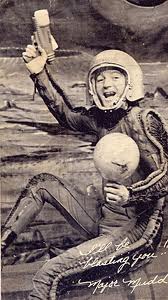
Major Mudd

Major Mudd

Congratulations, at long last, to those three gentlemen. As our old television favorite Major Mudd would say, “I’ll Be Blasting You!”

America’s Second “Ace of the Aces” – Greatest Generation Member Joe Foss (1915-2003)

October 13, 2013

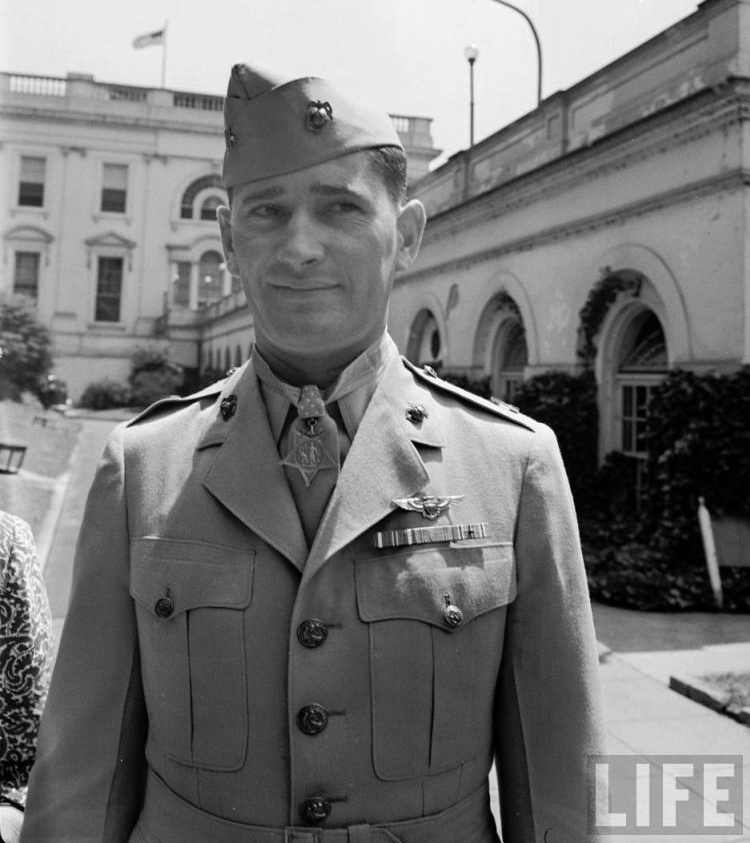
Joe Foss on the cover of Life Magazine

Joe Foss on the cover of Life Magazine

Sports fans of a certain age, especially those of us who grew up with the New York Giants of the National Football League, remember fondly the arrival in 1960 of the American Football League, the Boston Patriots, Dallas Texans, Los Angeles Chargers, New York Titans and others. The man whom the upstart AFL owners picked as their commissioner, to lead them in their challenge to the NFL and its commissioner Pete “Pope Alvin” Rozelle, was the governor of South Dakota, Joseph Jacob “Joe” Foss. And what a choice it was.

Joe Foss grew up in a South Dakota farmhouse that had no electricity. At age 12, he visited a local airfield to see Charles Lindbergh on tour with his plane, the Spirit of St. Louis. At 16, he and his father paid $1.50 apiece to take their first aircraft ride, in a Ford Trimotor.

In 1933, while coming back from the fields during a storm, his father died when he drove over a downed electrical cable and was electrocuted as he stepped out of his automobile. Joe dropped out of school at 17 to run family farm. But after watching a Marine Corps aerial team perform aerobatics in open-cockpit biplanes, he was determined to become a Marine aviator. Joe worked at a service station to pay for books and college tuition and began to take flight lessons. His younger brother took over the farm, and Joe attended Sioux Falls College and then the University of South Dakota.

Joe paid his way through university by “bussing” tables and took part in football, track, and boxing. In 1940, he hitchhiked to Minneapolis to enlist in the Marine Corps Reserves.

World War II, the Second “Ace of Aces”

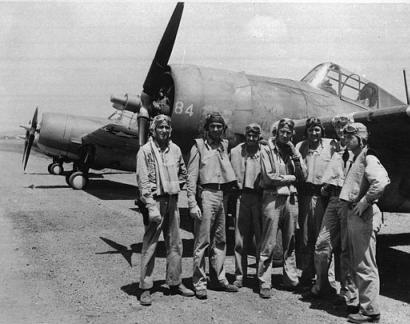
Men of the Cactus Air Force on Guadalcanal

Men of the Cactus Air Force on Guadalcanal

Foss became a Naval Aviator and was commissioned a second lieutenant. At age 26, he was considered too old to be a fighter pilot and was initially assigned to flying reconnaissance. He kept requesting combat, however, and eventually the Marines let him transfer to a fighting squadron. He became the squadron’s executive officer and was shipped with his mates to the Pacific island of Guadalcanal in 1942.

Foss and his group were catapult-launched off an escort carrier and flew 350 miles to reach the island, code-named “Cactus.” It was the brutal first extended encounter in the island-hopping campaign for the Marines. The air group became known as the Cactus Air Force. They were pivotal in the battle and in bringing ultimate victory.

Japan’s fighter plane, the Mitsubuishi “Zero”, was the best combat flying machine in the war’s early years. Foss shot down a Zero on his first mission. He barely escaped in his own shot-up Grumman Wildcat, but he landed it safely at full speed with three more Zeroes on his tail.

In three months of the battle for Guadalcanal, he and his boys of the Cactus Air Force shot down 72 Japanese Zeroes. Foss downed 26 of them. That matched the record held by America’s top World War I “Ace of Aces” Eddie Rickenbacker. America eventually surpassed Japan in aerial warfare capabilities and resources, and by 1945 the Japanese had no planes or pilots remaining to fight the air war.

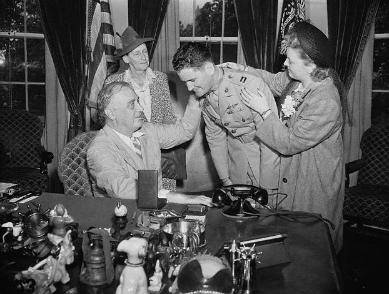
Receiving the Medal of Honor from FDR

Receiving the Medal of Honor from FDR

Foss returned to the United States and received the Medal of Honor from President Franklin Delano Roosevelt. The White House ceremony was featured in Life magazine, which portrayed the reluctant Captain Foss on the cover.

Foss returned to the Pacific in 1944 but did not register any more kills. He left active duty in 1945, but was recalled for the Korean War, was Director of Operations and Training for the Central Air Defense Command, and rose to the rank of Brigadier General.

Politics, Business, and Charitable Endeavors in Civilian Life

Foss served two terms in as Republican state legislator before becoming South Dakota’s youngest governor ever, at age 39. In 1958, he tried for the U.S. House of Representatives and lost to George McGovern, another World War II flyer.

Joe accepted the offer to become the first Commissioner of the newly created American Football League in 1959. He served there for seven years. In 1960, secured the league’s continued existence with a five-year, $10.6 million contract with ABC to broadcast AFL games. That deal arguably secured the future of ABC Sports as well. Joe stepped aside as league commissioner in 1966, two months before the historic merger of AFL and NFL and the creation of the Super Bowl.

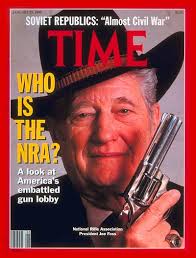
Joe Foss as NRA spokesman

Joe Foss as NRA spokesman

Joe hosted ABC ‘s The American Sportsman from 1964 to 1967, and he hosted and produced his own syndicated outdoors TV series, The Outdoorsman: Joe Foss, from 1967 to 1974. He spent six years as Director of Public Affairs for KLM Royal Dutch Airlines and two years as president of the National Rifle Association. He continued to speak out for Second Amendment rights and other conservative causes, once appearing on the cover of Time magazine wearing his trademark Stetson hat and holding a revolver.

Foss had a daughter with cerebral palsy, which undoubtedly played a part in his tenure as president of the National Society of Crippled Children and Adults. He also worked for Easter Seals, Campus Crusade for Christ, and an Arizona program for disadvantaged youths.

In 2001, he and his wife founded The Joe Foss Institute, a 501(c)(3) nonprofit organization that is still active today in promoting patriotism, public service, integrity and an appreciation for America’s freedoms. The Institute recruits military veterans to go into classrooms across the country to interact with students.

Handling Indignities with Dignity

In January 2002, the 86-year-old Foss was in the news when he was detained by security at the Phoenix Sky Harbor International Airport. He was scheduled to deliver an address at the NRA and speak to a class at the United States Military Academy. Because he had a pacemaker, he could not go through the metal detector. He was searched by the airport security people, who discovered his star-shaped Medal of Honor, a clearly marked dummy-bullet keychain, a second replica bullet, and a small nail file with Medal of Honor insignia. The airport functionaries did not recognize the Medal of Honor, demanded that it and the memorabilia be confiscated and destroyed, and required him to remove his boots, hat and belt.

Despite this ignorant and insulting treatment, Foss didn’t stoop to anything resembling “Do you know who I am?”

He said later, “I wasn’t upset for me. I was upset for the Medal of Honor, that they just didn’t know what it even was. It represents all of the guys who lost their lives – the guys who never came back. Everyone who put their lives on the line for their country. You’re supposed to know what the Medal of Honor is.”

Yes indeed. This was not a case of “Those who do not learn the lessons of history are doomed to repeat them.” Rather, it was a pathetic example of what can happen when people don’t bother to learn history or to respect those who made that history.

A Final Personal Comment

Joe Foss suffered a stroke in late 2002 and died on New Year’s Day 2003. He was buried in Arlington National Cemetery. I would like to thank him for many things. The first, of course, is for his military service. Boomers like me should never stop thanking our elders of the Greatest Generation for the hardships they endured and for the prosperous country they bequeathed to us.

Thanks also, Joe, for being the American Football League’s Number One Man. Those Boston Patriots’ games, especially at BC and Harvard, were unforgettable. It took a man of your stature to give the league the credibility it sorely needed. Later on, in your charitable endeavors, you were “a man for others” in the fashion that my own Jesuit educators preach to their students.

Finally, thank you for demonstrating such dignity and class after that unfortunate airport incident. You showed that you’d been living and fighting for a higher cause than yourself. It was never about you.

Yet, even as I acknowledge and recount all that Joe Foss did for his country, I can’t help but think that it would have been better if he’d taken a different path in 1960 and not run the American Football League. Like George McGovern, the man who kept him out of Washington DC – Joe Foss would have made a superb president of the United States.

I Still Like Ike

September 2, 2013

General Eisenhower Behind the Wheel of a Jeep“I hate war as only a soldier who has lived it can.”
–Dwight D. Eisenhower

Our 34th president learned well from the many errors he made as commander in chief of America’s army in Africa and Europe, and then as Allied Supreme Commander, during World War II.

But he got all the big decisions right, both in war and later on in eight years in the White House. For instance:

The Shoah

Interviewing survivors at Ohrdruf prison camp

Interviewing survivors at Ohrdruf prison camp

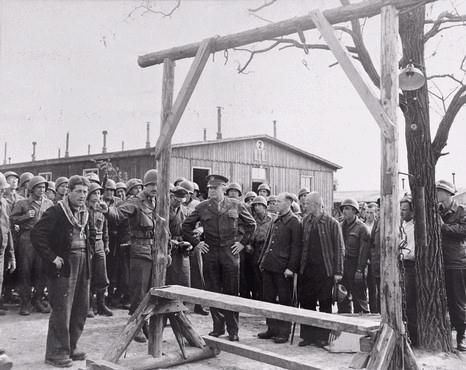
He insisted on seeing for himself the Nazi death camps and the horrors inflicted at them. Then he called for a sizable delegation of people from Congress, along with many photographers and journalists, to witness the evidence of man’s inhumanity to man. He explained,

“I visited every nook and cranny of the camp because I felt it my duty to be in a position from then on to testify at first hand about these things in case there ever grew up at home the belief or assumption that the stories of Nazi brutality were just propaganda. Some members of the visiting party were unable to go through with the ordeal.

“I not only did so but as soon as I returned to [General George] Patton’s headquarters that evening I sent communications to both Washington and London, urging the two governments to send instantly to Germany a random group of newspaper editors and representative groups from the national legislatures. I felt that the evidence should be immediately placed before the American and British publics in a fashion that would leave no room for cynical doubt.”

Segregation and Civil Rights

The 101st Airborne at Little Rock Central High

The 101st Airborne at Little Rock Central High

Eisenhower, not Kennedy or Johnson, was the first president to take a principled stand for Civil Rights. He followed through against the Southern Democrats whose century of delay and obstruction had frustrated realization of those rights for black Americans.

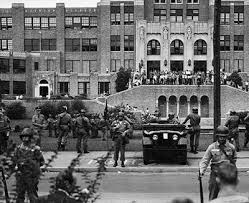
Governor Orval Faubus of Arkansas refused to comply with Brown vs. Board of Education. In 1957 he sent out the state’s National Guard to prevent nine black kids from attending Little Rock Central High School. Rioting broke out and Faubus did nothing to stop it. So Ike sent in 1,000 paratroopers from the 101st Airborne, one of the units he had commanded on D-Day, to restore order and ensure that the” Little Rock Nine” could attend the public school.

Harry Truman had ordered the military desegregated, but two-thirds of the units were still segregated when Eisenhower came along. He finished the job and made sure to include all auxiliary facilities including many southern shipyards. Firebrand black congressman Adam Clayton Powell stated that Ike “had done more to restore the Negro to the status of first-class citizenship than any president since Abraham Lincoln.”

National Defense and Security

Ike was principally responsible for the formation of NATO, a military alliance that prevented wars rather than fight them. Some of his military advisers were fans of using nuclear weapons during the Cold War. One time he reprimanded them, in writing, with “You boys must be crazy.”

That move established the principle of deterrence, a no-first-strike rule that has held to the present day. He never tipped his hand to the Russian Communists and other evil empire-builders of his era, however. He avoided involving America in what he called “brushfire wars” while making enemies believe that he would have no compunction about engaging in another world conflict.

The Economy, and America’s Standing as World Leader

In the Oval Office

In the Oval Office

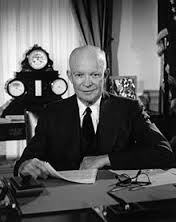
Eisenhower knew how to balance the demands of national security and the national economy. He stated “I patiently explain over and over again that American strength is a combination of economic, moral, and military force. If we demand too much in taxes in order to build planes and ships, we will tend to dry up the accumulations of capital that are necessary to provide jobs for the millions of new workers that we must absorb each year.”

When he came into office, he inherited a $6.5 billion deficit. Tax cuts, reductions in government expenditures, and abolition of price controls launched an economic rise that brought on surpluses by 1956. He left office with a surplus, and with the interstate highway system well underway and financed by a dedicated gasoline tax.

Eisenhower died in 1969. He was buried in an $80 Army coffin and wearing his standard field jacket. The only ornamentation consisted of his five stars, recognizing his rank as General of the Army. John J. Pershing also had that rank, as did George Washington, although Washington’s fifth star was awarded after his death.
.
Eisenhower’s predecessor “Give ‘em Hell Harry” once remarked with cynical realism that a statesman is a politician who has been dead for 10 or 15 years. It has taken much longer than that for history to show how great a statesman Dwight Eisenhower actually was.

Ike was so much more than a bland old retired soldier who liked to play golf. He was the perfect man for his time as leader of our nation, and, more importantly, he was one of the best presidents ever.

Though I was born in the Truman Administration, Dwight Eisenhower was the first president I knew. I was one of the many Boston kids who joined Big Brother Bob Emery in a toast to the president each day, raising our glasses of milk while “Hail to the Chief” played. I like Ike even more now than I did at the time, and nowadays I raise a glass of adult beverage in salute to him.

America sorely needs another president with Dwight Eisenhower’s character, values, experience, and perspective.

Frankly, My Dear, He Did Give a Damn

August 8, 2013

Major Gable

Major Gable

Today’s featured Greatest Generation member: Major Clark Gable. Frankly, my dear, he did give a damn. About his country.

Gable enlisted in the U.S. Army Air Forces in 1942 after the death of his wife, Carole Lombard. He was 41 years old at the time and had already starred in “Gone with the Wind,” “Mutiny on the Bounty,” and “It Happened one Night.”

He wanted to become an aerial gunner on a bomber. He was sent to Florida and officer Candidate School, where he was an assistant potato peeler during training. He graduated 700th in his class of 2,600, and his fellow trainees chose him as their graduation speaker. He got a special assignment from General “Hap” Arnold: to make a recruiting film in combat with the Eighth Air Force. Arnold wanted to recruit more gunners for his bomber fleet.

Gable trained with and accompanied the 351st Bomb Group to England. He spent most of 1943 there as the head of a six-man motion picture unit. He’d been promoted to captain while in training so he would have a rank commensurate with his position as a unit commander.

He flew five combat missions, including one to Germany, as an observer-gunner in B-17 Flying Fortresses between May 4 and September 23, 1943. Gable earned the Air Medal and the Distinguished Flying Cross. During one of the missions, his plane was damaged by flak and attacked by fighters, which knocked out one of the engines and shot up the stabilizer. In the raid on Germany, one crewman was killed and two others were wounded, and flak went through Gable’s boot and narrowly missed his head.

The lobbying of MGM got its top star reassigned to noncombat duty, and he returned to the States to edit his film. As it turned out, the service was able to recruit enough gunners, but he completed the film and hoped for another combat assignment. In May 1944 he was promoted to major but was not brought to Normandy for D-Day. He was relieved from active duty as a major on June 12, 1944 since he was over-age for combat. His discharge papers were signed by Captain Ronald Reagan.

Gable completed editing of the film “Combat America” in September 1944. He gave the narration himself and interviewed several enlisted gunners, making them the focus of the film. He resigned his commission on September 26, 1947, a week after the Air Force became an independent service branch.

Gable was Adolf Hitler’s favorite actor. The Führer had offered a big reward to anyone who could capture Gable and bring him to Berlin.

The scene that inspired Bugs Bunny's most famous line.

The scene that inspired Bugs Bunny’s most famous line.

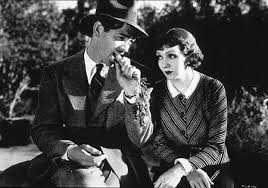
Bugs Bunny’s “Eh…what’s up, doc?” carrot-chewing pose was inspired by a scene in “It Happened One Night.” Gable, leaning on a fence, was eating carrots and talking with his mouth full to Claudette Colbert.

But as Doris Day put it, “He was as masculine as any man I’ve ever known, and as much a little boy as a grown man could be – it was this combination that had such a devastating effect on women.”

And LIFE magazine said of Gable: “All man… and then some.”

People Who’ve Made a Difference: The Ravishing and Brilliant Hedy Lamarr

July 31, 2013

A Beginning in Sex and Scandal

lamarr 1Her early life was scandalous. She appeared naked, on the movie screen, running through the woods and swimming in a lake, the first woman ever shown in the altogether.

That was in Ecstasy, made in Czechoslovakia in 1933. She also acted out sexual climax, writhing and moaning in a bliss that would have made Meg Ryan blush. Her films were luscious cinematic forbidden fruit, banned almost everywhere. Benito Mussolini owned and treasured a personal copy of Ecstasy.

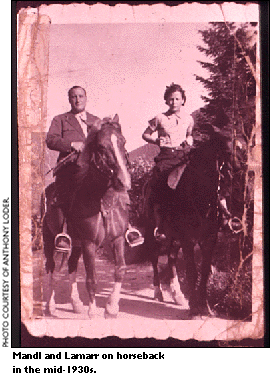
And she was beautiful. Hedwig Kiesler had a perfect face, raven hair, and a slim delicate figure. Men lusted for her. The first man to have her – that’s not the right word, nobody ever truly had her – was Friedrich Mandl, the first of her six husbands.

He was one of the richest men is Austria. She was his trophy wife. His company, Hirtenberger Patronenfabrik, sold ammunition and was the one of the leading arms makers in Europe. He was a Fascist sympathizer, supplying the war machines of anyone who’d buy his wares.

Mandl showcased Hedwig at dinners and banquets with the likes of Mussolini and Adolf Hitler. She acted the part of a brainless beauty. She often said that the secret of glamor was to “stand there and look stupid.” So she did. It was a superb performance, maybe the best acting job of her career.

Hedwig Kiesler was a genius. Daughter of a Jewish banker, she had excelled in school, especially in math and science. She was born in Vienna on November 9, 1914. She quit school at 16 to study acting. In the late 1920’s Hedy was discovered and brought to Berlin by director and acting instructor Max Reinhardt. Following her training in the theater, she returned to Vienna and began to work in the film industry. She married Mandl, who was 30 years older than she, in 1933.

Eavesdropping Inside the Third Reich

When her husband and the evil dictators sat around talking shop, she sat there, looked pretty, and took it all in. She knew what they were talking about, and she knew what they were up to.

A favorite topic of Adolf Hitler was military technology, especially of the type that could control missiles and torpedoes by radio. Wireless control of weapons would be a huge jump from the hard-wired methods then in use. Wireless did come into use during the 1940s, by both Allies and Axis forces. But it was single-frequency radio, easy to monitor, detect, and jam.

According to one account, Mandl and Hitler engaged in a drunken menage à trois after a dinner party. Mandl was desperate to cement a big arms deal. The third party in the threesome was his gorgeous wife. That story is from a widely-panned book, What Almost Happened to Hedy Lamarr, and its truth is in doubt.

Even if it is true, that may or may not have been the final straw for Kiesler. As a Jew, she came to hate Nazis. She despised her husband’s business ambitions, and she did not share her thoughts about science and technology. If anything, she would share her information with the Allies who were fighting against the Nazis.

The radio-controlled guidance system for torpedoes that she heard discussed never got into production because it was too susceptible to disruption. Somewhere along the way she got the idea of distributing the guidance signal over several frequencies. This would protect it from enemy jamming. But she still had to figure out how to synchronize the transmitter and receiver. The solution would come to her later.
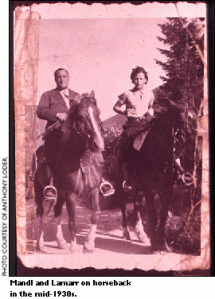
Hedy and Mandl

Hedy and Mandl

Mandl came to know how she felt about him, and he kept her locked up in his castle, Schloss Schwarzenau. He had also forbade her to pursue acting, and tried to buy up all copies of Ecstasy.

In 1937, Hedwig escaped by drugging her maid and sneaking out of the castle wearing the maid’s clothes. She sold her jewelry to finance a trip to London.

Hedwig made it out of Austria just in time. Hitler annexed the country in 1938 and took over Mandl’s business. Mandl was half-Jewish, so being an arms supplier to the Third Reich was no help to him. He had to flee to Argentina, where he eventually became an adviser to Juan Peron.

Into the Movies

In London, Kiesler arranged a meeting with the Hollywood film titan Louis B. Mayer. He knew of her, of course, and he too was captivated by her beauty. On the voyage to America she signed a long-term contract and became one of MGM’s biggest stars of the time.

Hedy and Paul Henreid in "The Conspirators"

Hedy and Paul Henreid in “The Conspirators”

She was in more than 20 films, costarring with Clark Gable, Judy Garland, Bob Hope, Paul Henreid, James Stewart, Spencer Tracy and others. Algiers, White Cargo, and Samson and Delilah were among her biggest screen successes. Unfortunately for Hedy, she turned down the lead in both Casablanca and Gaslight.

She made and spent, by some accounts, at least $30 million. The mansion used in filming The Sound of Music in 1965 belonged to her at the time. Her film career went into decline after Samson and Delilah in 1949.

Film fame and the showbiz scene didn’t do it all for Hedy Lamarr. She didn’t care much for the world of glitz, parties, and paparazzi. She wanted more. She wanted use her money, power, and formidable intellect to defeat the Nazis. She found an ally in composer/musician George Antheil.

Her Only True Partner
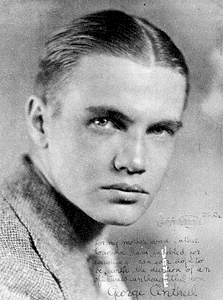
George Antheil

George Antheil

Antheil was an interesting individual too. His 1945 autobiography, The Bad Boy of Music, was a best seller. He was born in New Jersey in 1900 and showed promise as a musician and composer. He lived in Paris, and then in Berlin, from 1923 to 1933 when he returned to America. He also wrote books and a nationally syndicated advice column, wrote regularly for Music World and Esquire, and was a major figure in American ballet.

Antheil made his way to Hollywood to write musical scores for movies. He thought that the movie industry was hostile to modern music, however, and had little personal regard for Hollywood. He also saw Nazism for what it was. One of his magazine articles, “The Shape of the War to Come,” accurately predicted both the outbreak and eventual outcome of World War II. He joined up with Oscar Hammerstein and others in the Hollywood Anti-Nazi League.

Antheil and Lamarr were ideological soul mates. But that’s not what brought them together initially. He also claimed to be an expert on female endocrinology. He had written a series of articles about how to determine the availability of women based on “glandular effects” on their appearance. They had titles like “The Glandbook for the Questing Male” and another on “glandular criminology” titled “Every Man His Own Detective.”

Lamarr first sought out Antheil for help in “augmenting her upper torso,” as one web site nicely puts it. She had him over for dinner after scrawling her phone number in lipstick on his windshield after leaving a party. He suggested glandular extracts of some sort, but their talk evidently turned to technology and how it might be used to fight Hitler. Perhaps technology talk was unavoidable; she had a drafting table in her living room.

Antheil’s most famous musical work was the thoroughly avant-garde Ballet Mechanique. The work’s orchestration first called for 16 player pianos, along with two regular pianos, xylophones, electric bells, propellers, siren, and bass drums. It was hard to keep so many player pianos synchronized, so he scaled it back to a single set of piano rolls and augmented the regular pianos with several additional instruments. It produced an entirely new brand of stereophonic sound.

The Technological Breakthrough and Patent

Antheil’s expertise with player pianos was just what Hedy Lamarr needed. She wanted to design a system of controlling torpedoes that would also be hard or impossible for the enemy to jam. Single-frequency radio control was vulnerable to jamming, as she knew. If they could find a way to “change the channel” at random intervals, the torpedoes could make their way to the target.

Hedy incorporated Antheil’s method for synchronizing his player pianos. The coordination of frequency signals was done with paper player-piano rolls. Then she was able to synchronize the frequency changes between a weapon’s receiver and its transmitter. This “frequency hopping” used a piano roll to make random changes over 88 frequencies. It was intended to make radio-guided torpedoes harder for enemies to detect or jam.

On August 11, 1942, U.S. Patent No. 2,292,387 for a “Secret Communication diagramSystem” was granted to Antheil and Hedy Kiesler Markey, which was Kiesler’s married name at the time. They turned the patent rights over to the U.S. Navy, and unfortunately they never made any money from their brilliant invention.
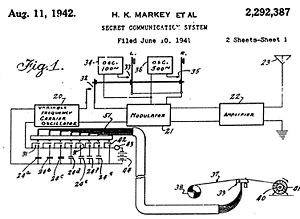
The Navy did not end up building radio-controlled torpedoes. They might not have taken the idea seriously; after all, it came from a gorgeous woman and a flaky musician. There were also some big additional hurdles to overcome before such a system could be used with waterborne ordnance. The Navy did ask her to use her good looks to sell War Bonds, though. She agreed, and bestowed kisses for a purchase price of $50,000.

But the Navy did use Lamarr’s system beginning in 1950. It first controlled sonobuoys, the floating listening posts that detect submarines. In the sixties, it was used for secure ship-to-ship communications during the Bay of Pigs invasion and the Cuban missile crisis. Reconnaissance drones used in Vietnam also employed frequency hopping.

Every time you dial your cell phone, take a call on it, or log onto the Internet, you can thank Hedy Lamarr. Her invention, conceived to fight the Nazis and now called “spread spectrum,” is the foundation of all wireless communication.

“Long-term evolution,” or “LTE,” technology, is just an extension of Hedy and George’s frequency-hopping. Spread spectrum is also the key element in anti-jamming devices used in the government’s $25 billion Milstar system. Milstar satellites control all the intercontinental missiles in U.S. weapons arsenal.

Dozens of “citing patents” owned by the likes of Sony, AT&T, and Seagate now appear on the Patent Office page for Hedy Lamarr’s Secret Communication System. The latest of them was filed in 2009.

After the Glamor Fled
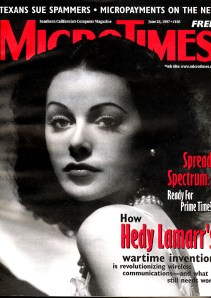
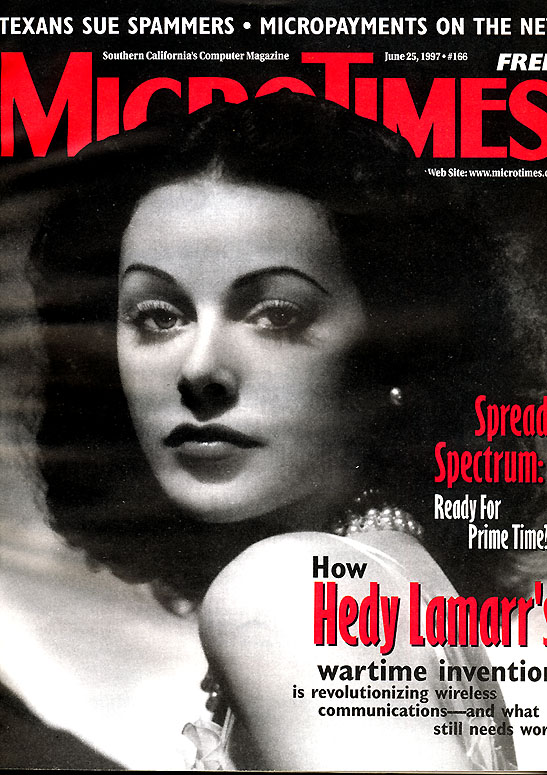
Micro Times magazine with coverage of Lamarr's achievements in technology

Micro Times magazine with coverage of Lamarr’s achievements in technology

The last half of this remarkable woman’s life was not happy. True, the Electronic Frontier Foundation gave Lamarr her a long-overdue award for her work in 1996. Her son Anthony Loder accepted it for her because she no longer appeared in public. She also received the prestigious Austrian Academy of Science Award from her native country.

All six of Hedy’s marriages ended in divorce. Some of her quotes about her experiences there are revealing:

“I must quit marrying men who feel inferior to me. Somewhere there must be a man who could be my husband and not feel inferior. I need a superior inferior man.”

“Perhaps my problem in marriage–and it is the problem of many women–was to want both intimacy and independence. It is a difficult line to walk, yet both needs are important to a marriage.”

“I have not been that wise. Health I have taken for granted. Love I have demanded, perhaps too much and too often. As for money, I have only realized its true worth when I didn’t have it.”

Lamarr’s last movie appearance was in 1958. Her eye-candy roles had never required much acting anyway. She was usually cast as the mysterious and ravishing femme fatale. She’d often been called the most beautiful woman in the world. But when other, younger stars came along, she had fewer and fewer opportunities. She underwent plastic surgery that didn’t help. She had money problems and was twice arrested for shoplifting.

She also launched a number of lawsuits. These included going after Mel Brooks for his silly “That’s Hedley Lamarr!” in Blazing Saddles, and suing Corel Draw for using her image on packages. Both suits were settled out of court. She also wrote an autobiography, Ecstasy and Me, in the 1960s, and ended up suing the publisher.

Hedy lived her final years in seclusion in Florida, her eyesight failing and out of touch with the world that her scientific genius has helped immeasurably. She died in 2000 and was cremated. At her request, her ashes were scattered in the Vienna Woods of her native land.

I Wish I’d Known Her

Anthony Loder once said that his mother never got the chance to grow old gracefully. He also stated that he wished she had talked more to him. There was so much he never was able to ask her. She was frequently on the phone with show-business people, he remarked – Greta Garbo, Bob Hope, Barbara Stanwyck, Louis Mayer, and many others. I wonder, though, if she ever truly revealed herself to another person. Much of what ought to be known about her remains hidden.

One of the greatest satisfactions I get in my work is to hear someone say, “You captured him (or her) in that article.” When I can discover and tell of things that should be known about people, I feel that I’ve done a good deed, both for my subject and for posterity.

How I wish I’d had the opportunity to capture the fabulous Hedy Lamarr. Yes, she was a rich and pampered glamor girl, and we have too many of them. Much of her biography reads like a supermarket tabloid.

But there was so much more to Hedy. She saw monstrous evil. She looked it in the face and escaped its clutches. She made it out of Adolf Hitler’s world, and could have lived an opulent and decadent life. But she decided to do something about the evil she’d seen.

There had to be enormous goodness in her soul, enormous strength in her character. I doubt that anyone was ever allowed to see that goodness and strength for what they were, and then to tell her entire story. We’re the poorer for it.

This blog post is the best I can do for her and for you, dear reader. Danke schoen, Hedwig Kiesler. Sie möge in Frieden ruhen.

A Profile from the Greatest Generation: James Maitland Stewart (1908-1997)

July 28, 2013

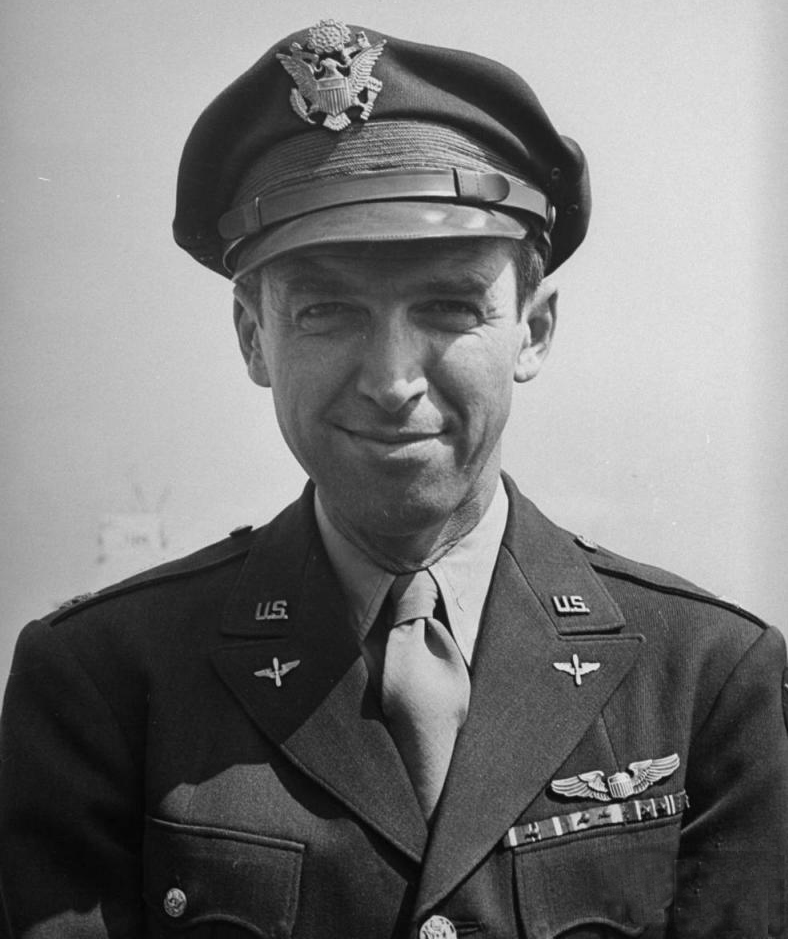
ImageThe real-life George Bailey didn’t stay home and fight the Battle of Bedford Falls.

Both of James Stewart’s grandfathers had fought in the Civil War. His father was in the Spanish-American War and World War I. James was eager to serve his country when World War II broke out, and he wanted to do so as a military flier. He had been a licensed pilot since 1935. Several times he’d flown cross-country from Hollywood to visit his parents in Pennsylvania, navigating by railroad tracks.

It wasn’t easy for him, either to get into the service in the first place or to get assigned to combat duty. He was already an established film star – “You Can’t Take It With You,” “Mr. Smith Goes to Washington,” “The Philadelphia Story” and others – when he was drafted in 1940. He did not meet the height and weight requirement and was rejected. He sought out the MGM muscle man Don Lewis, bulked up, and was initially rejected again before persuading the enlistment officer to run new tests. He finally got into the Army in 1941.

Stewart enlisted as a private, but as a college graduate (Princeton 1932) and a licensed commercial pilot he applied for an Air Corps commission. Though he was almost 33, six years beyond the maximum age restriction for aviation cadet training, Stewart received his commission as a second lieutenant on January 19, 1942, His first assignment was an appearance at a March of Dimes rally in Washington, D.C., but he wanted to go to war rather than be just a recruiting symbol. He applied for and was granted advanced training in multi-engine aircraft.

His show business background still was needed and useful to the nation as well. Shortly after Pearl Harbor, he performed with Orson Welles, Edward G. Robinson, Walter Huston and Lionel Barrymore in an all-network radio program called “We Hold These Truths,” dedicated to the 150th anniversary of the Bill of Rights. In 1942, he starred in “Winning Your Wings,” a film that helped bring in 150,000 new recruits.

Until well into 1943, he stayed stateside in various training capacities. After rumors that he would be taken off flying status and go out to sell war bonds, the 35-year old Stewart appealed to his commander, 30-year-old Lt. Col. Walter Arnold. His commander recommended Stewart to the commander of the 445th Bombardment Group, a B-24 Liberator unit then undergoing final training in Iowa.

Stewart started out as operations officer but soon became the group’s commander. They flew to England and had their first combat mission on December 13, 1943, bombing U-boat facilities at Kiel, Germany. After missions to Bremen and Ludwigshafen, Stewart was promoted from group commander to squadron commander. He received the Distinguished Flying Cross for actions as deputy commander of the 2nd Combat Bombardment Wing in February. In March, in his 12th combat mission, Stewart led the 2nd Bomb Wing in an attack on Berlin.

In all, Stewart flew on 20 official missions and on several others that were uncredited because he, as a staff officer, could assign himself as a combat crewman. He received a second Distinguished Flying Cross, the Croix de Guerre, and the Air Medal with three oak leaf clusters. He was promoted full colonel in 1945, making him one of a very few Americans to rise from private to colonel in four years.

After the war Stewart stayed with the Air Force Reserve and reached the rank of Brigadier General in 1959. He was one of 12 founders and a charter member of the Air Force Association. In 1966, he flew as a non-duty observer in a B-52 on an Arc Light bombing mission during the Vietnam War. He refused the release of any publicity regarding his participation, as he did not want it treated as a stunt, but as part of his job as an officer in the Air Force Reserve.

After 27 years of service, Stewart retired from the Air Force on May 31, 1968. But he kept working for democracy and human rights through the American Spirit Foundation, which he co-founded. He collaborated with Russian president President Boris Yeltsin to have a special print of “It’s a Wonderful Life” translated, and in January 1992, on the first free Russian Orthodox Christmas Day, Russian TV broadcast that film to 200 million Russians.

In tandem with politicians and celebrities such as President Ronald Reagan, Supreme Court Chief Justice Warren Burger, California Governor George Deukmejian, Bob Hope and Charlton Heston, Stewart also worked from 1987 to 1993 on projects that enhanced public appreciation and understanding of the U.S. Constitution and Bill of Rights.

If giving is what makes you rich, then James Stewart’s long life of service and giving of himself to his country undoubtedly made the real-life George Bailey the Richest Man in Town.

History I Never Knew: The Remarkable Annie Oakley

July 7, 2013
Little Sure Shot

Little Sure Shot

In April 1898, three weeks before the Spanish-American War broke out, President William McKinley received the following letter:

“I feel confident that your good judgment will carry America safely through without war. But in case of such an event I am ready to place a company of fifty lady sharpshooters at your disposal. Every one of them will be an American, and as they will furnish their own Arms and Ammunition will be little if any expense to the government. “

–Annie Oakley

President McKinley never responded to the 37-year old Annie’s offer to help. Nor did Woodrow Wilson or his Secretary of War Newton Baker nineteen years later when Oakley wrote “I can guarantee a regiment of women for home protection, every one of whom can and will shoot if necessary.” But she still gave soldiers of World War I shooting lessons, and she helped raise money for Red Cross and other organizations.

Gail Davis as Annie Oakley, with her horse Target

Gail Davis as Annie Oakley, with her horse Target

Annie Oakley, born in 1860, was a remarkable woman. Her name is familiar to my generation. We all remember the TV show of the mid-1950s that starred the glamorous Gail Davis. Gail was also a sharpshooter and expert rider too, but the 81 episodes of the Annie Oakley Show had no resemblance to the life and accomplishments of “Little Sure Shot.”

We boomers have also sung “Anything You Can Do, I Can Do Better” and “There’s No Business Like Show Business.” They’re from Annie Get Your Gun, the popular musical that debuted in 1946. Some of us even remember Barbara Stanwyck as Annie in the 1936 biopic.

So we can thank the showbiz acumen of people like Gail Davis’s mentor Gene Autry and composer Irving Berlin for keeping the name of Annie Oakley alive. That’s a good thing. But she deserves to be remembered for far more than most of us know about her.

Annie Oakley was not just an entertainer with a rifle slung over her shoulder. She was the first bona fide American female superstar. Her story is an inspirational tale of a child who rose from stark and abusive poverty, who never forgot her roots or those who faced similar hurdles, who did everything in her power to better the lives of girls and women, and who was a staunch patriot in deed as well as in word.

During her career, Oakley taught more than 15,000 women how to use a gun, both for the inherent discipline of marksmanship and for self-defense. She even taught ladies how to conceal their guns in umbrellas. She said, “I would like to see every woman know how to handle firearms as naturally as they know how to handle babies.”

Up from Poverty, Rifle in Hand

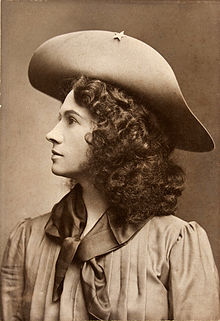
Annie in 1903

Annie in 1903

Phoebe Ann (Annie) Moses was born in a log cabin in rural northwest Ohio, the sixth of seven children of Jacob and Susan Moses. Jacob had fought in the War of 1812. He died of pneumonia in 1866, when Annie was five. Annie taught herself how to shoot, using her late father’s old 40-inch cap-and-ball Kentucky rifle.

At age eight, she began trapping and hunting small game to support her widowed mother and her siblings. She would kill the animals with a head shot, preserving as much edible meat as possible. She sold the game to Katzenberger’s Restaurant in Greenville, Ohio. The owner re-sold most of it to hotels and restaurants in Cincinnati, 80 miles away. Annie was so good that by age 15 she had earned enough to pay off her mother’s mortgage.

At age nine she was admitted to an infirmary in Darke County, Ohio along with her sister. The superintendent’s wife taught her how to sew and decorate. Annie was also “bound out” to a local family to help care for their infant son, on the false promise of fifty cents a week and an education. For two years she endured the couple’s mental and physical abuse. She would often have to do boys’ work. One time she was put out in the freezing cold, without shoes, to punish her for falling asleep over some darning. Annie referred to the family as “the wolves.” But in her autobiography, she did not reveal the couple’s real name.

Word of Annie’s prowess as a sharpshooter spread throughout the region. Her escape hatch from a grinding life of penury was that singular – but now forgotten – American institution, the traveling road show. On Thanksgiving Day, 1875, the Baughman and Butler shooting act was performing in Cincinnati. Traveling marksman and former dog trainer Frank Butler, an Irish immigrant, placed a $100 side bet – one worth more than $2500 today – with Cincinnati hotel owner Jack Frost. The bet: that Butler could beat any local shooter.

Frost arranged a match between the 25-year-old Butler and Annie, saying, “The last opponent Butler expected was a five-foot-tall 15-year old girl.”

Butler missed on his 25th shot, losing both match and bet. But he eventually won big. He began courting Annie. They married in August 1876 and stayed together until their deaths 50 years later. They first lived in the Oakley district of Cincinnati, and Oakley became her stage name. Offstage, she always referred to herself as Mrs. Frank Butler.

Poster for Buffalo Bill's Wild West Show

Poster for Buffalo Bill’s Wild West Show

Annie began as Butler’s assistant in the traveling act. But soon he stepped back from the limelight and let his more talented spouse be the star. They joined Buffalo Bill Cody’s Wild West Show in 1885 and stayed with it for 17 years. Annie was the main attraction. Her most famous trick was repeatedly splitting a playing card, with the edge facing her, and putting several more holes in it before it could touch the ground. She did it from 90 feet away, using a .22 caliber rifle.

That feat prompted people in the theatre business to refer to complimentary tickets as “Annie Oakleys”. Such tickets traditionally have holes punched into them to prevent them from being resold. She could also hit a tossed-up dime from 90 feet, and one day she hit 4,472 of 5,000 glass balls tossed into midair.

How “Little Sure Shot” Got Her Nickname

Sitting Bull

Sitting Bull

In 1884, after a performance in St. Paul, Minnesota, Oakley befriended the fearsome Sitting Bull, chief of the Lakota Sioux. Eight years previously, in 1876, Sitting Bull had led the Indians in the rout of General George Armstrong Custer at Little Big Horn. Sitting Bull fled to Canada, returned in 1881 and surrendered, and was still a political prisoner when he met Annie. Impressed by both her marksmanship and her self-assured demeanor, he gave her the Sioux name “Watanya Cicilla,“ which means “Little Sure Shot.”

Later that year Sitting Bull was allowed to join Cody’s entourage as a show Indian. He earned about $50 a week for riding once around the arena, and he became a popular attraction. But Sitting Bull stayed with the show for just four months. The poverty of the white men’s cities and their patronizing attitude disgusted him.

Sitting Bull was an admirable leader of his people, a superb military tactician, and a good guy. He gave speeches about education for the young and reconciling relations between the Sioux and whites. He earned a small fortune by charging for his autograph and picture, and he often gave his money away to the homeless and beggars. He said that Indian culture would take care of its sick and elderly, and was appalled that white society did not do the same for its own. But Sitting Bull loved Annie Oakley.

Fame, and Fortune Generously Shared

In 1887, Buffalo Bill’s Wild West toured England to join in the Golden Jubilee of Queen Victoria. Annie received a great deal of press coverage, and by the time Cody and his show returned to Europe in 1889, Annie had become a seasoned performer and earned star billing. The troupe stayed in Paris for a six-month exhibition, and then traveled around France, Italy, and Spain. Oakley was especially popular with women. Buffalo Bill made the most of her fame to demonstrate that shooting was neither detrimental nor too intense for women and children.

Annie and Frank Butler with Dave, the "Red Cross Dog" of World War I.

Annie and Frank Butler with Dave, the “Red Cross Dog” of World War I.

In Europe, Annie also performed for King Umberto I of Italy and Marie François Sadi Carnot, president of France. Shooting the ashes off a cigarette held in Frank’s mouth was a big part of the act. She was so good that the newly-crowned German Kaiser Wilhelm II asked her to shoot the ash off his cigarette. She did so, but had him hold the butt in his hand. After World War I began, she wrote him a letter requesting a second shot.

Annie earned $700 a week while on tour in Europe. But she remembered the poverty of childhood and lived frugally. She sent money home to her mother and family, and gave money to orphans, widows and young women who wanted to further their education. Records show she provided funding and professional training for at least 20 young women.

She often said, “Aim at the high mark and you will hit it. No, not the first time, not the second time and maybe not the third. But keep on aiming and keep on shooting for only practice will make you perfect. Finally you’ll hit the bull’s-eye of success.”

Though she had no formal education, Annie instinctively knew all about cultivating her feminine image – today we’d call it brand management. Annie projected womanly allure and sex appeal without being sexy – the perfect little lady. She wore her hair unpinned, like a young girl. She made all of her own clothes, which she styled to hug and display her pleasing curves. But she never showed any skin, covering her legs with long stockings and wearing long sleeves and high collars.

In that uptight, repressed Victorian era, Annie Oakley was breaking barriers at the same time while helping to create an image of American womanhood – proper, attractive, and practical. The woman Annie represented didn’t need protection; she could protect herself.

Setbacks and Hardships

It wasn’t all glory and fame for Annie Oakley and Frank Butler. She left Cody’s show for a year when a younger rival shooter named Lillian Smith joined up and got higher billing. In 1901, she lost a shooting match to a nine-year-old girl, Ethel Nice. Shortly after that, Annie was in a train wreck, was temporarily paralyzed, and had five spinal operations.

She left Buffalo Bill’s show in 1902 and began an acting career. She was on the stage as Nancy Berry, The Western Girl, who got the better of the bad guys by using pistol, rifle, and lariat.

Annie had previously appeared in one of the earliest movies ever produced, “The Little Sure Shot of the Wild West.” A Kinetoscope film shot in 1894 by inventor Thomas Edison, it was the 11th movie made after commercial showings began in April of that year. In the film, Annie performed an exhibition of shooting at glass balls.

In 1904, the odious William Randolph Hearst published a scurrilous story that Annie had been arrested for stealing to support a cocaine habit. A coke-snorting stripper from Chicago had been nabbed by police, and she gave her name as “Annie Oakley.” That “evidence” was apparently enough for the scandal-mongering Hearst.

It took the real Annie six years and 55 libel lawsuits against newspapers to get back her reputation. She won 54 of those suits, but the judgments she collected didn’t even pay her legal bills. Hearst even sent punks from his papers to Ohio to try and dig up dirt about her, but they came back with nothing.

Annie in 1922

Annie in 1922

Following Annie’s change of career and despite her injury, her shooting prowess continued to improve until she was well into her sixties. In a 1922 contest, Annie hit 100 clay targets in a row from 16 yards away. She was 62 at the time.

Later that year, she and Frank were in a car accident that forced her to wear a steel brace on her right leg. But she recovered and set more records in 1924.

Annie’s health declined in 1925. She succumbed to pernicious anemia in Greenville, Ohio and died at age 66 in November 1926. Frank Butler was so disconsolate at her passing that he stopped eating and died just 18 days later.

After Annie’s death, her incomplete autobiography was given to a friend, the stage comedian Fred Stone. Soon it was discovered that her entire fortune had been spent on her family and on her charities.

Her Legacy

So how should we remember Annie Oakley? As one of America’s best. Ever.

Annie Oakley was a model for the Greatest Generation that followed her, and for all generations to come. She overcame poverty, mistreatment and physical injury with her determination and strength of character. She broke barriers for women with her talent and accomplishments in her sport. She loved her country and proved it with many good and patriotic works. She showed compassion and generosity to orphans, widows and other young women. She was a devoted and faithful wife.

Annie Oakley excelled in a man’s world by doing what she loved – winning fame and fortune as the little lady from Ohio who never missed a shot.

History I Never Knew: Mary Had a Little Lamb – and He Built the Bunker Hill Monument

April 30, 2013

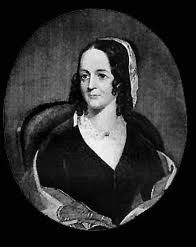
Sarah Josepha Hale

Sarah Josepha Hale

Well, not really. But there’s definitely a connection between that soft and gentle creature and the obelisk commemorating the first major, fiercest, and bloodiest battle of the Revolutionary War.

Construction of the Bunker Hill Monument started in 1825. They built one of America’s first railroads to carry the eight-ton blocks of granite from the quarries south of Boston. But funds ran out and it took a remarkable woman named Sarah Josepha Hale to rescue the project.

Hale was editor – she preferred to be called “editress” – of The Ladies’ Magazine. She’d also published, in 1830, Poems for Our Children, a collection that included Mary’s Lamb. She raised $30,000 for the completion of the Monument. She first asked her readers to donate a dollar each and also organized a week-long craft fair at Quincy Market. The fair sold handmade jewelry, quilts, baskets, jams, jellies, cakes, pies, and autographed letters from George Washington, James Madison, and the Marquis de Lafayette. Without Mrs. Hale, the 221-foot monument might never have been built.

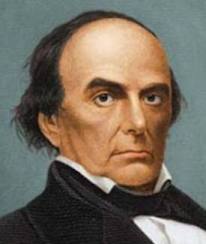
Daniel Webster

Daniel Webster

Daniel Webster had addressed a crowd of 100,000 at the laying of the cornerstone. He was still around in 1843, and he spoke again when the finished monument was dedicated that year. It is one of the signature edifices of Boston, a memorial both to the fighting spirit of the colonists and to the staunch patriotism of Sarah Josepha Hale.

Conquest of Breed’s Hill: A Pyrrhic Victory for the Redcoats

As the latest Smithsonian magazine tells it, there’s a lot of mythology about both colonial Boston and the Battle of Bunker Hill. The city was no cradle of liberty or bastion of religion. Though founded by Puritans, Boston had a neighborhood near Beacon Hill that was so thick with prostitutes that maps showed it as “Mount Whoredom.” One out of five families in Boston owned slaves. The city was viciously divided between Loyalists and advocates of independence. Many of the “Sons of Liberty” were vigilantes and thugs.

It had been two months since the skirmishes at Lexington and Concord. The Brits were holed up in the city of Boston, and the colonists were on the outskirts. Fortifying Breed’s Hill, which was closer to the city than Bunker Hill, was probably done as a deliberate provocation. It worked. The British responded, torched Charlestown at the base of the hill, and attacked the entrenched colonials.

The Brits, with their red uniforms and the nattily-dressed officers easily identifiable and thus prime targets, charged twice and were beaten back. The high grass had obscured many rocks, holes and other obstacles that made the uphill advance even more difficult. The third charge was different. They first blasted the hilltop with cannon fire, then marched in spaced columns rather than abreast.

There was no “whites of their eyes” command by Colonel William Prescott or General Israel Putnam. That was made up years later by writer Parson Weems, who also concocted the story of George Washington and the cherry tree. When the British charged, the Americans fired from 50 yards away. One colonel told his men not to shoot until they saw the splash guards, called half-gaiters, which the soldiers wore around their calves. “Don’t fire until you see their half-gaiters” just doesn’t sound the same, does it?

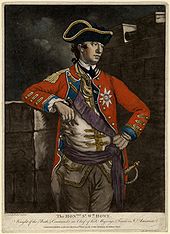
Lord William Howe

Lord William Howe

The Americans ran out of ammunition. Those who couldn’t escape perished in brutal, hand-to-hand combat. The British took the hill top, but had suffered 1,054 casualties to the Americans’ 400. “Success is too dearly bought,” wrote British General William Howe, who lost every member of his staff and the bottle of wine that his aide-de-camp had brought along.

The British got the message: the colonists, though driven off Breed’s Hill that day in June, were going to give them a tough fight. In March 1776, just nine months later, the redcoats evacuated the city of Boston for good.

The First Monument: In Memory of the Dr. Joseph Warren, the Revolution’s First Martyr

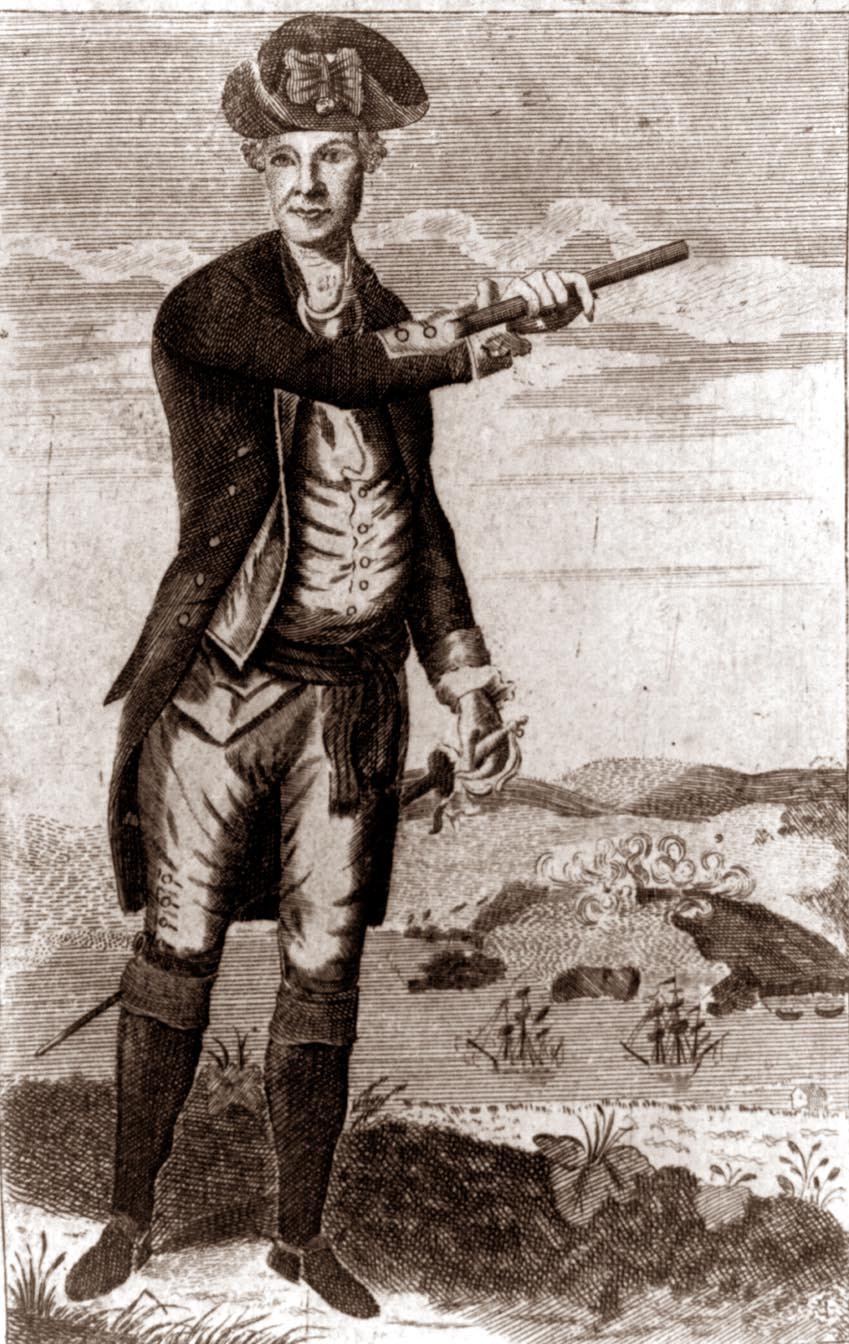
Joseph Warren

Joseph Warren

The first monument on the Breed’s Hill site was an 18-foot wooden pillar with a gilt urn erected in 1794 by King Solomon’s Lodge of Masons. They wanted to honor Dr. Joseph Warren, a physician and Mason who was the Revolution’s first martyred hero. There’s a statue of him in Charlestown now, but he is little remembered today.

Warren was a leader of the colonial underground, and he became a major general of the army in the time leading up to Bunker Hill. Clad in a toga, he addressed a crowd of 5,000 before the battle. He didn’t assume a command, but fought as an ordinary soldier. He wore a silk-fringed waistcoat with silver buttons, and he died from a bullet in the face during the final British charge.

Warren’s stripped body was later found and identified through his false teeth, which had been crafted by Paul Revere. He left behind both a fiancée and a pregnant mistress. In 1823, a group of prominent citizens formed the Bunker Hill Monument Association to put up a better memorial. They fell short of their goal, though, and had to be rescued by Sarah Josepha Hale and Mary’s Little Lamb.

America’s Best Friend About Whom You’ve Never Heard: Beaumarchais

April 26, 2013

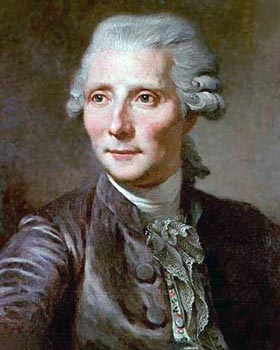
Beaumarchais

Beaumarchais

Students of the American Revolution learn of the indispensable aid that the colonists got from France’s King Louis XVI and his men: Lafayette, Rochambeau, and deGrasse. But we never hear of Pierre Augustin Caron de Beaumarchais. And that, mes amis, is une scandale. Without the tireless, entrepreneurial work of the fascinating M. Beaumarchais, we might still be drinking tea and saying “shedule.”

Master Spy

History shows that France formally entered an alliance with the Americans after the army of Horatio Gates defeated the redcoats of John Burgoyne at the Battle of Saratoga. The books don’t tell that our boys were wearing uniforms and firing guns delivered by 20 French ships manned by sailors organized and paid by the firm of Roderigue, Hortalez and Company. That company was a front, set up by Beaumarchais, which would have made the CIA proud.

Secretly backed by the governments of France and Spain, Roderigue, Hortalez purchased and shipped to America: 200 cannon; mortars; 25,000 firearms and ammunition; 200,000 pounds of gunpowder; and uniforms and camping equipment for 25,000 men.

The whole thing was done without the British ambassador to France catching wind of it. King Louis XVI had wanted to support the Americans against the Brits, but he wanted to do it clandestinely. Beaumarchais got the cooperation of admirals and factory owners by issuing many orders in Louis’ name, orders that the king never knew about. When he heard the news of the American victory at Saratoga, Beaumarchais sped off for Paris in a carriage to tell the king, and he suffered a serious injury in an accident along the way.

Stiffed by the “Grateful” Yanks

Silas Deane

Silas Deane

Beaumarchais had to borrow the money to finance the arms shipment. He was to be paid in tobacco, according to his deal with Silas Deane of Connecticut, who was then acting as agent for the Continental Congress. Deane was a slippery character. He didn’t keep his financial records in order, for whatever reason, and was eventually fired from the job in France and replaced by John Adams. Deane ended up advocating for the British cause and living in Europe.

John Jay

John Jay

Beaumarchais was never thanked by the Americans and never got paid for his troubles. Three and a half years later, he received a nice letter from John Jay. It promised that soon the Continental Congress would pass measures to pay up – it didn’t – and went on to say Beaumarchais had “gained the Esteem of this Infant Republic and will receive the merited applause of a new world.”

Merci beaucoup, Chief Justice. Show me the money!

Forty years on, Beaumarchais’ daughter had fallen into poverty. She petitioned Congress to pay the 2.25 million francs that America still owed her father, according to books originally compiled by Alexander Hamilton. Congress told her to take one-third of the amount, or nothing.

The American nation is not the only one that owes M. Beaumarchais its thanks. So do opera fans and literature buffs of all nations. He wrote the plays that eventually made into The Barber of Seville, The Marriage of Figaro, and The Guilty Mother. He also went into the publishing business in Germany and printed many of the works of Voltaire, which were banned in France. Without Beaumarchais’s publishing ventures, unprofitable though they were, we might not know much at all of that great author Voltaire.

Smooth Operator

How did Beaumarchais, son of a middle-class provincial watchmaker, achieve all that he did in and around the royal courts of France? It took a brew of talent, native intelligence, hard work, and a knack for bettering himself through networking and marrying rich women.

Madame de Pompadour

Madame de Pompadour

Watches were unreliable and worn mostly for ornamentation back then. At age 20, Beaumarchais invented an escapement for the internal works; the escapement made his watches much more accurate. He also designed a watch mounted on an elegant ring. The watch was for Mme de Pompadour, mistress of King Louis XV. That was his entrée to the court at Versailles.
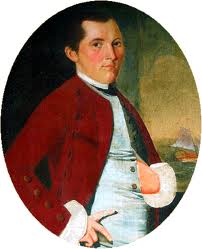
Beaumarchais became a harp instructor to Louis XV’s daughters. He married a second time, bought himself a title and coat of arms, and collaborated with some big French wheeler-dealers on ventures like the building of the Royal Military Academy. He also tried to be named the exclusive exporter of slaves to the French colony of Louisiana.

Countess du Barry

Countess du Barry

He fell out of favor when his wealthy patron Joseph Paris Duvereney died, and he got embroiled in a sensational lawsuit known as the Goezman affair. Both Beaumarchais and his opponent tried to bribe the judge, whose name was Goezman. Beaumarchais’s writings about the case were popular, scandalous faire. The verdict was basically a tie, and Beaumarchais ended up losing his civil rights.

He earned those rights back by going to England as Louis XV’s secret emissary. His task: to buy off a blackmailer who was threatening Countess du Barry, another mistress, with a defamatory book named Les mémoires secrets d’une femme publique. He succeeded brilliantly, getting 3,000 copies of the book burned. He persuaded the author to become a valuable informant for the French.

Later on, during the French Revolution, Beaumarchais made big money by supplying the City of Paris with water. He had to flee for his life and spent a couple years in Germany before returning and living out the rest of his days. He married a total of three times, and his enemies accused him of poisoning his first two wives in order to gain access to their money. Whether he ever did so was never proven. But one thing was certain: he did have a talent for wooing wealthy ladies.
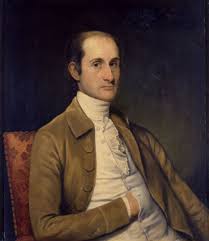
Pierre Augustin Caron de Beaumarchais deserved more than the mere esteem of this infant republic. We should be including him in any serious accounts of how the American colonies were able to win their war of independence. Belated applause too, please!

And come on now – admit it. Isn’t history just fascinating?

Fun Facts from the History of Preventive Medicine

April 9, 2013

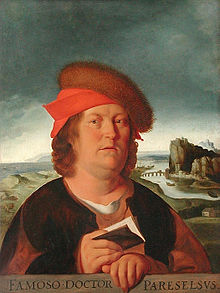
Paracelsus

Paracelsus

Back in the old days, people thought that illness was the result of imbalances of the four “humours” within the body. “Bleeding” to correct those imbalances was standard treatment. Paracelsus (1493-1541) first challenged this view by stating that poisons from outside the body made people sick. Introducing other “poisons,” albeit in smaller doses, could correct things.

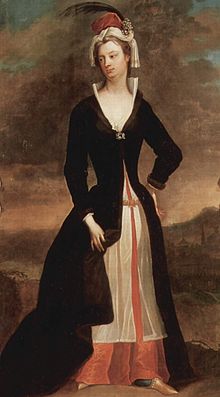
Fast forward two centuries to the early 1700s, when Lady Mary Wortley Montagu of London followed the basic ideas of Paracelsus in her personal crusade to make English people healthier. Smallpox was rampant in those days, and Lady Montagu promoted the radical idea of inserting a small bit of matter from a smallpox patient into the body of a healthy person to ward off the disease. A few people took her up on the offer and proved her right; King George I had his grandchildren “inoculated.”

Lady Montagu

Lady Montagu

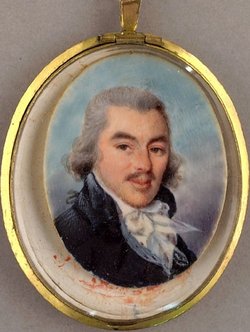
In America, the preacher Cotton Mather was a big supporter of the practice, but the only physician to adopt it was Dr. Zabdiel Boylston (1676-1766) of Brookline, Massachusetts. Boylston performed America’s first successful operation for the removal of bladder stones in 1710. In 1718, he did the first surgical removal of a breast tumor.

The “big pox,” or syphilis, was all too common as well. Dr. Thomas Dover (1660-1742) thought that mercury was the cure for syphilis. He prescribed mercury for that and for other venereal diseases and became known as “Dr. Quicksilver.” His “Dover’s Powder,” a concoction of ipecac, opium, and potassium sulfate, was used to induce sweating to defeat the advance of a “cold” and at the beginning of an attack of fever. It remained in use up to the 1960s.

Zabdiel Boylston

Zabdiel Boylston

Thomas Dover was an interesting guy. He gave up his medical practice and sought his fortune in privateering, even though he was a landlubber. On a three-year voyage of that legalized piracy he managed to make that fortune and put down a mutiny along the way. He was also the captain who rescued and brought home Alexander Selkirk, who’d been marooned on an island off Chile. Selkirk’s story was retold in fiction by Daniel Defoe in Robinson Crusoe.

Dover, like Lady Montagu, was a disciple of Paracelsus and a believer that diseases originated outside the body. That growing realization led to support for additional preventive medical techniques. Venereal disease was one affliction that simply cried out for methods of prevention, especially in military circles. The troops of the British Royal Guard suffered more deaths from sexually-transmitted diseases than from enemy swords and bullets.

A Colonel Cundom of the Guards came up with the answer. He designed a “bootie” made from dried lamb intestines which could be oiled before use. A number of writers and poets began to praise the new invention. Englishmen began referring to it as a “French letter,” while the French called it an “English cloak.”

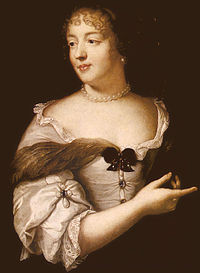
The Marquise de Sévigné

The Marquise de Sévigné

The Marquise de Sévigné (1626-1696), a prolific and witty letter-writer, described it thus to her daughter: “..an armor against enjoyment and a spider web against danger.”

A small company was founded in 1880 to produce the booties that were named for the intrepid colonel. In 1937, the first latex version of the bootie made its appearance. The company named the new product a “Trojan” in honor of the walls of Troy, which had been so effective on holding the Greeks at bay for ten years. The more formal name of the product is “prophylactic,” derived from the Greek words “pro” (for) and “phylax” (gatekeeper).
And that’s our history lesson for today.