Archive for the ‘Events and Society’ Category

It’s About Time!

July 31, 2012

The Art, Science, and Business of Timekeeping, in the Olympics and Long Before

Michael Phelps was 4.10 seconds behind Ryan Lochte in the 400-meter Individual Medley at the 2012 Olympics.  Lochte lost the lead to a Frenchman on the final relay leg and checked in 0.45 seconds behind.

Mere fractions of seconds now separate Gold Medal winners from out-of-the money participants. The swiftest will reap millions and bask in fame for the rest of their lives. The slower – barely, but still slower – ones who finish in their wakes will join the madding crowd in anonymity.

“As long as I’m around you’re second best. You might as well learn to live with it,” said Edward G. Robinson as Lancey Howard in The Cincinnati Kid. Live with it, they will. Maybe they won’t like it, but the also-rans should be bloody well proud that they even had a chance to compete.

Is there a higher honor for an athlete than to represent his country in the Olympic Games? I don’t think so. Well done, ladies and gentlemen, whatever your time or place of finish happens to be. That’s the editorial comment. Now, to our story.

Time is Money

The games of the Thirtieth Olympiad take place in London. It’s fitting. London is home to the Royal Observatory at Greenwich, which has long been the world’s point of geographical reference and is the fons et origo of modern timekeeping. Back in 1836, the Royal Observatory knew, down to the second, what time of day it was. But they had just about no way of sharing that information with the public.

Enter the first entrepreneur of time: John Henry Belville, an astronomer and meteorologist who worked there. He built up a lucrative side business – selling time.  Customers – local merchants, dockyards, shipping offices, instrument shops – paid a subscription fee for a weekly visit from Belville and his personal chronometer. That pocket timepiece, which was nicknamed Arnold, was tuned to the observatory’s clock to within one-tenth of a second.

Belville died in 1856, and his young widow Maria took over the time-supply business with the blessing of the Observatory. Her daughter Ruth inherited both the business and Arnold. Though telegraph, radio, and telephone’s “speaking clock” service moved onto the scene, the “Greenwich Time Lady” was most reliable and had a loyal following of customers. Ruth stayed in the time-selling business until 1940.

Timekeeping in Sports

Omega, the official timekeeper of the games, is now able to calibrate race times to one-thousandth of a second.  The starter’s “gun” is integrated with the laser detectors at the finish.  There’s no longer a human element to Olympic timing.
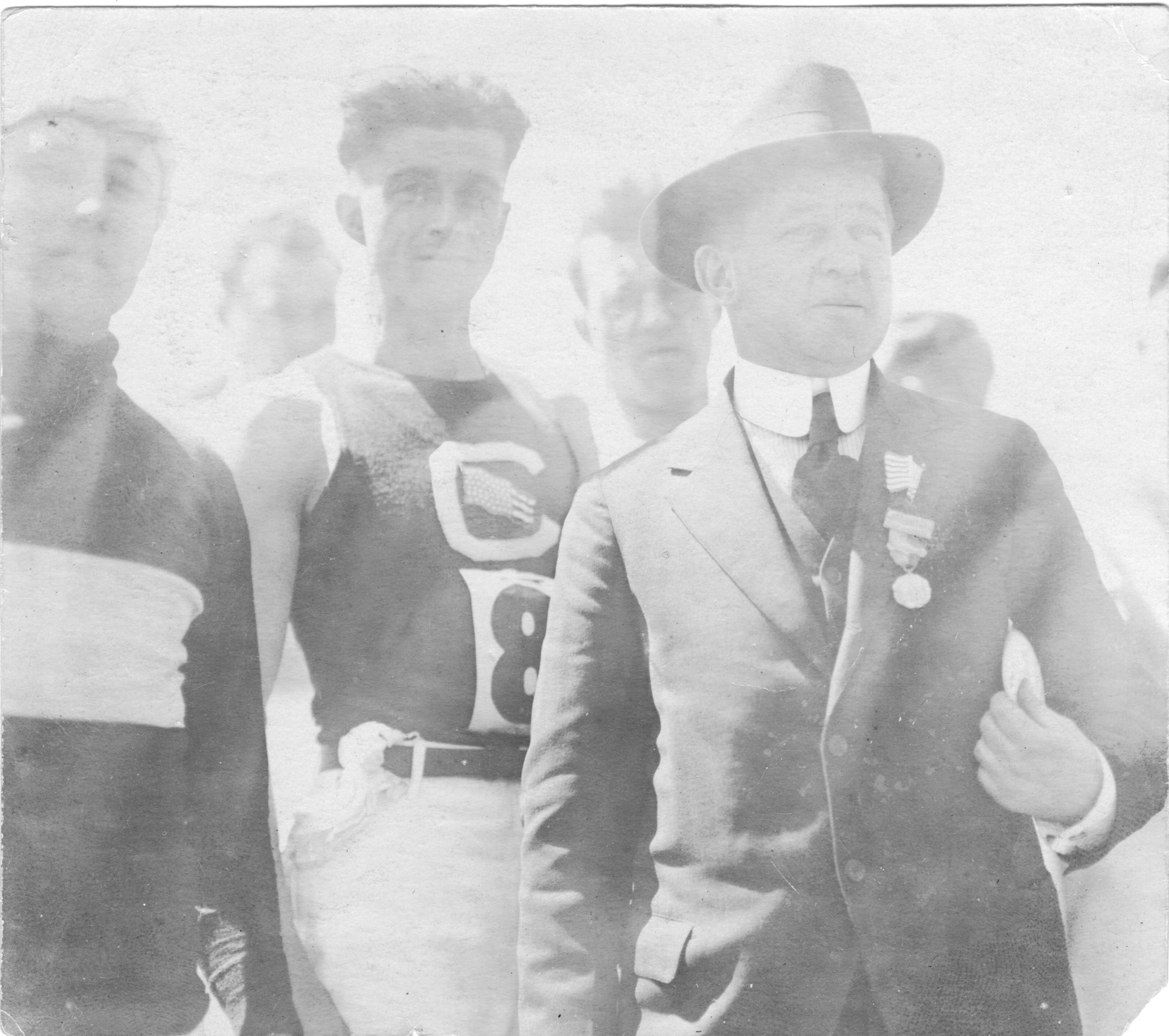
George V. Brown (right), the writer’s grandfather, finish line judge at 1932 Olympics in Los Angeles.

Omega has been the Olympic timekeeper for eight decades. The relationship began back in 1932, at the Los Angeles Olympics. Omega supplied 30 stopwatches for the track judges.  These watches were accurate to a tenth of a second. In the Amsterdam games of 1928, the timers had all used their own stopwatches.

The writer has little doubt that one of those who used the first official Olympic stopwatches from Omega was his grandfather, George V. Brown (pictured here).  George V. had been involved with U.S. Olympic Track and Field since the first London games in 1908. In Los Angeles, he was a finish line judge.

More accurate watches didn’t make for undisputed decisions at the 1932 Games, however. The 100 meter duel between Thomas Edward “Eddie“ Tolan and Ralph Metcalfe, both USA sprinters, is described thusly by Robert Parienté in his book La Fabuleuse Histoire de l‘Athlétisme:  “Everyone saw Metcalfe win, and yet he was only placed second… Metcalfe was beaten by the rule book.”

The timekeepers‘ hand-held Omega stopwatches had recorded three times of 10.3 seconds for Metcalfe and two times of 10.3 and one of 10.4 seconds for Tolan. Even so, Tolan was declared the winner. Why? Both competitors reached the finishing tape at exactly the same moment, but the rules specified that the race is finished only when the athlete‘s torso has completely crossed the finishing line marked on the ground.  Tolan crossed before Metcalfe. This rule, which was often interpreted in different ways, was changed in 1933. Since then, the winner has been the first person to cross the line with any part of his or her torso.
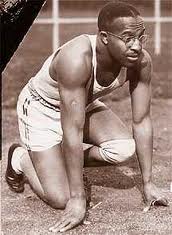
Thomas Edward “Eddie” Tolan

The results list shows both Metcalfe and Tolan with times of 10.3 seconds. Even though this time, which was achieved against a headwind of 1.4 m/sec, equaled the world record then held by Tolan, it was never officially recognized as such by the IAAF.  Tolan won two gold medals in Los Angeles, and Metcalfe went down in the history books as an unlucky loser. In the 200 m final, he was wrongly told to start the race from the relay mark and ran 3.5 m further than he needed to, finishing third as a result. Unbelievably, neither Metcalfe nor Tolan was a member of the USA 4 x 100 m relay team!
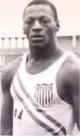
Ralph Metcalfe

Metcalfe did not win a gold medal until 1936, when he was part of the US relay team that included the legendary Jesse Owens. Tolan and Metcalfe were the world‘s top sprinters before

Owens began to rewrite the sporting history books. Metcalfe set a total of 15 unofficial world records over 100 yards, 100 m, 200 m, 220 yards and the 4 x 100 m relay; Tolan set 14.

Tolan later became a teacher. Metcalfe spent the last seven years of his life as a Democrat member of the House of Representatives. Both were members of Alpha Phi Alpha, the first academic fraternity for blacks in the USA.

The Horse and the Stopwatch

Stopwatches were not a new thing in 1932. As far back as the 1850s, they came into demand in America because of the famous racehorse, Lexington. Here too, is an interesting story in the history of race relations and American sport.

Lexington was a beautiful bay that stood at 15 hands and 3 inches. He was foaled in 1850, bred for a Dr Elisha Warfield, who named him Darley. Darley’s trainer was a former slave known as Burbridge’s Harry. He was a superb and well-known trainer, but Darley could not be entered into races by the Burbridges because the trainer was black. The horse first ran under Dr. Elisha Warfield’s name.
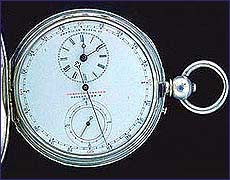
The Chronodrometer from American Watch Company

Darley was fast and strong.  He won his first two races handily and was purchased by a Richard Ten Broeck. The horse was renamed Lexington, and he proceeded to become one of the most popular of all race horses during his day.  He raced seven times and won six of them. Those races were four miles long. In April 1865, Lexington was raced against the clock. He complete four miles in seven minutes and 19 ¾ seconds, a record speed that he held for more than twenty years.

Lexington’s success spurred demand for timepieces that could measure fractions of seconds.  In 1869, the American Watch Company of Waltham, Mass. introduced the “chronodrometer,” or improved timing watch. The company made about 600 of the watches between 1859 and 1861. The watch sold for $50, compared to as much as $350 for a high-grade European import.

The Photo Finish
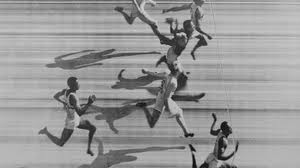
The first Olympic photo finish. Harrison Dillard wins the 100 Meters in 1948.

The Omega company’s website claims that the “Birth of Modern Sports Timekeeping” came at the second London Olympic Games in 1948. The world’s first independent, portable and water-resistant photoelectric cell, made by Omega, made its Olympic debut in 1948. There was also the Racend Omega Timer, a device that combined a Race Finish Recording photo finish camera with a timer.

The first photo finish came in the 1948 Men’s 100-Meter Final.  In that race, Harrison “Old Bones” Dillard of the United States finished in 10.3 second and beat out fellow American Barney Ewell by a tenth of a second.

Then at Helsinki in 1952, Omega became the first company to use electronic timing in sport with the Omega Time Recorder .

The Clock that Saved Professional Basketball

Hard to believe, but the National Basketball Association has not always used the 24-second clock. The league had been in operation for five years before the owners realized that they had to speed up the game or go out of business. Fans were often disgusted and upset when teams would hold the ball for minutes on end.  In 1954, Syracuse Nationals owner Danny Biasone figured it all out with some simple arithmetic.
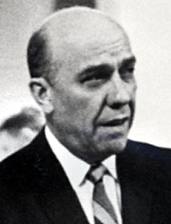
Biasone believed that basketball was most entertaining when it was neither a stallball game nor a wild shootout. His personal observation put the optimal level of shots per team at 60. That meant 120 shots per game. So he divided the length of each game, 48 minutes or 2,880 seconds, by 120. The result? 24 seconds per shot.

We’ve Come a Long Way

As with almost any subject, the history of timekeeping has a number of interesting developments in the 5,000 or so years since the Egyptians started building obelisks to track the passage of time with their shadows.

The Chinese used candles with evenly-spaced markings to track the passage of time. The Greeks had the clepsydra, which might have been the first way to record attorneys’ billable hours.  It was used to limit the length of lawyers’ speeches, actually. A hollow vessel with a hole in the bottom, the clepsydra was filled with water that would gradually run out into another vessel.  When the water was gone, the speaker’s time was up.

“Clock” comes from cloche, the French word for “bell.” The first mechanical clocks originated in European monasteries. They were faceless devices that marked the time with chimes rather than with hands.

The Swiss were talented horologists, as we all know. In 1577, Jost Burgi of Switzerland invented the minute hand. But it didn’t get popular until some 80 years later, when the addition of a pendulum decreased clocks’ daily margin of error from 15 minutes to about 15 seconds.

Back to Britain for our final story, and another lesson in economics.  Advocates of big government and of taxing everything that moves should be aware of yet another example of the killing power of taxes, this one involving timepieces. In 1797, British Parliament in its wisdom passed a law requiring citizens to register privately-owned timepieces, then pay taxes on them. The scheme, predictably, devastated the British clock making industry.  The law was repealed just nine months later.
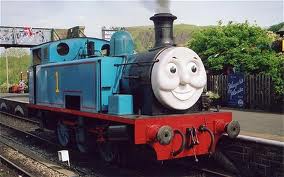
Fun with History: How Thomas the Tank Engine Arrived at His Home Land of Sodor

July 17, 2012

Thomas the Tank Engine

When the Vikings invaded the British Isles back in the Middle Ages, they divided the northern islands into two kingdoms.  Nordr, the northern kingdom, comprised the Shetland and the Orkneys. Sodor, the southern kingdom, included the Hebrides and the Isle of Man.

In 1266, the Vikings lost control. The Church, however, preserved the Southern Kingdom’s name in its already-established diocese of Sodor and Man. Seven centuries later, Rev. Wilbert Awdry visited the area on church business. He noted that, while there was an Isle of Man, there was no Sodor to be found.

Awdry was on the lookout for a fictional setting for his books, “The Railway Series.”  Thomas the Tank Engine was the subject of four stories in the second book of that series. Thomas was modeled after a wooden toy that Awdry had made from a piece of broomstick for his son Christopher. Awdry decided to use the name Sodor for the setting in the books.

Thomas was described as “a tank engine who lived at a Big Station. He had six small wheels, a short stumpy funnel, a short stumpy boiler and a short stumpy dome.  He was a fussy little engine, always pulling coaches about. … He was a cheeky little engine, too.” Kids loved Thomas, and he eventually became world-famous.

The Railway Series books were rediscovered in 1979 by British writer Britt Allcroft. The TV series “Thomas the Tank Engine and Friends” began in 1984. Ringo Starr was the first narrator for the series.  The accompanying picture of Thomas appears on a British postage stamp.

That’s how the ancient Viking kingdom of Sodor came to be the home of Thomas the Tank Engine and his friends.

VeepStakes: “We’re Number Two!”

July 12, 2012


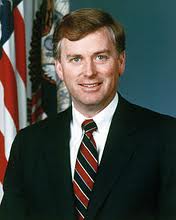
Vice President Dan Quayle. On the subject of his frequent mistakes and verbal miscues, his wife Marilyn once quipped, “What do you expect? He’s a blond.”

Would you like to be Vice President of the United States?  You’re probably better suited than many of the people who have held that high office.

The election is just a few months away.  Looks like Barack and Joe will be running together again, and we still don’t know who’s going to pair up with Mitt and run for vice president on the challengers’ ticket.

But whatever your political leanings, I hope you agree with me that the next person who will be a heartbeat away from the most powerful job in the world ought to be both of sound character and well qualified to step in, just like the Miss America runner-up. It hasn’t always been that way.

Perhaps that’s why so few sitting vice presidents get elected to the presidency.  It was more than 150 years between the elections of Martin Van Buren (1836) and George H.W. Bush (1988). Both of them lasted a single term as president.

You and I are more suited to stand first in line to succeed the president than many of those who’ve done so.  As Lord Acton wrote in his oft-quoted passage about the corruptive lure of power, “There is no worse heresy than the fact that the office sanctifies the holder of it.”  He might have been thinking of one or more vice presidents of the United States. Examples abound. Consider:

John Nance Garner

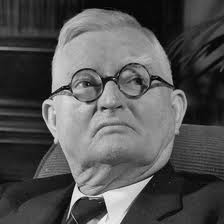
John Nance “Cactus Jack” Garner

A Texan, he was vice president for Franklin Roosevelt’s first two terms. He got the nickname after campaigning for the prickly pear cactus to be named the official state flower. It wasn’t – the Bluebonnet got the nod in that crucial political decision. Garner is often quoted as saying that the vice presidency isn’t worth “a bucket of warm spit.” Only he didn’t say “spit.” You can guess what the actual word was. He also called himself “the president’s spare tire.”

Okay, okay, at least Garner was qualified for the job, having been Speaker of the House. But you wouldn’t have wanted to invite him over for dinner. Labor leader John L. Lewis called him “a labor-baiting, poker-playing, whiskey-drinking, evil old man.” That must have been partly accurate; during Prohibition he convened his “Board of Education,” a place where politicians of both parties could consume alcoholic beverages.

Liberals didn’t like him; he opposed FDR’s New Deal machinations and the plan to pack the Supreme Court.  Garner declared for president in 1940 but got nowhere at the convention.  FDR couldn’t let go and ran for a third term, picking Henry Wallace as running mate.

Schuyler Colfax

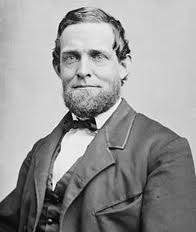
Schuyler Colfax, Financial Scandal Pioneer

Garner died at age 98, making him the longest-living vice president.  He and Schuyler Colfax – the coolest-named VP – who served under Ulysses Grant, are the only two Vice Presidents to have been Speaker of the House of Representatives prior to becoming Vice President.  That means that Garner and Colfax are the only people to have served as the presiding officer of both Houses of Congress.

Colfax, one of four veeps from Indiana, was another rogue. He was serving as Speaker of the House in 1865 when he declined an invitation to attend “Our American Cousin” with President Lincoln at Ford’s Theater.  Colfax was one of 13 congressmen who took bribes in the Credit Mobilier scandal that took place in the Andrew Johnson administration.  The news of those sleazy dealings, associated with the building of the first transcontinental railroad – the “Big Dig” of its day – came to light in 1872 when Colfax was VP.  He was bounced off the ticket and didn’t run with Grant for the latter’s second term in office. His successor, Henry Wilson, died in office after soaking in a tub.

Levi Morton, Civil Rights Obstructionist

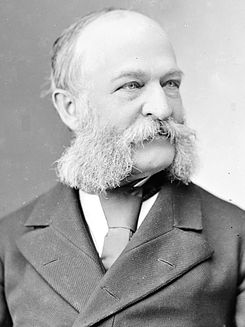
Levi Morton

Levi Morton was vice president under Benjamin Harrison from 1889 to 1993. He is a bit player in American history, but he might have become president had he accepted James Garfield’s invitation to run with him in 1880. He refused, and asked to be appointed Minister to France instead. Garfield – who had a superb background and might have made a wonderful president had he lived – agreed to the request. Soon he was assassinated by the screwball Charles Guiteau, who thought that he had been “passed over” for the job that Morton took.

Morton actually did a decent job as Minster to France.  In Paris, on October 24, 1881, he placed the first rivet in the construction of the Statue of Liberty. The rivet was driven into the big toe of Lady Liberty’s left foot.

When Morton was serving as VP, President Harrison tried to pass the Lodge Bill, an election law enforcing the voting rights of blacks in the South. Morton did not support the bill against a Democratic filibuster in the Senate, and Harrison blamed Morton for the bill’s failure. He bounced Morton from the ticket and chose Whitelaw Reid as the vice-presidential candidate for the next election. They lost to Democrats Grover Cleveland and Adlai E. Stevenson.

Daniel Tompkins

Daniel Tompkins, Sad Case of a Good Man’s Ultimate Failure

Governor of New York from 1807 to 1817, Tompkins won re-election three times and once turned down an offer to become James Madison’s Secretary of State.  He was vice president for James Monroe’s two terms. During the War of 1812, he was one of the nation’s most effective governors. He organized the state militia, initiated the practice of conscription, and funded much of the militia’s operations when the state legislature would not do so. This financial generosity to his country proved his undoing. Tompkins took out loans and used his personal property as collateral.  By the end of the war he was owed $90,000, quite a fortune in those days.

When Tompkins tried to recover his loans from the state and the federal government, they both stiffed him. Litigation ran to 1824, the last of his eight years as vice president. His financial problems drive him to alcoholism and to embezzling schemes, and he often presided over the Senate while drunk.  It got so bad that Congress even docked his pay.

Thomas Marshall, Small Caliber but Funny Guy

Thomas Marshall

An Indiana lawyer, Marshall was VP for Woodrow Wilson, the supercilious and much overrated president, who was also once the president of Princeton University.  Wilson called Marshall a “small-caliber man” and wrote that a vice president’s only significance is that he “be may cease to be Vice President.” Marshall should actually have assumed the top spot after Wilson had a paralytic stroke. Instead, Wilson’s wife effectively ran the country.  Marshall had been in the dark about how bad Wilson’s condition was, but he didn’t want the presidency anyway.

He was a wit, though. It was he who stated, after listening to a long, blustering Senate speech on the country’s needs, “What this country needs is a good five-cent cigar.” When he left the vice presidency, he retired to Indiana and did not want to work anymore. His memoirs made that point, and added, “I wouldn’t mind being Vice President again.”

Richard Johnson, Disheveled Tavern Owner

Richard Johnson

Martin van Buren, successor to President Andrew Jackson, was a foppish New York dandy who was accused of wearing corsets. To “balance” the ticket, they picked Kentuckian Richard Johnson, who tried to claim credit for slaying the Indian chief Tecumseh. That gave rise to a campaign slogan: “Rumpsey Dumpsey, Col. Johnson killed Tecumsey.”

Johnson once petitioned Congress to drill “the Polar regions” to see if the Earth was hollow. He also alienated Southern Congressmen by taking a slave as a common-law wife and escorting his two mulatto daughters to official functions. He ran up many debts as vice president, so he fled to Kentucky and ran a hotel and tavern. His appearance was so unkempt that an English visitor wrote, “If he should become President, he will be as strange-looking a potentate as ever ruled.”

“His Accidency” John Tyler, and Others Who (Briefly) Moved Up

Tyler succeeded William Henry Harrison, who died after a month in office. He became the first president not to run for a second term. No party wanted him.  Millard Fillmore, who moved in after Zachary Taylor died, fared no better when he tried to run again. It was he who appointed Brigham Young governor of Utah Territory. Andrew Johnson, disastrous second vice president under Abe Lincoln, was drunk at his vice presidential inauguration.  Chester Arthur, who took over for the assassinated James Garfield, was the presidency’s premier gourmand. He served 14 course meals at the White House.  His party dumped him too.

Vice Presidential One-Liners

Thomas Jefferson called his vice presidency under John Adams “a tranquil and unoffending station” and spent most of his time at Monticello. Adlai Stevenson, vice president to Grover Cleveland, was asked if the president ever consulted him on anything. His reply: “Not yet, but there are still a few weeks of my term remaining.”

Senator Charles Fairbanks of Indiana was Teddy Roosevelt’s vice president. T.R. did his best to foil Fairbanks’ career ambitions, dubbing him “the Indiana icicle” and undercutting him at every opportunity.  Four years after Roosevelt left office, Fairbanks was approached again for a possible vice presidential run. His answer: “My name must not be considered for Vice President. Please withdraw it.”

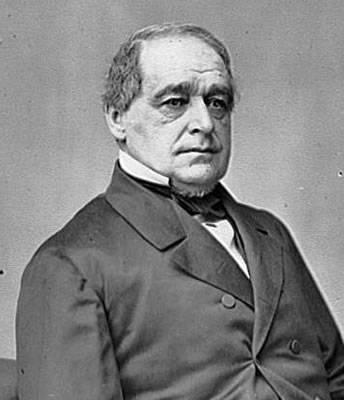
Hannibal Hamlin

Hannibal Hamlin of Maine, Lincoln’s first running mate, was an avid card-player. He said that the announcement of his candidacy “ruined a good hand.”

Lyndon Johnson, JFK’s vice president, was no friend of the Kennedys.  They called him “Uncle Cornpone.” Nelson Rockefeller, VP under Jerry Ford, said “I go to funerals. I go to earthquakes.”

And then there’s Bush I’s vice president Dan Quayle, who once spelled the name of a popular food “potatoe.” He also butchered the slogan of the United Negro College Fund and earned a spot in Bartlett’s, saying “It’s a terrible thing to lose one’s mind.  Or not to have a mind is being very wasteful.”

Source for most of the information in this post is the July/August issue of Smithsonian magazine. If you’d like to know more of the stories behind the stories of our country’s vice presidents, you might want to check out the Vice Presidential Learning Center in Dan Quayle’s home town of Huntington, Indiana. It’s the only museum dedicated to vice-presidential history and memorabilia.

The Center’s former marketing slogan: “Second to One.”

To Celebrate and Remember: July 1

July 1, 2012

Poppies of Flanders

Today is Canada Day, national holiday of our northern neighbor.  In America, we are preparing to celebrate the birth of our own nation three days hence. Let us wish our Canadian friends the best end enjoy the festivities here. But let us also pause and remember once again the suffering and sacrifices of those who made it possible for us to live freely in these blessed and noble lands.

99 years ago today, July 1, 1916, was the first day of the Battle of the Somme.  In that horrific encounter the British suffered 3,483 casualties an hour.  By midnight, British losses were 57,470 men. This is more than 50% of the manpower of the entire regular British Army in 2010.

That was in World War I, perhaps the most hideous and tragic of all conflicts because it was the first time that the tactics of ancient war confronted the machinery of modern war.  Formerly mighty stone fortresses and their defenders, blasted to rubble by monstrous artillery shells fired from 20 miles away. Cavalry and infantry charges, across open fields into cataracts of death spewed from automatic machine guns.

These encounters were foreshadowed years previously at places like Gettysburg and Balaclava, but they burst into full horror and unspeakable carnage with the perfection of the devilish engines of World War I. The Somme and battles like it befouled the battlefields and left large deposits of lime in the soil of France and Belgium.   Poppies were among the few plants that could still grow there.  In 1918, American professor Moina Michael resolved to wear a red poppy year-round to honor the soldiers who died in the war.  She also wrote poetry and campaigned to have the poppy adopted as an official symbol of remembrance by the American Legion.

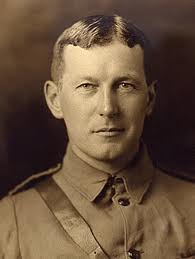
John McCrae

One literary work that never fails to move me is “In Flanders Fields” by John McCrae, who was a Canadian physician in World War I.  On this day, I think, it’s well to ponder his touching poem once again.

In Flanders Fields

In Flanders fields the poppies blow
      Between the crosses, row on row,
   That mark our place; and in the sky
   The larks, still bravely singing, fly
Scarce heard amid the guns below.

We are the Dead. Short days ago
We lived, felt dawn, saw sunset glow,
   Loved and were loved, and now we lie,
         In Flanders fields.

Take up our quarrel with the foe:
To you from failing hands we throw
   The torch; be yours to hold it high.
   If ye break faith with us who die
We shall not sleep, though poppies grow
         In Flanders fields.

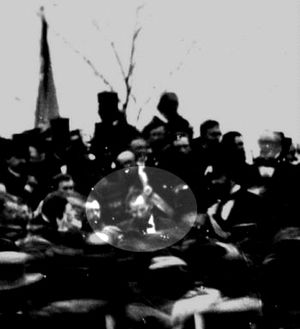
Lincoln (circled) at Gettysburg, three hours before delivering the Gettysburg Address.

The final stanza also calls to mind the message of Lincoln at Gettysburg: “… that from these honored dead we take increased devotion to that cause for which they gave the last full measure of devotion—that we here highly resolve that these dead shall not have died in vain—that this nation, under God, shall have a new birth of freedom..”

So yes, let us enjoy our nation’s upcoming birthday celebration and raise a glass in salute to our Canadian friends. But may we pause a moment, both to highly resolve as Mr. Lincoln said, and to hold the torch high as Mr. McCrae said. And on this day, July 1, it is also fitting that we whisper a prayer of gratitude and remembrance for those brave lads who suffered so terribly and made the ultimate sacrifice nearly 100 years ago in the War to End All Wars.

“Remembering the Raisin” and the War of 1812

June 1, 2012

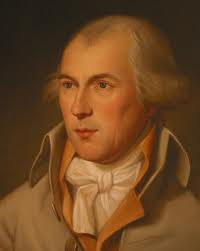
James Madison

Two hundred years ago, on June 1, 1812, President James Madison sent his “war message” to Congress, and  soon a divided Congress declared war on Great Britain, with 79-49 the House vote and 19-13 the Senate vote.  Only three of those pro-war Senators were from New England.

So began the War of 1812. We don’t really know much about it. That’s entirely understandable.  Other than a few memories burnished almost in isolation in the history books  – the USS Constitution’s successes, Francis Scott Key at Fort McHenry, Oliver Hazard Perry on the Great Lakes, the Battle of New Orleans – the War of 1812 was largely a bungled, mismanaged fiasco.

I’m not saying we shouldn’t learn about the War of 1812. It had a profound and lasting effect on the future course of the new American nation. But reading its tangled history is like learning a slew of guilty secrets about your family forebears.  Though I love history, recounting that of the War of 1812 is not my intent here. I’d just like to tell you a few things about it that perhaps you didn’t know.

  • “Remember the Raisin” became a battle cry of the time.  As the Alamo, the Maine, and Pearl Harbor would become motivators to future generations, the crushing 1813 defeat at the River Raisin in Michigan whipped up the martial zeal of the Americans against the enemy. That enemy was really the American Indian, not the British Redcoat.

At the Raisin, a joint force of Brits and Indians had overrun a poorly constructed, unguarded and unpatrolled American encampment. The Indians scalped 100 Americans during the fight, and later on they returned, drunk, and began scalping the wounded, burning the village, and tomahawking those fleeing the flames.

  • Two American presidents, prominent in the War of 1812, got to the White House because they won more battles than they lost against Indians.  William Henry Harrison, victor at Tippecanoe Creek in Indiana in 1811, had an epitaph that read “Avenger of the Massacre of the River Raisin.”  Andrew Jackson defeated the Creek Indians at Horseshoe Bend in the South, and got them to surrender 23 million acres of their land in the peace agreement.
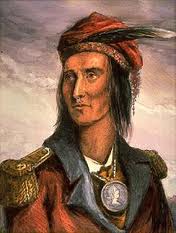
  • The Indians were the real losers in the War of 1812. Their lands and the vast expanse of Canada were the objectives of the “War Hawks” in Congress. Indians, led by the warrior-statesman Tecumseh, had been allied with the Brits ever since the cessation of the Revolutionary War. Britain hadn’t withdrawn all its troops from the West, and they harassed and opposed settlers moving west. But with the death of Tecumseh at Thames – his British allies had fled from the field – and the eventual withdrawal of British forces at war’s end, the native tribes had no more hope of uniting or defeating the Americans.

    Tecumseh

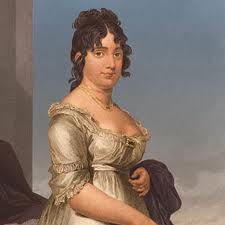
  • James Madison, scholar and writer, was a terrible president. His wife Dolley, outgoing, bodacious, and full of personality, would probably have been a better chief executive. Madison was shy and diffident; he appointed a crew of political lifers and self-dealing ne’er do wells to run the war effort.

    Dolley Madison, the first “First Lady.”

  • Dolley Madison saved the portrait of George Washington from destruction when the Brits burned the White House and the US Capitol in retaliation for the burning of Toronto. According to legend, President Zachary Taylor referred to Dolley as “first lady” at her funeral.  Before her husband was elected president, Dolley served as a hostess for President Thomas Jefferson. As first lady, she was known for her flamboyant parties, strong personality, and as a supporter of many charities, including the Washington City Orphan Asylum.
  • Impressment of seamen by Britain was probably overstated as a cause of the War of 1812. The states of the Northeast, maritime in their economies, were largely against the war. Yes, the Brits did impress sailors, most of whom were in fact deserters from the British Navy. Only a few hundred Americans were snatched onto British ships. The biggest hue and cry about “Free Trade and Sailors’ Rights” came from states of the South and West. It was an excuse.  The War Hawks wanted Indian land and Canadian land.
  • Canada was a winner in the War of 1812. Americans thought it would be easy to take over Canada, and invaded three times, only to lose each time. Canadians celebrate the war as a heroic defense against and a formative moment in their country’s emergence as an independent nation.  The War of 1812 bicentennial is big deal in Canada, as they celebrate heroes such as Isaac Brock and Laura Secord.
  • As mentioned previously, Northeastern states resisted “Mr. Madison’s War.”  Massachusetts and Connecticut refused to send soldiers to fight in Canada.  Secession was seriously considered, then abandoned, at the Hartford Convention of the two states in 1814. But emissaries from the convention, sure of an American defeat,  were on the way to Washington to “speak plainly” to Madison when word came that the Americans had won a big victory at New Orleans.  They stayed in Washington for a while but slunk back to New England after the Treaty of Ghent was ratified, ending the War officially in February 1815.
  • Rockets did have red glare at Fort McHenry. They were inaccurate but intimidating British missiles called Congreves. They looked like giant bottle rockets, long sticks that spun around in the air, attached to a cylindrical canister filled with gunpowder, tar and shrapnel. The “bombs bursting in air” were 200 pound cannonballs, designed to explode above their target. The British fired about 1500 bombs and rockets from ships in Baltimore Harbor and only killed four of the fort’s defenders.
  • Uncle Sam came from the War. In Troy, New York, a military supplier named Sam Wilson packed meat rations in barrels labeled U.S. According to local lore, a soldier was told the initials stood for “Uncle Sam” Wilson, who was feeding the army. The name endured as shorthand for the U.S. government.
  • The ill-fated General Custer got his start in the War. George Armstrong Custer “Remembered the Raisin,’ having spent his youth in Monroe, the city that grew up along the Raisin. In 1871, he was photographed with War of 1812 veterans beside a monument to Americans slaughtered during and after the battle. Five years later, Custer also died fighting Indians at Little Big Horn, one of the most lopsided defeats for U.S. forces since the River Raisin battle 63 years before.
  • The DuPont Chemical Company got its start in the War too. Pierre DuPont de Nemours had fled the French Revolution with his sons and settled in Delaware.  When a British fleet invaded up Chesapeake Bay, the sons’ powder factory rushed a supply of gunpowder to the scene, and the artillery was able to drive away the invaders.
  • The Burning of Washington in August 1814 turned out to be a blessing in disguise. The “President’s House” (as it was then known) was rebuilt in sturdier form, with elegant furnishings and white paint replacing the earlier whitewash. The books burned at Congress’s library were replaced by Thomas Jefferson. Tom was broke and needed money. He sold his wide-ranging collection to the government for around $20,000. It became the foundation for today’s comprehensive Library of Congress. The previous library had been limited largely to works of a legal nature.
  • The War of 1812 could have been avoided had there a telephone or telegraph.  Britain was ready to deal and had rescinded the Orders in Council just before Madison’s war message went to Congress.  Then in 1814, the U.S. and Britain agreed to peace two weeks before the battle of New Orleans.
  • Tchaikovsky’s 1812 Overture, the climactic musical piece in America’s Fourth of July celebrations in Boston and elsewhere, had nothing to do with the War of 1812. It was composed in 1880 in commemoration of Russia’s defeat of Napoleon at Borodino, near Moscow. The piece was first played at the Cathedral of Christ the Saviour in Moscow in 1882.
  • For roughly a century, the conflict didn’t merit so much as a capital “W” in its name and was often called “the war of 1812.” The British were even more dismissive. They termed it “the American War of 1812,” to distinguish the conflict from the much greater Napoleonic War in progress at the same time.

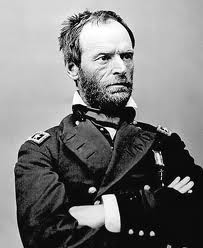
William Tecumseh Sherman

We should never forget the lessons that history can teach us, and military history is particularly thrilling and instructive. Wars are, unfortunately, sometimes the only choice that a nation can make.  The War of 1812 was not one of those choices.  What might have happened to the Native Americans, had the war not been waged, and had their leader Tecumseh survived to unify them? Would Harrison and Jackson ever have become presidents?

We’ll never know, of course. But we do know, as General Sherman – William Tecumseh Sherman, named for the great Indian leader – said to a military school’s graduating class in 1879:

“You don’t know the horrible aspects of war. I’ve been through two wars and I know. I’ve seen cities and homes in ashes. I’ve seen thousands of men lying on the ground, their dead faces looking up at the skies. I tell you, War is Hell!”

It’s Walpurgis Night!

April 30, 2012

The witches are abroad again!

It’s April 30. Happy Walpurgis Night, my friends!

Here, on the far side of The Pond, we’re missing out on some great fun.  How about we bring back some of the old world traditions of tonight and tomorrow?

Tomorrow is May Day, also called Beltane, throughout much of Europe.  Tonight, Walpurgis Night, is the eve of Beltane, the joyful festival of growth and fecundity that heralds the arrival of summer. It is the festival of the ‘Good Fire’ or ‘Bel-fire’, named after the solar deity Bel.

Lighting fires was customary at Beltane, and traditionally a Beltane fire was composed of the nine sacred woods of the Celts. All hearth fires were extinguished on Beltane Eve and then kindled again from the sacred “need fires” lit on Beltane. People would leap through the smoke and flames of Beltane fires and cattle were driven through them for purification, fertility, prosperity and protection.

It is a traditional time for Handfastings (marriages), and was a time for couples to make love outside to bless the crops and the earth. Maypoles were often danced around at Beltane to bring fertility and good fortune. The ribbons which were wrapped around the pole by the dancers brought a  sense of the integration of male and female archetypes, mirroring the union between the God and the Goddess. Beltane lore also includes washing in May-day dew for beauty and health, and scrying in sacred waters or crystal balls.

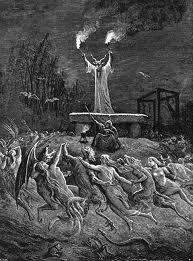
But that’s tomorrow. Tonight, exactly six months’ distant from All Hallows’ Eve, the supernatural once again rules. On Walpurgis Night, witches ride their broomsticks through the sky, and the natural world is forced to confront the powers of the supernatural. According to ancient legend, this night was the last chance for witches and their nefarious cohorts to stir up trouble before Spring reawakened the land.

Like Halloween, Walpurgis has its roots in ancient pagan customs, superstitions and festivals. At this time of year, the Vikings participated in a ritual that they hoped would hasten the arrival of Spring weather and ensure fertility for their crops and livestock. They lighted huge bonfires in hopes of scaring away evil spirits.

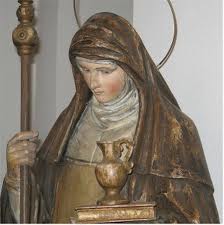
Saint Walpurga

The name “Walpurgis” comes from a woman named Valborg who founded the Catholic convent of Heidenheim in Wurtemburg, Germany. She later became a nun and was known for speaking out against witchcraft and sorcery. She was canonized Saint Walpurga on May 1, 779. The celebration of her sainthood and the old Viking festival occurred around the same time; over the years the festivals and traditions intermingled until the hybrid pagan-Catholic celebration became known as Walpurgis Night.

In Germany, the witches were said to congregate on Brocken, the highest peak in the Harz Mountains – a tradition that comes from Goethe’s Faust.  Brocken is also known for the phenomenon of the Brocken Spectre, the magnified shadow of an observer, typically surrounded by rainbow-like bands, thrown onto a bank of cloud in high mountain areas when the sun is low.

A scene in Faust Part One is called “Walpurgisnacht”, and one in Faust Part Two is called “Classical Walpurgisnacht”. The last chapter of book five in Thomas Mann’s The Magic Mountain is also called “Walpurgisnacht”. In Edward Albee’s 1962 play Who’s Afraid of Virginia Woolf?, Act Two is entitled “Walpurgisnacht”.

In some parts of Germany, the custom of lighting huge fires is still kept alive to celebrate the coming of May, while most parts of Germany have a derived Christianized custom around Easter called “Easter fires.”

The Czech Republic celebrates April 30 as the “burning of the witches” when winter is ceremonially brought to the end by the burning of rag and straw witches or just broomsticks on bonfires around the country. The festival offers Czechs the chance to eat, drink and be merry around a roaring fire.

In Estonia, they call it Volbriöö and celebrate throughout the night of April 30 and into the early hours of May 1, a public holiday called “Spring Day.”  Here too, the night originally stood for the gathering and meeting of witches. Modern people still dress up as witches to wander the streets in a carnival-like mood.

In Finland, Walpurgis day (Vappu) is, a big carnival-style festival that begins on April 30 and carries over to May 1. They drink large quantities of sima, sparkling wine, and other alcoholic beverages. Student traditions, particularly those of the engineering students, are one of the main characteristics of Vappu. Since the end of the 19th century, students and university alumni wear a cap; some caps, such as worn by engineering students and nurses, have pom-poms hanging from them.  In Helsinki, and its surrounding region, they have the fixtures include the capping (on 30 April at 6 pm) of the Havis Amanda, a nude female statue.  

Bonfire at Valborg, Sweden

In Sweden, it’s all but an official holiday. Walpurgis Night bonfires, which are supposed to be kindled by striking two flints together, are seen on many hills. Farm animals are let out to graze, and the bonfires are meant to scare away predators.  Singing traditional songs of spring is widespread throughout the country.  During the day, people gather in parks, drink considerable amounts of alcoholic beverages, barbecue and generally enjoy the weather.

So how about it? We deserve this kind of celebration too! Let’s cast a vote for the first presidential candidate who promises to declare Walpurgis Night a national holiday in America!

Armistice Day

November 11, 2011

It is Veterans’ Day in America. This national holiday was known as Armistice Day from 1926 until 1954, when an Act of Congress changed the name to Veterans’ Day.

I agree with the thought behind that change. We should remember, honor and thank those who served in all conflicts that imperiled our nation and the free world. Thank you once again to all American veterans, and to your comrades in arms from Britain and Canada, for going into harm’s way for the sake of my freedom.

I am old enough to remember Armistice Day. I think that it is unfortunate that the name of that day, and what it meant, is fading into the background of history. Armistice Day, while a celebration of the cessation of World War One hostilities on the Western Front, also was a sobering and necessary reminder that the War to End All Wars was anything but that. Perhaps the best way to honor our veterans is to learn, and to belatedly apply, the lessons of Armistice Day.

Here is a link to a 1948 Armistice Day speech by General Omar Bradley.

His words are still relevant today, especially the following:

“With the monstrous weapons man already has, humanity is in danger of being trapped in this world by its moral adolescents. Our knowledge of science has clearly outstripped our capacity to control it. We have many men of science; too few men of God. We have grasped the mystery of the atom and rejected the Sermon on the Mount. Man is stumbling blindly through a spiritual darkness while toying with the precarious secrets of life and death. The world has achieved brilliance without wisdom, power without conscience. Ours is a world of nuclear giants and ethical infants.”

The Grandest Italian Master

November 6, 2011

“If you build it, they will come.”  Yes, but first you’ve got to figure out how to build it.

Filippo Brunelleschi

Filippo Brunelleschi

Filippo Brunelleschi figured it out, all right. His unsurpassed work in the field of architecture not only led to the construction of the Duomo of Florence, Italy.  His mathematical and artistic genius also made possible much of the Italian Renaissance, which led the people of the world out of the Dark Ages and into a new era of learning and culture.

I’m no art history expert, but I will venture a guess that no one – not even Leonardo or Michelangelo – had more impact, or unleashed more creative genius resident in others, than Filippo Brunelleschi.

A buddy of fellow sculptor Donatello, Filippo lost a contest to design the bronze panels adorning the west doors of the Cathedral of Santa Maria del Fiore in Florence.  Embittered by the loss, he fled to Rome with Donatello and studied the architecture of the grand old buildings, especially the Pantheon.

But construction of that Florentine cathedral, which had been going on for a hundred years, drew him back. It was time to build the dome, and nobody had the faintest idea of how it was to be accomplished. The dome was to be the widest and highest ever built.  But the plans forbade use of flying buttresses, such as those in the Gothic cathedrals of France, for support. The designer, Neridi Fioravanti, had died without telling anyone how to accomplish the task of vaulting the dome, 70 million pounds of Carrara marble standing 375 feet high.

Brunelleschi was named capomaestro of the project and swore on the Bible that he would adhere to Fioravanti’s vision.  His ideas and innovations included:

  • Building not one dome but two, with the inner and outer domes supporting each other;
  • Herringbone brick pattern on the dome surface, which made the bricks self-supporting until the mortar dried
  • The world’s first reverse gear, built into the hoist that lifted 1,700-pound stones hundreds of feet high. The reverse gear allowed the bucket to be lowered without turning the oxen around and re-hitching them,
  • The castello, the world’s  first sky-crane, built on the lower rim of the dome and used for positioning of the stones once they were lifted to that height;
  • A solid system of parapetti: platforms, scaffolds, lighted stairways and eating rooms for the workmen. Only three men died in the 16 years of construction work, an unheard-of safety record. He also had wine rather than water for the workmen; wine was safer than water back in those days.

Yet for all those innovations in architecture and construction, Brunelleschi’s greatest impact came in the world of art. He discovered the secret to linear perspective.  He did this by having people peer through a hole in the back of a painting he had made of the baptistery of San Giovanni, across the street from the cathedral. In front of the painting, they held a mirror that reflected the painting of the building; the real-life building itself was behind the mirror.

The people who participated in this experiment could not tell the painting apart from the real scene.

Brunelleschi thereby discovered, and quantified, that all lines receded toward a common point relative to the viewer of a painting. In Raphael’s “Betrothal of the Virgin,” for instance, all parallel lines of the painting intersect at a point on the horizon, which in the painting is the one that is farthest away.

What did all this mean?  Artists who learned this lesson could now accurately represent the three-dimensional world on a two-dimensional painting canvas. Brunelleschi’s disciple Masaccio was the first to do so successfully. He launched a movement that eventually included Raphael, da Vinci, and Michelangelo.

The Duomo was finished in 1636. Years later, Michelangelo was commissioned to vault the dome of St. Peter’s in Rome. He said he’d make it bigger and more beautiful than Brunelleschi’s.  Didn’t happen.  The diameter of the dome of St. Peter’s is 7.9 feet smaller than the Duomo’s diameter.

Ben fatto,Filippo Brunelleschi!

Farewell, Filene’s Basement

November 3, 2011

Back when I was a child, I was puzzled about this place called Filene’s. I thought it was owned by Bambi’s girlfriend Faline. She and her beau were nowhere to be found the first time that I went in-town shopping with mother and siblings.

There were at least a few family pilgrimages to Filene’s Basement in Boston every year. It was always a big event. We’d walk through the upstairs store too, and across the street to Jordan Marsh. But we seldom bought anything on the upper levels. Too pricey.

“The Basement” we knew and loved, with its raucous crowds and automatic markdowns and designer duds for cheap, is long gone. But they made it official today with the news that all of its stores would be closing by January.

I have to say that I knew this was coming way back in the 1980s. I was working at the Bank of New England and saw the acquisition/expansion loan proposals touted by CEO Sam Gerson…a leveraged buyout to spin off and expand Filene’s Basement.

Making the Basement a separate company from Filene’s itself – and financing it with mountains of debt – was dumb to begin with. Taking the Basement out of the basement and putting its bastard children into malls around the country was ever crazier. Didn’t they learn anything from Mammoth Mart, Zayre, Orbit, Bradlee’s, and all those other retail busts?

Still, it was with a measure of nostalgia that a read the corporate obituary. Filene’s and its founding family deserve a prominent niche in the business and social history of America.

Wilhelm Katz arrived in the United States from Prussia in the late 1840s. Like many Jewish immigrants of the day, he was fleeing the persecutions and pogroms that had sprung up in Europe after the Revolution of 1848. When he got to Customs in Boston, he wanted to register with an Anglicized version of his surname. Rather than Katz, he preferred “Feline.” The customs officer misspelled the name, and he became William Filene.

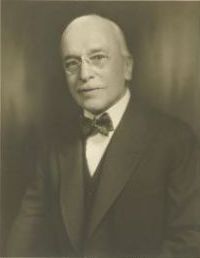
William Filene’s Sons Company was established in 1881. The Washington Street store opened in 1890, the start of the “Gay Nineties” and the height of the Gilded Age. William’s son Edward, pictured below, ran the company from 1908 to 1937. He was an exceptionally fine leader and captain of industry.  Among his innovations were:

  • Complete and honest descriptions of merchandise, and a “money back if not satisfied” promise;
  • Organization of the Filene Cooperative Association, America’s first company union, and advocacy of a “buying wage” as opposed to a “living wage;”
  • Minimum wages for women and a 40-hour workweek;
  • Founding the Credit Union National Association, which liberated many people from usury;

Did you also know that:

  •  Boston’s first public telegraph office was opened on the service balcony of Filene’s (1913)

(If you’re a post-boomer, do you even know what a telegraph office is?)

  •  Filene’s was the first American store to get rush shipments of the newest fashions from Paris, sent over on the Graf Zeppelin (1928)

Edward Filene (Photo by Bachrach)

(If you are a post-boomer, do you even know what a zeppelin is?)

  • Filene’s was the first store in New England to be air-conditioned (1935)
  • Filene’s uniform headquarters in Northampton outfitted every WAVE naval officer and every woman officer in the Marines (1945)
  • Filene’s installed a zoo on its roof, complete with an elephant, lions, and monkeys. Hurricane Carol destroyed the zoo the same year (1954). I never went to that zoo, but I remember Carol.

One more thought. We have read much about the drive, innovation, and creativity of the departed Steve Jobs. No one disagrees about the benefits that his company and products brought to the world.

I suggest that the story of Filene’s and Filene’s Basement – for its first 70 or so years anyway – is much like that of Jobs and Apple. It shows what the entrepreneurial spirit in the competitive pursuit of profit can do for a people, a city, a country.

Well done, and rest in peace, William and Edward Filene and family.

We Must Never Forget

October 29, 2011

The Survivor Torah

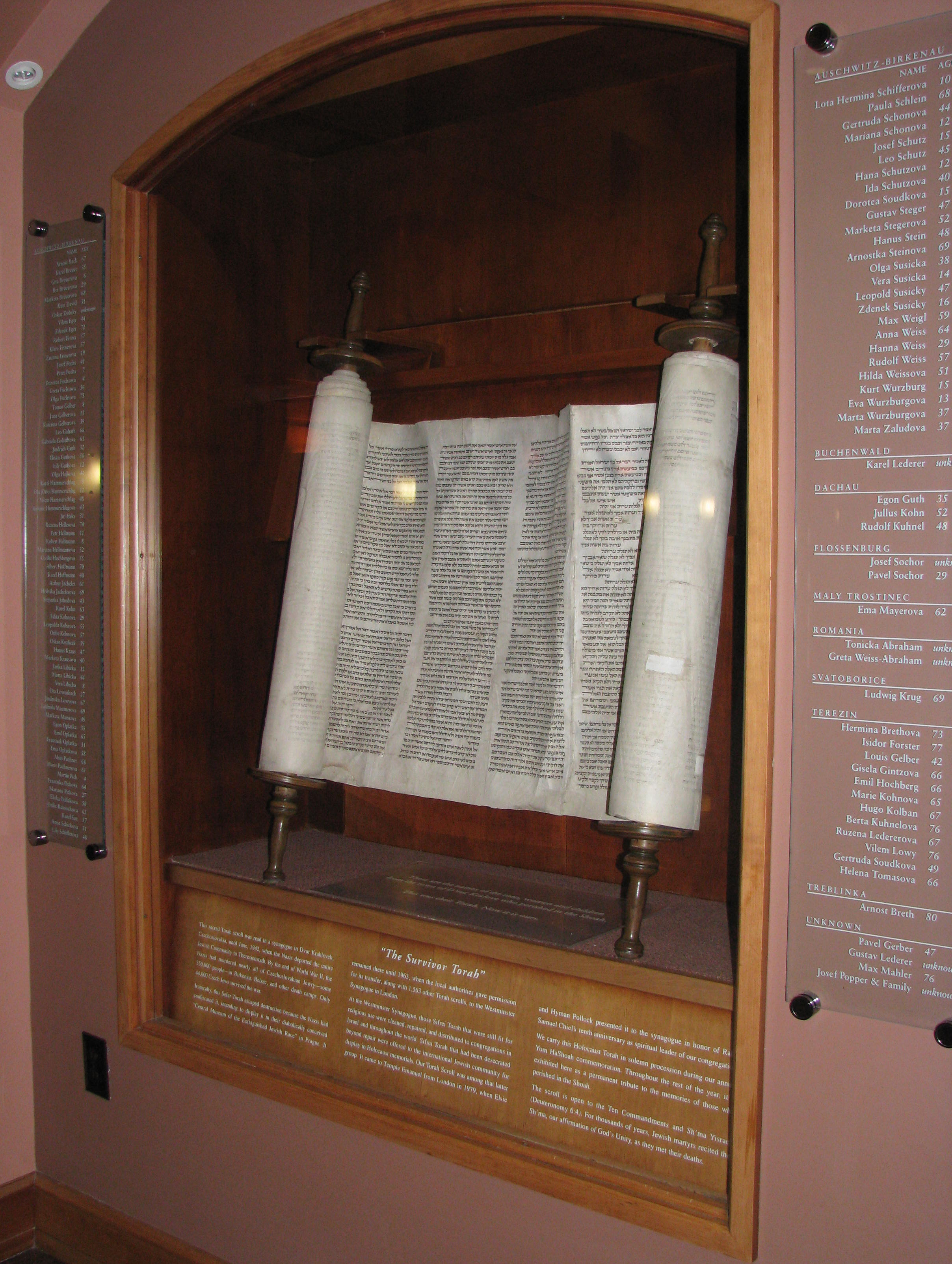
This magnificent Torah Scroll, in a display case at Temple Emanuel in Newton, Massachusetts, is open to the Ten Commandments and to Deuteronomy 6:4:“Hear O Israel, the Lord our God, the Lord is One.”   This is the “Survivor Torah,” and its story speaks to us of the very survival of mankind.

On the external glass frame surrounding the case are etched their names; Helena Tomasova, age 66; Luis Gelber, 42; Zdenek Susicky, 16; Lota Hermina Schifferova, 10; and some 95 others.  They were not survivors.  All members of the Jewish community of Dvur Kralove in Czechoslovakia, they were rounded up and sent to death camps by the Nazis in June, 1942. Of the 350,000 Czech Jews, only 44,000 lived through World War II. None of the survivors were from Dvur Kralove.

The Nazis killed the people, but they preserved this Torah Scroll for their planned “Central Museum of the Extinguished Jewish Race” in Prague. The Torah remained there until 1963, when it was taken to the Westminster Synagogue in London along with 1,563 other scrolls. Many of them, like this one, had been desecrated beyond the point where they could be used in the liturgies.

In 1979, a member of Temple Emanuel obtained this scroll and brought it to America on the occasion of the tenth anniversary of Rabbi Samuel Chiel’s service at the temple. Once a year, on Shoah Remembrance Day, the scroll is carried through temple in solemn procession. The names of the martyred faithful are remembered that day, and all through the year.

I feel a profound sadness when I contemplate their earthly fate, and a melancholy that sometimes verges on despair when I realize the depths of depravity to which members of the human race have sometimes descended, as they did during World War II.  I do take a measure of comfort in knowing that the names of Helena, Luis, Zdenek, Lota Hermina, and the Jews of Dvur Kralove will forever live in memory while the names of their captors and tormentors lie buried deep within the ash heap of human history.

Nazis, and their vile cousins who still infest the earth, are thuggish soldiers of the forces of darkness which, I am sorry to say, will be with us until the Last Day. But comforting, too, is the knowledge that even in times when evil is ascendant, there are the righteous among us who take up arms and thwart that evil – ordinary people like Wallenberg, Schindler, Socha, Sugihara, and the most heroic them all, Irena Sendlerowa.

I agree, as well, with the quote from a Shoah victim’s diary that my sister learned of in a visit to Yad Vashem in Israel. A young girl, who died in the camps, wrote that she hoped that somehow the victims would be remembered not by monuments but by the good deeds of people who learn the story of what happened.

Yes, we must learn and we must remember, just as the good people of Temple Emanuel have done.  In the display case is written, “This was their Torah. Now it is our Torah.”

May it be everybody’s Torah.  May we all remember the people of Dvur Kralove, and may we honor them – by knowing their names, by learning the story of what happened, and by courageously speaking the truth to evil. If we do that, we may yet ensure the survival of mankind and the ultimate victory of light over darkness.