Archive for the ‘The World of Sport’ Category

History I Never Knew: Lip Pike, Baseball’s First Professional

August 27, 2014
Lipman E. Pike (1845-1893) America's First Pro Baseball Player

Lipman E. Pike
(1845-1893)
America’s First Pro Baseball Player

Logan Mankins, late of the New England Patriots, will hereafter be cashing his generous paychecks in Florida, just his second professional sporting home. As you ponder that news, consider how far we’ve come since the days of America’s first documented professional athlete, the peripatetic Lipman Emanuel “Lip” Pike.

Lip Pike was the first American to be revealed as a professional athlete. He was also the first Jewish baseball player. And he was a good one. Known as the “Iron Batter,” he first appeared in a box score one week after his bar mitzvah in 1864. He joined the Philadelphia Athletics in 1866, and he was paid $20 a week under the table.

Two other guys were also reportedly getting money from the A’s, and a hullabaloo ensued. The National Association of Base Ball Players set up a hearing on the matter, but nobody showed up and the whole thing was dropped.

By 1869, however, the façade of amateurism in baseball had fallen away, and the Cincinnati Red Stockings became the first openly professional baseball team. So Lip Pike was a Jackie Robinson of sorts – he broke a barrier and paved the way for others. What he did was first deemed unacceptable. Society eventually got around to embracing it, but I bet nobody every thanked Lip Pike.

Pike also endured prejudice, but of a different sort than that felt by Robinson or by Pike’s Jewish brethren. Yes, Lip was a powerful hitter and speedy runner – he once hit six homers in a game that the Athletics won 67-25. But the A’s dropped him from the team in 1867. Why? Because he was a “foreigner,” as far as the team’s fans were concerned. He was from New York. They couldn’t have that, in the City of Brotherly Love.

Pike wasn’t finished. He had a lengthy career, playing for teams like the New York Mutuals, Brooklyn Atlantics, Troy Haymakers, Providence Grays, Baltimore Canaries, Hartford Dark Blues, St. Louis Brown Stockings, Worcester Ruby Legs, and New York Metropolitans. He was always on the move. Harry “Suitcase” Simpson had nothing on Lip Pike.

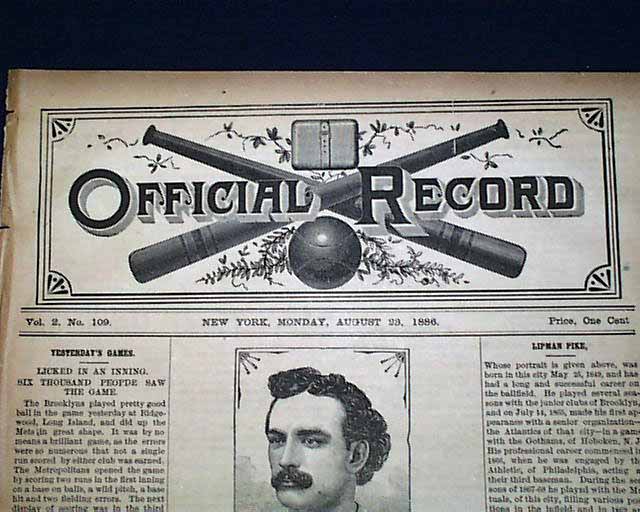
August, 1886 Media Coverage of Lip Pike and His Baseball Exploits. Newspaper Price: One Cent.

August, 1886 Media Coverage of Lip Pike and His Baseball Exploits. Newspaper Price: One Cent.

In 1869 Pike batted .610 for the Atlantics. He was their second baseman in 1870 when they beat Cincinnati and ended the Red Stockings’ 93-game winning streak.

Pike also used his speed and skill to make money in other ways. On August 16, 1873, he raced a trotting horse named Clarence in a 100-yard sprint at Newington Park in Baltimore. Lip won by four yards with a time of 10 seconds flat, earning a nice little prize of $250.

The superb writer Mordecai Richler points out that the Encyclopedia of Jews in Sports reports that most baseball players of the 19th century were gamblers and drunkards, or thought to be. But Richler states that “Pike was an exception. Throughout his career, contemporary journals commented on his sobriety, intelligence, wit, and industry.”

After retiring, Pike went back to the family business; his father, a Dutch immigrant to Brooklyn, owned a haberdashery. Lip died rather young, succumbing to a heart attack at the age of 48. According to the Brooklyn Eagle, “Many wealthy Hebrews and men high in political and old time baseball circles attended the funeral service.”

Of course, Lip Pike is enshrined in the International Jewish Sports Hall of Fame. In 1936, according to Wikipedia, he got one vote for election to the Baseball Hall of Fame in Cooperstown.

As far as I’m concerned, Lip Pike belongs in Cooperstown too.

Olympic Ideals, and the Ideal Olympics

August 23, 2014

Spiridon Louis, the Greek shepherd boy who won the marathon race at the 1896 Athens Olympics, leads the Greek team into stadium at Berlin in 1936.

Spiridon Louis, the Greek shepherd boy who won the marathon race at the 1896 Athens Olympics.

Full disclosure: I still get goosebumps when I read the old stories of Spiridon Louis (1896 marathon winner, shown here at the Berlin games), Jim Thorpe, Ray Ewry, Johnny Weissmuller, and all the rest. I cherish the photos that I have of my grandfather officiating in Los Angeles in 1932, and posing aboard the S.S. Manhattan in 1936 with Johnny Kelley the Elder and Jesse Owens.

I loved the idealism of Baron de Coubertin and I think the Olympic ideal is cool. A part of me would love to see Boston as host city for the 2024 Summer Games, as some of our civic leaders have proposed.

But only a part of me. I know that the Olympic Ideal is all fluff and chiffon for those who organize, televise, and perform in the games.. “The name of the game is bucks,” as my radio professor Dan Viamonte kept reminding us.

My city, or any city, should not have to mortgage its future and put up those bucks to build a gigantic new athletic stadium. My city should not have to erect tens of thousands of new, luxury housing units that will be used for two weeks and then abandoned. No bucks from us for the privilege of hosting the Games. Rather, we think it will be a privilege for athletes from around the world to compete for their countries here, in the Cradle of Liberty.

So, International Olympic Committee, here’s what we’ll do. You can have your games in and around Boston. They will take place in August. We will arrange for our august (small “a”) institutions of higher learning to delay their openings for a few weeks. We’ll have them all pitch in and host the athletes from one or more countries.

The Japanese can stay at Showa Institute. The Israelis can live at Brandeis. The Irish will be housed at Boston College. Athletes from Communist countries can stay anywhere they want in Cambridge. And so on. Each national team can pay market rent for its housing arrangements. There’s plenty to be found, but no freebies. If you play, you pay.

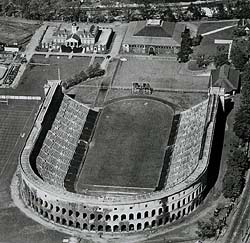
Harvard Stadium

Harvard Stadium

We’ve got all the venues. We’ll have swimming at Harvard, sailing at Marblehead, equestrian at Myopia, all the other events at existing stadia and arenas.

Of course, the marathon will be from Hopkinton to Boston, the setting for the world’s premier road race. The opening and closing ceremonies will be at Harvard Stadium. What better atmosphere for them than America’s version of the Roman Coliseum?

TV money foots all the bills. Not a penny from taxpayers. We’ll work as volunteers during the games, and we’ll put up with the traffic and inconvenience. We’ll be glad to have you. But you’ve got to show us that you appreciate our hospitality.

Yes, Citius, Altius, Fortius. “Swifter, Higher, Stronger.”

sealBut Sicut Patribus, Sit Deus Nobis as well. “God be with us as He was with Our Fathers.’

That’s tradition. That’s a Boston Olympic ideal. Keep that in mind and let the games begin.

Best of the Best: Boston College’s New Hall of Famers

July 30, 2014

One Coach and Nine Student-Athletes Will be Inducted on Friday, October 17 and Presented at Halftime of BC-Clemson Football Game the Next Day

With Cathy Inglese, winningest coach in the history of  Boston College women's basketball.

With Cathy Inglese, winningest coach in the history of Boston College women’s basketball.

Today I got down to work on one of my most enjoyable annual assignments: interviewing and writing up the life stories of the newest members of the Boston College Hall of Fame. I spent a few hours with Cathy Inglese, the all-time winningest women’s basketball coach in BC history. Cathy coached at BC for 15 seasons, had an overall record of 273-197, and brought the Eagles to seven NCAA Tourneys and three appearances in the Sweet Sixteen.

Cathy is a most fitting choice and is the only coach among the inductees. The rest of the Hall of Fame Class of 2014 are student-athletes. And yes, that’s for real; all were top-notch students. Three of them played ice hockey. The other sports represented with one inductee each are volleyball, field hockey, track & field, softball, baseball, and the first-ever inductee in the sport of fencing.

Allison Anderson ’07 (volleyball): A three-year captain and BC’s career leader in aces (133), digs (2,176), and digs per set (4.92). After graduation, she received the Weaver-James-Corrigan Award, an ACC postgraduate scholarship for excellence both on the court and in the classroom.

Bob Dirks ’09 (field hockey): A three-time All-American and 2006 ACC Offensive Player of the Year. She started 77 out of 79 games and finished her career as BC all-time leader for goals in a career (62) and points in a career (150).

Jeff Farkas ‘00 (hockey): Played four years and was All-American and a Hobey Baker finalist in 2000.He is BC’s sixth all-time in scorer (190 points). He also received BC’s Outstanding Male Scholar-Athlete Award and was drafted by the Toronto Maple Leafs.

Kasey Hill ’07 (track and field): The first BC track & field athlete to earn All-America honors at the NCAA Indoor Championships in 2007. She also competed in the heptathlon at the U.S. Olympic Trials. She holds BC’s record holder in both the pentathlon and heptathlon, and she is among the top five in the 55m hurdles (8.02), 100m hurdles (13.91), 200m (24.85m), shot put (43’0.25”), javelin (123’0”), and long jump (19’0.75”).

William Hogan, Jr. ’33 (hockey): The Bill was responsible for reviving the sport of ice hockey at Boston College during the Great Depression and for recruiting his Cambridge neighbor John “Snooks” Kelley to be head coach. He led the team in scoring in 1932-33 and went to a distinguished legal career after graduating from Harvard Law School. His son Bill Hogan III, Class of 1963, is also a Hall of Fame member. Bill Jr. will be a posthumous induction; he passed away in 2012 at the age of 100.

Marty Reasoner ’98 (hockey): The breakthrough recruit in coach Jerry York’s rebuilding of the hockey program, Marty played for three years and led the team in scoring each time. He was All-America and the team leader in the NCAA Frozen Four Year of 1998. He went on to play 15 years in the NHL.

Kim (Ryan) Scavone ’03 (softball): A two-time captain, she was Big East Rookie of the Year in 2000 and Pitcher of the Year in 2003. She ended up as Big East career and single-season strikeout record holder, and she was a first-team Regional All-American in 2003.

Paul Taylor ’04 (fencing): Boston College’s first Rhodes Scholar and holder of a doctorate in astrophysics, Paul is BC’s first fencers to be inducted to the Hall of Fame. He was a three-time NCAA Regional finalist, twice qualified for the NCAA Championships, was 2002 New England Collegiate Foil Champion, and has BC’s most career wins as foilist.

Jeff Waldron ’99 (baseball): A catcher, Jeff was captain in 1999 and twice All-Big East first-team. He ranks first all-time in walks (99), third in on-base percentage (.441), fifth in runs (138) and seventh in batting average (.341). He was drafted by the St. Louis Cardinals in the 1998 MLB draft.

Once again, BC Varsity Club has nominated a most impressive group of people. They’re great representatives of the school. I’m looking forward to getting the program book written up, and to the induction ceremony in October.

*****
P.S. This is not related to the Hall of Fame, but I don’t want to lose this opportunity to let you know of the October 7 release date for Tales from the Boston College Hockey Locker Room, co-authored by Reid Oslin and me. It’s a history of Eagle hockey that traces the evolution of the sport from the days of “ice polo” in the 1880’s all the way through BC’s six national championships.

That’s right – six. BC has won the NCAA Championship five times. But before that tournament even existed, the Eagles took the National AAU Tournament Crown way back in 1942. After winning it, they were presented with the George V. Brown Memorial Trophy, which was emblematic of the championship of amateur hockey in America.

Full disclosure: George V. Brown is my grandfather. So you know that made it into the book!

Click here to go to the order form on Amazon.

An Address to 2014’s New England College Hockey Award Winners

April 17, 2014

Remarks Delivered at Presentation of 62nd Annual Walter Brown Award, New England Hockey Writers’ Dinner, April 16, 2014 in Saugus, Massachusetts

One of my favorite Bible passages is a single line from the Book of Proverbs:

“Remove not the ancient monument.”

To me that means never forget where you came from. Always remember who brought you here.

That’s what we’re doing tonight, and every year, with the Walter Brown Award and with all the others you’ll hear…Joe Concannon, Bobby Monahan, Leonard Fowle, Herb Gallagher and the rest.

When we select winners of these named awards, we are honoring both the achievements of the present – yours – and the good works of the past – theirs. Just as the Bible tells us to do. Hockey people do as the Bible says.

My uncle Walter Brown did many great things in his long career as a sportsman. But he was the first, and the most energetic, promoter of American amateur hockey on the international scene. His college boys rewarded him with America’s first world championship in 1933.

Writers like Bobby and Joe and Len loved your game, they loved the players who were just like you, and they made sure to tell their stories to the world. Hockey is much richer for the lives they all led and the work they did.

I congratulate all those we’re honoring tonight and wish you the best in your upcoming chapters, whether they are with blades on your feet or not.

And to those who leave here with their names inscribed on these various memorial awards – you’re getting something that’s extra special and unique. Your name will always be associated with hockey people who are the best of the best.

I think I can speak for them when I say that they are proud to be associated with you too. They’re cheering you now from the Second Balcony.

The winner of the 62nd annual Walter Brown Award, to the best American-born Division One hockey player in New England, of the Herb Gallagher Award for best forward in New England, and the Leonard Fowle Award for Most Valuable Player in New England, is a member of the Calgary Flames by way of Boston College, “Johnny Hockey” Gaudreau.

Annals of Sportsmanship: Coach K. Channels Coach W.

March 22, 2014

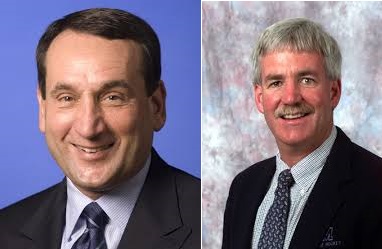
Much has been made – and rightly so – about Mike Krzyzewski’s classy post-game visit to the Mercer locker room. Coach K. congratulated the Bear players after they had upset Duke 78-71 in the first round of the NCAA Tournament.

Bravo. We see too little of that nowadays. I suspect there’s more of it going on than is reported; after all, media bias is always towards controversy rather than comity. But when a captain of the sporting industry such as Mike Krzyzewski does something classy like this, it simply must be reported.

Coaches Mike Krzyzewski and Shawn Walsh:  Classy, Frequent Winners Who Were Gracious and Sporting in Defeat

Coaches Mike Krzyzewski and Shawn Walsh: Classy, Frequent Winners Who Were Gracious and Sporting in Defeat

Here’s a story of another such sporting gesture. Back in March of 1998, Boston College’s hockey team defeated Maine 3-2 in the Hockey East championship game. Black Bears’ coach Shawn Walsh visited the Eagles’ locker room after the game to extend his congratulations.

But Walsh took it a step further. He admonished the BC players to not be satisfied with the win. He told them that they were good enough to go all the way to win the national championship, to believe in themselves, and not to let up.

BC had endured six consecutive losing seasons before that breakout year. Getting that far was quite an achievement, and, quite probably, few of the players had expected to be national contenders when the season began. It’s about attitude, not just talent. Walsh knew what he was talking about, and he drove that message home.

As it turned out, BC went to the NCAA Championship Final game that year but lost in overtime to Michigan. But they have been a contender for the title in almost every season since 1998. I can’t help but think that Shawn Walsh’s visit to their locker room that night had a lot to do with it. Class wins out. So does sportsmanship.

Maine hockey was the Duke basketball of its day. Walsh had taken over a mediocre program in 1984 and brought it to two national championships. His 1992-93 team went 42-1-2.

The final game that Shawn Walsh coached was against that same Boston College team. BC defeated Maine 3-1 in the 2001 NCAA regional final and went on to win the national championship at last. Already ill with renal cell carcinoma, Sean died at age 46 in September of 2001. It was a terrible loss to the world of hockey.

This is playoff time. The games of today will always bring back memories of the clashes of yesteryear. We remember best those stories that go beyond the game scores and trophy presentations – the stories that remind us why we love our sports. The story of Coach Krzyzewski in the locker room will carry down through the years. So too should the story of Coach Walsh in the BC locker room.

Here’s to you, Shawn!

Hockey Memories

March 10, 2014

Winthrop High School celebrates the 50th anniversary of its hockey team this year. Though I did not go to WHS or play on that team, those days hold particularly fond memories for me. I was one of the “Saturday morning hockey gang,” the Winthrop kids who were introduced to organized hockey by the late Mort Buckley. Just a few years after it got rolling, in 1976, Winthrop High hockey won the state championship. My youngest brother Jackie played a prominent role in that tournament.

In 2007, a group of the Saturday morning kids led by Winthrop’s leading citizen Richard Honan raised funds for a plaque in honor of Mort Buckley. I did a writeup of that day and posted it on the net. Here it is again, in case you missed it. Winthrop Honors the Founding Father of Its Hockey

Go Vikings!

An Address to the Massachusetts All-State High School Football Team

March 2, 2014

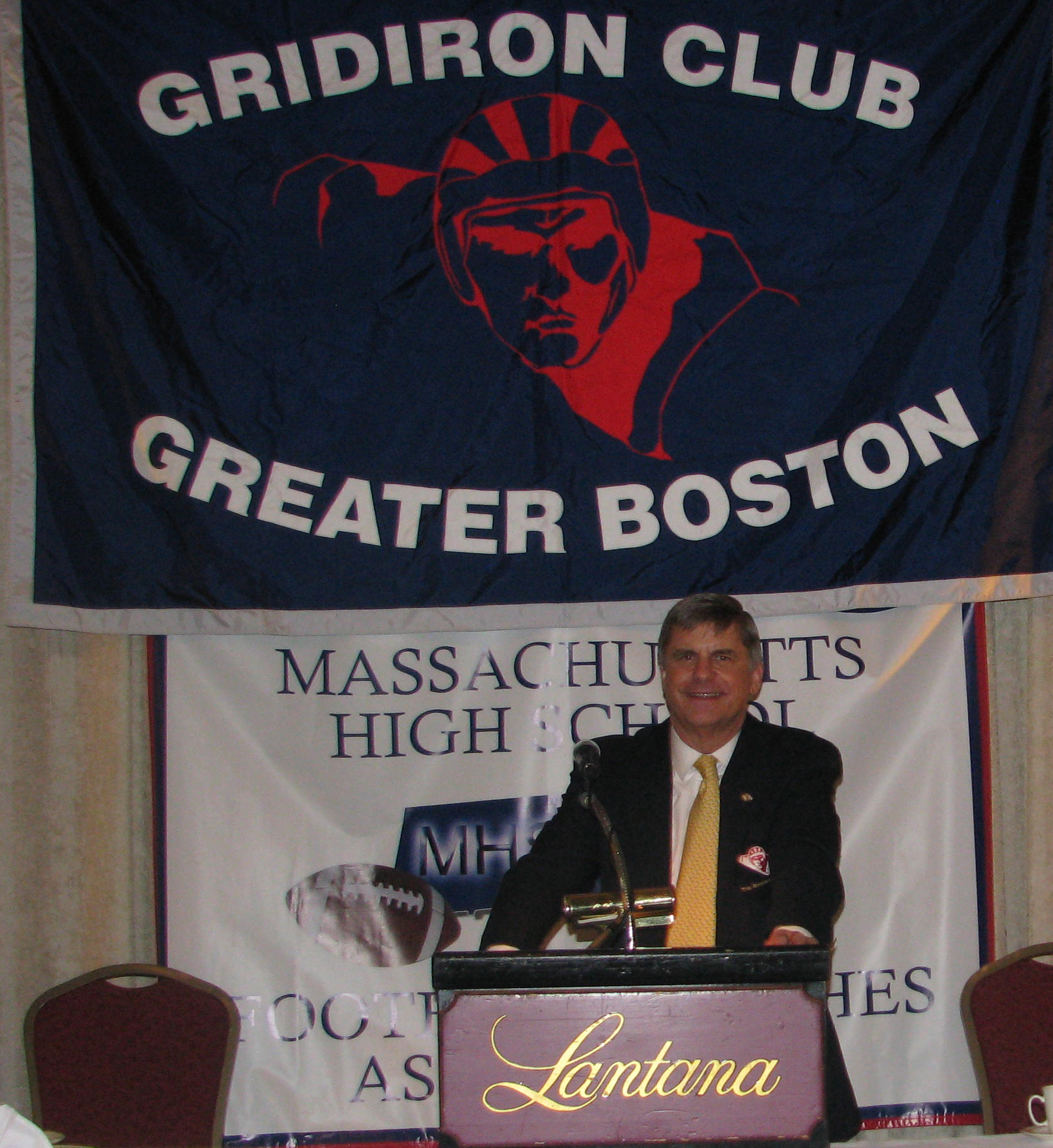
IMG_7919aMaster of Ceremonies’ Welcoming Remarks
Delivered at the Super26 High School Football Awards Dinner
March 2, 2014

Ladies and gentlemen, welcome to the 16th annual Super26 dinner, co-hosted by the Massachusetts High School Football Coaches Association and the Gridiron Club of Greater Boston.

I know I speak for both organizations when I say thank you for being with us this evening. You’ll hear from their presidents shortly.

If I were the president – president of the United States – I’d be thanking you too. And we’d be holding this gathering in the White House, and the award presentations in the Rose Garden.

That’s because what you’ve done is critically important to our country. To the fabric of our society. To what makes us Americans. You may well be the ones who are standing in the front lines, holding back a trend that is not good news for America.

I hope I’m wrong about that. But it’s worth mentioning.

When Alexis de Tocqueville traveled around this country back in the 1830s. He wrote his monumental work, “Democracy in America.” He was trying to tell the people of the Old World why America is unique among nations.

What he said then, I think, is just as true today as it was 180 years ago.

Americans are individual achievers. They strive to better themselves in ways that Europeans never imagined. But Americans also put that individualism together with that of others whose values they share. To strive for a common purpose, in community groups that are independent of their king and theig government.

DeTocqueville called that “self-interest properly understood.” It was a check on the tyranny that Americans had come here to escape. It was unique. It made America, America.

This is political philosophy, but it’s relevant to our gathering this evening. I got to thinking about it recently when I read a Wall Street Journal Article about trends in youth sports participation. Over the last five years, those trends are not encouraging.

In the four most-popular team sports – baseball, basketball, soccer, and football – combined participation by both boys and girls is off by 4% between 2008 and 2012. In some places, it’s worse. Ohio high-school basketball is off 15%. Sales of baseball bats are down 18%.

According to the soccer federation’s physical activity council, the percentages of inactive youth are up from 15% to 20%.

During those same five years, the population of six-to-17 year olds went down by less than one percent. Translation: same number of kids, a lot fewer of them playing team sports.

What’s going on here? Yes, there is a heightened fear of injury. But these numbers are from all sports, not just the contact ones.

Is it too much technology, and social networking, and video games? Have sports become too expensive? Is it not that much fun anymore, to be a member of a team, unless you’re an elite player?

I don’t know the answers to these questions. But if these figures tell of a real sustaining trend, it’s a problem for America. And if it’s a problem, what you are doing is the solution.

The Center for Disease Control has been telling us that childhood obesity is way up since the 1980s. And our political leaders are blaming sugary drinks in high school cafeterias. Wrong.

Being physically active is the way to overcome obesity. But that is just one big benefit. Being physically active, in the context of a team sport, brings so much more. Self-control. Discipline. Pushing your own limits. Contributing to your group’s success. Understanding your own role and responsibility to others.

Or, as Mr. DeTocqueville would say, seeing to your self-interest, properly understood. The essence of America.

Playing team sports, and representing our schools and communities as you do, is one of the many things that make this country exceptional.

Super26 members, you’re the cream, and I congratulate you. But the cream can’t rise to the top unless it’s part of big jug of milk.
We’re honoring you tonight, but we’re celebrating all of your team mates. And your coaches and officials. They’ve all made possible what you’ve done. And they, like you, have done their parts to keep this great country strong and great and exceptional.

That’s why, when I’m elected president, we’re moving this dinner to the White House. I hope I’ll see you all there.

Today’s History Lesson: Music and Sports – How Golf’s Bogey Got Its Name, and Who Colonel Bogey Really Was

February 6, 2014

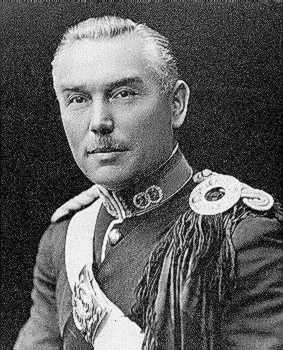
Bandmaster Lt. J.F. Ricketts, composer of  "The Colonel Bogey March."

Bandmaster Lt. J.F. Ricketts, composer of “The Colonel Bogey March.”

By the time Lieutenant J.F. Ricketts wrote “The Colonel Bogey March” in 1914, the fictitious Colonel Bogey was already the presiding spirit of golf links in Britain. This is the story of how Ricketts’s famous song was written, and of how the bogey came to mean one over par in golf.

Let’s go back, first, to a popular British song of the late 19th century. The “Bogey Man,” who lived in the shadows, was the star of said song. It went “I’m the Bogey man, catch me if you can.” “Bogle” had been the term for a Scottish goblin since the 16th Century. A Bogey-man was a popular term for a goblin or devil.

In 1890, Hugh Rotherham, secretary of the Coventry, England Golf Club, proposed standardizing the number of shots at each hole that a good golfer should take. He called that number the “ground score.” A Dr. Browne, Secretary of the Great Yarmouth Club, adopted the idea. Great Yarmouth used it in match play. During one competition, a Major Charles Wellman exclaimed to Dr. Browne, “This player of yours is a regular Bogey man.”

In Yarmouth and elsewhere the ground score became known as the Bogey score. So it was, originally, the measure of a well-played round of golf. Golfers of the time thought that they were playing against “Mister Bogey” when measuring themselves against the bogey score. They would, as the song went, try to catch the Bogey man. Bogey was interchangeable with the word “par.”

In 1892, Colonel Seely-Vidal, the Secretary of the United Services Club at Gosport, worked out the “Bogey” for his course. All members of the United Club had a military rank, and they felt they could not measure themselves against a “Mister” Bogey or have him as a member. So they gave him the honorary rank of Colonel, and “Colonel Bogey” was born.

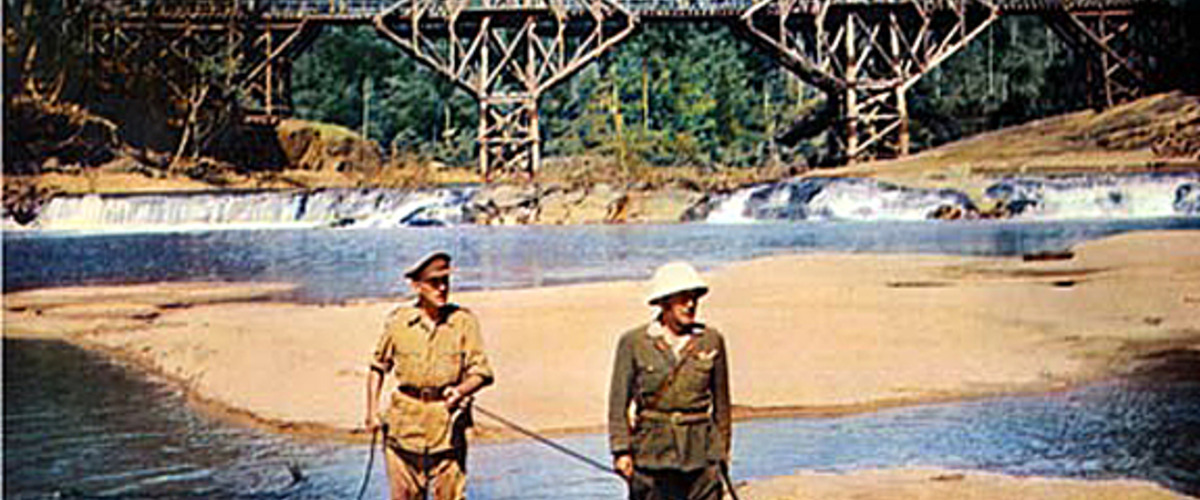
Alec Guinness and Sessue Hayakawa in "Bridge on the River Kwai," the movie that introduced a generation of Americans to "The Colonel Bogey March."

Alec Guinness and Sessue Hayakawa in “Bridge on the River Kwai,” the movie that introduced a generation of Americans to “The Colonel Bogey March.”

Lieutenant Ricketts (1881-1945) was a British army bandmaster who later became director of music for the Royal Marines at Plymouth. He published “Colonel Bogey” and his other compositions under the pseudonym Kenneth Alford, because service personnel were not supposed to have jobs outside of the military.

The tune was said to have been inspired by a military man who was also a golfer. That golfer did not shout “Fore” when it was called for. Instead, he whistled a two-note phrase, a descending interval which begins each line of the march’s melody.

The bogey got demoted to its present one-over-par status in the early 20th century. Although the first noted use of the word “Par” in golf was in Britain and predates that of Bogey. “Par” comes from a stock exchange term – a stock may be priced above or below its normal or “par” figure.

In 1870, a British golf writer asked golf professionals David Strath and James Anderson, what score would win “The Belt,” which was the winning trophy for “The Open” at Prestwick. Strath and Anderson said that perfect play should produce a score of 49 for Prestwick’s twelve holes. The writer, whose name was Doleman, called this “Par for Prestwick.”

However, the bogey scoring system as the high-performance standard would take effect in Britain first. But over Across the Pond, things were changing.

Shortly before the turn of the century, the American Women’s Golf Association began to develop a national handicapping system for women, and the Men’s Association soon followed suit. In 1911, the Men’s USGA set down the following modern distances for determining Par: Up to 225 yards, Par 3; 225 to 425 yards, Par 4; 426 to 600 yards, Par 5; and over 601 yards, Par 6.

Golf continued to improve in America, and scores started to come down. But many old British courses did not adjust their courses or their Bogey scores.

This meant that good golfers and all the professionals were achieving lower than a Bogey score. The United States had an up-to-date national standard of distances for holes, but the British Bogey ratings were determined by each club and were no longer appropriate for professionals.

Americans began referring to one over Par as a Bogey, much to British chagrin.

And now you know the rest of the story.

This is Your America

November 18, 2013

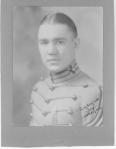
George Lermond West Point 1930 Graduation Photo

George Lermond
West Point 1930 Graduation Photo

The “great people” are the ones who make history. Or at least they’re the ones who get credit for it.

Presidents and potentates, generals and warlords, captains of industry and show-business celebrities – we chronicle and study their lives. Their deeds – and their misdeeds – are the Cliff’s Notes stories of our civilization. We are supposed to know those stories so that we may make sense of the world we live in.

But it’s not enough to read about those with the big jobs, impressive titles, and bottomless bank accounts. Not if we want to learn the possibilities of the human spirit, to hear of the heights of personal accomplishment, to grasp the boundless potential of human love and sacrifice. Not if we want to understand what it means to be an American.

To comprehend and appreciate such possibilities, heights, and potential, we must know the people who have been there. They’re not in the pages of the history books. But they are all around us, and always have been. I would like you to meet one such man. His name is George Lermond.
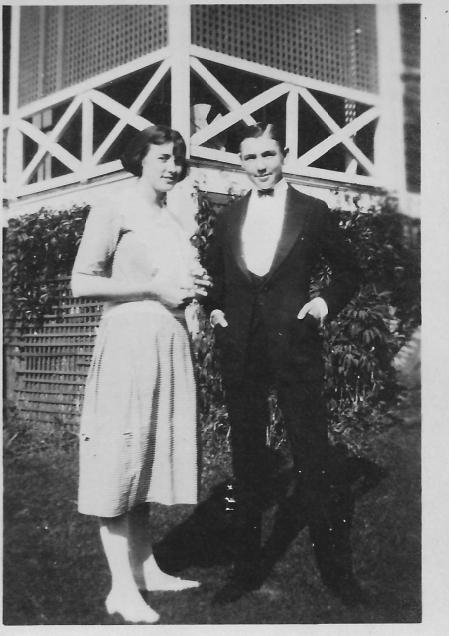
George Lermond and his sister Mary in Nahant before BC High graduation, 1921

George Lermond and his sister Mary in Nahant before BC High graduation, 1921

George was born into a poor Massachusetts family. He was a hard-working student, loving son and brother, altar boy, Olympic athlete, soldier, and father. His life touched many of those whom history considers great men.

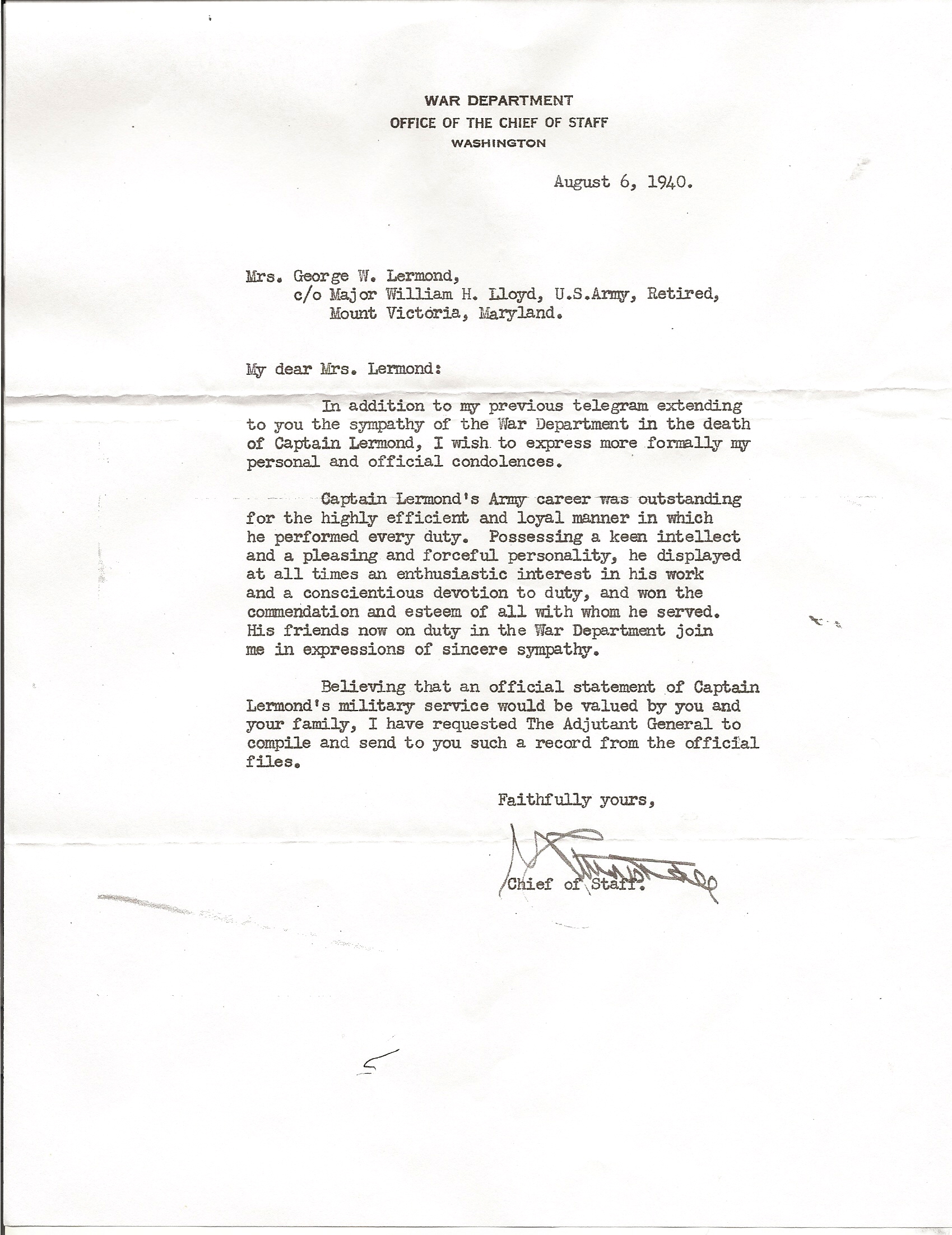
Dwight Eisenhower promoted George Lermond to captain in the U.S. Army. Franklin Roosevelt called on him when he needed trained pilots to fly U.S. air mail. George Patton was to be his next immediate superior before his tragic death in a house fire. George Marshall commended his exemplary service in a personal letter to his family. Roosevelt directed that Lermond and his son, George Junior, be buried together in Arlington National Cemetery.

George Lermond commuted from Nahant to Boston College High School. He graduated from there in 1921 and from Boston College in 1925. He was a superb track athlete, the only one from his college squad chosen to compete in the 1924 Olympics. After BC, he went to West Point and graduated in 1930. I researched and wrote his biography for his induction to the BC Hall of Fame in early October. The full text of the story appears below, along with some photos and letters that I received from family members.

George’s son Bill journeyed from Maryland for the Hall of Fame induction ceremony. His heartfelt words of thanks, as he accepted the bronze plaque for the father he hardly knew, brought tears to many eyes that evening.

Bill, his sister Edith, and his mother Edith, were saved from the blaze that took George Lermond’s life. George lowered the two children, who were wrapped in a blanket, from a window to his wife on the veranda. George then went back inside to save the third child, and perished.

I want the world to know of this man’s exemplary life. Perhaps history won’t number him among the greatest of men. But I do, and I suspect you will agree.

In this our time, it is all too easy to become distressed at the sight of so many charlatans, mountebanks, and outright villains who occupy positions of power and prestige. Do not be distressed. They will be gone and forgotten.

To my fellow baby boomers, who’ve reaped our blessed land’s bounty that was sown by our fathers and grandfathers, I say take heart. The generation of our children, and soon enough, their children, has its own ample supply of George Lermonds. They’ll soon be in charge.

You made them and set them on their way. Have faith.

George Lermond
Boston College High School ’21, Boston College ’25, United States Military Academy ‘30

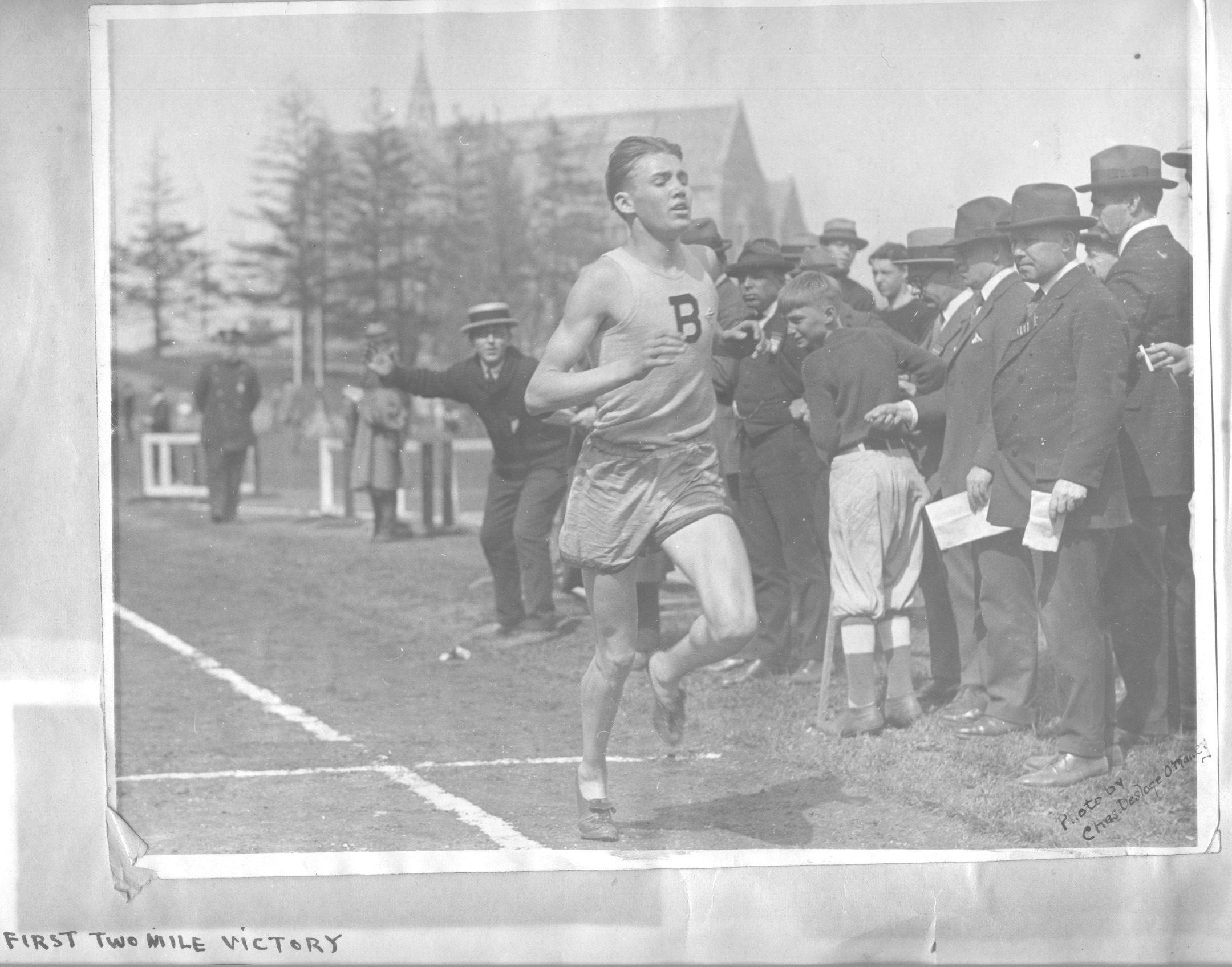
Winning the two-mile run at Boston College

Winning the two-mile run at Boston College

The first glorious era for Boston College track and field was the Roaring 20’s. Nine Eagle athletes of that time along with coach Jack Ryder, are already enshrined in the Hall of Fame. But none of those athletes distinguished himself, both on the fields of play and in later life of service to his country, more than George Lermond.

A middle distance runner and winner of innumerable races and championships during his time at Boston College, Lermond was the only Eagle who made the 1924 Olympic team.

After Boston College he enrolled at West Point and graduated in 1930 while continuing his track career and grooming his younger brother Leo to track stardom.

George was a championship-caliber runner well into the 1930s while serving in the United States Army. He died tragically in a house fire in1940, on the eve of World War II.

George Lermond was the prototypical student for whom Boston College was founded. The third child in a poor but hard-working Catholic family, George was born in Revere, Massachusetts. His father left when he was ten years old, and his mother Julia Lenehan Lermond moved to Nahant to be with her parents.

George’s uncle, Father Daniel Lenehan, was pastor of Sacred Heart Parish in Malden. A frequent visitor to the house, he undoubtedly had something to do with George’s enrolling at Boston College High School in Boston’s South End. George commuted the 15 miles every day. Like many BC High lads, he then proceeded right to Boston College.

“Lemons” fit right in with the other Eagle track stars. He was on the distance medley team with Tom Cavanaugh, Luke McCloskey, and Louis Welch. They won four national championships and broke three world records.

George was the New England two-mile champion three straight years, and in one of those victories he set a course record of 9:33.5. Sportswriters called him “the sensation of the Eastern track world” in 1924. Among his many victories were the Millrose Three Mile in New York, the New England Two Mile championship, both indoor and outdoor, the National AAU 5- Mile, and the BAA Games Two Mile.
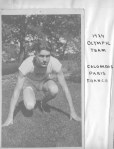
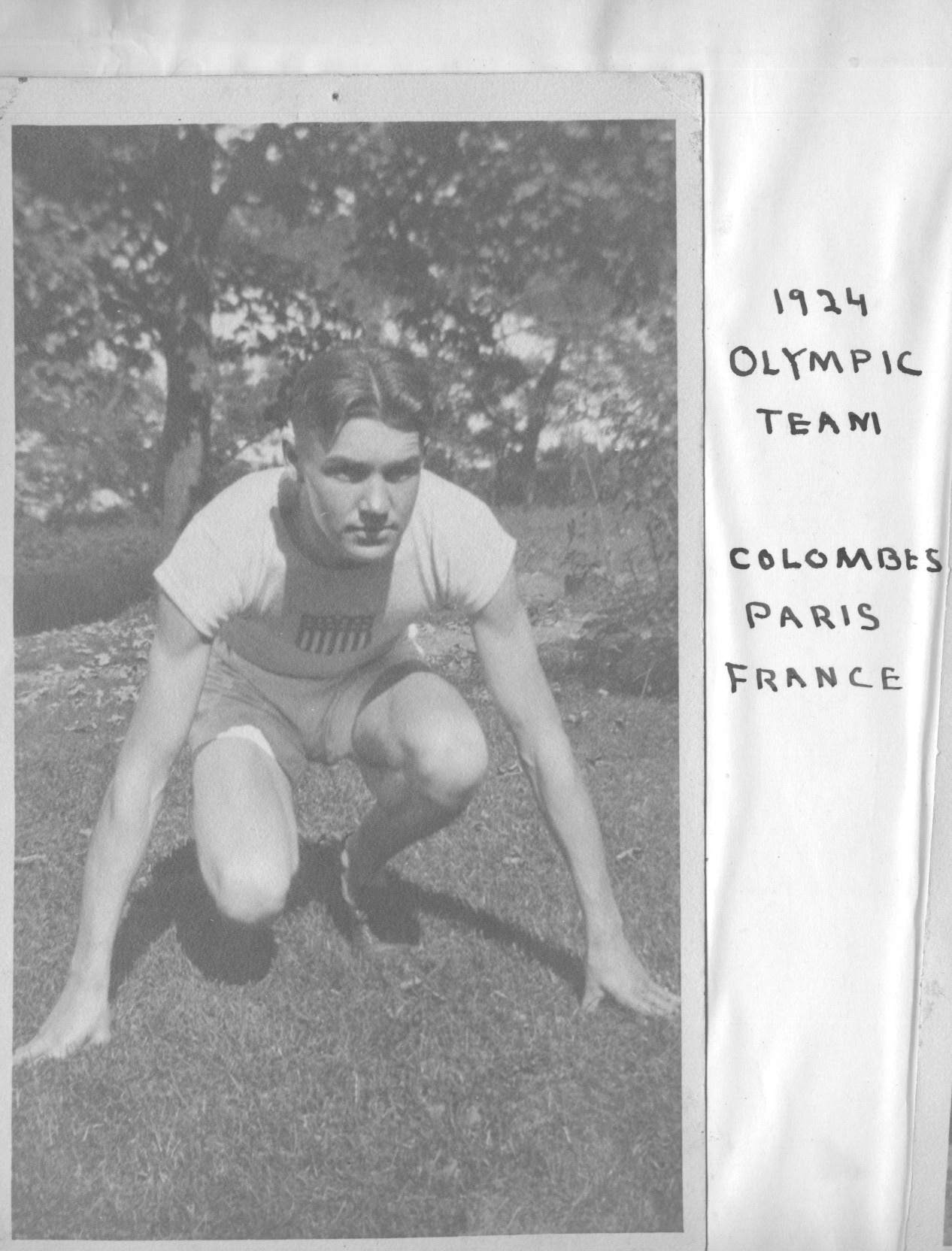
At Paris Olympics, 1924

At Paris Olympics, 1924

At the Paris Olympics George faced the immortal Paavo Nurmi and his mates from Finland in the 5000-meter run. Nurmi won the gold and George finished 24th. Aged 19, George was the second-youngest American ever to compete in the 5000.

Returning to Boston after the Olympics, George was the AAU six-mile champion in 1925. In January of 1925, he placed fourth against Nurmi in the 5000 at the Millrose Games in Madison Square Garden.

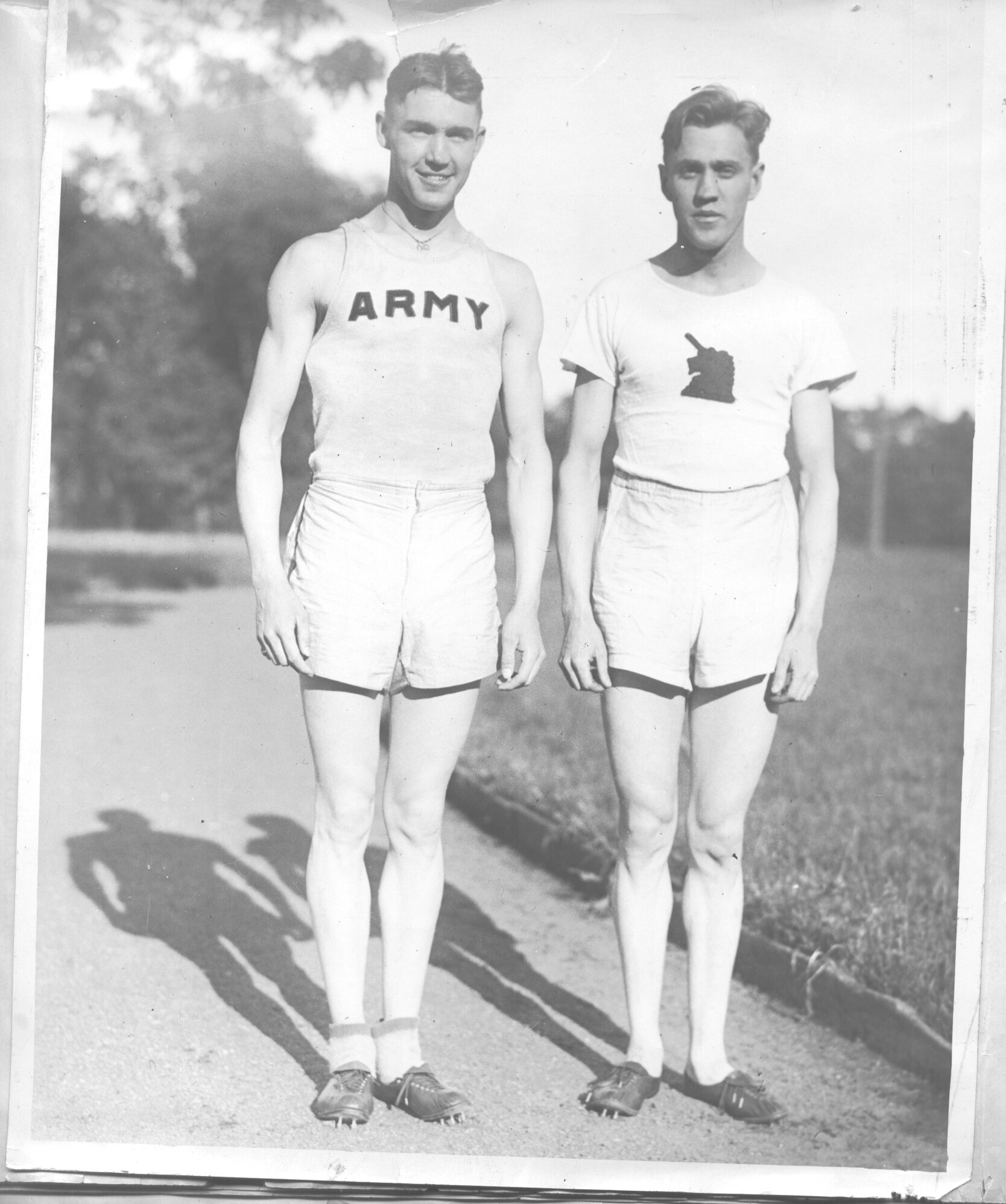
George also ran for the Boston Athletic Association. He introduced his younger brother Leo to Jack Ryder and the BAA. Under Ryder’s direction Leo became as big a star as George. Leo finished fourth in the 5000 at the 1928 Olympics in Amsterdam.
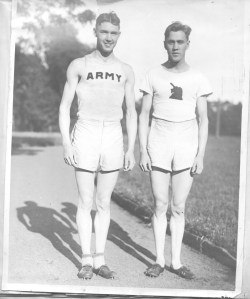
George in West Point track uniform, brother Leo in BAA gear

George in West Point track uniform, brother Leo in BAA gear

George and Leo also ran for the New York Athletic Club during the 1920’s, and press reports speculated that the United States would have two brothers competing at the Amsterdam Olympics in the 5000. George was at the peak of his powers at the time, holding the Military Academy records for the half-mile, the mile, and the two-mile. But he came up short during the trials, probably wearied from competing in multiple events at West Point.

Service to the county was in George’s family history. His grandfather Patrick had lied about his age to get into the 55th Massachusetts Infantry in the Civil War. A great-grandfather, William McCallister, served at both Petersburg and Appomattox.

George’s first military career stop was at the Air Corps Flying School in California. Though commissioned as a flyer, he stayed with the infantry. However, he was one of 262 Army pilots who delivered the nation’s air mail for 78 days in 1934.
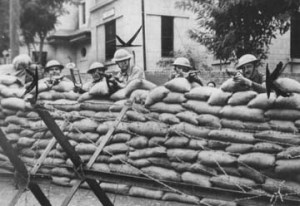
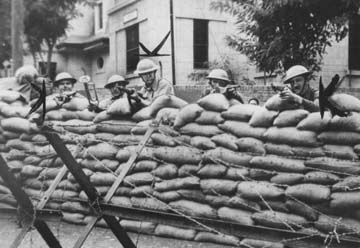
George's 15th Infantry Defending Post in Tientsin, China

George’s 15th Infantry Defending Post in Tientsin, China

George returned to an infantry assignment at Fort Jay on Governor’s Island in New York Harbor. He kept running and aimed for the 1932 Olympics in Los Angeles. His personal bests in several events took place around that time. In 1930 he posed a 1:55.3 in the 880 and a 4:15.2 in the mile. In 1932, he ran the two-mile in 9:16.6. It was also in 1932 that he set the unofficial world record for the 3000 meter steeplechase at the Eastern Olympic Tryouts at Harvard, with a time of 9:08 2/3.

He and Leo competed in a track meet in Lynn before the national Olympic tryouts, and George injured an ankle going over a water jump and missed the national final tryouts. The winner was Joe McCluskey, with a time of 9:14.8, much slower than George. McCluskey ended up taking the bronze in Los Angeles.

George did go to Los Angeles in 1932, however. He was a coach in the pentathlon. That event, consisting of fencing, swimming, show jumping, pistol shooting, and a distance run, was a showcase for military competitors. Richard Mayo won America’s first-ever pentathlon medal, a bronze.

George attended chemical warfare school in Maryland in 1934. After a graduate course in infantry at Fort Benning, Georgia, he was assigned to the 15th Infantry Brigade in Tientsin, China in 1936. His wife Edith accompanied him.

Japan invaded China in 1937, and the 15th ‘was reassigned to Fort Lewis, Washington. George’s immediate superior was and up-and-coming colonel named Dwight Eisenhower. Ike promoted George to captain in 1940.

George Lermond’s final assignment was to tank school at Fort Benning. He was slated to train under General George Patton, but he never got there. He and his family stopped for a few days at the luxurious Mount Victoria in LaPlata, Maryland, while Edith’s parents took a short vacation.

On the night of July 5, a fire broke out in the upper floors and spread quickly. George was able to lower Edith, four-year old Bill, and 15-month old daughter Edith to a porch by using a bedsheet. He dashed back into the house to save George junior and was overcome by the smoke. He was 35 years old. President Roosevelt directed that he be buried in Arlington National Cemetery.
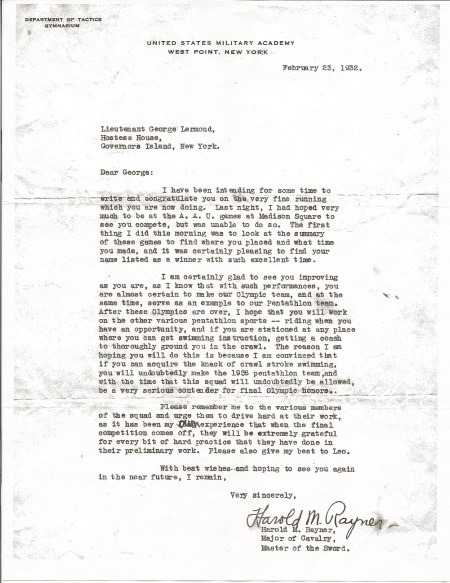
1932 Letter from Major Harold Rayner, Major of Cavalry and Master of the Sword
1932 Letter from Major Harold Rayner, Major of Cavalry and Master of the Sword

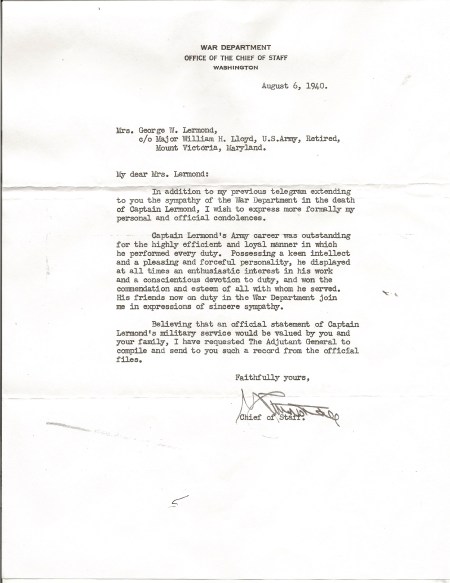
1940 Letter of Condolence from General George C. Marshall, U.S. Army Chief of Staff

1940 Letter of Condolence from General George C. Marshall, U.S. Army Chief of Staff

Discussing College Hockey’s Best Rivalry with the Master: Former Boston University Coach Jack Kelley

November 11, 2013

Getting cold out there. Steamy morning breath. Rime on the windshield. A skim of glaze on the Charles. Bats, balls and gloves are put away. A final thanks to our Boys of Summer. Time for the Boys of Winter.

It’s hockey season at last, and there’s no better harbinger than the renewal of that ancient rivalry, Boston College and Boston University.

The Eagles took this year’s first encounter, 5-1, in the Terriers’ home arena on November 8. These two teams first played against each other in 1918. The all-time tally now reads BU 129, BC 117, with 17 ties. The 5-1 game was BC’s first outing since the announcement of Jerry York’s six-year contract extension. Looks like the team decided to throw Jerry a little party.

David Quinn, BU’s new head coach, was facing BC for the first time. He said that his lads would put the lessons of the loss to good use. Good call, David, to remember this game and build upon it.

Learning from Defeat
“I think I only remember the times that you beat me. That tells you what a rivalry it was,” said the coach.

Jack Kelley at the old Boston Arena, in the days before protective glass.

Jack Kelley at the old Boston Arena, in the days before protective glass.

The speaker of the above was not David Quinn or his predecessor Jack Parker. It was Jack Kelley, the man who coached the Terriers to the pinnacle of college hockey back in 1971 and 1921. Jack was the first coach I ever interviewed in person when I began writing for the Hockey News in 1969. I spoke with him recently to ask him for some memories of his games with Boston College.

“I had such great respect for Snooks Kelley and I loved coaching against him,” said Jack. “He and Cooney [Weiland] and Eddie Jeremiah and Herb Gallagher… they did so much for hockey way back then, getting it recognized and bringing it to the forefront…what they’ve done is probably forgotten today.”

For those who don’t remember back that far, Cooney Weiland played for the Bruins, coached them as well, then was the long-time coach at Harvard. Herb Gallagher was hockey coach and then athletic director at Northeastern. Eddie Jeremiah was a legendary head coach at Dartmouth. Agree with Jack’s observation about all three. But the same is certainly true of him. He’s not forgotten, but I don’t think his own contributions to college hockey are as well remembered or as highly esteemed as they should be.

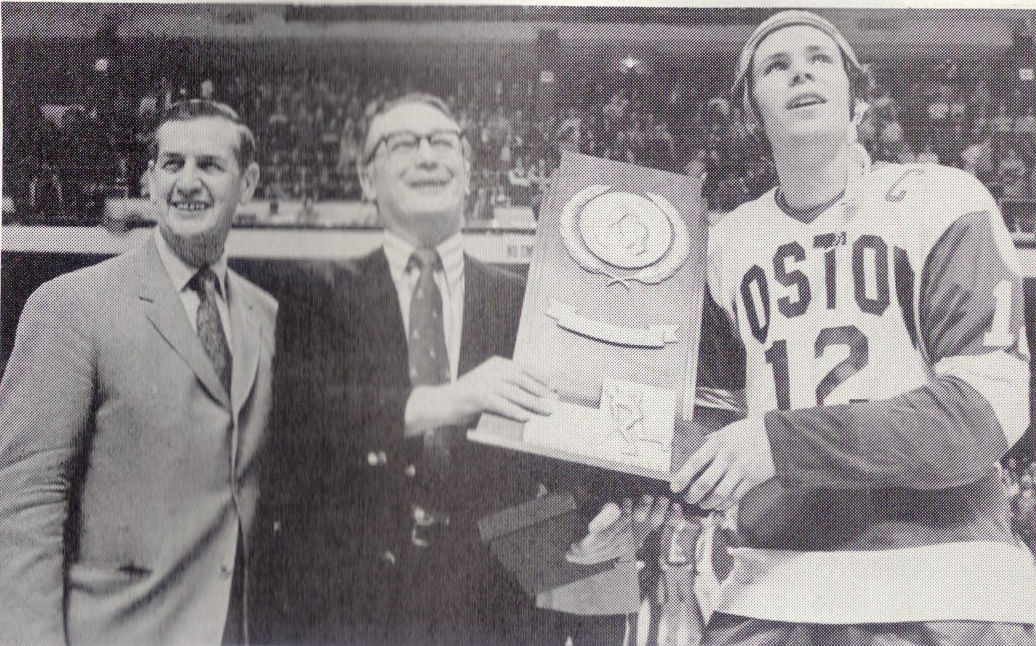
NCAA Tournament chairman Herb Gallagher, left, presents 1972 national championship trophy to Kelley and captain John Danby.

NCAA Tournament chairman Herb Gallagher, left, presents 1972 national championship trophy to Kelley and captain John Danby.

Jack Kelley’s work at Boston University transformed the college hockey culture in Boston. He came down from Colby College and shook a sleepy Terrier program awake. He turned the BC-BU series upside down and made the Beanpot a virtual BU invitational. He also showed that Eastern colleges could take down the mighty Western schools in the national tournament. And the precise, methodical passing game of his champion teams remains an essential part of any successful college sextet today.

Aside – yes, Cornell won a couple of national titles during Kelley’s era too. But gimme a break – they were a Denver-style Western crew, a transplanted Canadian Major Junior A outfit in college uniforms. Dick Bertrand, their tri-captain in 1970, was 28 years old when he graduated. Cornell had excellent teams and was almost impossible to beat. But their success was not quite as admirable as that of the other Eastern champions, of which Boston University under Jack Kelley would be the first.

The Raw Numbers

Before Quinn arrived, Parker had directed the team for 40 years. York is in his 42nd year of coaching. Between them, they’ve earned ten national championships and have won 1,838 games. Their places on Boston’s sporting Olympus are secure.

Jack Kelley, in his ten years at BU, had “only” 206 wins to go along with 80 losses and eight ties. His win percentage was .716, and his teams won six Beanpots and two national titles. Add seven years of coaching at Colby, and his all-time college record is 295-95-13. These numbers don’t lie, but they don’t speak loudly enough either.

Reverberations

You hear echoes from Jack Kelley’s time whenever BU and BC play. Parker learned his hockey at Kelley’s knee, a both player and assistant coach. After the year-and-a-half blip with Leon Abbott in charge at BU, Jack the Younger took over in 1973-74. He had learned well, and he preserved and extended the Terriers’ winning ways. Quinn played for Parker and was his assistant for a spell.

York’s teams play like an updated version of Kelley’s Terriers. They fling the puck around and through the opposition, a perpetual attack at greyhound skating speed made possible by full face masks and ever-lighter protective equipment. The face mask was not a good thing for the game, but that’s a topic for another time. It’s here to stay, and the winning teams like York’s have adapted to it. Jerry’s players excel at the stick-to-stick passing that Kelley’s BU teams perfected.

Back in 1971, Notre Dame came to BU and lost by several goals. The goaltender was asked what he thought about trying to stop the BU power play. “Stop it?” he said. “I just had to stand there and watch it – it was so beautiful. “

Those Last Games of 42 Seasons Ago

Kelley and his 1972 team, on the ice for the final time at Boston Garden

Kelley and his 1972 team, on the ice for the final time at Boston Garden

The last game that Jack Kelley coached against Boston College was one of those losses he remembers. He’s not the only one who recalls it well. Both he and Snooks Kelley had announced their retirements. BU was on its way to a second straight NCAA title. BC was a struggling, second-tier crew that had just one objective: to get Snooks his 500th career win before he went home after his 36th season.

BU that year was a little like the Bruins of 1971. Both teams were so powerful that they didn’t have to try especially hard. The B’s had won the Stanley Cup in 1970, then breezed through the next season and absorbed a dope-slap loss from Montreal in the first playoff round.

BC somehow rose to the occasion that snowy February night and upset BU 7-5, snapping an eight-game loss streak. As both Kelleys exited the rivalry, the series stood at 50-50-4. Jack Kelley recalled,

“That was the wakeup call. It was probably my fault. I sure didn’t want to be his 500th victim. Snooks deserved to beat someone like Boston University for such a magic number, and as time’s gone on, it’s dulled the pain and I appreciate being a part of his history.

“When you lose, most of the time you think it’s on you… and I kept wondering what I had done that I didn’t have my team totally prepared for BC.”

BC had given Jack a captain’s chair before that game. He still has it up in his lakefront home in Maine. As always, he was most gracious with Snooks and his players in the post-game handshakes at center ice. But when the locker room door closed behind him, Jack launched a post-game tirade that has become a permanent part of Terrier hockey alumni lore.

Well known to BU insiders too is the story of Kelley’s return to his Belmont home, where he usually entered by the back door. Finding the door locked, and still steaming, he kicked it in.
“My wife didn’t speak to me for a week after that,” he chuckles.

If that game was a poetic denouement to Snooks Kelley’s career, if the Snooker deserved to topple Boston University one last time, then the final contests of Jack Kelley’s tenure at BU were just as fitting and just as deserved.

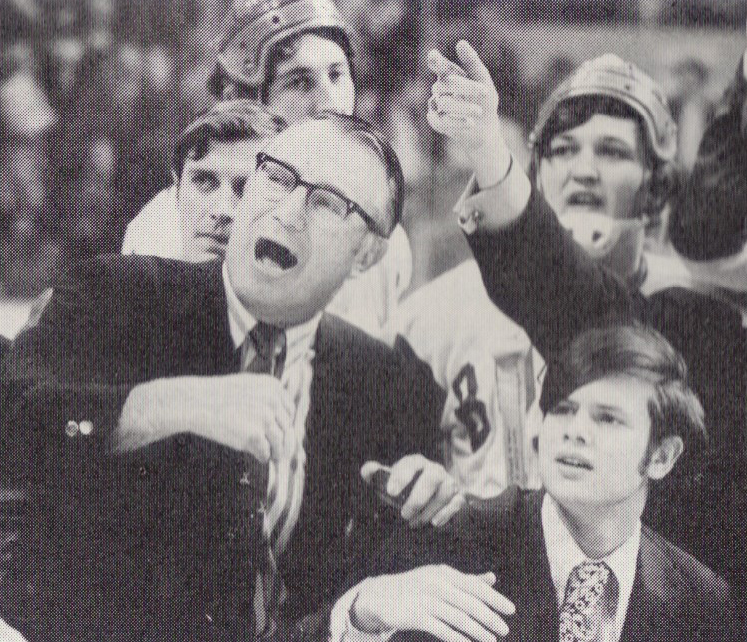
Celebrating the win: Whooping it up as the 1972 tournament awards are announced. Behind Kelley is Jack Parker, then his assistant coach.

Celebrating the win: Whooping it up as the 1972 tournament awards are announced. Behind Kelley is Jack Parker, then his assistant coach.

The 1972 Terriers took both the ECAC and the NCAA championships at their second home, the Boston Garden. Each time they defeated Cornell, the team that had been Kelley’s most troublesome foe. It was 4-1 in the ECAC final and a thumping 4-0 in the NCAA title game.

Those final victories didn’t come easily. Cornell had beaten BU in the last regular season game after the BC loss. But the music finally stopped for the Big Red and their supercilious fans. Kelley kept fiddling with his lineup. If memory serves, one of his key moves was to give a more prominent role to Paul Giandomenico. Up to that time, the little guy known as Sweeper to his teammates and Peewee to his Walpole, Mass. friends had been a spare part, but in the Garden he gave his team mates a big extra boost.

What Else Might Have Been

Kelley departed the scene then, off to run the Whalers of the World Hockey Association. He turned to Boston College for several of his pro players – Tim Sheehy, Kevin Ahearn, John Cunniff, Paul Hurley. He also ran ice arenas, went back to Colby to coach a year, and all the while kept up with his horse-breeding business. An entire career in college hockey was not for him.

It would have been nice to see what Jack Kelley could have done as coach of a U.S. Olympic team. He was every bit as tough, every inch the disciplinarian, as Herbie Brooks would turn out to be in 1980. I suspect that he would have made Brooksie seem like a soft touch.

Jack’s Terriers took on the 1972 Olympic Team at an exhibition game at the Garden in November of 1971 and tied them 4-4. Three BC players were on the Olympic roster, prompting one Terrier partisan to yell, “Come on BU – it’s only BC!” A tie with the team that would bring home a Silver Medal from Sapporo – not bad at all for a college outfit.

Another thing that I never knew about Jack Kelley until our recent chat – he too is one of those Greatest Generation guys to whom we boomers owe so much gratitude. He was a latecomer to the war effort, but he did his duty, leaving Belmont High early in 1945 and entering the service. The war ended shortly thereafter. Jack would have graduated from BU in 1949, but his delayed return with so many other veterans put him into the class of 1952.

BC was in the Kelley family’s sights even then. Jack points out that his brother Paul was the BU goaltender in the first Beanpot game ever played, a 4-1 Terrier win over Northeastern on December 26, 1952. But he proudly adds that later in the year, Paul shut out Boston College. It was the first time the Eagles had been blanked in eight seasons.

Boston College and Boston University meet for the 264th time on January 17 at BC. Then they’ll play in the Beanpot first round on February 3.

I won’t predict the winner of either of those games. But I can promise that in both contests you’ll see college hockey the way it should be played. You’ll feel the rivalry’s spirit, raucously opposing on the surface, but respectfully friendly at the core like the game of hockey itself. For all that, you can thank the people who built these two college hockey programs. And one of the greatest of those builders was Jack Kelley. He wasn’t around Boston for very long, but he was one of the very best.