Want to Date a Nice, Smart Girl? Want to Go to a Prestigious College? Watch Your Grammar!

March 7, 2013

I was happy to see the results of the 2013 Match.com survey, which reported that 69% of women judge men by their grammar. Poor English usage is ladies’ second-biggest turn-off. Though I’m long since out of the dating game, I see new hope for curmudgeons like me.

It was also nice to note that my alma mater, Boston College, now requires completion of an essay as part of the admissions process. The move has reduced the applicant pool by some 25%, to about 25,000 candidates for 2,287 slots. I agree with BC that the cadre of hopefuls should be of higher quality than before. Only the seriously interested students will make the effort to craft a 400-word personal response to one of four questions.

Not everybody sees it this way. A recent Boston Globe story pointed out that Boston University dropped its supplementary essay requirement after just one year. Many of the essays lacked originality and were “too generic,” as one of the admissions staff put it. It will be interesting to revisit the BC files after a year to see if anything like that happens.

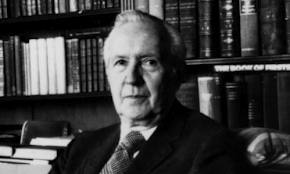
Samuel Johnson

Samuel Johnson

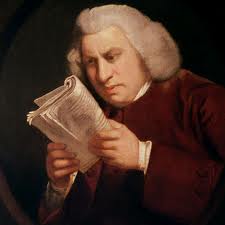
Writing is hard. As Britain’s famed man of letters Samuel Johnson (1709-1784), put it “Every man has often found himself deficient in the power of expression, big with ideas he could not utter, and unable to impress upon his reader the image existing in his own mind.”

Composing a short piece is even harder than writing a long one. If you can succeed in giving the admissions officers a clear and convincing snapshot of something that is uniquely you – and do it in 400 words – I say you deserve a spot in the freshman class.

As someone who does a lot of writing and editing, I’d like to offer some advice to those applicants who have to submit an essay or craft a personal statement.

First, write your draft from your heart. Write it from your gut. Pour yourself into it. Make it yours alone.

If you have to tell about how some person or event made you feel, or how it affected your outlook on life or changed the way you do things, spill it. Don’t ask anybody else about it. Don’t try to anticipate what the school is “looking for” in your response. They want to know you. There’s something special about everybody, and that means you too.

I suspect that the bland, formulaic essays that frustrated the BU admissions staff weren’t written from the heart. Rather, the applicants probably built their responses around what they thought the people at the school wanted to hear. That’s a sure way to conceal who you are, to submerge yourself in the crowd. Don’t do it.

Jacques Barzun

Jacques Barzun

Second, after you’ve let your draft cool off for at least a full day, go back and revise it. Then do it again. In his book “Simple & Direct; A Rhetoric for Writers,” Professor Jacques Barzun (1907-2012) offers the following principle: “Read and revise, read and revise, keep reading and revising until your text is adequate to your thought.”

If you follow that advice, you’ll probably be surprised at how good your work has become. But you’re still not ready to submit at that point.

Go find someone else to read it, critique it, and help you to make a series of fine editorial passes. If there’s no one in your family who can do it, hire a professional editor. The fifty or hundred or two hundred dollars will be money well spent.

Rule of thumb: If I have to read a sentence or a paragraph more than once in order to figure out what it says, a rewrite is in order. Sloppy, imprecise writing indicates sloppy, imprecise thinking.

I don’t have the space to go into all aspects of a well-crafted piece of writing. But grammar is just one of them, and it includes topics like dangling modifiers, pronoun agreement, and logical comparison. A diligent editor will spot mistakes in those areas and will also point out weaknesses in word choice, idea flow, sentence structure, punctuation, and tone.

Here are a few examples of mistakes that I see all too frequently:

• Using “it’s” (which means “it is”) when you want to say “its” (the correct form of the possessive pronoun)
• Writing “your” when you mean “you’re.” “Your the greatest?” No, you’re not.
• Adding an apostrophe along with “s” to construct a plural.
• Describing a fierce storm that has thunder and “lightening.”

The correct spelling in the last bulleted item is “lightning.” That points up another concern: the inadequacy of spell-check. Don’t rely on it. “Lightening” is a perfectly acceptable word, but it’s not part of an electrical storm. Spell-check wouldn’t flag it, or hundreds of other mistakes of this nature. You need a gimlet-eyed editor or proof reader to do the job.

Think of it this way. In that brief essay, you only have one shot to look your best. It’s perfectly acceptable to get help to be sure you do.

The lovely Kate Upton couldn’t have looked any better in the recent Sports Illustrated swimsuit issue, could she? Kate didn’t go to her Antarctica photo shoot alone. Her entourage included makeup artists, hair stylists, wardrobe consultants, lighting technicians, and Lord knows who else. Just think of your editors and proofreaders as the makeup artists for your college essay.

And guys – when you make it into that college, you’ll be a big hit with all those gorgeous co-eds who fall hard for men with grammatical savoir faire.

Ladies – it works the other way too. The Match.com survey said that 55% of men considered good grammar a “must-have” for a second date. It’s not quite as high as your 69%, but it’s men’s second-most important trait as well.

The biggest “must-have” for both sexes? Good teeth.

So brush and floss before you sit down to write. Good luck!

Berengaria: The Queen of England Who Never Set Foot on that Sceptered Isle

March 1, 2013

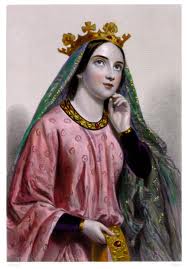
Queen Berengaria

Queen Berengaria

She was the Queen of England, but she never even saw her realm. Nonetheless, she is the first queen who had a British ocean liner named for her, a ship that had been built for Imperial Germany by Kaiser Wilhelm. She was Berengaria, wife of King Richard I, “The Lionheart.”

The year was 1190. Richard had succeeded his father, Henry II, on the throne of England. Henry’s wife was the imperious, scheming Eleanor of Aquitaine. Eleanor had once been married to King Louis VII of France. She had that one annulled, got her real estate back, then went out and snagged Henry. Eleanor knew a few things about arranging marriages for political gain.

Mommy the Matchmaker

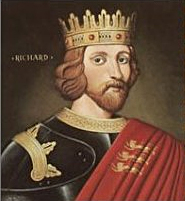
King Richard I, "The Lionhearted"

King Richard I, “The Lionhearted”

When Eleanor’s son Richard inherited the throne, he’d already been betrothed to Princess Alys, daughter of King Philip of France. But Eleanor wanted to look after her homeland, the French duchy of Aquitaine. She saw that a friendly neighboring realm was the way to go. That realm was Navarre. So Eleanor connected up with King Sancho of Navarre at a banquet in Spain, and she fixed up her son with Sancho’s oldest daughter, Berengaria.

One problem: Richard had already been packed off from England to run the disastrous Third Crusade. With him out of the way, of course, Eleanor could rule in his stead, as regent. Richard was at Messina, in Sicily, when the 70-year old Eleanor and Berengaria caught up with him. He officially terminated his betrothal to Alys – a good move, because she had been sleeping with his father Henry, and probably had borne Henry at least one illegitimate child.

Eleanor of Aquitaine

Eleanor of Aquitaine

So Richard and Berengaria got engaged. Another problem: It was Lent, so they couldn’t get married. Richard’s sister Joan, the widowed Queen of Sicily, was there too. The happy couple, now engaged, set off for the Holy Land in different ships. Joan was assigned to keep an eye on Berengaria, and traveled with her. A storm hit, the fleet got scattered –Richard’s treasure ship sunk too – and Berengaria ended up aground off the island of Cyprus.

An Island Wedding, at Last

The nasty Isaac Comnenus ruled Cyprus. He threatened Berengaria and her entourage with all sorts of bad things. Richard’s fleet finally arrived and came to her rescue. He conquered the island and married Berengaria there, at the Chapel of St. George at Limassol. A couple of A-List church men were on hand, and so that same day, Berengaria was crowned Queen of England by the Archbishop of Bordeaux and the bishops of Évreux and Bayonne.

Berengaria and Richard went to Acre in Palestine. She soon left, and went back to Poitou, France. Things didn’t go well for Richard, though. On his return trip to Europe, he was captured and held prisoner in Germany until 1194. Eleanor finally arranged for his ransom – by plundering the riches of the church, primarily – and got him freed.

The marriage of Berengaria and Richard was not a happy one. They had no children, and he is widely believed to have been gay even though he did father at least one illegitimate child. Richard was more interested in his military campaigns than in his marriage after he returned from captivity. The marriage was seen as so rocky that Pope Celestine ordered the pair to reconcile. Richard obeyed and took Berengaria to church every week after that.

Richard died in 1199 and was succeeded as King of England by his brother John. Berengaria, distressed at being overlooked as queen of England, retired to Le Mans in France. She lived in poverty because John seized her property and never paid most of her pension, which amounted to 4,000 pounds. Later on, though, John’s son Henry III came across with the funds.

Berengaria may have actually come to England at one point to complain about the money. But she was never there during Richard’s lifetime, and therefore is the only queen of England who never set foot in her realm. She died in 1230 and was buried at a convent in Le Mans.

The Berengaria – Once the World’s Largest Ship

Launch of The Imperator at Hamburg, Germany

Launch of The Imperator at Hamburg, Germany

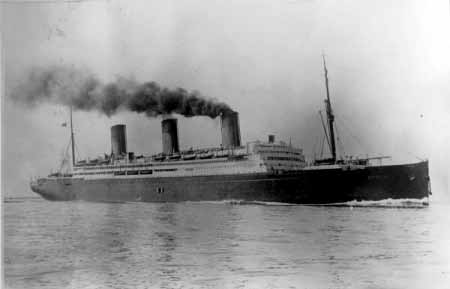
In May 1912, a month after the Titanic went down, Vulcan Shipyards of Hamburg, Germany launched the Imperator, a luxurious ocean liner that was then the world’s largest ship. Its maiden voyage from Hamburg to New York was in June of 1913. But in July 1914, with World War I breaking out, the German navy ordered that the Imperator remain in port, lest it be seized as a war prize.

The Imperator remained there until 1919 when the Americans made it into a troop transporter for returning soldiers. In August of that year, they gave the ship to the Brits as reparation for the Lusitania.

RMS Berengaria, flagship of the Cunard Line

RMS Berengaria, flagship of the Cunard Line

The Imperator became the flagship and pride of the Cunard Line. The British rechristened her the Berengaria, in honor of the queen who never made it to her country. It was the first time that a ship was named for a queen of England. Along with the Mauretania and the Aquitania, the Berengaria was a mainstay of the Cunard Line’s express routes between Southampton and New York in the 1920s.

The Berengaria was taken from service after the Queen Mary and the Queen Elizabeth were launched in 1936. The Berengaria was sold for scrap in 1938, but it took until the end of World War II to dismantle her completely.

The Berengarias – Queen of England who lived in France, and luxury British ocean liner built for Imperial Germany by the man most responsible for the Great War that nearly destroyed England and the rest of Europe. And now you know their stories.

The Fascinating Georgia “Tiny” Broadwick, America’s First Lady of Parachuting

February 26, 2013

Tiny Broadwick's portrait at the First in Flight Shrine, Kitty Hawk, North Carolina.

Tiny Broadwick’s portrait at the First in Flight Shrine, Kitty Hawk, North Carolina.

She was called “Tiny,” weighing only three pounds when she was born in 1893, the seventh and last child of a poor farm family in Granville County, North Carolina. Georgia Ann Thompson was married at 12, a mother at 13, and a school dropout. After her husband was killed in an accident, she had to work 14-hour days in a cotton mill to support her daughter Verla. She seemed destined for a life of grinding, relentless poverty.

But when she saw “The Broadwicks and their Famous French Aeronauts” at the 1907 North Carolina State Fair, something happened to Georgia Ann Thompson. She just had to become one of those daring people. They ascended to the sky in hot-air balloons, then thrilled spectators by jumping out of the basket and floating to earth with the aid of parachutes.

Little Georgia asked show owner Charles Broadwick if she could travel with the group and become a part of the act. Broadwick was impressed by her good looks and spirit. He could see that pretty little girl, who stood all of four feet tall, would be a big hit. He agreed to hire her. Georgia’s mother let her go, but only if she’d leave the daughter at home in North Carolina and send back a portion of her salary to help.

Off to a Life of Adventure

So Georgia Ann Thompson escaped the tobacco fields and cotton mills and set off for a new life and an honored place in the history of aviation. Broadwick trained her in the art of parachute jumping, and she became the sweetheart of carnival crowds all across the land. Broadwick also got her father’s consent to legally adopt Georgia, because it was unseemly for a young girl to be traveling the country with an older man.

Her name became Tiny Broadwick. They called her The Doll Girl at the carnivals. She dressed in ruffled bloomers with pink bows on her arms, ribbons in her long curly hair, and a little bonnet on her head. But Tiny was anything but a demure princess. She was an utterly fearless daredevil, drawing large crowds wherever she went. Her first jump was in 1908. Newspaper stories described her as the most daring female aeronaut ever seen, chronicling the dangerous maneuvers she executed with apparently little or no fear.

From Balloons to Airplanes

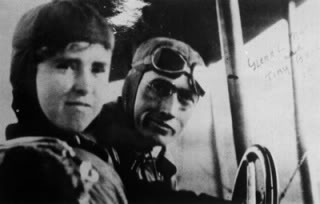
Tiny Broadwick and Glenn Martin

Tiny Broadwick and Glenn Martin

The Broadwicks traveled all over the country with their balloon act. But by 1912, that kind of performance was losing popularity. Times were changing, and heavier-than-air machines were rapidly getting better and better after the Wright Brothers’ pioneering work in the previous decade. Fortunately, a new opportunity arose for Tiny. Out in Los Angeles for the Dominguez Air Show, she met up with famed pilot Glenn Martin. He had seen her jump from a balloon, and he asked if she’d try parachuting from his airplane instead. Like Charles Broadwick, Glenn Martin saw how Tiny would attract spectators for his airplane shows.

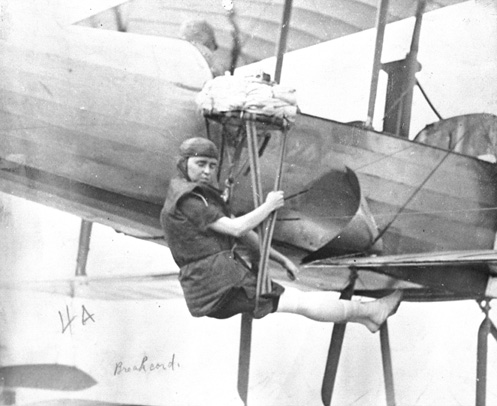
Tiny immediately agreed to work for Martin, whose aircraft company is still with us today as Martin Marietta. Charles Broadwick developed a parachute for her. It was made of silk and was packed into a knapsack attached to a canvas jacket with harness straps. A string was fastened to the plane’s fuselage and woven through the parachute’s canvas covering. When the wearer jumped from the plane, the cover tore away and the parachute filled with air.

Tiny getting ready for her first jump from an airplane.

Tiny getting ready for her first jump from an airplane.

On her first jump, Tiny was suspended from a trap seat behind the wing and outside the cockpit, with the parachute on a shelf above her. Martin took the plane up to two thousand feet, and then Tiny released a lever alongside the seat, allowing it to drop out from under her. She floated to earth and landed in Griffith Park in Los Angeles, making her the first woman to parachute from an airplane. After that first jump from Martin’s plane, Tiny was in great demand all over the country. She also became the first woman to parachute into a body of water.

The Army Comes Calling

In 1914, representatives of the Army Air Corps visited Broadwick in San Diego and asked her to demonstrate a jump from a military plane. War was already raging in Europe. Many pilots of the corps had already perished, and more would surely follow if nothing was done to help them.

Tiny Broadwick and Army Air Corps officials before her demonstration jumps at North Island, San Diego

Tiny Broadwick and Army Air Corps officials before her demonstration jumps at North Island, San Diego

Tiny made four jumps at San Diego’s North Island that day. The first three went smoothly, but on the fourth jump, her parachute’s line became tangled in the tail assembly of the plane. The wind whipped and her flipped her small body back and forth, and she could not get back into the plane. But Tiny Broadwick did not panic. Instead, she cut all but a short length of the line and plummeted away toward the ground. Then she pulled the line by hand, freeing the parachute to open by itself. Thus she demonstrated what would be known as the rip cord. Her quick thinking and cool under pressure made Tiny Broadwick the first person ever to make a planned free-fall descent.

That accident she survived in mid-air demonstrated that someone who had to leave an airplane in flight did not need a line attached to the aircraft to open a parachute. A pilot could safely bail out of a damaged craft. The parachute became known as the life preserver of the air. During World War I, Tiny served as an advisor to the Army Air Corps.

Tiny Broadwick made more than 1,000 jumps from airplanes, enduring and surviving several harrowing mishaps. Once she ended up on top of the caboose of a train that was just leaving a station; she got tangled up in the vanes of a windmill and in high-tension wires. She suffered numerous injuries along the way – broken bones, sprained ankles, wrenched back. But she loved her work.

Her last jump was in 1922. Chronic problems with her ankles forced her into retirement. She eventually went to work on an assembly line in a tire factory. Later on, she worked as a companion-housekeeper for elderly people.

During World War II, Tiny Broadwick visited military bases and talked to pilots and air crews. She’d bring along one or more of her primitive parachutes and convinced the lads that if she could survive a jump, so could they. The parachute she used for her first military demonstration jump is now in the Smithsonian Institution in Washington.

Tiny spent most of her life in California. In 1955, she appeared on an episode of “You Bet Your Life” with Groucho Marx. She never remarried, but daughter Verla gave her six grandchildren. Tiny also lived to see 15 great-grandchildren and several more great-great-grandchildren. She died in 1978, at age 85. She was buried in Henderson, North Carolina, the town where she first lived with Verla and worked those long days in the cotton mill.

North Carolina prides itself as the state that’s “First in Flight.” Thanks in part to its daughter Georgia “Tiny” Broadwick, the little girl with the big dream and the courage to pursue it, North Carolina might also claim title as the state that was First From Flight – and safely back to earth again. Countless fliers from America who came after Tiny Broadwick would undoubtedly agree, and dip their wings in salute to her.

Unsung Heroes’ Department: Štefan Banič (1870-1941)

February 21, 2013

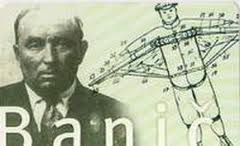
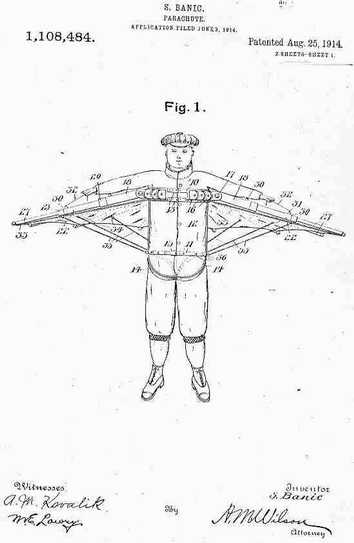
banic imageŠtefan Banič (23 November 1870 – 2 January 1941) was a Slovak inventor who devised a military parachute, the first parachute ever deployed in actual use. He patented his parachute in 1914 and donated the patent (No. 1,108,484) to the U.S. Army. Banič’s parachute became standard equipment for all U.S. aviators in World War I, and it saved many lives.

Banič received no money or recognition for his invention during his lifetime. In 1997, the Stefan Banič Parachute Foundation was created to honor his legacy and memory. The foundation annually bestows the Stefan Banič Award on the world’s leading parachute-industry professionals and manufacturers, past or present.

A Lifetime of Helping Others, an Immigrant with the American Dream

Banič was born in Neštich, Austria-Hungary, which is now part of Smolenice, Slovakia. As a young man, he was an employee of a Hungarian Count Palffy. He was fired from his job for trying to improve conditions for fellow workers and the townspeople. He was also refused enrollment to the high school because of his Slovak consciousness.

Banič came to America in 1907 and settled in Greenville, Pennsylvania, where he worked in the coal mines. He later was a stone mason and an employee of the Chicago Bridge and Iron Company, where he improved productivity through his innovative ideas. Banič also attended technical school at night. He became fluent in the English language, as evidenced by his petitions for a U.S. Patent and the technical descriptions of his parachute device.

A Daring Test of His Invention

Banic's Parachute patent

Banic’s Parachute patent

Having witnessing a plane crash in 1912, Banič constructed a prototype of a parachute in 1913. The idea of a parachute had been known and discussed long before, and people had actually jumped from high places with them. Banič’s invention was different from those we know today – it was like an umbrella that was attached to the body.

Banič tested his invention in Washington, D.C. before U.S. Patent Office and military representatives. He first jumped from a 15-story building, and in 1914 he jumped from an airplane.

After donating his patent rights to the newly formed Army Signal Corps and to the American Society for the Promotion of Aviation, Banič was made an honorary member of the Army Air Corps – now the Air Force – and the Society. It was a time when entrepreneurs and inventors often gained wealth and fame for their work. He received neither, even though his invention was important to war effort and to the subsequent development of modern aviation.

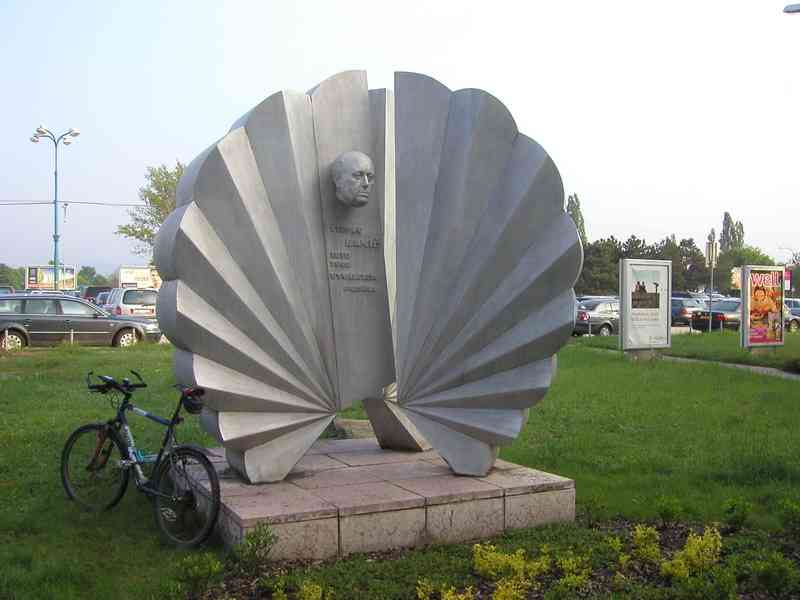
Monument to Banic at Bratislava Airport

Monument to Banic at Bratislava Airport

After World War I Banič returned to Slovakia where he helped to explore the Driny karst cave in the foothills of the Little Carpathian Mountains near his home town. He died in 1941. In 1970, a memorial to him was unveiled at the airport in Bratislava, capital city of Slovakia.

Recognition: Better Late than Never

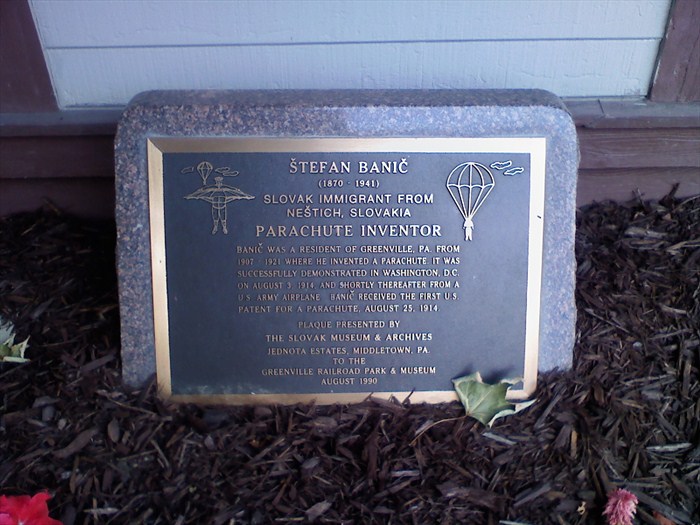
In 1989, Banič’s first American home town, Greenville, Pennsylvania, celebrated the 75th anniversary of his invention with a gathering that included Army and Air Force officials. It was the first tribute to Stefan Banič in America. In November 1990, a bronze plaque honoring Banič was presented to the town by the Slovak Museum & Archives of Middletown, Pennsylvania.

Plaque honoring Banic In Greenville, Pennsylvania.

Plaque honoring Banic In Greenville, Pennsylvania.

Another Slovak, Slavo Mulik, was founder of the Stefan Banič Parachute Foundation. Mulik was born in 1944 and started skydiving in 1960. He made more than 2,300 jumps and obtained American licenses as an instructor, commercial pilot and expert parachutist. He served with the 82nd Airborne and was awarded Golden Wings and Diamond Wings.

Saint Barbara: A Real Bombshell

February 15, 2013

She lived in Asia Minor in the third century, legend has it, the daughter of Dioscorus, a strict pagan father who locked her up in a tower to shield her from the world. She secretly converted to Christianity and wouldn’t agree to an arranged marriage. Her father had her condemned to death. She escaped several times through divine intervention, and finally Dioscorus took it upon himself to behead her.

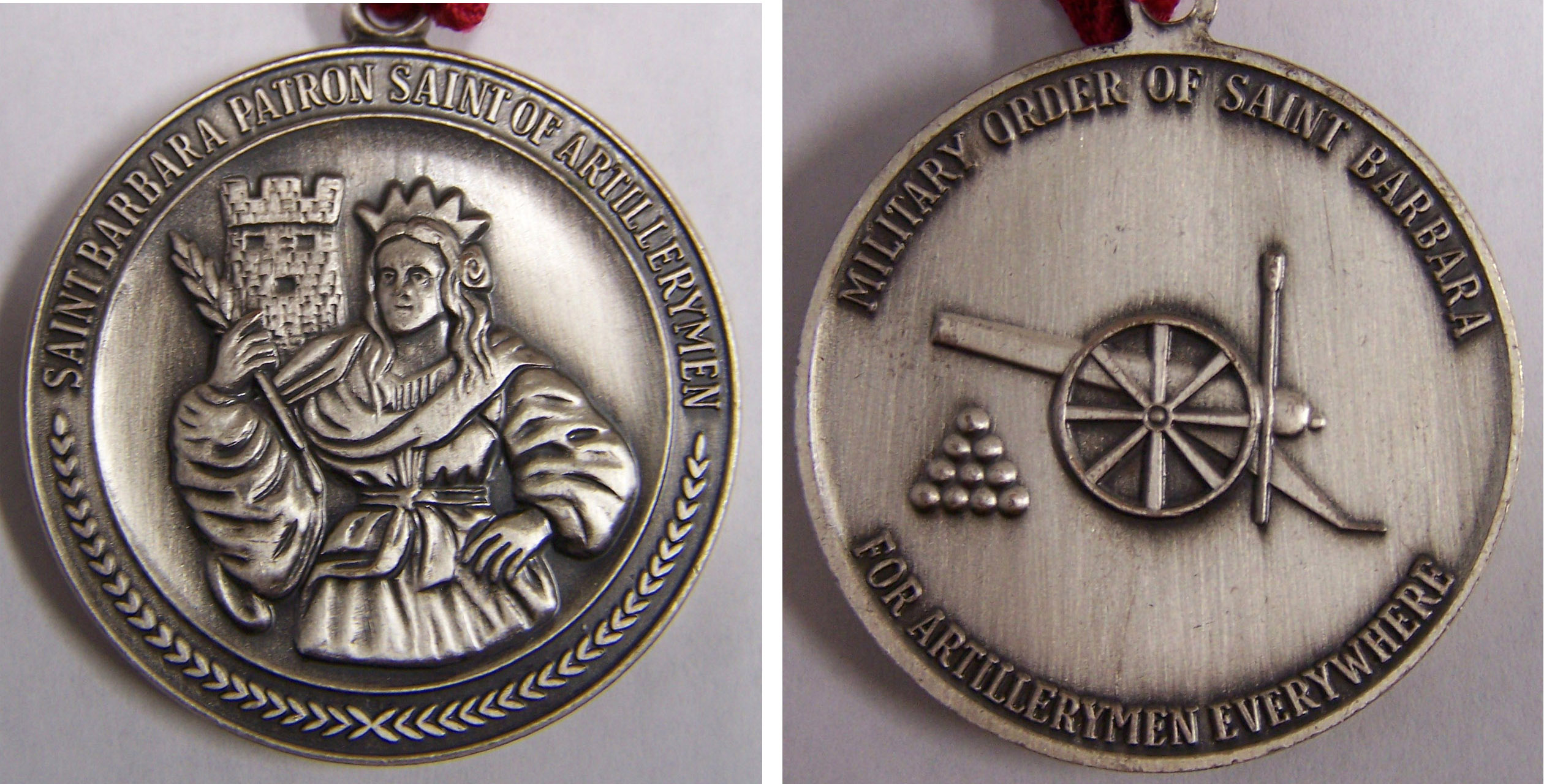
The Army's Medallion of the Order of Saint Barbara

The Army’s Medallion of the Order of Saint Barbara

God got even with the old man, however. On his way home from killing his daughter, the father was blown to smithereens by a bolt of lightning.

So Saint Barbara became the patron saint of artillerymen, armorers, military engineers, gunsmiths, miners, bomb squads, and anyone else who works with cannon and explosives. She is invoked against thunder and lightning and all accidents arising from explosions of gunpowder. She is venerated by every Catholic who faces the danger of sudden and violent death in work.

Pope Paul VI removed Barbara from the calendar of saints in 1969, citing the improbability that she actually lived. No matter. Her feast day, December 4, is still celebrated in many countries of the world.

The US Army Field Artillery Association and Army Air Defense Artillery Association maintain the Order of Saint Barbara as an honorary military society. Its most distinguished level is the Ancient Order of Saint Barbara for those who have achieved long-term, exceptional service to the field artillery. Membership at that level must be approved of by the Commanding General, United States Army Fires Center of Excellence and Fort Sill.

The Spanish and Italian word “santabarbara” and the obsolete French “sainte-barbe” signify the powder magazine of a ship or fortress. It was customary to have a statue of Saint Barbara at the magazine to protect the ship or fortress from suddenly exploding. She is also the patron of the Italian Navy.

Who needs Barbie dolls when you’ve got Saint Barbara on your side?

The First Emancipation Proclamation

January 24, 2013

It was nearly a century before Abraham Lincoln. And it was one of the “bad guys,” John Murray, Earl of Dunmore, Royal Governor of Virginia, who issued it. Lord Dunmore freed the slaves of the Royal Colony of Virginia on November 7, 1775.

John Murray, Earl of Dunmore, Royal Governor of Virginia, 1771-1775.

John Murray, Earl of Dunmore, Royal Governor of Virginia, 1771-1775.

That date is tucked away in the chronicles of American history like a guilty secret. Maybe it’s because we really don’t want to acknowledge what motivated many American colonists to take up arms against England. It was the need to preserve slavery. It was the wealth of the plantations, wealth only made possible by slave labor. It was all about the money.

Dunmore’s Proclamation was issued from a British warship in Yorktown harbor. He had fled there in April after the colonists surrounded his royal palace in Williamsburg, the colonial capital. They were furious that he had effectively disarmed them by removing the colony’s supply of gunpowder from the public magazine and storing it in another British ship. It was the day after the Lexington and Concord clashes in Massachusetts. The Virginians didn’t buy Dunmore’s initial excuse that he was safeguarding the powder from potential seizure by rebellious black slaves.

The November proclamation by Dunmore offered freedom to slaves who would rebel and take up arms against their masters. Some 800 to 2,000 did so, becoming his “Ethiopian Regiment” in the early stages of the war. They had some initial success in the Chesapeake area, but later on were evacuated to New York to fight there.

At the time of the April rebellion, and as he was fleeing to the safety of the moored warship. Dunmore had announced that “by the living God, he would declare freedom to the slaves, and reduce the city of Williamsburg to ashes.”

Like Lincoln’s Emancipation Proclamation, Dunmore’s move was just a war measure, intended to incite rebellion and bring disorder to the enemy. But it backfired, with disastrous results. Virginia and the rest of its Southern brethren were now in the rebellion to stay. Hundreds, if not thousands, who had been undecided enlisted in the Continental Army. Nothing did more to turn the South against the Crown than the Dunmore Proclamation.

John Adams, circa 1765

John Adams, circa 1765

All of the colonies chafed under the thumb of the British – the endless taxes, harassment, and disdain. Not all colonists supported slavery, of course, and many were ardent abolitionists whose time had not yet come. But the prospect of liberated slaves was the final provocation, the tipping point. As one Virginian wrote to a friend overseas, “Hell itself could not have vomited anything more black than his design of emancipating our slaves.”

Virginia in the Forefront of the Revolution

The Revolution needed the Southerners. It especially needed Virginia, the largest and wealthiest of all the colonies. That is the main reason that Thomas Jefferson was picked to write the Declaration of Independence. John Adams, for one, insisted on it.

Thomas Jefferson

Thomas Jefferson

Back in 1774, Adams, Jefferson, and Benjamin Rush had discussed the political situation at a tavern in Frankford, Pennsylvania. At that time, Adams acknowledged and wrote that “Virginia is the most Populous State of the Union. They are very proud of their ancient dominion, they call it; they think they have the right to take the lead…”

Two years later, when asked why Jefferson, still such a young man, would draft the Declaration of Independence, Adams replied, “It was the Frankford advice, to place Virginia at the head of everything.”

And so it was. But Virginia would most likely never have been there, had Lord Dunmore not attempted to free the slaves first.

Britain in the Forefront of Abolition

Banastre Tarleton

Banastre Tarleton

British authorities never repudiated Dunmore, even though they must have realized that his declaration did not have the intended effect. In 1779, British General Sir Henry Clinton’s Philipsburg Proclamation freed slaves owned by Patriots throughout the rebel states, even if they did not enlist in the British Army.

That second Emancipation Proclamation prompted about 100,000 slaves to try to leave their masters and join the Brits over the course of the entire war. And at the end of the war, the British relocated about 3,000 former slaves to Nova Scotia. This wasn’t much, compared to the total slave population, but more American slaves were freed by the British than in any other way until the Civil War.

Britain also had an admirable conversion to the cause of abolition in the ensuing decades, again well before the days of Abraham Lincoln. The plight of the slaves became better known to people in the mother country as a result of the Revolutionary War, and public sentiment turned against it.

The conversion took a few years, and not before British Colonel Banastre Tarleton made himself a fortune in the slave trade after the war was over. Boomers who were fans of Leslie Neilsen, “The Swamp Fox” of Walt Disney’s shows about guerrilla fighter Francis Marion, will remember Colonel Tarleton as Marion’s primary military foe in the Carolinas.

Leslie Nielsen as The Swamp Fox

Leslie Nielsen as The Swamp Fox

Britain abolished its slave trade in 1807, and the Royal Navy began an anti-slavery patrol of West Africa in 1808. Between then and 1860, the West Africa Squadron seized approximately 1600 ships involved in the slave trade. They freed 150,000 Africans, almost all of whom had been destined for plantations in the American South.

So, taking the long view, the First Emancipation Proclamation by Lord Dunmore was a short-term failure. But it set in motion a chain of events that were ultimately beneficial, even though there was much suffering along the way.

The Emancipation Proclamations. More than one of them. And now you know the rest of the story.

“Nevermore” Such a Rich Family Tradition of Sports and Service: The Poes of Princeton

January 20, 2013

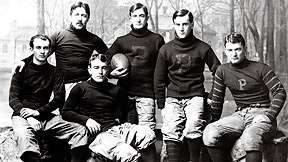
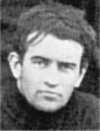
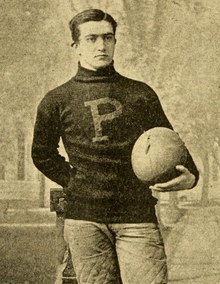
Princeton football heroes (L-R) Arthur Poe, Samuel Johnson Poe, Neilson (Net) Poe, Edgar Allan Poe, Gresham Poe and John Prentiss Poe Jr.

Princeton football heroes (L-R) Arthur Poe, Samuel Johnson Poe, Neilson (Net) Poe, Edgar Allan Poe, Gresham Poe and John Prentiss Poe Jr.

When Bill Belichick was drawing up his game plan for the American Football Conference championship game with the Baltimore Ravens, his eyes most surely had “all the gleaming of a demon that is dreaming.” Bill’s teams have established a winning tradition for professional football that will be difficult to match.

Still, whatever that particular game’s outcome, the New England Patriots have to go a long way to match the sporting, cultural, and military traditions of the relatives of Edgar Allan Poe. Edgar was born in Boston in 1809 and died in Baltimore in 1849. “The Raven” was his most famous poem. Published in 1845, it gave Baltimore’s current professional football team its nickname.

But “back in the day,” college football was king, and the mighty Harvard and Yale elevens perennially fought for national supremacy. The special nemesis of both the Crimson and the Elis were the Tigers of Princeton. And the most renowned of the athletes who played for Princeton were the six Poe brothers, all sons of Edgar’s cousin John Prentiss Poe. They all played football in college, and three of them served with distinction in World War I.

John graduated from Princeton in 1854. He later became attorney general of Maryland. From his “full paternal quiver” he sent all six sons to his alma mater. They were:

Samuel Johnson Poe, Class of 1884. He played halfback for the Tigers in 1882-83. He was also an All-American lacrosse player.

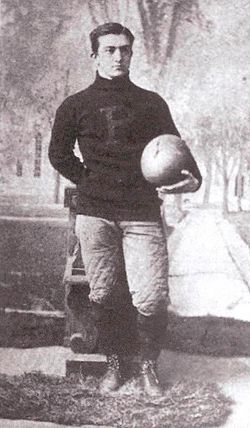
Edgar Allan Poe, second cousin of "The Rave" author and college football's first All-America quarterback.

Edgar Allan Poe, and college football’s first All-America quarterback.

Edgar Allan Poe, Class of 1891. Probably the best known of all the Poe boys, he was the country’s first All-America quarterback, chosen in 1889, when Caspar Whitney of Harper’s magazine selected the first All-America college football team. Edgar was captain of Princeton the team as a junior and as senior.

One story goes that after Princeton beat Harvard 41-15, a Harvard man reportedly asked a Princeton alumnus whether Poe was related to the great Edgar Allan Poe. The Princeton guy replied, “He is the great Edgar Allan Poe.'” The younger Edgar Poe graduated Phi Beta Kappa and later served as the Attorney General of Maryland from 1911 to 1915.

John Prentiss Poe

John Prentiss Poe

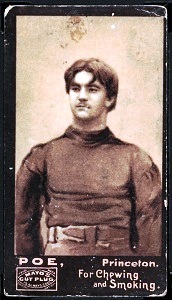
John Prentiss Poe, Jr., Class of 1895. Perhaps a typical “third child,” with both a reckless courage and a generous nature, he was a star halfback on the football varsity and class president. When he flunked off the team the next spring, his whole class turned out at Princeton Junction to see him off. He was readmitted in the fall, played even better, but again had to leave for academic reasons. This time he did not return. He set off on a series of adventures, coaching football at other colleges and working as a cowpuncher, gold prospector, surveyor, and soldier of fortune.

When World War I broke out he hastened to England and “took the King’s shilling” as a private in the Royal Garrison Artillery. He later applied for transfer to the infantry and was assigned to the 1st Black Watch. That famous Scottish infantry regiment was known to the Germans as the “Ladies from Hell” because of their ferocity and the kilts they wore.

John died in the Battle of Loos in September of 1915. He was with a detachment carrying bombs to another regiment and was part way across an open field when he was struck in the stomach by a bullet and killed. He was buried there, between the German and British lines, and relatives were never able to locate his grave.

His portrait, showing his stocky figure with the kilts and bonnet of the Black Watch, hangs in Madison Hall; it was given by the Princeton Alumni Association of Maryland. Poe Field, provided in his memory by classmates and friends, is used for lacrosse and intramural athletics. The John Prentiss Poe Football Cup, given by his mother, is Princeton’s highest football award. Now known as the Poe-Kazmaier Award, it goes annually to the member of the varsity football team who has best exemplified courage, modesty, perseverance, and good sportsmanship.

Neilson Poe

Neilson Poe

Neilson (Net) Poe, Class of 1897. He played in the backfield in 1895 and 1896, and later came back and coached. In World War I he was a lieutenant was in the U.S. Army’s American Expeditionary Force, the “Rainbow Division.” He was wounded in a 1918 battle in which his commanding officer was killed. Neilson took command and safely entrenched his men for 24 hours while suffering a bullet wound to the stomach and several shrapnel wounds. He was later awarded the French War Cross and the Distinguished Service Cross.

His coaching at Princeton spanned 20 years between the World Wars. He was in charge of the scrubs, who today would be known as the Scout Team. They were called “Poe’s Omelettes” because “they were good eggs who were beaten up.”

Arthur Poe

Arthur Poe

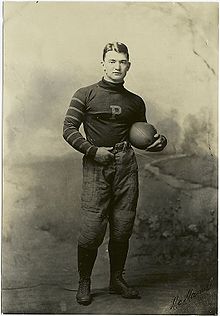
Arthur Poe, Class of 1900, was another All-American. He scored the deciding points in two consecutive victories over Yale. In 1898 he ran ninety yards for a touchdown and the only score of the game. Newspapers reported that he had recovered a Yale fumble, but Poe said that he had grabbed the ball from a Yale halfback’s arms, that he had a clear field and a ten-yard start for the goal line, and that he had never felt happier in his life.

In the 1899 game, with less than a minute to play, and with the score 10 to 6 in Yale’s favor, Bill Roper ’02 of Princeton recovered a fumble on Yale’s 30-yard line. It was getting dark and time was running out. The only feasible strategy was to kick a field goal, then worth 5 points, but Princeton’s two drop-kickers were out with injuries. Arthur Poe volunteered to try a drop-kick even though he had never kicked in a college game before. He dropped back to the 35-yard line, and (the newspapers said) made a perfect dropkick. Arthur’s version was different, however, He wrote:

“The pass from center came back perfectly which is more than anyone could truthfully say for the rest of the play. . . . The ball bounded a little too high off the ground as I dropped it and I got under it too much, raising it high into the air almost like a punt. It came down just about a foot over the crossbar and about a yard inside the upright. I wasn’t sure it was good until I turned to the referee and saw him raise his arms and heard him say `goal.’ . . . Then everything broke loose. . . . All I remember after that was being seized by a crowd of undergraduates and alumni who rushed out onto the field, and hearing my brother Net shout: `You damned lucky kid, you have licked them again.’

Gresham Poe

Gresham Poe

Gresham Poe, Class of 1902, was a substitute on the Princeton varsity in 1901. He was in a field artillery unit in the U.S. Army during the war. Gresham wasn’t quite the athlete that his older brothers were. He was inserted late into the 1901 game against Princeton to return a punt, and he received a loud ovation from Princeton fans. The Elis won that game 12-0, but they were prepared for yet more Poe family heroics against them too.

In 1899, the following poem by Booth Tarkington was read at the victory celebration. Gresham was just an incoming freshman at the time. In this poem, Eli Yale is addressing the Princeton Tiger:

“’Sir,’ I said, `All Poes are gone —
Johnson, Edgar, Neilson, John;
Arthur with the toe on which
Winning goals are kicked galore.
Tell me, tell me, gentle Tiger,
Is it possible there are more?’
`Stop!’ the Tiger cried, `there’s Gresham,
Getting ready to refresh ’em —
Don’t forget him. I implore.”’

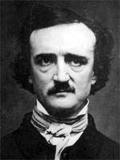
Author Edgar Allan Poe

Author Edgar Allan Poe

Finally, we should note that Edgar Allan Poe’s son, Edgar Junior, also graduated from Princeton and fought for his country in World War I. He never played football, but he too carried on the tradition of service of that admirable family. He was a U.S. Marine lieutenant and was severely wounded, but survived.

So I ask – when will there be a New England football family that matches or surpasses the traditions of football prowess and military service of the Poes of Princeton?

Most likely – Nevermore!

My Boston, My Beanpot

January 15, 2013

In 1995, on the occasion of the last Beanpot Tournament to be played in historic Boston Garden, I was featured speaker at the annual Beanpot Press Luncheon. Here’s what I had to say at that time – about what the Beanpot means to me and to the city, and about why it will always be special, and uniquely Boston. This is one of my all-time favorite addresses.
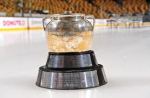
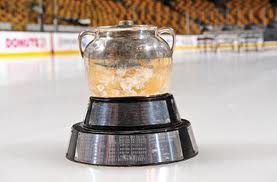
beanpot on iceI’m honored to be allowed to address you today. This is the last time we’ll be gathered for our Beanpot Luncheon in the House of Magic, as Eddie Powers used to say. We all have so many memories from this building.

I’m not going to do much personal reminiscing about Beanpots past, though. I have a much bigger message. I have some thoughts about Boston. About this tournament. About its mystique. Its grandeur. Its irresistibility.

I would like to tell you my biggest Beanpot thrill, however. On that wild overtime night, back in 1980, Alan Segal and I were on the air. I had the play-by-play mike when Wayne Turner scored his goal. Northeastern has won the Beanpot! After 29 years! And I told the world about it. That’s a big thrill, for people like me.

There was another man on play-by-play that night. He probably told more people about it than I did. I want to thank him for all he’s done for Boston sports, and congratulate him on his retirement. Longtime Boston Bruins announcer Bob Wilson, would you please stand and be recognized?

That was special. We all like to see the underdog win. But that goal was the most important in the history of this tournament. It made the Beanpot a four-team event. It brought Northeastern to a new level of prestige. It was level Northeastern hadn’t yet achieved, and which it’s maintained to this day. That goal re-made Northeastern hockey. We’re all better off for it. And I told the world about it. That was a thrill.

But enough of my personal memories. Whenever Snooks Kelley took this podium, we all looked forward to him. And he said the same thing every year. The Beanpot is not just an athletic must. It’s a social must.

And that’s true. There are people in Boston who come to the Beanpot who never attend another sporting event. I think I know why that happens. That’s my message.

So no more personal reminiscences…although 1976…Richie Smith…going around Gary Fay for that shorthanded goal…Gary’s still got a bruise on his cheek where he fell down…one of two shorthandeds by BC that night…I was broadcasting that game too, with David Pearlman…another big upset, BC over BU…that was special But why is the Beanpot so special to Boston?

Father Frank Sweeney of Boston College has a book about out city. It’s called “It Will Take a Lifetime.” And it begins this way:

Boston to me is the poetry of its street names. Cornhill. Cricket Lane. Haymarket. Pudding Lane. Appian Way. Province Steps. Battery March. Damnation Alley. Pie Alley. Turnagain Alley. Winter Street. Summer. Autumn, Spring.”

The first time I read those words they just leapt off the page at me. That’s because when I was a little boy, I and my friends used to sneak into town from Winthrop on Saturdays and explore our city. Meet it up close and personal. I didn’t know what those street names meant then. But I know now. And nothing compares to Boston, for the sheer poetry of its street names. It’s just one of the things that made growing up in Boston so wonderful.

But when I was growing up here, Boston to me was its sporting life. Sport is as old as humanity. Sport identified with cities is as old as civilization. Every city has its sporting life. But here in Boston, we’re truly blessed. We of my generation have four matchless traditions. They’re really not traditions, they’re more like defining events. They remind us of who we are. They make our city a small town. They bring us together. These four traditions are:

Fenway and the Sox
 The Boston Marathon
 Celtic Pride
 and the Beanpot Tournament

beanpost schoolsAnd the greatest of these is the Beanpot Tournament. It’s the most essentially Boston, of all these four, for reasons that we’ll see. But let’s look at them.

Fenway and the Sox. A field of dreams. It was in the movie. And well it should have been. You’ve all had the same dream I have. I dream of being Carlton Fisk. Only in Game 7, not Game 6. And when that ball goes off into the night, and the series crown comes back…finally, we banish the miserable ghost of Harry Frazee, and we welcome back the shade of the Bambino, back to where he really belongs…everybody from Boston has that dream. We’re all waiting together for it to happen. And some day it will.

The Marathon. The most ancient of athletic events. Once a year, it happens here. On Patriots’ Day. That’s the day America was conceived, and they fired the shot heard ‘round the world. For the Boston Marathon now, the whole world turns its eyes to Boston. And all of Boston turns out, millions of us, to welcome the athletes of the world to our city. That’s Boston at its best. And it’s not just a race, the Boston Marathon. It’s a man. Old Johnny Kelley. The marathon isn’t over until Johnny finishes. And we all wait to welcome that man, forever young at heart. What an achievement. Over 62 years competing in that grueling test. We’ll never see his like again.

Celtic pride. As old Johnny is to individual achievement, the Celtics are to professional team achievement. 16 world championships. Eight in a row. The Celtics always found a way to win for us. They won when they should have, and they won when they shouldn’t have. No matter how much they were up against it, the Celtics always dug way down, deep into the very soul of their team, and found a way to win.

You might ask what all this has to do with a talk about the Beanpot. I think it has a lot to do with it.

That’s because the man who owned the Celtics, the man who was ultimately responsible for all they were able to accomplish, was a hockey man. He was a founder of the Beanpot. He was a man for all seasons in Boston. Walter Brown. He was my uncle. I want to tell you about him.

I was the last member of my family to see Uncle Walter alive. I stopped in his office here in the Garden one day. It was about 33 years ago. I was all excited and nervous. I’d been accepted to BC High for the fall. He said to me, “You know, I wanted to go to BC High. They wouldn’t let me in. I had to go to Bryant and Stratton.”

That’s true. And he never went to college. But by the peak of his career here, Walter was president and owner of the Celtics. President of the Bruins. President of the Garden. And president of the BAA. A man of sterling character, charitable to a fault. If ever any one man personified our city, if ever there was a First Citizen of Boston Sport, that man was Walter Brown. A hockey man, first and foremost.

A brief digression. Boston has taken some hits, over the years, on the subject of bigotry. But here’s the Boston that I choose to believe in. Boston broke the color line in the National Basketball Association. It’s a bit hard to believe now, but that league had no black players until Boston, in 1952 I believe, drafted a man named Chuck Cooper. He was the best man available, and they took him.

It wasn’t as courageous as Branch Rickey’s taking Jackie Robinson. But it was the right thing to do. And it cost the Celtics and Walter Brown a lot of money. That’s because Abe Saperstein, the man who owned the Harlem Globetrotters, was furious. He now had to compete for his players. He threatened to boycott Boston, and he did. Boston had to pass up those lucrative Friday night doubleheaders, with the Trotters playing the first game.

But principle triumphed. The right thing won, over the expedient. That’s why, I think, that the Celtics were always able to reach down, further than any other team, and pull out those championships year after year. I am a firm believer that the good guys will win in the end. That’s what the Celtics did.

That’s what I choose to believe about Boston. That’s the character of our city. And it was the hockey man who owned the basketball team, one of the men who founded the Beanpot, who showed us the way.

But of all his accomplishments, I think Walter would be most proud of this Beanpot Tournament, and what it’s become. As I’ve said, he was first, last, and always a hockey man. Manager of the 1936 Olympic Team. Manager of he 1948 team. Owner of the Boston Americans. Hockey Hall of Fame member. President of the Bruins. [1995 Boston University captain] Jacques Joubert, you have his trophy.

Second, because the Beanpot, more than any of our matchless traditions, literally is Boston. His city. Our city. All of the people who built this city, who made it the world class metropolis it is – even though we don’t have a megaplex – not only come to the Beanpot. They play in the Beanpot. And who are they?

The men of Harvard are here. The people who came to these very shores first. The people who defined our American way of life. Boston is the education capital of the world. That’s because Harvard is here. Oh, there are others, but they all stand in line behind John Harvard’s school. Since 1636, the best and the brightest have gone to Harvard. They go there still. Wasn’t it only fitting that the first Beanpot champions were the men of Harvard?

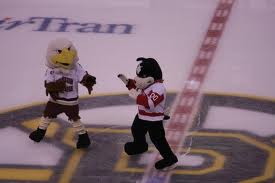
beanpot mascotsThe Catholics are here. Boston College. My school. There is no group of people who have done more to shape and mold our city of Boston, since its founding, than the Catholics. In wave after wave the Catholic immigrants came to Boston. Uneducated, but devout and hard working. And when there was nobody else around to educate them, Boston College was here.

Then there’s Northeastern. I like to call them the kids of the American dream. Because they did it all on their own. The hard way. It takes an extra year to put yourself through Northeastern. You study. You work. Then you study some more. And work some more. And by the time you’re through with the Co-Op program, you’re ready for anything that life could ever throw at you. Northeastern University has given Boston many thousands of graduates in all sorts of professions. But more than that, Northeastern has given Boston an outstanding work ethic. That’s Northeastern’s enduring gift to Boston.

And there’s Boston University. And because this is the Beanpot Luncheon, after all, we save the best for last. And friends, I must confess that I couldn’t find a way to capture, in a capsule, the educational essence of BU. It’s a big, sprawling place. They’ve got everything there. All range and manner of grad and undergrad schools and programs. And maybe, just maybe, the educational character of BU has been eclipsed, from where I stand, by the incandescent personality of the man who runs the place. If you’ve got a question, the man who runs BU has your answer. And it’s always a good answer.

And I want my friends from BU to know how very special they are. I’ve been a student in the Metropolitan College. My grandfather, George V. Brown, was your first athletic director. And you play your superb brand of hockey – the pride of the East – in Walter Brown Arena.

You’re special to all of us who love the Beanpot too. Just look at the Beanpot achievement of Boston University. As old Johnny was to individual accomplishment, as the Celtics were to professional team accomplishment, so is Boston University to college hockey and the Beanpot.

Seventeen championships. 16 second places. In the title game 27 of the last 31 years. There’s no way to explain such a record. Like the Celtics, the Terriers win when they should. They win when they shouldn’t. It doesn’t matter if the coach is Parker or Abbott or Kelley.

I think I know why that happens now. I think that the Terriers, like the Celtics, carry a little bit of Walter Brown with them. They skate down from Walter Brown Arena to Walter Brown’s beloved Garden and something wonderful happens. Celtic green has become Terrier scarlet. You wear it well, BU.

And every time I see Boston University skate out onto the Boston Garden ice, the Boston College man in me says “Oh, God. Here they come again!” But the Beanpot man in me, the Bostonian in me, just tingles with anticipation. I’m seldom disappointed. I know I’m going to see something grand. And so does everyone else in Boston, no matter where their allegiances lie.

That’s what the Beanpot means to me, my friends. That’s what it does to me. That’s what it does to my city.

Boston is indeed many things. The poetry of its street names. The education capital of the world. And Boston is the Beanpot. And the Beanpot is Boston. That’s why it’s a social must. That’s why it’s irresistible. That’s why we’ve all got to be there.

Players. Coaches. Best of luck This is your time. Let’s make this Beanpot, the last one in the old Garden, the House of Magic, the Grande Dame of Causeway Street, one we’ll never, ever forget.

Delivered at the Beanpot Press Luncheon
February 2, 1995
The Vanishing Traditions of College Football

January 10, 2013

(These are my opening remarks at the Gridiron Club of Greater Boston’s annual Bob Whelan College Awards Night, held January 10, 2013 at the Westin Waltham Hotel)

Ladies and gentlemen, thank you for being with us this evening. Thank you for being part of what the Gridiron Club does – keeping alive the memories, standing up for all the tremendous good that comes from athletic competition, and carrying the flame of tradition.

It’s especially good and important that you’re joining us tonight, at this point in the history of college athletics. I say that because it seems – to me anyway – that not everybody the sporting world still values tradition as highly as it should be valued.

Let me give you an example. “Maryland, My Maryland.” Don’t you love that song? I get goose bumps when the Naval Academy Glee Club sings it before the post parade at the Preakness.

It’s a very nice musical rendition – set to the tune of “O Tannenbaum” – of a long poem that is not so nice. In fact, it may be the most militaristic and warlike piece of poetry every written by an American.

Maryland“Maryland, My Maryland” was the work of James Randall. He despised Abe Lincoln, calling him the despot and the tyrant. He wrote the poem 1861 to urge Maryland to secede from the Union and cast its lot with the Confederacy. One stanza:

Dear Mother! burst the tyrant’s chain,
Maryland My Maryland!
Virginia should not call in vain,
Maryland, My Maryland!
She meets her sisters on the plain-
“Sic semper!” ’tis the proud refrain
That baffles minions back amain,
Arise in majesty again,
Maryland! My Maryland!

Maryland and Virginia. The Old Line State and the Old Dominion. They’ve been sisters for hundreds of years. And whatever side you might have taken during the Civil War, you’ll probably agree with me that they belong together.

Virginia should not call in vain. But now she will. When she calls to Maryland from the football field, there will be no answer. Maryland will be out somewhere in the cornfields of Iowa. Maryland and Virginia first played football in 1919, and had a game every year since 1957. No more. Tradition? Who needs it?

TexasIf you’ve never been to College Station, Texas, put a Texas A&M football game on your bucket list. It’s a happening. It’s only 85 miles across the plains from Austin and the University of Texas. Up until 2008, Texas A&M and Texas had faced each other 117 times on Thanksgiving Weekends. It was a rivalry more fierce than any that we laid-back Northerners know.

PittHow about the Back Yard Brawl between Pitt and West Virginia? Fans travel just 70 miles along the Monongahela to see this game. For how many generations have the coal fields of West Virginia fed the blast furnaces of Pittsburgh? They belong together too. In football, the universities have played 104 times. 14th oldest rivalry. No more.

Kansas- Missouri. The Border War. In 2007, the universities decided they didn’t like the name of the game and changed it to “Border Showdown.” This rivalry harkens back to pre-Civil War days and “Bleeding Kansas.” The Civil War really began out there, years before Fort Sumter and Bull Run.

KansasThe teams even got their nicknames from that era. Jayhawkers were originally characters that included abolitionists, military regiments, robbers, and murderers. In the years following the Civil War, the term became synonymous with native Kansans. The Tigers were a home guard unit that protected Columbia, Missouri from marauding guerrilla bands.

The football series was a war, all right, and when the Kansas coach heard about the name change, he wasn’t pleased. His quote: “It’s a goddam war! And they started it!”
Kansas-Missouri was college football’s second-oldest rivalry. 120 games. Gone.

Nebraska-Colorado . First met in 1898. Total games – also mostly around Thanksgiving – a mere 69. That’s over now, too.

BYUBrigham Young-Utah. The Holy War. First played in 1896. 94 total games, and every year since 1946. They will play in 2013 and once more in 2016. But that’s it.

I’m sure there are many more such stories, and not just in football.

There’s going to be a lot of prosperity created in the coming years – when college leagues break up, and re-form, and have playoff games, and sign new television contracts, and establish even more networks.

But I’m not sure that we’ll be any wealthier, after all that. There’s a richness about life that can only come your way through friendships, and family – and through those traditions and rituals that anchor you in the world and define who you are.

So it is in sport. But we’re seeing many of those traditions disappear. That can’t be a good thing.

That’s why I say that your presence here, in the body as well as in spirit, is so important. That you sit in the stands, and come to the games in person, and now, that you are present for the well-deserved accolades and recognitions…You’re doing your part to preserve tradition – perhaps more than you realize.

So thank you again, for being with us at the Bob Whelan College Awards Night. We always appreciate your support. Especially this year.

The End of the World is not Upon Us – But Don’t Scoff at the Mayans

December 18, 2012

There have been many articles and more than a few jokes about the end of the world that the ancient Mayans of Mexico supposedly predicted.

Don’t laugh. It’s not going to happen. But the Maya never predicted it anyway. What they prophesied, long ago, has just been misinterpreted.

Click on this YouTube link and check out the short (about 4 minutes) clip from NASA. It gives a concise and plausible explanation of the Mayan prophecy.

Essentially, this December 21 is a day on which the ancient Mayan calendar “re-sets” to the same reading as on the day of creation, many thousands of years ago. Reminds me of the Y2K non-event – remember that one?

The Maya believed that the world will be renewed, not destroyed. Sounds good to me. Let us embrace that renewal!