Archive for the ‘Events and Society’ Category

History I Never Knew – EEEWWW! The origin of vinaigrette, and the real lives of our stinky ancestors.

April 3, 2015

I usually order vinaigrette salad dressing when I go to a restaurant. I think I’ll go back to Greek, now that I know where the term “vinaigrette” came from.
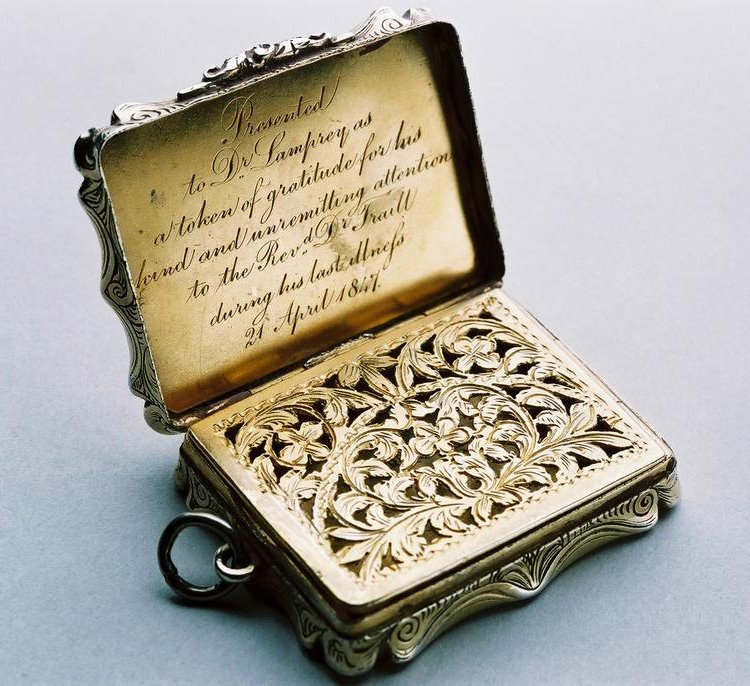
Vinaigrette Box

Vinaigrette Box

Back in Victorian times – think the 75 years or so before the era of “Downton Abbey” – fashionable ladies carried their vinaigrette everywhere. Depicted here, the vinaigrette was a little perforated box filled with aromatic herbs and a vinegar-soaked sponge. It was handy for sniffing in times of “olfactory distress.” The ladies’ attendants also found the vinaigrette handy in reviving their mistress after she had swooned and fainted for one reason or another.

 
Apparently, there were plenty of occasions of olfactory distress back in those days. A great deal of the ladies’ fainting must have been caused by the relentless assaults of offensive aromas.

According to “The Royal Armpits” in the latest issue of Mental Floss magazine, our forerunners stank. To high heaven, they stank. The article’s subhead wryly points out,  “We should be thankful they don’t make history books scratch n’ sniff.”

 
So how bad was it? Hard to imagine, but it started ‘way back before the Victoria era. People in those days thought that baths caused disease by opening the pores and allowing diseases to invade the body – the exact opposite of what happens.
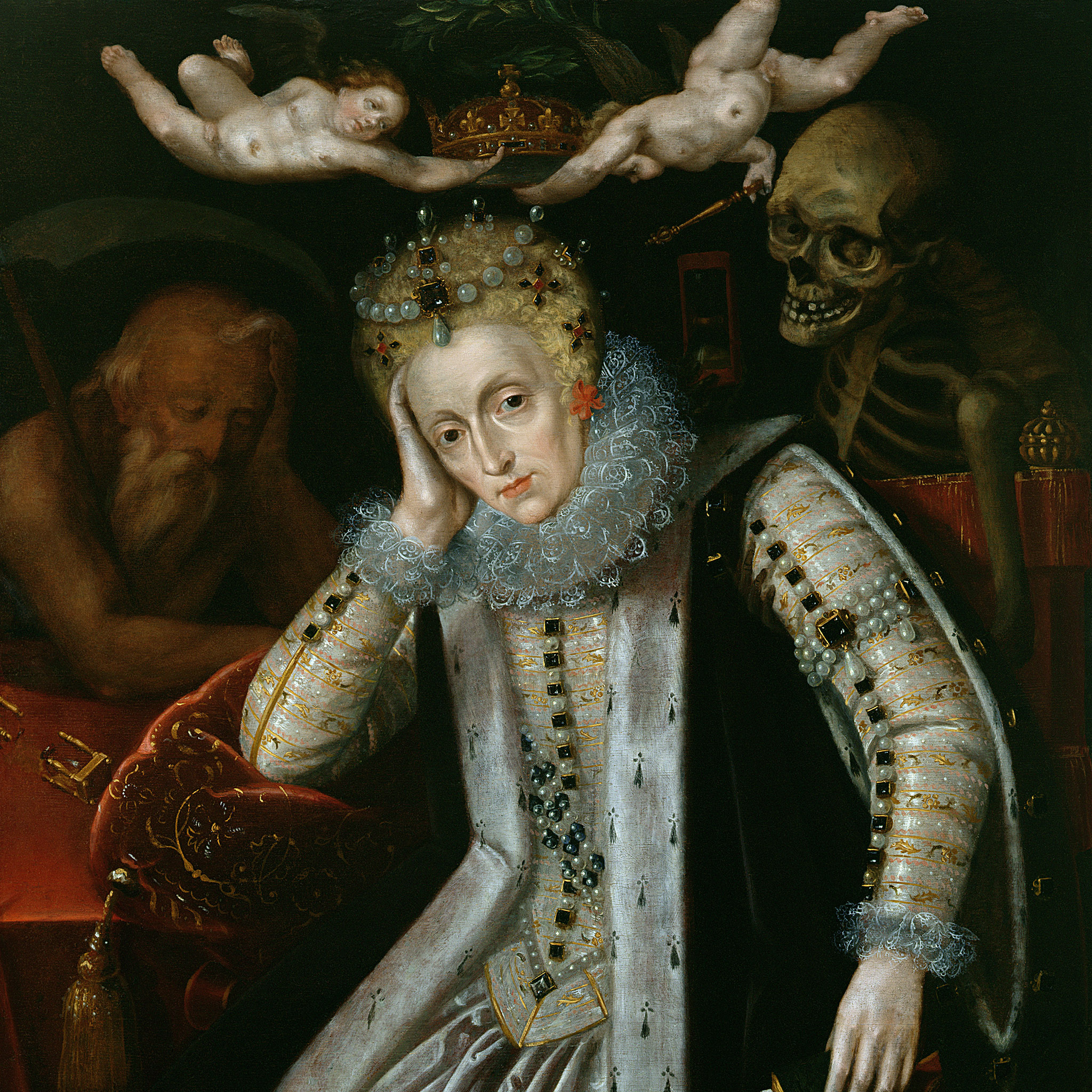
 

Elizabeth I - never had the luxury of Dove Body Wash.

Elizabeth I – never had the luxury of Dove Body Wash.

Queen Elizabeth I once stated that she “took a bath once a month, whether I need to or not.” Henry VIII had a foul-smelling, festering wound on his lower leg; you could get a whiff of it from three rooms away. The royal doctors made it worse by tying the wound open, thinking that the sore needed to run in order to heal. They even sprinkled gold pellets onto it, keeping it infected and putrefying.

 
Over in La Belle France, Louis XIV, “The Sun King,” had such bad breath that his mistress doused herself in perfume to ward off the stench. His predecessor, Louis XII, once declared, “I take after my father. I smell of armpits.”

 
Outside those royal rooms it was just as bad, if not worse. In cities, people would simply toss the products of their bathroom visits out into the street. In 1900, in New York, there were about 200,000 horses within the city. That means a daily output of five million pounds of poop, most of which was just swept to the curb.
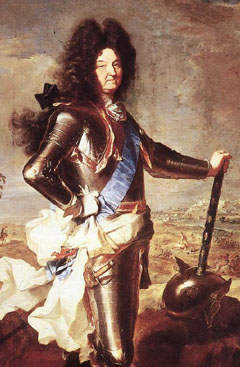
Louis Quatorze - could have put Scope or Listerine to mighty good use.

Louis Quatorze – could have put Scope or Listerine to mighty good use.


Wealthy Londoners employed an army of “night soil men” to cart the stuff away. They disposed of it in dumps on the outskirts of the city. One such place – typical British humour – was named “Mount Pleasant.”

 
The invention of the flush toilet made it even worse. In the summer of 1858, so much human excrement clogged the Thames River that it became known as the year of the “Great Stink.”

 
There was also the smell of death. In London, butchers killed and disemboweled animals right in the streets. One greedy British pastor sold “burials” to his flock, but didn’t bury the bodies. He stashed 12,000 of them in the church cellar, and the fumes made churchgoers pass out.

 
Even in churches where the dead had been properly buried, the smell of the people was too much to take. Thomas Aquinas approved the use of incense because the faithful’s odors “can provoke disgust.” In Shakespeare’s Globe Theatre, the people who bought the tickets in the cheap seats were known as “penny stinkers.”

 
Yes, I am very glad that our history books are not scratch ‘n sniff. And I have a suggestion for historians.

 
Let’s revise, once again, those notations that describe calendar eras. “BC” is now “BCE,” and “AD” is now “CE.” I say that we do away with them.

 
The most accurate way to depict former times is to start back at the beginning. Make the year that Adam and Eve left the Garden of Eden “Year One, B.O.”
“Next Year in Jerusalem” – My Thoughts and Wishes for You on This Weekend

April 2, 2015

April 2, 2015

(Slightly updated, originally posted in 2012)

This holy season is a time of the year that the veil between the worlds – between the earthly lives that we are living now and the eternity that awaits us all – is at its thinnest point, as a dear friend once pointed out to me.

This evening, Christian peoples begin the Easter Triduum, the three-day observance that culminates in the Easter morn celebration of redemption and deliverance from sin and death. Tomorrow evening, Jewish folk begin Passover, their week of remembrance and thanks for divine deliverance from bondage in Egypt.

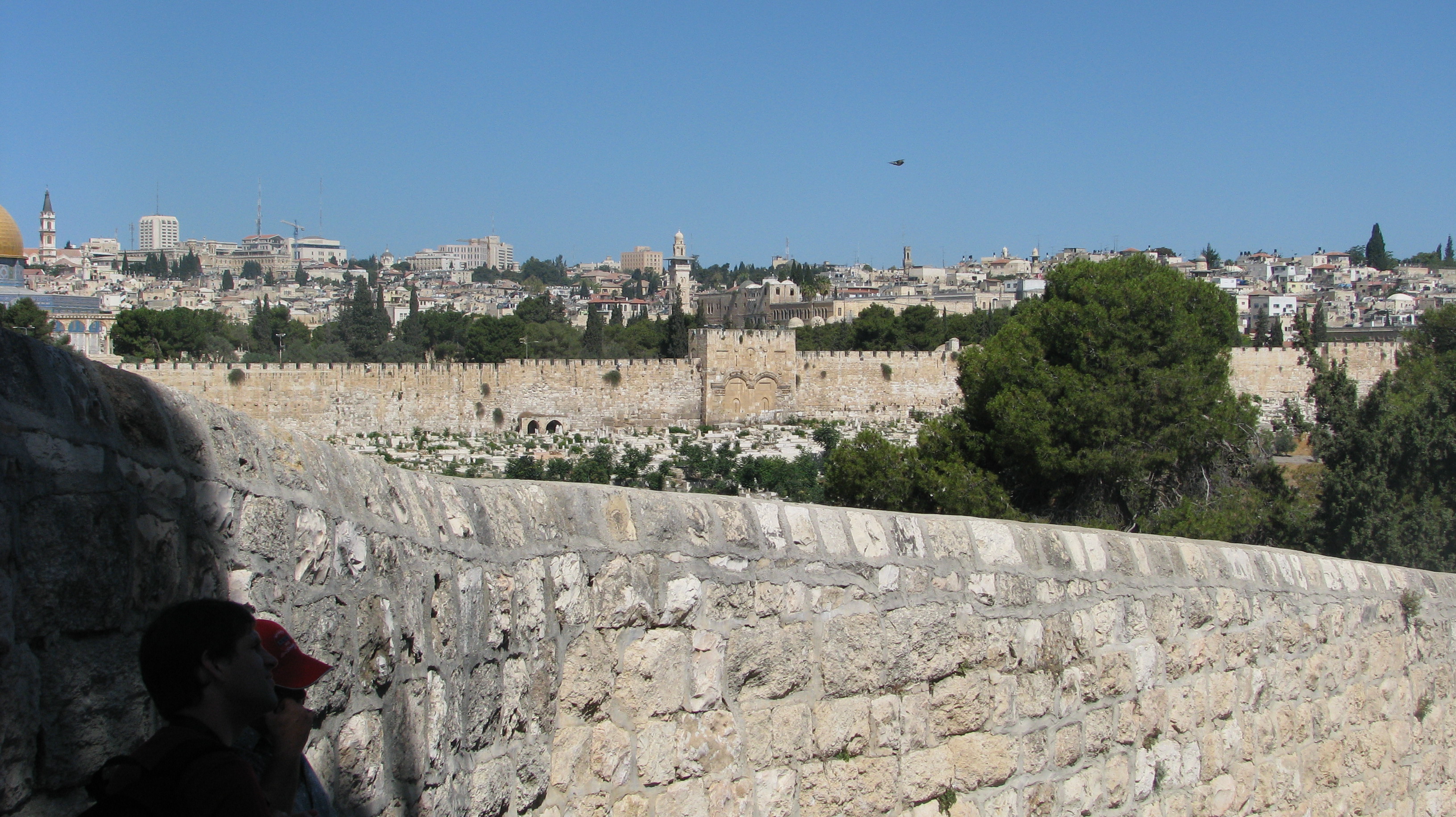
The Earthly Jerusalem, seen from the Mount of Olives. Redeemer's Gate, on the city wall that overlooks the Kidron Valley and Gethsemane, which is at the foot of the Mount of Olives, will remain sealed shut until Judgment Day.

The Earthly Jerusalem, seen from the Mount of Olives.
Redeemer’s Gate, on the city wall that overlooks the Kidron Valley and Gethsemane, which is at the foot of the Mount of Olives, will remain sealed shut until Judgment Day.

Meanwhile, all around us the earth is coming back to life in the glorious season of spring. I can’t help but think that even those who don’t profess or practice a religious faith share with those who do the same feelings of wonderment and appreciation of our here and now, as well as eager anticipation of the blooming, the ripening, and the harvest that are to come.

That same friend also remarked that our earthly life is but a moment of time that stands between two eternities.  How true. But before we exit our moment and pass through that veil and finally know what dreams may come, much remains for us all to do.

I especially love the way our Jewish friends conclude the Seder on the first night of Passover with the phrase “Next year in Jerusalem.” Those words reach forward to the coming of the Messiah and to complete spiritual redemption, which is represented by Jerusalem.

Rabbi David Hartman explains it inspiringly. Every year, he writes, Jews drink four cups of wine and then pour a fifth for Elijah, the prophet who would be sent before the coming and great day of the Lord.

“The cup is poured, but not yet drunk. Yet the cup of hope is poured every year. Passover is the night for reckless dreams; for visions about what a human being can be, what society can be, what people can be, what history may become. That is the significance of ‘Le-shanah ha-ba-a b’Yerushalayim’ (Next year in Jerusalem).”

So let us take this special time to love and embrace and celebrate it all – our families, our friends near and far, our health, our work, our fair and blessed land that still flows with milk and honey.

Let us drink that cup of hope and dream those reckless dreams. Let us renew once again all that we are about, and envision all that we may yet become. Then, when we do take our leave, we’ll have done our parts to make the world a better place for those whose brief moments in time have not yet come.

Happy Easter. Chag Pesach Sameach. And to all, “Next year in Jerusalem.”

The Power of a Curt Response

March 6, 2015

First, let me add my voice to the millions who’ve shouted “Bravo, Curt Schilling.

Future baseball Hall of Fame member Curt Schilling

Future baseball Hall of Fame member Curt Schilling

His smackdown of the tweeting cowards was long overdue…if not from him, then from SOMEBODY. And therein lies a lesson.

We need more Curt Schillings, people who don’t just sit there, but who fight back. Hard. He forced the dirtbags to face the music for their anonymous, bullying, perverted tweets aimed at his daughter. That’s what it’s going to take to win the “war” against bullying.

That’s also what it’s going to take if decency and civility are to overcome just about anything that is not right about the world we live in today.

Curt actually didn’t do the smacking down. He did the tracking down. Then he outed them – the ticket puncher and the “student.” It was a bold, righteous, action by one person who’d had more than enough, and who did something about it

Civilized American society took over from there and smacked ‘em. Ticket guy is fired, the other guy is suspended. One for the good guys.

In the aftermath, Schilling explained that he grew up in the raucous, off-color culture of the locker room. He knows salty language. He knows bravado. He knows macho. This, he said, was different.

On his blog, he wrote, “in the real world you are held accountable for the things you say.”

That’s true, but Schilling also grew up in sports. He was a big winner, and he knows what it takes to win. It takes exactly the same thing, whether it’s in the sports world or the real world. It requires that we all, in the immortal words of William Stephen Belichick, “Do Your Job.”

Pick your favorite team sport. Why does Team A defeat Team B? Was it because of the master game plan, the scouting charts, the coach’s pep talk? No. Team A won because more of their players won more of the hundreds – no, the thousands – of solo battles that add up to victory.

The defender dashes to the spot and gets his hands on the ball a fraction of a second before the receiver gets there. Malcolm Butler.

Dave Roberts makes it to second base just in time.

Dave Roberts makes it to second base just in time.

The runner sprints to the base and slides in head first, his hand touching the bag just before the shortstop’s glove touches the hand. Dave Roberts.

The pass catcher holds onto the ball that’s pinned to the crown of his helmet, and keeps the touchdown drive alive. David Tyree.

The backchecker who bulls his man off the puck and spoils the odd-man rush; the rebounder who leaps just a little higher than the other guy; that batter who fouls off ten pitches, then draws a walk.

Those are the battles that win sporting contests. There other arenas, other contests, in which we all should take our cue from Curt Schilling and fight back. Rules of conduct and stated principles are nice, just like scouting reports and game plans. Speeches and policies and pronouncements don’t hurt. But in the end, they don’t help much either. We have to go one-on-one with the enemy.

But be careful, lest the good society’s greatest enemy, political correctness, turn it into a case of “pick your poison.”

Was Curt Schilling’s outing of the bullies an assault on free speech and “fairness?” After all, doesn’t everyone have a right to speak his mind? That’s all that those young males were doing.

Amid the cheers of approval and the compliments, there were more than a few who said that Schilling had no business bragging on line about his daughter’s achievement, and that what happened to those poor lads was wrong. In other words, that Curt too was a bad guy and a bully himself.

So, in like manner, are you a racist if you criticize the policies and actions of an elected political leader whose skin color is different from yours?

Are you a sexist if you oppose the presidential ambitions of someone whose gender differs from yours?

Are you a homophobe if you believe that the hate campaign leading to the legal ruination of florist Barronelle Stutzman is a disgrace?

Are you an evil despoiler of the environment if you are skeptical of doctored data that purportedly shows that mankind is responsible for global warming? Or is it global cooling? Or is it climate change?

The answers are No, No, No, and No. But how many Americans who realize this would still speak their minds, would still battle back, as did Curt Schilling? Or, to ask the same question another way, how many Americans just don’t bother speaking up as he did because they don’t want to endure a barrage of ad hominem, politically correct opprobrium?

In the latter case, I daresay it’s too many. That’s why I say we need more Curt Schillings. We need more people to do their jobs. There’s still a never-ending battle for truth, justice and the American way. And it’s not for Superman to fight. It’s for all of us. In the manner of Curt Schilling vs the tweeting bullies.

POSTSCRIPT

Just a little more on Curt and the Schillings:

1.) He’s not been afraid to speak his mind in the sporting arena either. If memory serves, he was one of the few players who said, in effect. “Good riddance” when the Red Sox traded Nomar Garciaparra in August 2004. Schilling ticked off a lot of fans and writers, but was absolutely right. Getting rid of Nomar was addition by subtraction. Remember what happened with the Red Sox in October 2004. No coincidence.

Curt and Shonda

Curt and Shonda

2.) I had the opportunity to meet and talk briefly with Shonda Schilling one day. It was at an event where she spoke about Curt’s and her book, “The Best Kind of Different.” The love and devotion that she – and undoubtedly he as well – have for kids with Asperger’s Syndrome and similar conditions were abundantly clear and obvious to me. This is not a celebrity couple espousing a cause du jour. Rather, they’re fully and sincerely committed to the cause of helping such children and their families.

3.) After he retired from baseball, Curt Schilling took a fling at private business. His 38 Studios failed, and failed spectacularly. Yes, he got help and breaks from the states of Massachusetts and Rhode Island. But he also put up and lost a tremendous amount of his own capital. It was no Solyndra-type fraud on taxpayers by the politically connected. Curt Schilling was all-in for the venture, and he faced up to the consequences when it tanked.

It was once rumored that Curt Schilling was thinking about running for the United States Senate. I’m sorry that he didn’t. He would be a superb representative for the citizens of Massachusetts.

“Jews and Words” – Book Review and Reflection

February 18, 2015

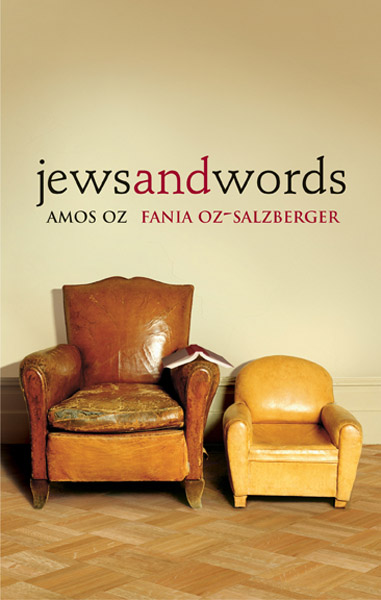
Jews and WordsDid you ever wonder why the Jewish kids always did the best in high school? Did you also ever wonder how the Jewish people have not only survived but prospered and contributed untold good to humanity, despite centuries of prejudice, ostracism, and persecution?

I always wondered, and I think I know now, after reading “Jews and Words” by Amos Oz and Fania Oz-Salberger. It’s a tight little 204-page essay by two people who describe themselves as “secular Jewish Israelis.” At the outset, the authors declare who they are and whence they come:

“First, we don’t believe in God. Second, Hebrew is our mother tongue. Third, our Jewish identity is not faith-powered…There is not a religious bone in our bodies.

That’s pretty strong stuff to declare in a book that is, after all, about a people who are identified by their religion. I can’t imagine a Catholic author saying anything similar in a book about his confessional faith. But their ability to utter such words is, as it turns out, a logical conclusion to one of the big differences between Judaism and Catholicism – the infallible guy in Rome.

Near the end of the book, they write, “The Jews never had a pope…Because suppose we did have one, everyone would be slapping him (or her?) on the shoulder, saying that their grandfather knew his grandmother in Plonsk or Casablanca. Two degrees of separation at most. Familiarity, intimacy, contrariness – this is the stuff our communities are made of…Someone will always dissent. Our smoke will never be white. So much for a Jewish Pontiff.”

They earlier stated, “There is a Jewish theology of chutzpah. It resides in the subtle juncture of faith, argumentativeness, and self-targeting humor. It amounts to a uniquely irreverent reverence. Nothing is too holy to deserve the occasional send-off. You can laugh at the rabbi, at Moses, and the angels, and at the Almighty too.”

No, that’s not the way it was for someone who grew up Catholic. But maybe this Jewish approach to things is one of the reasons that I enjoyed being the only goy in attendance at monthly business networking meetings at a temple a few communities distant.

There’s another thing about the Jewish people that this book confirmed for me. I think I had it essentially right, but the book explains why. Before reading it, I had come to believe that one of the greatest sources of Jews’ strength and resiliency was that they remember who they are. I believed that their rituals, their traditions, their religious learning all undergird their collective identity.

The authors seem to agree. They write “Almost all societies have cherished the imperative of intergenerational storytelling. Almost all cultures have glorified the passing of the torch from old to young…But there is a Jewish twist to this universal imperative. …No ancient civilization…can offer a parallel comparable with Judaism’s insistence upon teaching the young and inculcating in them the traditions and customs of their people….Where other cultures left boys in their mothers’ care until they were old enough to pull a plough or wave a sword, Jews started acculturating their youngsters to the ancient narrative as soon as the tots could understand words, at two years old, and read them, often at the ripe age of three. Schooling, in short, began soon after weaning.”

The vessels for all that learning were the written texts. When the Jews went into the Babylonian captivity – and even before that – families understood that they must “act as relays of national memory embedded in written texts.”

So there it is – early literacy and facility with storytelling that gave the Jewish kids a big leg up on their contemporaries once the secular schooling began. No wonder they had so many honor students. And there too is the collective memory of who we are and how we got here. No wonder that the Jewish community has staying power.

That collective memory, those cultural touchstones and common points of reference, it seems to me, are fading away in modern America. It seems like there’s a lot of insubstantial fluff being taught today, mere stuff and nonsense. The Common Core, anyone?

We need a real common core, a cultural canon that every American must experience. A return to close familiarity with the Bible and all it offers would be a giant step back towards the right path.

And spare me, please, the knee-jerk, selective quoting of Tom Jefferson’s 1802 letter to the Danbury Baptists on the “wall of separation between church and state.” If you insist that the old plantation owner and slave driver’s private writings be the supreme law of the land, then bring in what he had to say about black people in “Notes on the State of Virginia.” You might have second thoughts.

But back to Amos and Fania’s thoughts on the matter. They point out that there are “more Bible-wise atheists in Israel than anywhere else.” And that, too, is an advantage.

They go on to say “Most Western nonbelievers today have not crossed paths with the Bible as a literary text. Unlike Homer, it is not widely taught in schools. Like Twitter, it is handed down in byte-sized chunks…The paradox is clear to an Israeli eye. Today, in many secular societies, religion itself obscures this exquisite work of art from view. The Constitution of the United States helps bar it from public schools, because it is mistaken for a (wholly, solely) religious text. This is a sad cultural loss.”

Can’t agree more with that one.

I’m glad I got this book. It also has a lot of things I never knew about the women of the Bible, about the resurrection of the Hebrew language, and about the delicious brand of humor that is distinctively Jewish.

If you like to read, if you love history, if you want to know why things are as they are, and if you enjoy learning “the rest of the story,” I think you’ll like it too.

Today’s Cultural History I Never Knew: The Jaywalker, and the Power of Public Relations

December 29, 2014

Cartoon by veteran Canadian political cartoonist Steve Nease

Cartoon by veteran Canadian political cartoonist Steve Nease

Up until about a century ago, the thoroughfares of America belonged to pedestrians. Like the spectator benches in “Casey at the Bat,” the streets were black with people – women, men, children at play – along with the occasional horse-drawn wagon.

Then came the motorcar; specifically, the affordable motorcar. Henry Ford’s Model-T, introduced in 1908, made the horseless carriage cheap enough for middle-class families.

Ford’s popular new machines were not only affordable. They were lethal. Capable of speeds up to 45 miles per hour, they could maim or kill any person or animal that happened to get in the way. And kill they did, especially in cities, as drivers moved down pedestrians “in the homicidal orgy of the motorcar,” as a New York Times article put it.

In 1922, 10,000 children marched through the streets of New York during a “safety week;” that demonstration included a separate group of 1,054 kids who represented the youngsters who were killed my cars during the previous year.

By 1925, according to the December 2014 Smithsonian magazine, auto accidents accounted for two-thirds of all deaths in cities with populations of more than 25,000. Children were especially vulnerable; a third of all traffic deaths in 1925 were children, and half of them were killed on the streets of their own home blocks.

The automotive industry had become the new evil empire. Sales of cars, which had been growing steadily for several years, slumped 12% between 1923 and 1924. Anti-car legislation, including some laws mandating speed governors, was discussed and promoted.

The carmakers and drivers fought back. Their mission: to make the streets exclusive territories for motorized vehicles, not for people. Their leader: Charles Hayes, president of the Chicago Motor Club. Their method: a public relations campaign to change the subject and blame the victim. Their weapon: the jaywalker.

“Jay” was another term for a rube, a clueless hayseed, a country bumpkin. If you were a jay, you were the opposite of cool, hip, and “with it.” If you walked like a jay, out there in the streets where the motorcars belonged, you could get killed. And it would be your fault.

The carmakers succeed brilliantly. It was a blitzkrieg, a “lightning war” that ended in total victory.

They employed Boy Scouts to hand out cards that warned pedestrians to cross streets only at certain corners. At a New York safety event, they had a guy who was dressed like a rural rube get jokingly rear-ended again and again by a Model-T. In a Detroit parade, they entered a float with a huge tombstone that read “Erected to the memory of Mr. J. Walker: He stepped from the curb without looking.”

The compliant press – newspapers and magazines – was totally in the tank for the automakers. How could they not be, with hundreds of millions in advertising revenue at stake? The Providence Journal, for one, reprinted an article titled “The Jaywalker Problem.” The piece had originally appeared in Motor magazine. The accompanying Steve Nease cartoon might be from just a few years ago, but it typifies the media’s newly evolved frame of mind in the 1920s.

In a few years, it was all over. But as early as 1924, the word “jaywalker” appeared in a dictionary. The definition: “One who crosses the street without observing the traffic regulations for pedestrians.” America’s love affair with the automobile resumed, and it has never cooled off again.

So, don’t jaywalk. And don’t take on people who have bottomless bank accounts and willing allies in the media.

One more thing. Think about how the tactics of the Chicago Motor Club and its fellow travelers are still in use. They’re not so much public relations as they are out-and-out propaganda. Can you think of any examples in the public realm today where a particular interest group attempts to brand those who oppose it as the “jays” of this era? As uncouth, uncool, unsophisticated bumpkins? I can.

How do they do it? Oh, promoting their agenda by changing the subject of discussion, by distorting and obscuring the facts, by blaring deceptive one-liners and slogans, and by demeaning the character and motives of those with whom they disagree? Sound familiar? It should. And, unfortunately, it’s effective.

“Plus ca change,” as the French say.

Look both ways. That’s today’s history lesson, and that’s the rest of the story.

“You are NOT Special” by David McCullough Jr.: Book Review and Reflection

December 14, 2014

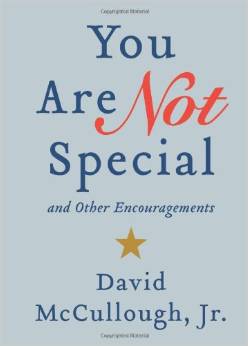
bookAfter a recent book-signing appearance at Buttonwood Books in Cohasset, the store owner kindly offered Reid Oslin and me the opportunity to take home any book we wanted. My pick, after a hasty scan of the shelves, was “You are NOT Special…and Other Encouragements” by David McCullough, Jr. I just finished reading it, and I’m glad I made that choice.

McCullough, son of the author of well-received biographies of John Adams and Harry Truman, teaches English at Wellesley, Massachusetts High School. This book grew out of his June, 2012 commencement address at Wellesley High. He shot to fame when some of his excerpted remarks went viral along with a video that someone had taken and uploaded without his knowledge.

I’d heard of his talk and read an article or two about it, but I didn’t know he’d written a book. It’s a good read, rather like an expanded version of that commencement address. He weaves in a lot of his personal experiences and anecdotes as he discusses a range of topics: being a parent; education and being a teacher; high school kids; school sports and extracurricular activities; the college scene; wealth and success; and lives well lived.

He also wades through the minefield of explaining the differences between boys and girls. He begins,

“Before we proceed, though, a caveat. ..I intend no offense and apologize in advance if any is taken. I’ll be playing the percentages as I see them, merely, and this with no formal training or education beyond a sociology course in college thirty-something years ago that I found largely tedious. If you anticipate even a teaspoon of umbrage, skip this section. …Here’s my first salvo: the genders differ…they differ so much, in fact, I sometime wonder if there are two realities, the male and the female.”

Author David McCullough delivering his 2012 commencement address at Wellesley High School.

Author David McCullough delivering his 2012 commencement address at Wellesley High School.

To my mind, he makes it through that minefield unscathed. What he has to say on the subject is going to be helpful to me in my still-new assignment as a writing instructor for young college students. Thus far, I’ve found that there’s a big, big difference between the guys and the girls in their respective approaches to academic matters. Now I understand a little more about why that is.

I also thought of a goodly number of people I know, and whose friendship I treasure, while reading the chapter about college. Wellesley High undoubtedly sends a high percentage of its graduates to “prestige” or “elite” institutions. Though he has a great respect for such schools and the Wellesley kids who enroll there, McCullough also writes with enthusiasm and respect for other possible post-secondary-school approaches to preparing for the game of life.

That part first reminded me of William F. Buckley’s quip – that he’d rather by governed by the first 2000 people in the Manhattan phone book than by the entire faculty of Harvard University. I also recalled Oscar Wilde’s dictum about education’s being a fine thing, but that it’s good to remember that nothing that’s worth learning can ever be taught.

But that section also made me reflect upon my friends who’ve taken routes other than four years of college into their admirable, productive adult lives. Some of them went right to work or into the military; others got married early and started their families right away. Some stumbled early and then got serious about themselves and those around them. Along the way they found their respective niches. A few picked up some targeted or specialized training, or earned a college degree later on. Other just realized what they loved to do, and went out and did it.

Most of those friends did it the hard way and scrapped for everything they’ve got. They appreciate what they have and don’t sweat the small stuff. They love every day of their lives, which they live with passionate engagement. I love spending time with such individuals. I’m glad that the author seems to share my affection for them. America needs more such people.

Which brings me to another of the book’s most important points: the importance of friends and friendship. He writes,

“We are, then, most genuinely ourselves in our choice of friends…Show me your friends, and I’ll tell you your future. And, of course, much about who you are…In their company we encounter the universe and sift together through our discoveries for the gemstones over which we revel together. And through the rough patches we commiserate. In friendships abides our true wealth. They warm the cosmic chill.”

Great stuff, that. I could go on, but I think I’ll stop here. Suffice it to say that David McCullough manages to get a wealth of valuable advice and wisdom born of experience into his compact little book. Much of what he says, you’ve already heard. But perhaps not in quite the same way that he puts it.

So if you’re looking for a good book, check this one out. I don’t think you’ll be disappointed.

Please Join Us for an Evening of Sports Talk!

November 11, 2014

Authors Tom Burke and Reid Oslin Invite You to

doyles logoDoyle’s Cafe – “Boston’s Best Pub”
3484 Washington Street
Jamaica Plain, MA 02130

Tuesday, November 18, 7:30 to 9:00 p.m.

No Cover! No Minimum! Just bring a love of Boston sports (especially hockey!)

tom and reidTom and Reid’s new history of Boston’s sport at Boston’s college, Tales from the Boston College Hockey Locker Room, is now available at bookstores everywhere.

The book, published by Skyhorse Publishing of New York, chronicles the long and successful history of “The Montreal Game” at Boston College. It begins with the early days of “ice polo” on rivers and outdoor rinks of the 1890s and runs through the Eagles’ skein of four NCAA Championships since 2001.

Cover front2The authors interviewed dozens of former Eagle players, coaches, and rivals along the way. Included are chapters on the origins of hockey at the Heights; on BC’s iconic coaches John “Snooks” Kelley, Len Ceglarski, and Jerry York; on the NCAA Tournament’s origin and evolution; and, of course, on the Beanpot Tournament.

The book also recaps many memorable Boston College games and seasons, but it is not just for BC loyalists. As the Authors’ Note at the beginning states,

“College hockey is a unique sport. It is ‘big time,’ with many of its best players going on to win Olympic medals and carve out successful professional careers. Yet it is a ‘small’ sport as well. Relatively few schools have chosen to make the game a part of their athletic tradition and to invest the time and treasure required for success. So the college hockey community is a tightly knit one. We’re an extended family. We’re all in this together.”

Here are just a few of the comments the book has received to date:

“Fabulous read! Terrific look back on our history here!”
–BC head coach Jerry York

“A great read – and this from a BU guy!”
Gary Fay, Terrier power play point man extraordinaire

“Thoroughly enjoying my copy.”
Jim Reid, former Northeastern University crew captain and Winthrop High School’s first hockey co-captain.

“Great read, thanks for the Beanpot props!”
Mike Powers, BC’s 5-goal man in Beanpot opener, 1973

Tom Burke was Eastern College Hockey’s first national correspondent. He wrote for the Hockey News for eighteen years and was a New York Sunday Times college hockey contributor for seven years. He has served as a member of the Hobey Baker Award Selection Committee, and he annually presents the Walter Brown Award, which is named for his uncle Walter, to New England’s best American-born Division One player. Tom serves as assistant secretary of the Beanpot Tournament and has contributed to the annual Beanpot game programs for over thirty years. He also is the Boston College Varsity Club Hall of Fame’s biographer, has been the arena voice of BC hockey for twenty-seven years, and the stadium voice of BC football for thirty-nine years. Tom grew up in Winthrop, Massachusetts and now resides in West Roxbury.

Reid Oslin was affiliated with Boston College and its athletic program for forty-one years, including twenty-four years (1974–1997) as the Eagles’ associate athletic director and sports information director. During this period he attended hundreds of Boston College athletic events and got to know thousands of student athletes, coaches, staff members, and fans. He served as the senior media relations officer in the university’s Office of News and Public Affairs before retiring in 2012. Oslin is also the author of two books on the history of Boston College Football. He is a native of Springfield, Massachusetts and now resides in Scituate.

If you have questions or comments, or to schedule a talk by the authors, please email eaglepuckhistory@gmail.com.

Memoria Maris: A Visit to Gloucester Harbor

November 7, 2014

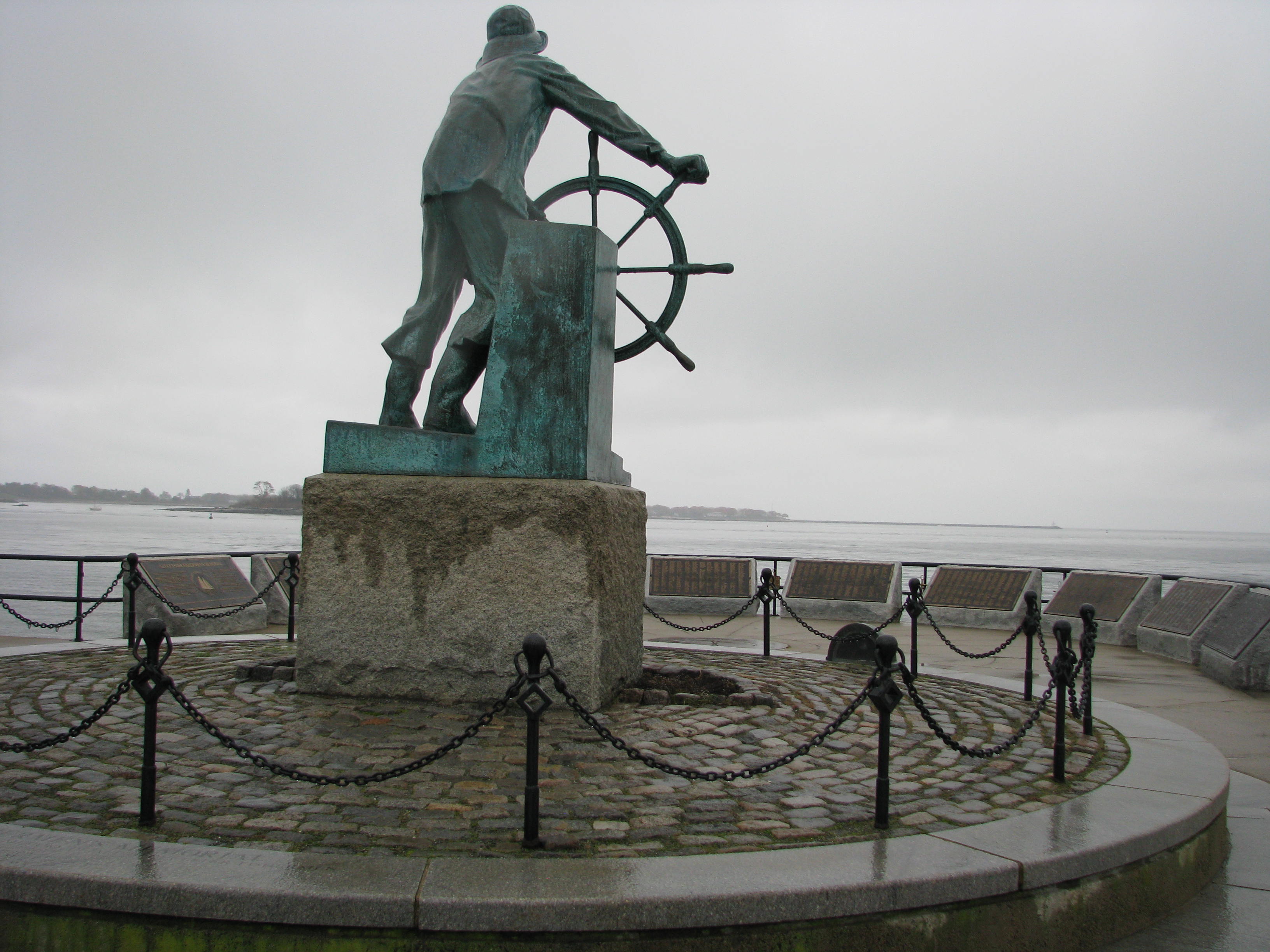
IMG_9048“They that go down to the sea in ships” reads the inscription on the famous Gloucester Fisherman statue.

The full text of that Psalm (107; 23-24) appears on a plaque in the memorial plaza overlooking the harbor. It continues “…that do business in great waters; These see the works of the Lord, and his wonders in the deep.”

Those words touched my soul today, as I paid my first visit to the Fishermen’s Memorial. The statue draws thousands of tourists a year, and that’s a good thing. But it is more than just another landmark of this marvelous nation. It is sacred ground, a place of abiding sorrow, a holy shrine.

I had come as a tourist. I became a pilgrim.

I was glad that no one was nearby. The steady rain and the smoky, low-lying clouds had kept them away. I didn’t mind the rain at all. I didn’t put my jacket hood up – it seemed that to do so would be a sign of disrespect. The few gulls that there were on the beach cooperated, keeping a deferential silence. The tide, at lowest ebb, had uncovered the black veils of seaweed on the rocks. There wasn’t a whisper of wind. Wavelets barely crested and spent themselves at the water’s edge. I listened, though, and like Matthew Arnold on Dover Beach, I could hear them “bring the eternal note of sadness in.”

IMG_9050I prefer quiet solitude when I pay my respects and when I pray. And the Fishermen’s Memorial is a place where one should pray.

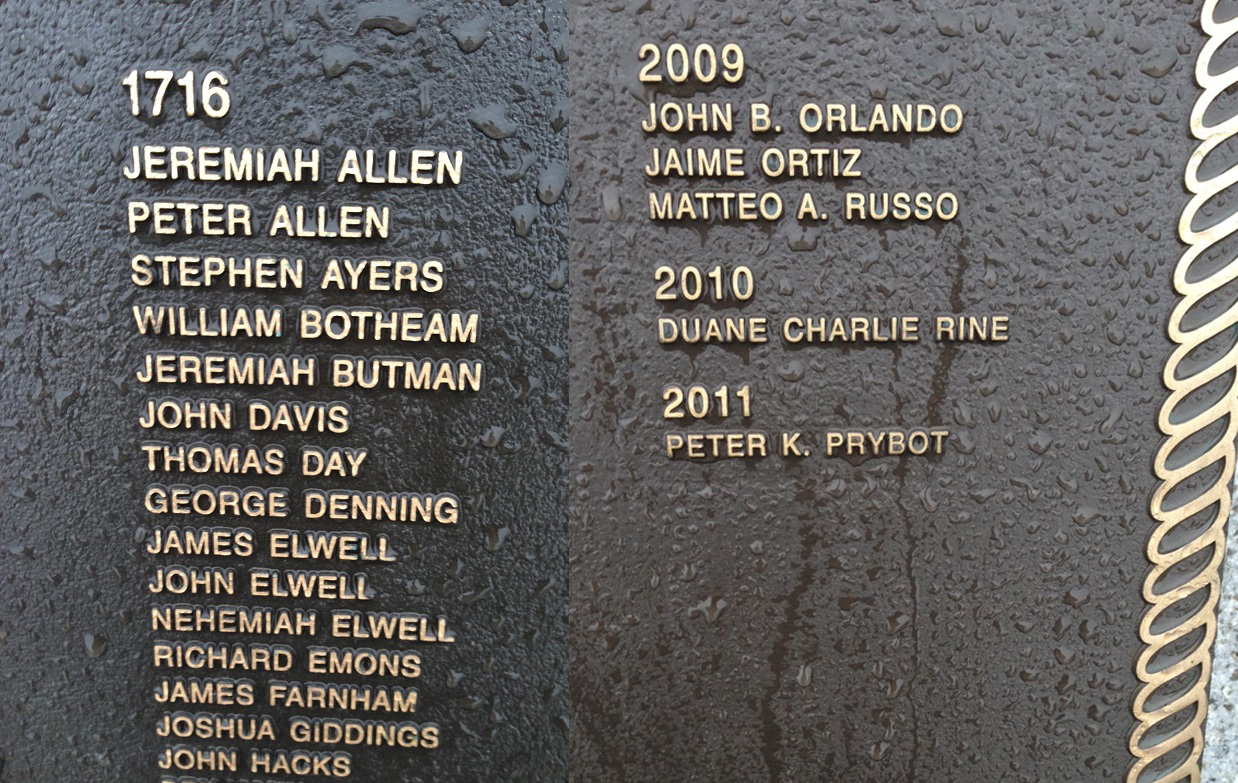
The statue, the man at the ship’s wheel, gazes intently toward the horizon. But he also keeps watch over his brothers – 5,368 Gloucestermen known to have died at sea – who are honored there. At his feet, on the semicircular wall that curves oceanward, are the plaques with the names. The first is Jeremiah Allen, deceased in 1716. The last is Peter Prybot, who perished in 2011. There is ample space below Peter’s name for additional honorees. And yes, it is only a matter of time before more names arrive.

memorial 1aThe memorial says that they were called fishermen, but they were known by other names: father, husband, brother, son. They deserve our prayers. Today, walking in the autumn rain, I gave them mine.

The psalmist, whoever he was, was right about the Lord’s wonders in the deep. Masefield’s joyous “call of the running tide” and his tall ships and stars to steer them by have stirred the blood and beckoned to the adventurous. We can all wax eloquent as we speak of flashing seas and glorious dawns and calm blue lagoons. But that is not the lot of those who go down to the sea in ships. Just a short walk from the Fishermen’s Memorial is another plaque with the following passage from Kipling’s Captains Courageous:

“’We lose one hundred a year from Gloucester only, Mr. Cheyne,’ she said— ‘one hundred boys an’ men; and I’ve come so’s to hate the sea as if it ‘twuz alive an’ listenin’. God never made it for humans to anchor on.’”

No, that’s not why God made the sea. And I would not gainsay anyone from Gloucester who had also come to hate the sea as if it were alive and listening. I thought of Jeremiah Allan and of Peter Prybot. And of all those since Jeremiah and before Peter, and of those yet to come. Whose brother, son, father, husband were they? What were their dreams, their hopes, their fears – and their loves – that the sea has taken from them? We don’t know. Maybe some day, when they return, we will.

When I departed the Gloucester shore this afternoon, I thought of the Book of Common Prayer’s rite for burial at sea: “We therefore commit his body to the deep…looking for the resurrection of the body, when the sea shall give up her dead, and the life of the world to come.”

May the Gloucester Fisherman stand strong and firm until that day, and may he be the first to welcome back his long lost brothers when the sea at last gives up her dead.

Student Athletes, Part 2: Don’t Lose Sight of Them, or of the Value of What They Do. Consider Boston College’s Paul Taylor

October 27, 2014

It’s almost November 2014, and the embarrassing stories and commentary about college sports and athletes continue thick and fast. This time it’s the University of North Carolina’s long history of “paper courses” for big-time players. Last month it was a college football player who took money for his autograph. Earlier we heard more than one credible allegation of sexual misconduct by college football stars.

I hate hearing these stories. It’s not that I doubt them. It’s not that I want them squashed so that the games can go on. It’s not that I want the miscreants to escape with a tut-tut followed by a rah-rah. I hate these stories because they cast a dark cloud over all the rest of the college athletes. The noise about the bad actors can obscure the stories of the vast majority whose accomplishments both on and off the fields of play are exemplary and worthy of emulation.

So here’s a blog post in counterpoint to what we’ve been hearing and reading lately. It’s a profile of Paul Taylor, one of ten such pieces that I wrote for the Boston College Hall of Fame induction earlier this month.

Paul Taylor photo for bioPaul Taylor: Boston College’s First Rhodes Scholar and First Hall-of-Fame Fencer

The fastest moving object in sport, save for the bullet in shooting, is the tip of the sword in fencing. Smaller than a dime, it explodes at the target from a meter away. The target is you, the fencer. You must defend yourself with no more than a slender blade and all the guile, cunning, and wit you can muster.

Fencers are either tacticians or warriors. Paul Taylor was a warrior. He wielded the foil and, as Boston College fencing coach Sydney Fadner puts it, “He was aggressive. He was confident in his attacks. He went out after the touch, rather than waiting for the touch to come to him.”

Over four years of hand-to-hand combat up and down the 14-metre strip, Paul Taylor’s approach paid off. In the five-touch foil bouts – three per fencer per meet – Paul amassed the highest winning percentage, .673, in Boston College history. He had 103 career wins and 50 losses. No other BC fencer to date has 100 wins in foil, where one scores a point only through a touch of the tip to the foe’s torso.

Paul twice qualified for the NCAA National Championships, advanced another time to the NCAA Northeast Regionals, and in senior year he finished fourth in the Intercollegiate Fencing Association (IFA) championships.

Foilists must be durable, patient, strong, and smart. Coach Fadner explains that foil encounters can run longer those of the epee and the sabre, and that Taylor displayed both the creativity and the endurance to advance and retreat relentlessly until scoring the touch.

“Paul was the total package. He worked very hard and he made the people around him better. He was naturally talented as an athlete and could have been successful in any sport. He was always confident but never cocky; he was very humble about it all, actually,” she said.

Paul believes that his weakness was that very aggressiveness, stating “If I err on the side of anything, it’s in not being quite patient enough.” He then went on to explain that mental acuity and adaptability are essential to fencing success. Every opponent has strengths and weaknesses that the fencer must ward off and exploit, recognizing both in split seconds through the thrusts and parries as the blade tips seek their target.

Fencing is also an unusually physically demanding “asymmetric” game. One’s front leg is always the front leg, with stress and strain on hamstring and quadriceps throughout the advances and retreats. The back leg remains in back, with the calf and Achilles tendon working overtime. A genteel sport, it’s not.

BC 2001 Fencing Team poses on -- appropriately - the library steps. Freshman Paul Taylor is at left end of second row.

BC 2001 Fencing Team poses on — appropriately – the library steps. Freshman Paul Taylor is at left end of second row.

If you wonder which institutions of higher education do well in fencing, look to the elite academic schools — the Ivies, Duke, Stanford, Penn State, Northwestern, and Notre Dame. Paul was admitted to Duke but took a liking to Boston College during a campus visit to his sister Lisa, a member of the Class of 2001. He stopped by the Physics Department in Higgins Hall, and professors Kevin Bedell and Mike Graf showed him around.

“I had a really nice feeling about Boston College, right from the beginning,” he said. “Not many places would do that for some random person walking in the door. I liked that the department was small, and you could get to know the professors. And it was that way with the Classics Department. I had taken Latin before BC and wanted to continue with it.”

Paul compiled a perfect 4.0 grade point overage over four years in his dual major of physics and classics. He is the first Boston College student to be named a Rhodes Scholar. At graduation he received the Edward H. Finnegan, S.J. Award, the school’s highest academic honor and the only one awarded university-wide.

A native of Elm Grove, Wisconsin, Paul discovered fencing while at a summer camp in Milwaukee. In high school he played basketball and baseball. But he flourished with the swordsmanship learned mostly from a Russian-speaking immigrant named Boris Shepsulevich. It made for “interesting communications,” as Paul describes it.

Boston College teammates elected him captain in both his junior and senior years. But all along the way he had been a leader anyway. As a freshman, recalled that year’s captain Greg Shea, Paul quickly took the top spot among the trio of fencers competing in foil.

“I was shocked at how talented he was. A lot of guys have swagger coming in. But he took advice very well, and you never knew how much better he was than everybody else. He had a quiet confidence,” said Greg.

Haynes Ko earned a spot on the team during his junior year thanks to Taylor’s tutelage. He’d been in a recreation class that met before fencing practice, and he asked Taylor to teach him the sport. Paul stayed after practice regularly and schooled Ko in footwork and blade work. By the middle of junior year, Ko was the number-two fencer on BC’s saber unit.

While teammates looked up to Paul both in competition and in academics, not everyone was aware of his other passion: social services. He tutored BC students in calculus and physics and taught inmates at a youth detention facility. On most Sunday mornings, he volunteered at Haley House, a soup kitchen near Copley Square. He was Haley House Volunteer of the Year in 2003.

Paul became interested in astrophysics during a summer internship at the Smithsonian Astrophysical Observatory at Harvard. Astrophysics, like his college major physics, deals with calculations and simulations. Astronomy, on the other hand, is observational, a geography of the heavens. At Oxford he earned a doctorate in astrophysics, working on computer simulations of collapsing stars, testing progenitor conditions for gamma-ray bursts, a type of sidereal explosion.

After teaching a year at the African Institute for Mathematical Sciences (AIMS) near Capetown, Paul began postdoctoral work on functional magnetic resonance imagery (MRI). He is now concentrating on brain research with MRI, targeting both children exposed to fetal alcohol syndrome and people who have tested positive for HIV. He also teaches at AIMS facilities in South Africa, Ghana, and Senegal.

College Student-Athletes: A Modest Proposal

August 29, 2014

Every championship tournament of the National Collegiate Athletic Association shall consist of:

1) On-field competition in the respective sports. They will be organized and seeded in the usual ways and will proceed through as many rounds as necessary to determine the national champion.

2) In-studio competition among all of the teams that have qualified for the on-field competition. The in-studio competition will be in the format of the “College Bowl” television shows. Initial matchups will be identical to those in the on-field competition. The teams will proceed through as many rounds as necessary to determine the national champion.

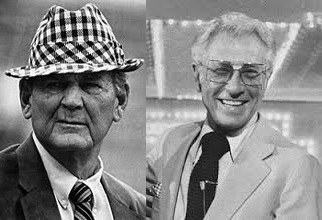
Paul Bryant and Allen Ludden, giants of the gridiron and television studio, respectively. The Bryant-Ludden Trophy, emblem of student-athlete superiority, will be named in their honor.

Paul Bryant and Allen Ludden, giants of the gridiron and television studio, respectively. The Bryant-Ludden Trophy, emblem of student-athlete superiority, will be named in their honor.

Special Rules:

All competitions will be televised and broadcast over as many media outlets as possible so as to maximize available revenues.

All funds and rights fees from the tournaments, including revenue from the sale of souvenirs, t-shirts, software packages, etc. will be pooled.

Each time a team in either field wins a match, it will gain a “victory point.” The more victory points an institution receives, the higher its share of the winnings.

After all competitions are complete, and the champions in both sectors determined, the money will be distributed to the schools and to the competing athletes. Fifty percent of each institution’s winnings will go to the school to use as it sees fit. The other fifty percent will be paid directly to the student-athletes.

The members of the in-studio teams must be selected from the playing rosters of the on-field teams. They must be letter-winners in their respective sports, not nonparticipating bench-warmers.

The team captain of the on-field team must be one of the members of the studio team. However, it is not mandated that he or she also be designated as captain of the studio team.

The team that scores the most victory points in a given academic year, and therefore wins the most money, will receive the coveted Bryant-Ludden Trophy, the new emblem of the highest level of student-athlete achievement in America.

Now let’s let the games begin!