Archive for the ‘Events and Society’ Category

Remembering Boston’s Lady in Red

March 18, 2013

The Lady in Red walks Long Island's shore.

The Lady in Red walks Long Island’s shore.

Today we celebrate Evacuation Day in Boston. School is closed because yesterday was a Sunday and the actual anniversary of March 17, 1776 when the British military fled Boston. The fleet of the mightiest navy in the world departed Boston Harbor under heavy cannonading by George Washington’s forces. The colonial army was using guns that had been dragged to Boston from Fort Ticonderoga by a contingent led by Henry Knox.

Abigail Adams saw the fleet departing and described the ships’ masts as a “forest” in the harbor. On board the British ships were 11,000 soldiers and 1,019 citizens who remained loyal to King George and wanted to return to England.

Two of these Loyalists were newlyweds William and Mary Burton. Their hoped-for married life in Britain was not to be, however. Mary was struck in the head by a cannonball fired from Long Island as their ship made its way seaward. She was not killed immediately but lingered on for several days in great pain. As she lay dying, Mary pleaded with her husband not to bury her at sea. After her death on board the ship, the British and the colonial forces on Long Island struck a truce, and William Burton was allowed to come ashore to bury his love.

Burton sewed his wife’s body into a red blanket that Mary had brought aboard to keep warm on the long journey home. He laid her to rest on the East End of Long Island and made a grave marker from a piece of driftwood. He vowed to return to Boston some day and give her a proper head stone, but he never did come back.

The British fleet did not depart immediately. The ships stayed at anchor in Boston’s outer harbor and blockaded the port for another three months, exchanging gunfire with shore batteries. They finally left on June 13, 1776 when a barrage of cannon fire from the East End hit the British flagship Milford. British Commodore Banks ordered his ships to put to sea. On July 17, 1776, that same Long Island Battery on East Head fired a thirteen-gun salute to celebrate the Declaration of Independence.

But Mary Burton refused to be forgotten. Her wooden grave marker soon disappeared. But in 1804, fishermen shipwrecked on Long Island encountered her ghost, wrapped in a red cloak and sighing mournfully. With blood pouring from her head wound, she floated over a hill and disappeared. The Lady in Red was also seen and heard in 1891 by a soldier at Fort Strong, which was built on the island shortly after the Civil War.

March 17 is better known around here as Saint Patrick’s Day. But Evacuation Day was one of the turning points in America’s war for independence. Had it not taken place in 1776, we might not today enjoy the religious freedom that allows us to honor Boston’s patron saint.

But also, had Evacuation Day not taken place, William and Mary Burton would likely have spent many happy years together and given the world their children whose descendants may have been our friends, neighbors and relatives.

Let us today remember Mary Burton, the Lady in Red, and pray that she rest in peace at last.

Berengaria: The Queen of England Who Never Set Foot on that Sceptered Isle

March 1, 2013

Queen Berengaria

Queen Berengaria

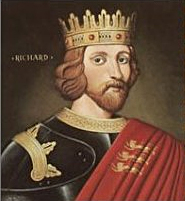
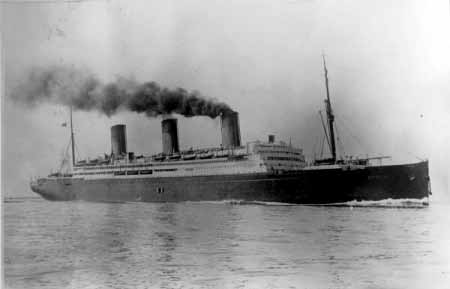
She was the Queen of England, but she never even saw her realm. Nonetheless, she is the first queen who had a British ocean liner named for her, a ship that had been built for Imperial Germany by Kaiser Wilhelm. She was Berengaria, wife of King Richard I, “The Lionheart.”

The year was 1190. Richard had succeeded his father, Henry II, on the throne of England. Henry’s wife was the imperious, scheming Eleanor of Aquitaine. Eleanor had once been married to King Louis VII of France. She had that one annulled, got her real estate back, then went out and snagged Henry. Eleanor knew a few things about arranging marriages for political gain.

Mommy the Matchmaker

King Richard I, "The Lionhearted"

King Richard I, “The Lionhearted”

When Eleanor’s son Richard inherited the throne, he’d already been betrothed to Princess Alys, daughter of King Philip of France. But Eleanor wanted to look after her homeland, the French duchy of Aquitaine. She saw that a friendly neighboring realm was the way to go. That realm was Navarre. So Eleanor connected up with King Sancho of Navarre at a banquet in Spain, and she fixed up her son with Sancho’s oldest daughter, Berengaria.

One problem: Richard had already been packed off from England to run the disastrous Third Crusade. With him out of the way, of course, Eleanor could rule in his stead, as regent. Richard was at Messina, in Sicily, when the 70-year old Eleanor and Berengaria caught up with him. He officially terminated his betrothal to Alys – a good move, because she had been sleeping with his father Henry, and probably had borne Henry at least one illegitimate child.

Eleanor of Aquitaine

Eleanor of Aquitaine

So Richard and Berengaria got engaged. Another problem: It was Lent, so they couldn’t get married. Richard’s sister Joan, the widowed Queen of Sicily, was there too. The happy couple, now engaged, set off for the Holy Land in different ships. Joan was assigned to keep an eye on Berengaria, and traveled with her. A storm hit, the fleet got scattered –Richard’s treasure ship sunk too – and Berengaria ended up aground off the island of Cyprus.

An Island Wedding, at Last

The nasty Isaac Comnenus ruled Cyprus. He threatened Berengaria and her entourage with all sorts of bad things. Richard’s fleet finally arrived and came to her rescue. He conquered the island and married Berengaria there, at the Chapel of St. George at Limassol. A couple of A-List church men were on hand, and so that same day, Berengaria was crowned Queen of England by the Archbishop of Bordeaux and the bishops of Évreux and Bayonne.

Berengaria and Richard went to Acre in Palestine. She soon left, and went back to Poitou, France. Things didn’t go well for Richard, though. On his return trip to Europe, he was captured and held prisoner in Germany until 1194. Eleanor finally arranged for his ransom – by plundering the riches of the church, primarily – and got him freed.

The marriage of Berengaria and Richard was not a happy one. They had no children, and he is widely believed to have been gay even though he did father at least one illegitimate child. Richard was more interested in his military campaigns than in his marriage after he returned from captivity. The marriage was seen as so rocky that Pope Celestine ordered the pair to reconcile. Richard obeyed and took Berengaria to church every week after that.

Richard died in 1199 and was succeeded as King of England by his brother John. Berengaria, distressed at being overlooked as queen of England, retired to Le Mans in France. She lived in poverty because John seized her property and never paid most of her pension, which amounted to 4,000 pounds. Later on, though, John’s son Henry III came across with the funds.

Berengaria may have actually come to England at one point to complain about the money. But she was never there during Richard’s lifetime, and therefore is the only queen of England who never set foot in her realm. She died in 1230 and was buried at a convent in Le Mans.

The Berengaria – Once the World’s Largest Ship

Launch of The Imperator at Hamburg, Germany

Launch of The Imperator at Hamburg, Germany

In May 1912, a month after the Titanic went down, Vulcan Shipyards of Hamburg, Germany launched the Imperator, a luxurious ocean liner that was then the world’s largest ship. Its maiden voyage from Hamburg to New York was in June of 1913. But in July 1914, with World War I breaking out, the German navy ordered that the Imperator remain in port, lest it be seized as a war prize.

The Imperator remained there until 1919 when the Americans made it into a troop transporter for returning soldiers. In August of that year, they gave the ship to the Brits as reparation for the Lusitania.

RMS Berengaria, flagship of the Cunard Line

RMS Berengaria, flagship of the Cunard Line

The Imperator became the flagship and pride of the Cunard Line. The British rechristened her the Berengaria, in honor of the queen who never made it to her country. It was the first time that a ship was named for a queen of England. Along with the Mauretania and the Aquitania, the Berengaria was a mainstay of the Cunard Line’s express routes between Southampton and New York in the 1920s.

The Berengaria was taken from service after the Queen Mary and the Queen Elizabeth were launched in 1936. The Berengaria was sold for scrap in 1938, but it took until the end of World War II to dismantle her completely.

The Berengarias – Queen of England who lived in France, and luxury British ocean liner built for Imperial Germany by the man most responsible for the Great War that nearly destroyed England and the rest of Europe. And now you know their stories.

Unsung Heroes’ Department: Štefan Banič (1870-1941)

February 21, 2013

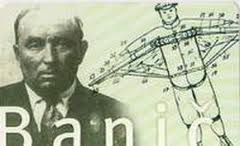
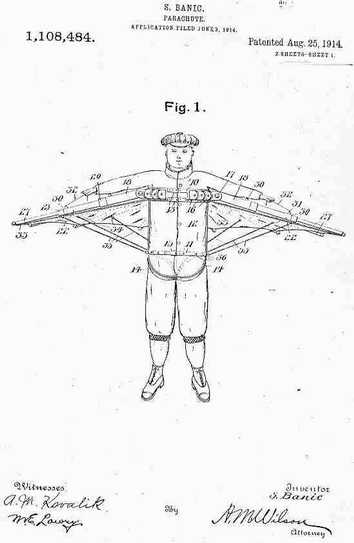
banic imageŠtefan Banič (23 November 1870 – 2 January 1941) was a Slovak inventor who devised a military parachute, the first parachute ever deployed in actual use. He patented his parachute in 1914 and donated the patent (No. 1,108,484) to the U.S. Army. Banič’s parachute became standard equipment for all U.S. aviators in World War I, and it saved many lives.

Banič received no money or recognition for his invention during his lifetime. In 1997, the Stefan Banič Parachute Foundation was created to honor his legacy and memory. The foundation annually bestows the Stefan Banič Award on the world’s leading parachute-industry professionals and manufacturers, past or present.

A Lifetime of Helping Others, an Immigrant with the American Dream

Banič was born in Neštich, Austria-Hungary, which is now part of Smolenice, Slovakia. As a young man, he was an employee of a Hungarian Count Palffy. He was fired from his job for trying to improve conditions for fellow workers and the townspeople. He was also refused enrollment to the high school because of his Slovak consciousness.

Banič came to America in 1907 and settled in Greenville, Pennsylvania, where he worked in the coal mines. He later was a stone mason and an employee of the Chicago Bridge and Iron Company, where he improved productivity through his innovative ideas. Banič also attended technical school at night. He became fluent in the English language, as evidenced by his petitions for a U.S. Patent and the technical descriptions of his parachute device.

A Daring Test of His Invention

Banic's Parachute patent

Banic’s Parachute patent

Having witnessing a plane crash in 1912, Banič constructed a prototype of a parachute in 1913. The idea of a parachute had been known and discussed long before, and people had actually jumped from high places with them. Banič’s invention was different from those we know today – it was like an umbrella that was attached to the body.

Banič tested his invention in Washington, D.C. before U.S. Patent Office and military representatives. He first jumped from a 15-story building, and in 1914 he jumped from an airplane.

After donating his patent rights to the newly formed Army Signal Corps and to the American Society for the Promotion of Aviation, Banič was made an honorary member of the Army Air Corps – now the Air Force – and the Society. It was a time when entrepreneurs and inventors often gained wealth and fame for their work. He received neither, even though his invention was important to war effort and to the subsequent development of modern aviation.

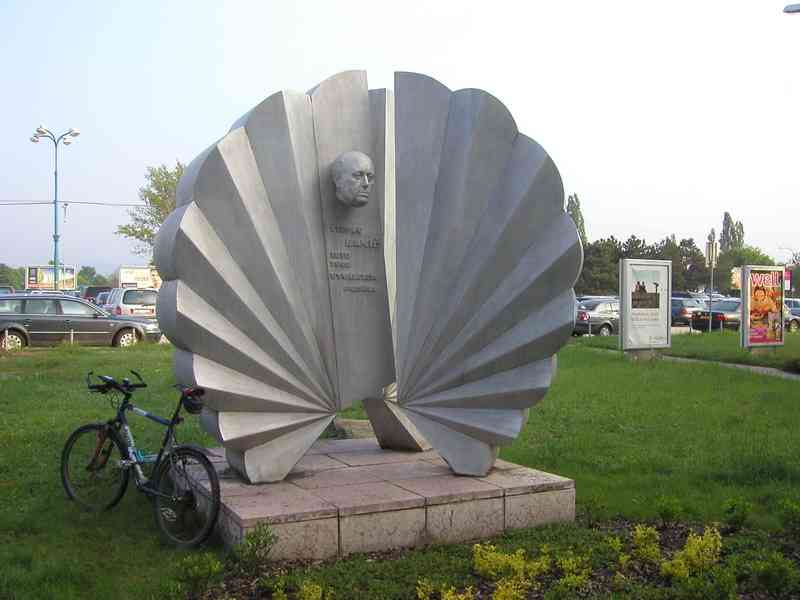
Monument to Banic at Bratislava Airport

Monument to Banic at Bratislava Airport

After World War I Banič returned to Slovakia where he helped to explore the Driny karst cave in the foothills of the Little Carpathian Mountains near his home town. He died in 1941. In 1970, a memorial to him was unveiled at the airport in Bratislava, capital city of Slovakia.

Recognition: Better Late than Never

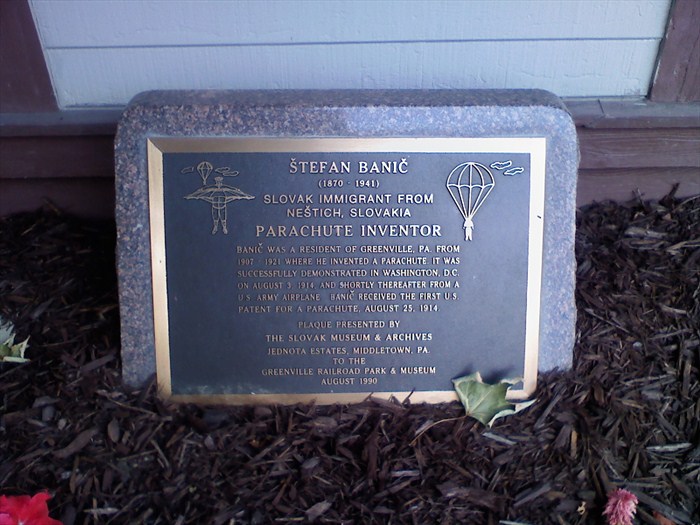
In 1989, Banič’s first American home town, Greenville, Pennsylvania, celebrated the 75th anniversary of his invention with a gathering that included Army and Air Force officials. It was the first tribute to Stefan Banič in America. In November 1990, a bronze plaque honoring Banič was presented to the town by the Slovak Museum & Archives of Middletown, Pennsylvania.

Plaque honoring Banic In Greenville, Pennsylvania.

Plaque honoring Banic In Greenville, Pennsylvania.

Another Slovak, Slavo Mulik, was founder of the Stefan Banič Parachute Foundation. Mulik was born in 1944 and started skydiving in 1960. He made more than 2,300 jumps and obtained American licenses as an instructor, commercial pilot and expert parachutist. He served with the 82nd Airborne and was awarded Golden Wings and Diamond Wings.

Saint Barbara: A Real Bombshell

February 15, 2013

She lived in Asia Minor in the third century, legend has it, the daughter of Dioscorus, a strict pagan father who locked her up in a tower to shield her from the world. She secretly converted to Christianity and wouldn’t agree to an arranged marriage. Her father had her condemned to death. She escaped several times through divine intervention, and finally Dioscorus took it upon himself to behead her.

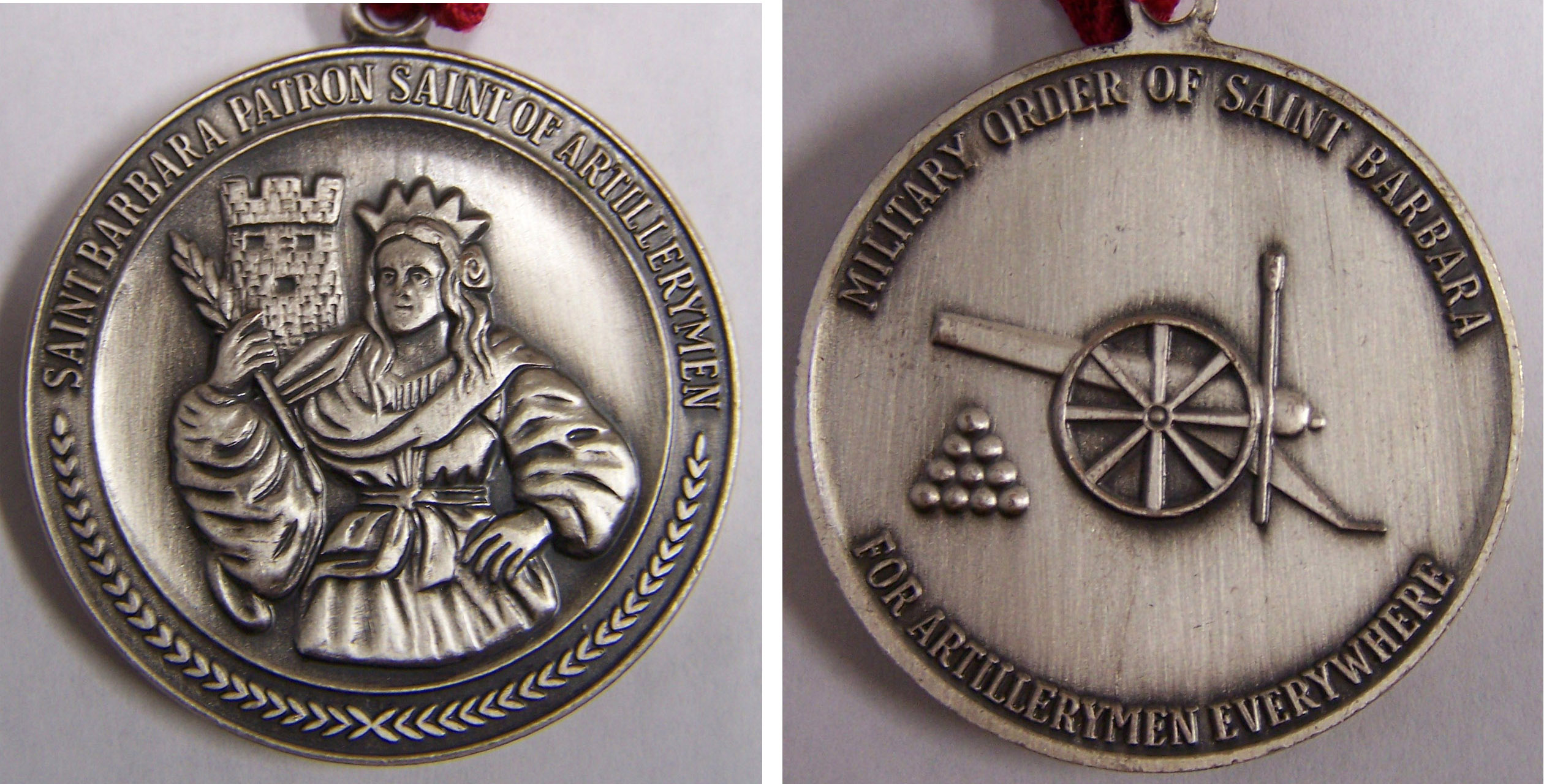
The Army's Medallion of the Order of Saint Barbara

The Army’s Medallion of the Order of Saint Barbara

God got even with the old man, however. On his way home from killing his daughter, the father was blown to smithereens by a bolt of lightning.

So Saint Barbara became the patron saint of artillerymen, armorers, military engineers, gunsmiths, miners, bomb squads, and anyone else who works with cannon and explosives. She is invoked against thunder and lightning and all accidents arising from explosions of gunpowder. She is venerated by every Catholic who faces the danger of sudden and violent death in work.

Pope Paul VI removed Barbara from the calendar of saints in 1969, citing the improbability that she actually lived. No matter. Her feast day, December 4, is still celebrated in many countries of the world.

The US Army Field Artillery Association and Army Air Defense Artillery Association maintain the Order of Saint Barbara as an honorary military society. Its most distinguished level is the Ancient Order of Saint Barbara for those who have achieved long-term, exceptional service to the field artillery. Membership at that level must be approved of by the Commanding General, United States Army Fires Center of Excellence and Fort Sill.

The Spanish and Italian word “santabarbara” and the obsolete French “sainte-barbe” signify the powder magazine of a ship or fortress. It was customary to have a statue of Saint Barbara at the magazine to protect the ship or fortress from suddenly exploding. She is also the patron of the Italian Navy.

Who needs Barbie dolls when you’ve got Saint Barbara on your side?

The First Emancipation Proclamation

January 24, 2013

It was nearly a century before Abraham Lincoln. And it was one of the “bad guys,” John Murray, Earl of Dunmore, Royal Governor of Virginia, who issued it. Lord Dunmore freed the slaves of the Royal Colony of Virginia on November 7, 1775.

John Murray, Earl of Dunmore, Royal Governor of Virginia, 1771-1775.

John Murray, Earl of Dunmore, Royal Governor of Virginia, 1771-1775.

That date is tucked away in the chronicles of American history like a guilty secret. Maybe it’s because we really don’t want to acknowledge what motivated many American colonists to take up arms against England. It was the need to preserve slavery. It was the wealth of the plantations, wealth only made possible by slave labor. It was all about the money.

Dunmore’s Proclamation was issued from a British warship in Yorktown harbor. He had fled there in April after the colonists surrounded his royal palace in Williamsburg, the colonial capital. They were furious that he had effectively disarmed them by removing the colony’s supply of gunpowder from the public magazine and storing it in another British ship. It was the day after the Lexington and Concord clashes in Massachusetts. The Virginians didn’t buy Dunmore’s initial excuse that he was safeguarding the powder from potential seizure by rebellious black slaves.

The November proclamation by Dunmore offered freedom to slaves who would rebel and take up arms against their masters. Some 800 to 2,000 did so, becoming his “Ethiopian Regiment” in the early stages of the war. They had some initial success in the Chesapeake area, but later on were evacuated to New York to fight there.

At the time of the April rebellion, and as he was fleeing to the safety of the moored warship. Dunmore had announced that “by the living God, he would declare freedom to the slaves, and reduce the city of Williamsburg to ashes.”

Like Lincoln’s Emancipation Proclamation, Dunmore’s move was just a war measure, intended to incite rebellion and bring disorder to the enemy. But it backfired, with disastrous results. Virginia and the rest of its Southern brethren were now in the rebellion to stay. Hundreds, if not thousands, who had been undecided enlisted in the Continental Army. Nothing did more to turn the South against the Crown than the Dunmore Proclamation.

John Adams, circa 1765

John Adams, circa 1765

All of the colonies chafed under the thumb of the British – the endless taxes, harassment, and disdain. Not all colonists supported slavery, of course, and many were ardent abolitionists whose time had not yet come. But the prospect of liberated slaves was the final provocation, the tipping point. As one Virginian wrote to a friend overseas, “Hell itself could not have vomited anything more black than his design of emancipating our slaves.”

Virginia in the Forefront of the Revolution

The Revolution needed the Southerners. It especially needed Virginia, the largest and wealthiest of all the colonies. That is the main reason that Thomas Jefferson was picked to write the Declaration of Independence. John Adams, for one, insisted on it.

Thomas Jefferson

Thomas Jefferson

Back in 1774, Adams, Jefferson, and Benjamin Rush had discussed the political situation at a tavern in Frankford, Pennsylvania. At that time, Adams acknowledged and wrote that “Virginia is the most Populous State of the Union. They are very proud of their ancient dominion, they call it; they think they have the right to take the lead…”

Two years later, when asked why Jefferson, still such a young man, would draft the Declaration of Independence, Adams replied, “It was the Frankford advice, to place Virginia at the head of everything.”

And so it was. But Virginia would most likely never have been there, had Lord Dunmore not attempted to free the slaves first.

Britain in the Forefront of Abolition

Banastre Tarleton

Banastre Tarleton

British authorities never repudiated Dunmore, even though they must have realized that his declaration did not have the intended effect. In 1779, British General Sir Henry Clinton’s Philipsburg Proclamation freed slaves owned by Patriots throughout the rebel states, even if they did not enlist in the British Army.

That second Emancipation Proclamation prompted about 100,000 slaves to try to leave their masters and join the Brits over the course of the entire war. And at the end of the war, the British relocated about 3,000 former slaves to Nova Scotia. This wasn’t much, compared to the total slave population, but more American slaves were freed by the British than in any other way until the Civil War.

Britain also had an admirable conversion to the cause of abolition in the ensuing decades, again well before the days of Abraham Lincoln. The plight of the slaves became better known to people in the mother country as a result of the Revolutionary War, and public sentiment turned against it.

The conversion took a few years, and not before British Colonel Banastre Tarleton made himself a fortune in the slave trade after the war was over. Boomers who were fans of Leslie Neilsen, “The Swamp Fox” of Walt Disney’s shows about guerrilla fighter Francis Marion, will remember Colonel Tarleton as Marion’s primary military foe in the Carolinas.

Leslie Nielsen as The Swamp Fox

Leslie Nielsen as The Swamp Fox

Britain abolished its slave trade in 1807, and the Royal Navy began an anti-slavery patrol of West Africa in 1808. Between then and 1860, the West Africa Squadron seized approximately 1600 ships involved in the slave trade. They freed 150,000 Africans, almost all of whom had been destined for plantations in the American South.

So, taking the long view, the First Emancipation Proclamation by Lord Dunmore was a short-term failure. But it set in motion a chain of events that were ultimately beneficial, even though there was much suffering along the way.

The Emancipation Proclamations. More than one of them. And now you know the rest of the story.

The End of the World is not Upon Us – But Don’t Scoff at the Mayans

December 18, 2012

There have been many articles and more than a few jokes about the end of the world that the ancient Mayans of Mexico supposedly predicted.

Don’t laugh. It’s not going to happen. But the Maya never predicted it anyway. What they prophesied, long ago, has just been misinterpreted.

Click on this YouTube link and check out the short (about 4 minutes) clip from NASA. It gives a concise and plausible explanation of the Mayan prophecy.

Essentially, this December 21 is a day on which the ancient Mayan calendar “re-sets” to the same reading as on the day of creation, many thousands of years ago. Reminds me of the Y2K non-event – remember that one?

The Maya believed that the world will be renewed, not destroyed. Sounds good to me. Let us embrace that renewal!

My Old Year’s Resolution: No More “Happy Holidays”

December 3, 2012
Menorah

Menorah

We are now in the final month of 2012. As the old year winds down, it’s the “Holiday Season,” which began with our day of Thanksgiving on November 22 and ends on New Year’s Day, January 1. It is a happy and festive time for all of us.

For the rest of this old year, however, I am going to try very hard not to say “Happy Holidays.” Why, may you ask? Patriotism, I reply.

On December 2, the first Sunday of Advent, Christians lighted the first candle of their advent wreath: the candle signifying hope.  Four more candles will follow, in succeeding weeks leading up to Christmas. Saturday evening December 8, our Jewish friends will mark the first of Chanukah’s eight days when they light the shamash , the menorah’s “server” candle, which they will then use to light the other eight candles. Christians are preparing for the birth of their Savior; Jews are commemorating the re-dedication of the temple after fighting to secure their religious freedom.

Advent Wreath

Advent Wreath

The reverence for tradition and the celebratory spirit that we find among Christians and Jews at this time of year should not be, in my opinion, a reverence and spirit that is limited to homes and houses of worship, or shared only with those of one’s same faith.  Rather, it ought to shine forth from every household, burst forth from the hearts and lips of every man and woman in America, whether they practice a religion or not.  These holidays are quintessentially American holidays.

Yes, July 4 is rightfully regarded as America’s biggest day. It celebrates the birth of our nation. But I suggest that the Christmas and Chanukah holidays are just as important. They remind us why the birth of America even took place.

Here is how the Bill of Rights commences: “Congress shall make no law respecting the establishment of religion, or prohibiting the free exercise thereof;…” Only after the people’s religious rights and liberties were addressed did the Founding Fathers go on to add freedom of speech, of the press, of the right to peaceably assemble, of the right to petition for redress of grievances.

The longing for religious freedom brought people to America. The securing of the right to that freedom was the very first building block of the Bill of Rights.

This is the time of year that we are – or should be – remembering and celebrating that freedom.  And to me, “Happy Holidays” just does not do an adequate job; it is a bland and artificial substitute that purposely avoids any religious impulse or feeling.   “Merry Christmas,” or “Peace of Christmas,” or “Happy Chanukah” or “Chanukah Sameach” are so much better, and so much more American.

And so, here’s my Old Year’s resolution. For the rest of December I’ll do my best to eschew “Happy Holidays.” But I will be wishing happiness for those I greet, while keeping in mind the blessings we all enjoy in our lives in this great and noble land.  My words of greeting: “Merry Christmas” and “Happy Chanukah.”

Armistice Day 2012

November 10, 2012

It is Veterans’ Day Weekend in America. This national holiday was known as Armistice Day from 1926 until 1954, when an Act of Congress changed the name to Veterans’ Day. It is now known as Remembrance Day in the British Commonwealth of Nations. In France and Belgium, however, the name of Armistice Day has remained.

I agree with the thought behind that change, which came in the aftermath of World War II. We should remember and honor those who served in all conflicts that imperiled our nation and the free world. Thank you once again to all American veterans, and to your comrades in arms from Britain and Canada, for going into harm’s way for the sake of my freedom.

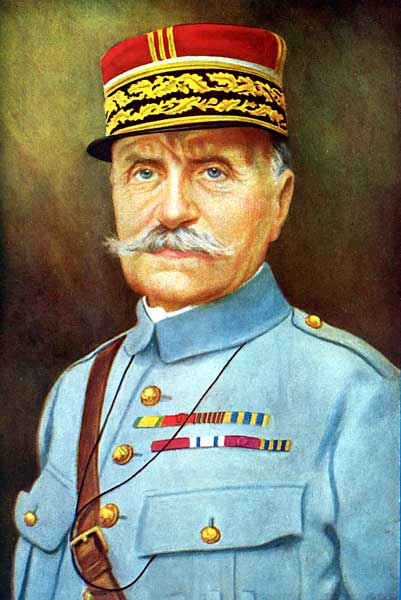
Ferdinand Foch

However, perhaps because I am old enough to remember Armistice Day, I think that it is unfortunate that the name of that day, and what it meant, is fading into the background of history. Armistice Day commemorated the cessation of hostilities on the Western front in World War One. It took effect at “the eleventh hour of the eleventh day of the eleventh month.” The document was signed in the private railway car of French army general Ferdinand Foch in the forest at Compiegne, France.

Armistice Day, to me, is a sobering and necessary reminder that World War I, the “War to End All Wars,” was anything but that.

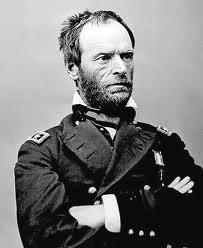
War is hell, as the Union’s William Tecumseh Sherman said. The Civil War saw more than its share of carnage – Antietam, Gettysburg and other battles – but World War I was especially brutal and gruesome. The best way to honor our all of our veterans is to learn, and to belatedly apply, the lessons of Armistice Day.

William Tecumseh Sherman

Perhaps we should adopt, or return to, a practice first suggested by Australian writer Edward George Honey. That is, we observe two consecutive minutes of silence at 11:00 a.m. local time on November 11. The first of those minutes is dedicated to the approximately 20 million people who died in World War I. The second is dedicated to the living who remained behind – mainly the widows, children, and families.

That second minute is especially fitting. Why? Because it reminds us, the living, that we have a duty to fashion a better world, so that our children and those who come after us might be spared the horrors of war. We remember those who died but, as Lincoln said at Gettysburg, we highly resolve that these honored dead shall not have died in vain.

And how shall we fashion that better world? How shall we ensure that our veterans’ sacrifices have not been in vain? Let us ponder the words of American General Omar Bradley, who learned well the lessons of war.

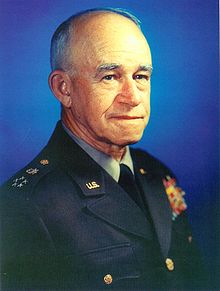
Bradley graduated West Point in 1915 but did not end up in Europe before the Armistice. He first saw duty on the Mexican border, then commanded a unit that guarded the copper mines in Butte, Montana. But in World War II, he was an especially able commander under Dwight Eisenhower. At one point, he commanded 900,000 soldiers, the largest force ever to serve under a single field general.

Like Sherman, Bradley knew war in all its fury. When he took up arms, he was good at it. He saw war for what it was, as only someone who has been there is able to do.

Omar Bradley

Here is a link to Bradley’s 1948 Armistice Day speech .

His words are still relevant today, especially the following:

“It is no longer possible to shield ourselves with arms alone against the ordeal of attack. For modern war visits destruction on the victor and the vanquished alike. Our only complete assurance of surviving World War III is to halt it before it starts….”

“For that reason we clearly have no choice but to face the challenge of these strained times. To ignore the danger of aggression is simply to invite it. It must never again be said of the American people: Once more we won a war; once more we lost a peace. If we do we shall doom our children to a struggle that may take their lives…”

“With the monstrous weapons man already has, humanity is in danger of being trapped in this world by its moral adolescents. Our knowledge of science has clearly outstripped our capacity to control it. We have many men of science; too few men of God. We have grasped the mystery of the atom and rejected the Sermon on the Mount. Man is stumbling blindly through a spiritual darkness while toying with the precarious secrets of life and death. The world has achieved brilliance without wisdom, power without conscience. Ours is a world of nuclear giants and ethical infants.”

I don’t think all that much has changed in the 64 years since Armistice Day, 1948. Perhaps Armistice Day, 2012, can be a new beginning. We can highly resolve to heed the words of General Bradley. And after that second minute of silence, we can strive for wisdom to guide that brilliance, for conscience to guide that power – and make sure that hereafter, those we elect to lead our nation are not ethical infants, and will do likewise.

“We the People” say “Thank you, Gouverneur”

September 25, 2012

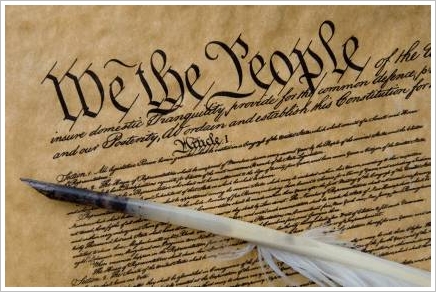
Those mighty opening words!

September 17, 2012 came and went without fanfare. That’s unfortunate. It was the 225th anniversary of the signing of the United States Constitution.  Constitution Day is one of the least-acknowledged events on America’s calendar, and it just shouldn’t be that way.

Don’t take it from me. Let George Washington remind you of how significant the completion and ratification of the Constitution was.  As president, he issued a proclamation – to accompany a resolution of Congress – declaring November 26, 1789 as the first Thanksgiving Day. It was to give “thanks” for the new Constitution.

We should be thankful for it as well, and September 17 of each year should be an occasion of thoughtful and appreciative reminiscence, if not a national holiday.  I’d like to take this occasion to belatedly raise a glass in salute to one of the most unsung heroes of early America, and the most important influence on the final form of United States Constitution, the remarkable Gouverneur Morris.

Our Constitution has a total of 4,440 words. It is the oldest, and the shortest, written Constitution of any major government in the world.  Every word of the Constitution counts, especially “We the People,” the mighty and telling first three words of the Preamble. Those were the words of Morris, the wealthy, womanizing aristocrat from New York. He did much, as one of the Founding Fathers, to help bring forth the new nation.  Those three words were his greatest gift to us all.
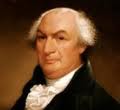
Gouverneur Morris: “Penman of the Constitution”

Gouverneur Morris actually disdained democracy.  That word, in fact, does not appear in the Constitution. When Elbridge Gerry of Massachusetts remarked, at the Constitutional Convention, that “The evils we experience flow from an excess of democracy,” Morris agreed. He thought that only landowners should be allowed to vote; a broad voting franchise would entrench the rich in power, in his view.

The people never act from reason alone,” he said, in one of his 173 speeches – more than anyone else – at the Convention. “The rich will take advantage of their passions and make these the instrument for oppressing them.  Give the votes to people who have no property, and they will sell them to the rich, who will be able to buy them.”

So how did that man fashion the enduring document that has secured the rights of all individuals for the past 225 years?  He was on the right side of all the issues that truly mattered. He was an ardent nationalist; he believed that the only hope for survival of the new country was for it to be bound together as one nation, not a confederation of sovereign states. He also hated slavery, and he was a passionate believer in freedom of religion even though he was no churchgoer himself.

As one who writes and edits for a living, I am a big fan of Morris.  My earlier blog post, which you can read by clicking here, recaps his life and career. There’s no need to repeat it.  But since I did that post, I have read Richard Brookheiser’s biography, “Gentleman Revolutionary: Gouverneur Morris, the Rake Who Wrote the Constitution.” The book describes how Morris’s skills as a writer and editor brought the Constitution into being.
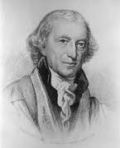
William Samuel Johnson, Chairman of the “Committee of Stile.” He delegated the committee’s responsibilities well.

Morris was the star performer on the “Committee of Stile,” a group of five men selected by a Committee of Detail to “frame” all of the resolutions that the entire convention had approved.  The chairman of the committee was Dr. William Samuel Johnson, a 60-year old lawyer from Connecticut. The others were Rufus King, Alexander Hamilton, and James Madison.  Only one could do the writing, though, and they delegated it to Morris.

He completed his redraft in four days. Morris compressed the first draft’s 23 articles into seven.  He followed faithfully all of the resolutions, but his editing eliminated superfluous wording and added clarity and simplicity. Here is just one example, from Article 1, Section 10, in which he reduces the word count from 61 words to 36.

The early draft reads:

“No State, without the consent of the Legislature of the United States, shall…keep troops or ships of war in times of peace…nor engage in any war, unless it shall be actually invaded by enemies, or the danger of invasion be so imminent, so as not to admit of a delay, until the Legislature of the United States shall be consulted.”

Morris’s tightened version reads:

“No State shall, without the consent of Congress…keep Troops or Ships of War in times of peace…or engage in War, unless actually invaded, or in such imminent danger as to not admit of Delay.”

So it was throughout the redrafting. Though he was a lawyer, Morris avoided the excess verbiage that lawyers seem to love.  His rewording was invariably concise, direct, and clear.

But the Preamble was the one place where he did not have to follow any resolutions. Instead, he wrote it from scratch. Rather, he rewrote it from scratch, and in so doing he made clear for all time that the powers of the government derive ultimately from the people. He also pointed out the purpose of the government that was being formed, which the Committee of Detail had neglected to do.

The Committee of Detail’s version of the preamble went, “We the people of the States of New Hampshire, Massachusetts…” and so on through Georgia “do ordain, declare, and establish this Constitution for the Government of Ourselves and our Posterity.”

This wasn’t good enough for Morris. It was, first of all, a roll call of states. It also neglected to say what the ends of the government were, or why it existed in the first place. And you know how he fixed it.
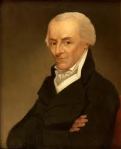
Elbridge Gerry, Massachusetts delegate who refused to sign the Constitution.

“We the People of the United States…” begins his preamble. It’s not the 13 states that are the source of legitimacy and power of the government. It’s the people of the entire nation.  This was Gouverneur Morris’s statement of nationalism, and his lasting bequest to us.

Not everybody agreed with the wording. Patrick Henry refused to attend the convention, and wrote “That poor little thing, we the people, instead of the states.”

Just as importantly, Morris wrote why “We the People” are doing it. Earlier drafts and suggestions had had vague and off-point purposes such as “the exigencies of government” and “the common benefit of the States.”  Morris swept them all away with: “In order to form a more perfect union, establish justice, insure domestic tranquility, provide for the common defense, promote the general welfare, and to secure the blessings of liberty to ourselves and our posterity.”

The style is poetic even while it remains spare. The subtle rhymes of “insure/secure” and “tranquility/liberty/posterity” along with the alliteration “provide/promote” give the Preamble an appealing and memorable ring.  “We the People” are establishing this government, and here’s why.

The government that Morris and his fellow conventioneers built and secured with that Constitution has endured for more than two centuries.  It will continue as long as “We the People” elect representatives who carry out the mission of the government as stated in the Preamble, who act in the interests of the entire nation. There is no guarantee that we will do that.  Our record over the past several decades is mixed at best.

Most of the framers knew that their finished work was not perfect. After the Convention’s final meeting, the 81-year old Benjamin Franklin, oldest of the signers, was asked by the wife of the mayor of Philadelphia what kind of a government had been formed. His reply was, “A republic, madam, if you can keep it.”

In 1803, Gouverneur Morris wrote to a friend, “In adopting a republican form of government, I not only took it as a man does his wife, for better for worse, but what few men do with their wives, I took it knowing all of its bad qualities.

For doing so, and for writing the immortal words that established our sovereign role in this great and lasting enterprise, “We the People” say “Thank you, Gouverneur.”

Third-Party Candidates: The Fun and Fascinating Losers

August 30, 2012

As I write, The Republican National Convention winds down in Tampa, and the Democrat hoedown begins soon in Charlotte.  Believe it or not, the political “preseason” is just ending and the campaigning starts in earnest.

Did you know that in addition to Barack Obama and Mitt Romney, there are 19 people are running for president as nominees of their respective parties, and five more are running as independents?  That’s what I got from a Web search. Some of the candidates will actually get votes. Libertarian Party nominee Gary Johnson is on the ballot in 40 states thus far. The Green Party’s Jill Stein, a Massachusetts physician, has ballot access in 32 states.

There are many other parties that have nominated candidates – household names like the Socialist Workers’ Party, the Reform party, the Peace and Freedom Party, and of course the old reliable Prohibition Party.  I don’t know anything about their candidates, and I’m not going to seek them out.   Which might mean I’ll be missing out on some of the fun of politics, America’s favorite spectator sport.

Here are some of the “colorful” characters who have run for president in campaigns gone by:

Amondson Campaign Button

GENE AMONDSON (Prohibition Party) – He ran against Obama in 2008 and received 643 votes. He liked to dress as the Grim Reaper. He was a landscape painter, woodcarver, Christian minister and prohibition activist who preached like the legendary Billy Sunday.  Some of his talking points from press conferences: “Prohibition was America’s greatest 13 years.” “Drinking responsibly is like teaching a pig to eat with a spoon. Can’t happen.”

Amondson died of a stroke shortly after the last election, but the Prohibition Party has contested every election since 1872. Its candidate this year is Jack Fellure of West Virginia.

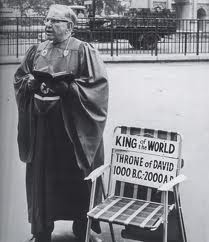
HOMER TOMLINSON (Theocratic Party) Ran against Nixon in 1968, as well as in 1952, 1960, and 1964, when he got 24 votes. His platform included replacing taxes with tithes and

Homer Tomlinson

establishing a cabinet post of “Secretary of Righteousness.” His day job was “King of the World.” He crowned himself king in 100 countries and ruled the world from a hotel room in Jerusalem, wearing a gold-painted crown and sitting on a folding chair.

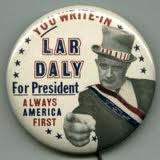
LAR “AMERICA FIRST” DALY (Tax Cut Party)  Ran against Kennedy in 1960, campaigning in an Uncle Sam costume.  He also ran for many other offices during his lifetime. He wanted to legalize gambling and shoot drug dealers on sight. He once told Harry Truman that he wanted to drop the first atomic bomb on Moscow.

Daly also was a big fan of Douglas MacArthur, and he filed MacArthur’s name for President in every election from 1936 onwards. In the 1950s he announced that he was “100 per cent behind” Senator Joseph McCarthy’s investigations into domestic Communist activities.

Daly’s day job was operating a chair and stool company out of his garage. But his incessant demands to be given equal time whenever a mainstream candidate appeared on air, citing Section 315 (the “equal time” provision) of the Communications Act, caused Congress to amend the law so that broadcasters didn’t always have to give equal time. Daly died in 1978.

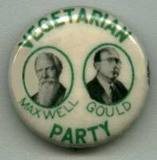
Maxwell-Gould Campaign Button

JOHN MAXWELL (Vegetarian Party) – He was an 85-year old vegetarian restaurant owner who founded the party and ran with running mate Symon Gould against Truman in 1948.

He pledged to abolish medicine, and he wanted to pass a law prohibiting farmers from spending more than 20% of their time raising cattle or poultry. He also wanted government ownership of all natural resources and a $100 per month government pension for everyone over the age of 65. His favorite vegetable was any one, except okra.

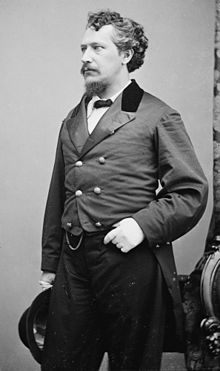
GEORGE TRAIN (Independent) – Ran against Ulysses Grant in 1872.  After his unsuccessful presidential bid, he campaigned to be America’s first dictator. He charged admission fees to his campaign rallies, and drew record crowds. Instead of shaking hands with other people, he shook hands with himself. That was a type of greeting he had seen in China. He spent his final days on park benches in New York City’s Madison Square Park, handing out dimes and refusing to speak to anyone but children and animals.

But before his sad ending, the Boston-born Train had a most interesting life. He started in the mercantile business and at age 31, in 1860, he went to England to found horse tramway companies in Birkenhead and London.  His trams were popular with passengers, but his designs had rails that stood above the road surface and obstructed other traffic. In 1861 Train was arrested and tried for “breaking and injuring” a London street.

George Train

Train was involved in the formation of the Union Pacific Railroad during the Civil War, but left for England in 1864 after having helped set up the infamous Crédit Mobilier of America.  That company had been formed to sell construction supplies for the Union Pacific, and its attendant payoffs and scandals rocked the nation.

In 1870 Train made a trip around the globe which was covered by many newspapers. It likely inspired Jules Verne’s novel Around the World in Eighty Days.  Phileas Fogg is believed to be modeled on Train. In 1890, he made his third circumnavigation of the earth in 67 days.  A plaque in Tacoma, Washington commemorates the point at which the 1890 trip began and ended.

While in Europe after his 1870 trip, Train met with the Grand Duke Constantine and persuaded the Queen of Spain to back the construction of a railway in the backwoods of Pennsylvania. That was the funding for the Atlantic and Great Western Railroad. Back in America he promoted the Union Pacific Railroad. His company, Credit Foncier of America, earned Train a fortune from real estate.  He was in on the action when the transcontinental railway opened up settlement and development of huge swathes of western America, including large amounts of land in Omaha, Council Bluffs, Iowa and Columbus, Nebraska.

In 1872 he ran for President of the United States as an independent candidate. He supported the temperance movement and that year he was jailed on obscenity charges while defending Victoria Woodhull.  Her newspaper had published an issue reporting the alleged affair of Henry Ward Beecher and Elizabeth Tilton, each married to other people.

Train was the primary financier of the newspaper The Revolution, which was dedicated to women’s rights, and published by Susan B. Anthony and Elizabeth Cady Stanton.

LEONARD “LIVE FOR EVER” JONES (High Moral Party) Ran against Lincoln in 1860. Jones believed that as an immortal, he was made for high office. Fortunately, voters didn’t agree. He also ran for governor of Kentucky, where he was born.  His campaign style was to speak while jumping up and down on the spot and banging the ground with his cane.

Jones filed a lawsuit against President Buchanan in 1856 on the grounds his name had not appeared on the ballot. He also sued Lincoln in 1860, trying to have the election declared invalid. When Lincoln was murdered in 1865, Jones took that as a sign from God that the “morally elected president” (himself) had not been allowed to serve.

Jones thought that mortality was a side effect of immortality, and anyone could achieve immortality through a regimen of prayer and fasting.  His brother was Laban Jones, a renowned preacher of the time. Jones caught pneumonia and died in 1868, refusing medical aid because he believed that his sickness was moral at its base.

So – see what we’re missing if we don’t pay attention to those third-party candidates?